 3 months ago
113
3 months ago
113
Tokyo has no shortage of coffee shops that not only offer aromatic and well-brewed drinks, but also aesthetic spaces to take a breather from the shopping, eating and museum-hopping that many come to the city for. Here, we list five new coffee destinations that opened in recent years, together with suggested places to explore in the neighbourhood before or after your caffeine fix.
BLUE BOTTLE COFFEE TOYOSU PARK CAFE
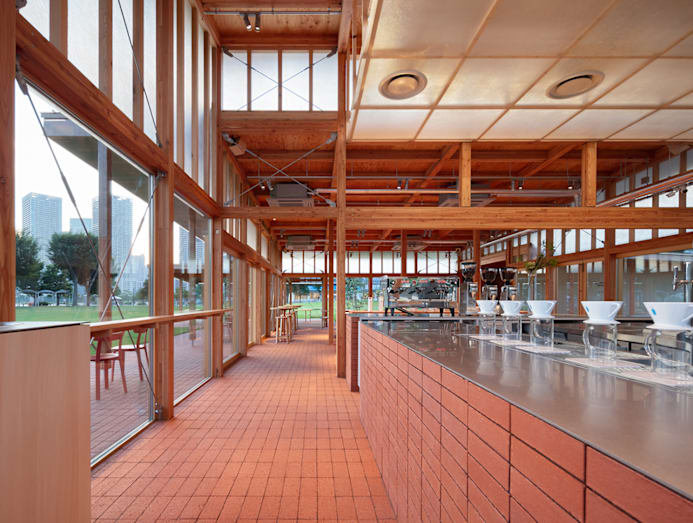 (Photo: Takumi Ota for Blue Bottle)
Schemata Architects has realised many interiors for Blue Bottle Coffee in Japan, but Blue Bottle Coffee Toyosu Park Cafe is the first stand-alone building it has designed for the American brand. Located in Toyosu Park overlooking Tokyo Bay, the cafe sits in a seaside park that is a favourite spot for locals. It is also just a 10-minute walk from teamLab Planets Tokyo.
The porous building is well connected to the surrounding lawn. Rather than one large space, it is divided into clusters of indoor, semi-indoor and outdoor pavilions, creating a more human scale. Conventional park hardscape brick floors and counters, a mix of hinoki and larch wood structures, and outdoor furniture – inspired the cafe’s material palette and interior details.
To check out nearby: Toyosu Market
If you’ve ever wondered where the former Tsukiji Market moved to, it’s here in Toyosu – only a five-minute drive or a 20-minute walk from Blue Bottle Coffee Toyosu Park Cafe. The modern update of the former wholesale seafood and produce quarters comprises three interconnected buildings. Visitors are not allowed onto the market floor, but there are galleries where you can look down on the famous daily fish auctions between 5.30am and 6.30am.
Advance reservations are required to access a special tuna auction observation deck that brings you closer to the action. There are also shops, restaurants serving the freshest seafood, and a rooftop garden with views of Tokyo Bay – with Tokyo Tower not too far away.
ALCHEMIST AOYAMA
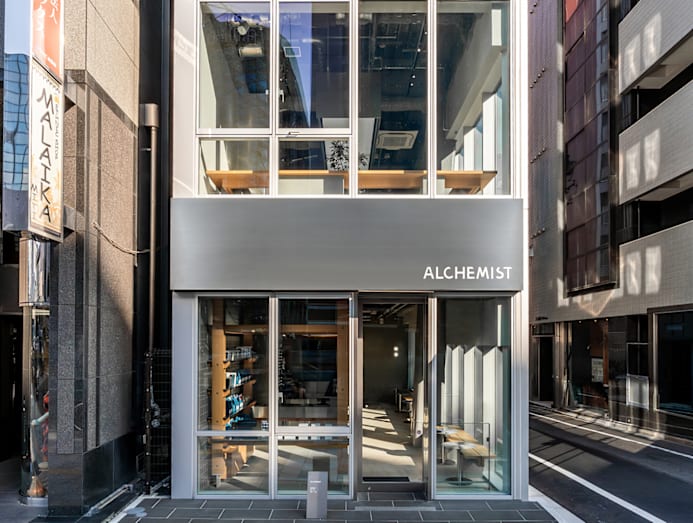 Alchemist Aoyama store. (Photo: Alchemist)
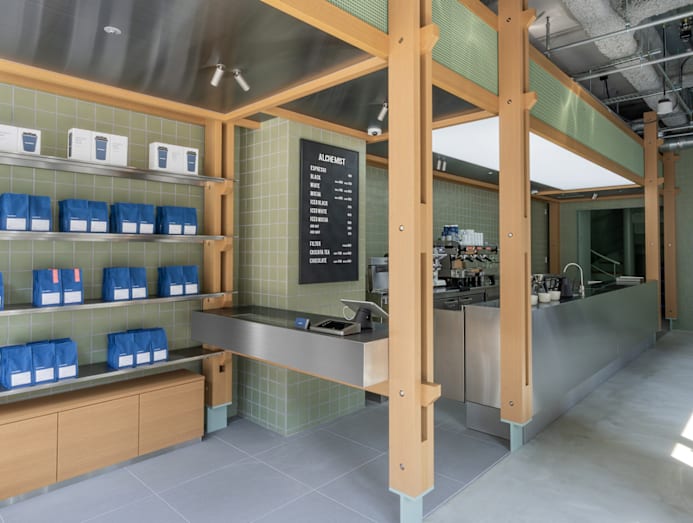 Alchemist Aoyama's interior. (Photo: Alchemist)
Singapore coffee brand Alchemist, founded by barista Will Leow, has expanded to Japan with not just one, but two shops. They are located in Asakusa and Aoyama, two of Tokyo’s most popular neighbourhoods. “We’ve long admired the rhythm and thoughtfulness of Tokyo’s coffee culture. We’re not here to reinvent the scene or stand out, just to quietly find our place and offer a thoughtful cup and a welcoming space,” said Leow.
Alchemist’s long-time collaborator, Wynk Collaborative, which created many of its Singapore locations, designed the two stores. They continue the modern, material-focussed sensibility of the Singapore stores. For example, the first store in Aoyama combines ceramic tiles, timber structures and stainless steel counters.
Don’t forget to check out: Yoku Moku Museum
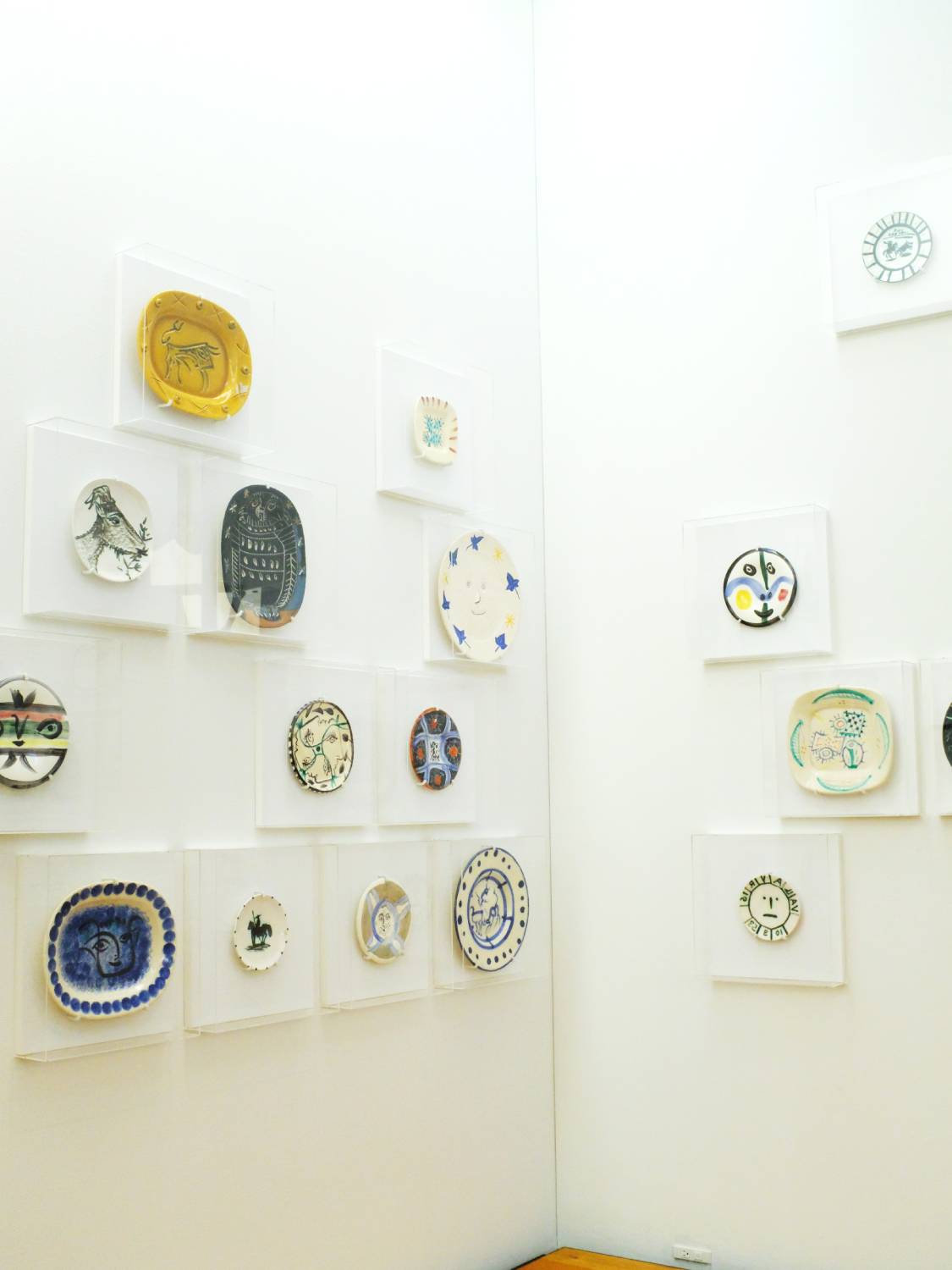 Yoku Moku Museum. (Photo: Luo Jingmei)
Yoku Moku is synonymous with crispy, cigar-like confectionery that is beloved by many. The brand opened the Yoku Moku Museum in 2020 near its flagship Aoyama shop, a 12-minute stroll from Alchemist Aoyama. The grandson of the brand’s founder, Toshiyasu Fujinawa, is an avid art collector who, over the course of 30 years, has amassed more than 500 ceramic works by Spanish artist Pablo Picasso. A selection is on display in the museum, whose residential scale matches the neighbourhood.
There are also ceramic elements throughout the museum designed by Japanese architect Yoshihiro Kurita – even in the signs and roof tiles. The museum celebrates creativity in both ceramics and confectionery – taking visitors on a journey that is inspiring, surprising and educational, beginning with the library on the first storey.
FUGLEN SANGUBASHI
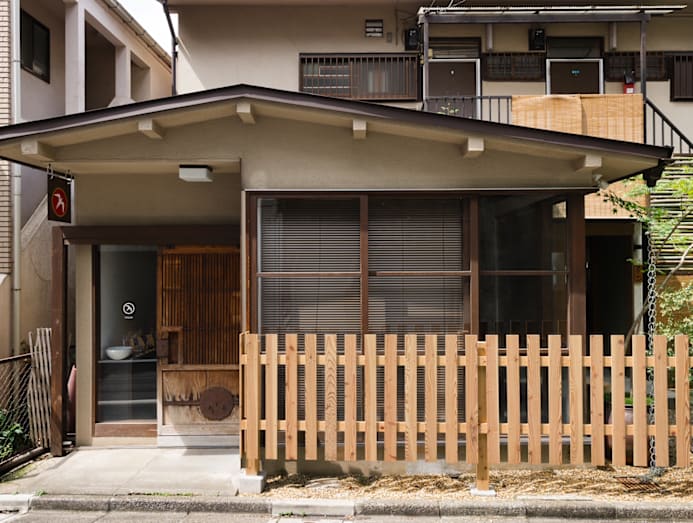 Fuglen Sangubashi. (Photo: Fuglen)
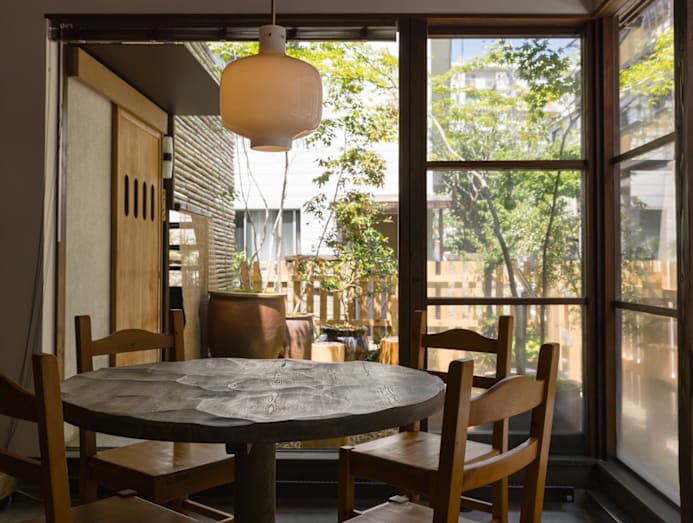 (Photo: Fuglen)
Fuglen is a coffee brand founded in 1963 in Oslo, Norway, serving both coffee and coffee cocktails. Its logo is a migratory tern, symbolising the brand’s sojourn out into the world – and specifically to Tokyo, where it opened its first overseas branch in Shibuya. Fuglen Sangubashi, which opened in January 2024, is its latest branch. It is housed in a transformed 59-year-old wooden house, with stone counters and handmade tableware.
“Sangubashi is a quiet, charming neighbourhood just a short walk from Shinjuku or Shibuya, yet feels worlds away from the city’s bustle,” said Keiya Takahashi, director of Fuglen Japan. “Using the same beans as our other stores, we explore new flavours, aromas and textures through hand-brew methods, including Norwegian ‘kokikaffe’ and other special preparations. This location allows us to offer a deeper, more immersive coffee experience in a calm, intimate setting.”
Don’t forget to check out: Yoyogi Park Be Stage
The 134-acre Yoyogi Park offers respite from Tokyo’s bustle. It is also home to Yoyogi National Gymnasium, designed by late architect Kenzo Tange for the 1964 Tokyo Summer Olympics. Just in front of this building with its iconic sweeping roof is Yoyogi Park Be Stage, which opened in spring 2025. The three-storey sports and wellness facility also includes F&B spaces, such as Tiki’s Tokyo – the first overseas location of the Waikiki-based grill restaurant.
The building also houses New Balance Run Hub Yoyogi Park, where visitors can find their perfect pair of running shoes via 3D measurements, and tourists can borrow shoes for a free test run in the park. Grab a coffee, smoothie or craft beer while watching skateboarders work on their grinds and land flip tricks in the skatepark in front of the building.
PARKLET IN MEIJI PARK MARKET
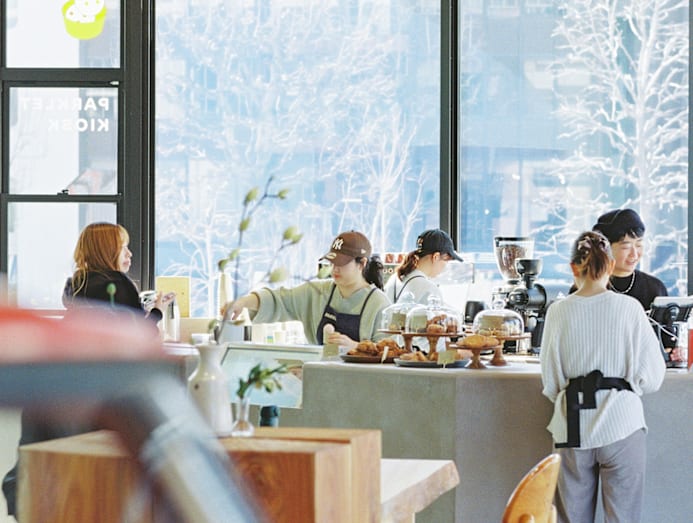 Parklet in Meiji Park. (Photo: Parklet)
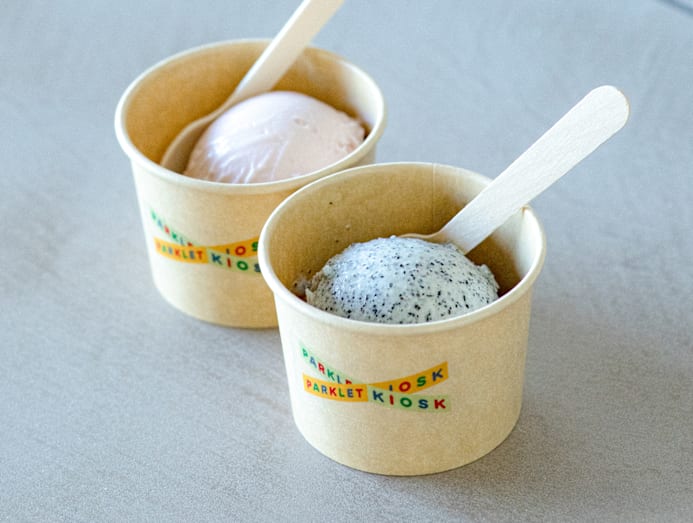 (Photo: Parklet)
In January 2024, Kengo Kuma & Associates (KKAA) completed a development in the Meiji Jingu Gaien vicinity that offers 7,500 sq m of green space and forest, named Mori no Hokori, or Pride Forest, across from the Tokyo Olympic Stadium – also designed by KKAA. It is near Sendagaya Station, as well as Gaienmae Station and Harajuku Station, depending on where you’re coming from.
In March 2024, the team behind Parklet – a popular bakery and cafe in Nihonbashi – opened Meiji Park Market here. The food hall has three eateries, including Parklet, which serves open sandwiches and salads alongside the naturally fermented sourdough breads and pastries its Nihonbashi branch is known for. Pair it with speciality coffee – and ice cream for the kids. For a grab-and-go treat to enjoy outdoors, Parklet Kiosk serves speciality coffee and ice cream. The third eatery, Baby J’s, brings the Sapporo brand’s famous buttermilk fried chicken to Tokyo for the first time.
Don’t forget to check out: Play Mountain
Japanese designer Shin Nakahara, who helms design company Landscape Products, is behind many hip stores in Sendagaya, including Play Mountain. The store sells original furniture pieces ranging from craft to mid-century modern styles, as well as chic interior goods.
It will be hard to leave empty-handed. Designs range from chic brass bookends and sculptures by Austrian coppersmith Carl Aubock to sculptural lamps by Takeshi Awaya, a Yokohama-based maker who creates objects from parchment-like sheep, goat and deerskin. The store also hosts regular fairs featuring various designers and artisans.
SINGLE O YURAKUCHO
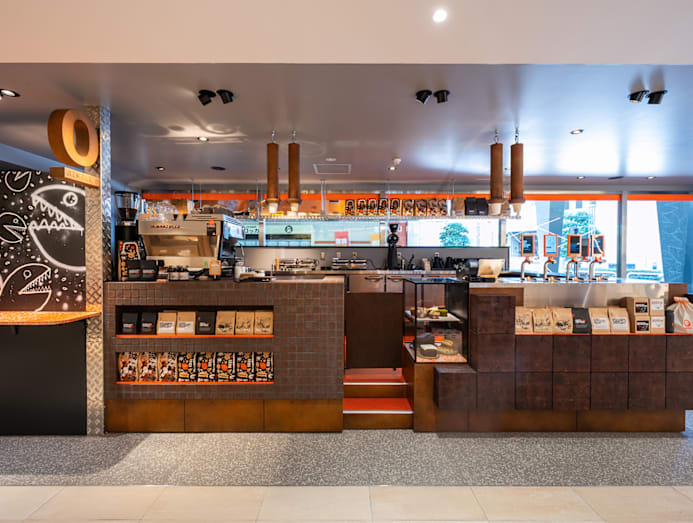 Single O Yurakucho. (Photo: Single O)
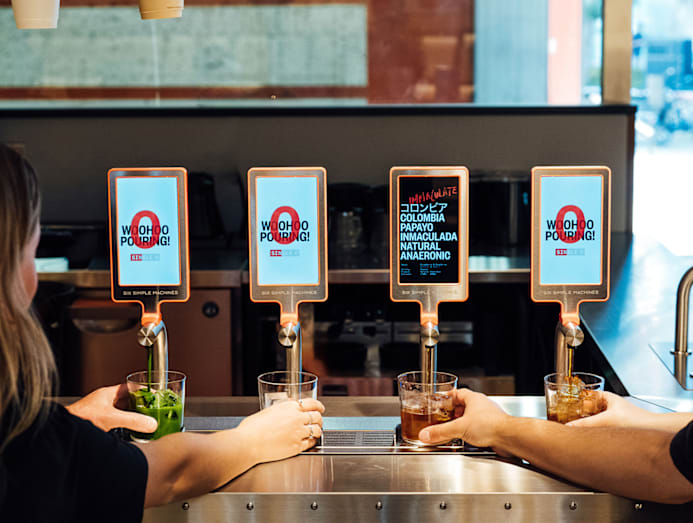 (Photo: Single O)
The Australian coffee roaster opened its fifth and newest Tokyo outlet in Yurakucho in June 2025. “We loved this Yurakucho venue from the start. It has the elements we like at Single O. It’s on a busy street corner, off the main drag like our cafe in Surry Hills, and only a short 500-metre walk from Ginza,” said Mike Brabant, CEO of Single O.
The grungy shop, outfitted by Australian design firm Luchetti Krelle, has recycled plastic tables by Defy Design, upcycled chairs by Flange Plywood and original artwork by renowned artist Ryuji Kamiyama. It also offers Freepour Batch Taps that can serve 18 people every 30 seconds. Directly connected to JR Yurakucho Station’s Ginza Exit in the Lumine Street precinct, the 14-seat venue is a perfect place to people-watch, with some 120,000 people passing through the busy station daily.
Don’t forget to check out: Tokyo International Forum
Across the street from Yurakucho Station is the Tokyo International Forum, designed by American architect Rafael Viñoly. The building boasts a cable-supported glass roof that minimises the need for heavy structural supports. Curved, ship-like steel structures above the 11-storey-high atrium make for a striking feature.
The building hosts important conferences, but it also stages community events in the outdoor plaza. One of these is the Oedo Antique Market – Japan’s largest outdoor antique market – where visitors can trawl through more than 250 stalls selling Japanese pottery, tableware, kimonos and accessories. It is held on the first and third Sunday of every month, from morning until late afternoon.