 3 months ago
100
3 months ago
100
analysis East Asia
Analysts say the rare same-day calls on Wednesday (Feb 4) were a calculated move by Beijing to assert its centrality and maximise leverage as great-power politics hardens.
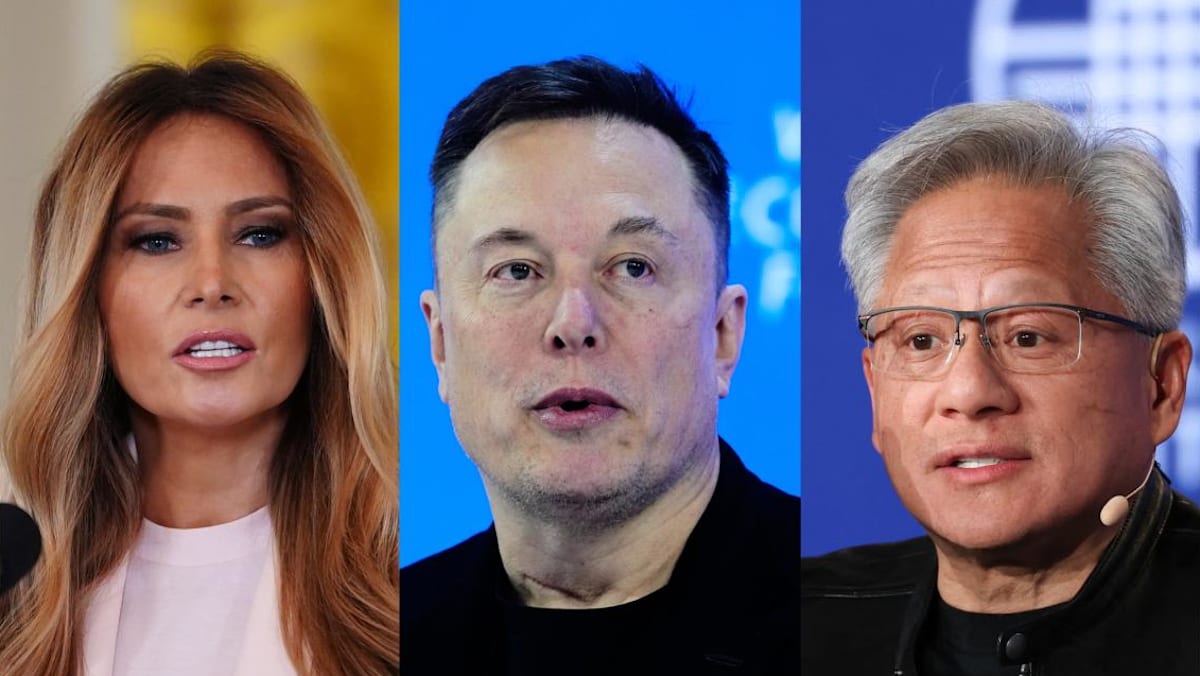
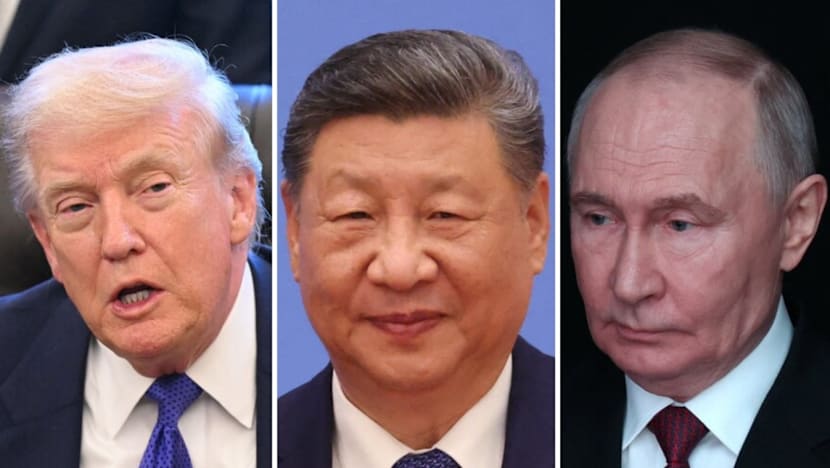 Chinese President Xi Jinping (middle) held back-to-back calls with Russian President Vladimir Putin (right) and US President Donald Trump (left) this week. (Photos: Saul Loeb/AFP, Ludovic Marin//AFP, Vyacheslav Prokofyev/AFP)
New: You can now listen to articles.

This audio is generated by an AI tool.

BEIJING: Chinese President Xi Jinping’s separate same-day calls with Russian President Vladimir Putin and United States President Donald Trump were a calculated move by Beijing to assert its centrality as great power geopolitics returns to the fore, analysts told CNA.
The back-to-back calls on Wednesday (Feb 4) came a day before the last remaining nuclear arms control treaty between the US and Russia lapsed - heightening uncertainty over strategic stability and lending fresh urgency to high-level engagement among major powers.
Set against sharpening rivalry, mounting nuclear risks and a fraying global order, Beijing was projecting itself as a major power with options, leverage and clearly defined priorities, experts said.
“Xi is flexing,” Chong Ja Ian, an associate professor of political science at the National University of Singapore (NUS) and also a non-resident scholar at Carnegie China, told CNA.
“(Xi) is showing that he is central to key developments,” he said, providing “some degree of assurance to Putin that he can manage Trump” and signalling to Trump that he has other options.
“Beijing sees itself in a position of strength with both the US and Russia,” Chong said.
“China is a pivotal major power,” said Ren Xiao, a professor at Fudan University’s Institute of International Studies (IIS) in Shanghai, who pointed to the order of the calls. Xi held a virtual meeting with Putin before speaking with Trump later that evening.
“The order of the calls reflects close coordination and communication between Beijing and Moscow,” he said.
China was underscoring the re-emergence of great-power politics, with Washington, Beijing and Moscow once again dominating global calculations, experts said.
DIVERGENT MESSAGES
Official readouts from Beijing, Moscow and Washington underscored sharply different priorities.
According to reports published by Chinese state media outlets, Xi and Putin held a virtual meeting on Wednesday that was broadcast from the Great Hall of the People in Beijing and the Kremlin in Moscow respectively.
“Xi extended New Year greetings to Putin and the Russian people … Putin wished Xi and the Chinese people a happy Spring Festival, vibrant energy and immediate success in all endeavours,” read a report by the Xinhua state news agency.
“Xi said China and Russia should work together to maintain global strategic stability as the international situation has become increasingly turbulent since the beginning of the year,” the Xinhua report read.
Putin “expressed full confidence in Russia-China relations”, the report said, also adding that “both sides should continue to support each other steadfastly in safeguarding their national sovereignty and security”.
Russian state media reports framed Xi and Putin’s exchange as warm and friendly - with Putin describing the China-Russia relationship as being “in an eternal bloom”.
“Xi sees Putin as a good friend and is ready to move dialogue between the two forward,” TASS, Russia’s state news agency, reported.
According to TASS, Putin had called cooperation between the two countries exemplary while Xi said China and Russia were “successfully defending global justice and relations are entering a new stage of development”.
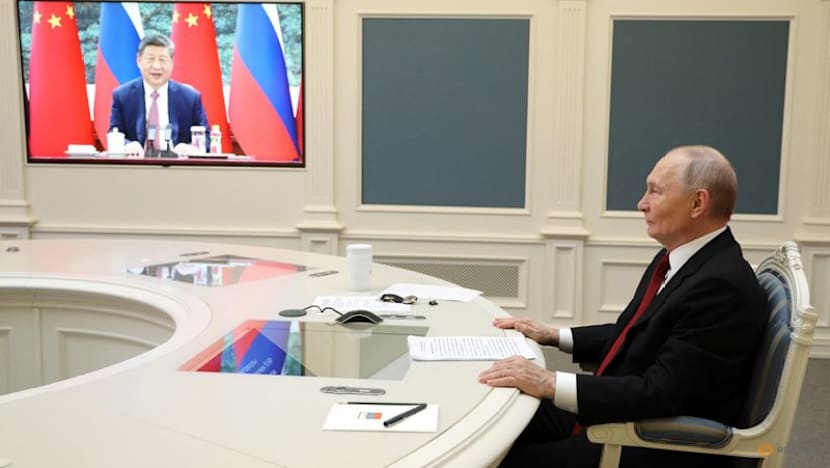 Vladimir Putin speaks with Xi Jinping via video link from Moscow on Feb 4, 2026. (Photo: Vyacheslav Prokofyev/Pool via Reuters/Sputnik)
Later that evening, Trump hailed “very positive talks” with Xi. Writing on Truth Social, Trump said the call was “all very positive” and that his relationship with Xi is “extremely good”.
“We both realise how important it is to keep it that way,” he added.
Both leaders had also discussed a wide range of issues including Taiwan and soybean purchases ahead of Trump’s expected visit to China in April.
STRATEGIC CHOREOGRAPHY
It remains unclear which leader initiated each call, with state media reports offering no indication.
But analysts noted that the choreography carried strategic significance.
“It is rather rare for top leaders of such calibre to talk to each other on the same day,” said Zhang Xin, an associate professor at the School of Politics and International Relations at East China Normal University in Shanghai, adding that it highlighted the growing urgency for dialogue among major powers.
“There is (also) an increasing sense of urgency that China, together with Russia and other international actors, needs to prepare for the management of an increasingly abusive and irresponsible US and consequent chaos,” he said.
The calls also underscored that no major security or diplomatic recalibration could take place without China at the table, Chong said.
“It shows that China has options and is not restrained by any other actor,” he added.
“Hedging is for the weak”, said Chong, arguing that Xi and Beijing were acting from a position of strength - keeping channels with Washington open while maintaining alignment with Moscow.
For Beijing, the back-to-back calls sent a clear message of resolve, analysts said, particularly on issues it defines as core interests.
In Chinese state media reports, Xi struck a steadying tone on US-China relations while issuing a pointed warning on Taiwan and arms sales, as Trump’s account highlighted a more transactional agenda - agricultural purchases and his expected April visit to China.
Beijing doubled down on its Taiwan red lines a day after the call.
China’s Taiwan Affairs Office said the issue lies at “the core of China’s core interests” and constitutes the first red line in China-US relations that must not be crossed.
At a regular briefing on Thursday, spokesperson Chen Binhua said President Xi’s remarks had set out China’s firm position on Taiwan and provided clear guidance for policy towards the island.
The US, Chen said, should adhere to the one-China principle and the three bilateral joint communiqués, and handle Taiwan-related issues with extreme caution.
Beijing is pressing Washington to curb arms sales to Taiwan, but is not signalling any corresponding reduction in its own military pressure - reinforcing that stability, from China’s perspective, does not imply concession, Chong said.
CALIBRATING A NEW WORLD ORDER
Taken together, analysts said the calls point to a broader Chinese calculus about how power should be managed in a less orderly, more contested world - not by choosing sides, but by maximising room for manoeuvre as great-power politics hardens.
The risks, however, are not absent.
A perception in Washington that Beijing is overplaying its hand could provoke a backlash if Trump feels slighted, Chong from NUS said.
Even so, Trump’s own priorities - securing a high-profile visit to Beijing and maintaining a measure of stability in trans-Pacific ties - make a sharp response unlikely.
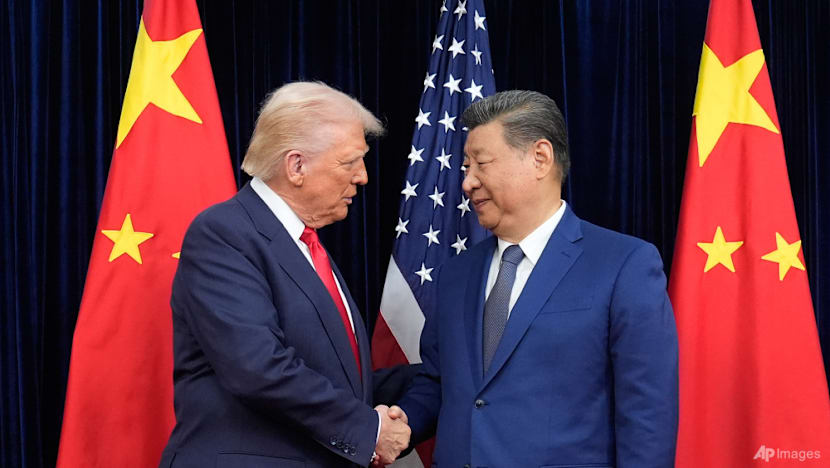 Donald Trump and Xi Jinping shake hands at the Gimhae International Airport in Busan, South Korea on Oct 30, 2025. (Photo: AP/Mark Schiefelbein)
Moscow, meanwhile, is in little position to press Beijing for concessions, given Russia’s growing dependence on China amid its ongoing war in Ukraine, Chong said.
In that conflict, China is already signalling how far it is prepared to go and where its limits lie, said Zhang from East China Normal University.
Outcomes that risk nuclear escalation or extend NATO’s footprint into the Asia-Pacific would be unacceptable, Zhang added - underscoring Beijing’s preference for shaping conditions rather than brokering deals.
The same logic applies to global governance. Rather than abandoning the UN-centred order, China views emerging platforms such as BRICS as complementary mechanisms that can operate alongside existing institutions - allowing Beijing to work both within and beyond the current system, Zhang said.
Beyond the calls, Beijing appears intent on shaping a looser, more flexible model of great-power interaction as traditional arms-control regimes lapse and US-led initiatives fragment.
In this emerging approach, China is not offering a blueprint so much as asserting a principle: stability, engagement and cooperation remain possible in a more contested world - but only on terms that reflect a redistribution of power, and only if Beijing remains firmly at the centre.