 3 months ago
102
3 months ago
102
SINGAPORE: Singapore is introducing measures such as mandatory isolation for measles cases, contact tracing and quarantine of some close contacts, after detecting a rise in infections.
Eleven measles cases were recorded in January, compared with two cases in the same month last year. There were 27 cases for the whole of 2025.
Of the 11 cases, laboratory testing confirmed that three were genetically linked, even though they had no known contact with each other.
"This suggests the possibility of undetected local transmission in the community," the Communicable Diseases Agency (CDA) said in a media release on Friday (Feb 6).
"Epidemiological investigations are ongoing."
All 11 cases in January were not fully vaccinated, including three infants under 12 months old who were not yet eligible for the measles, mumps and rubella (MMR) vaccination. Seven cases had travelled overseas recently.
Apart from one tourist, the others live in Singapore. CDA said no further information about the 11 cases would be given to protect patient confidentiality.
“The increase reflects a worldwide trend, with the World Health Organization (WHO) reporting 11 million measles infections globally in 2024 - exceeding pre-pandemic levels by 800,000 cases,” CDA added.
What is measles?
- Measles is an acute and highly contagious viral disease caused by the measles virus.
- Symptoms normally appear 10 to 12 days after contact with a contagious person. Early symptoms include coughing, runny nose, red eyes, tearing and fever.
- Two to four days after the initial symptoms surface, bluish-white spots called Koplik’s spots may appear inside the cheeks and may be accompanied by a skin rash spreading across the face, neck, trunk, limbs, palms and soles of the feet.
- Some may also experience diarrhoea, vomiting and inflammation of the eyes. In severe cases, measles may cause encephalitis - an inflammation of the brain that can result in permanent impairment.
- The disease primarily transmits through inhalation, direct contact with infectious particles when an infected person coughs or sneezes, or contact with contaminated surfaces that have infectious particles.
- The incubation period is typically between eight and 14 days, although it can range from seven to 21 days.
- The infectious period usually ranges between four days before and up to four days after the onset of rash.
Collapse Expand
MEASURES AGAINST MEASLES
Given the rise in measles cases, Singapore authorities are stepping up precautionary public health measures.
These include mandatory isolation of confirmed cases until they are no longer infectious. Cases who are not admitted to hospitals will be placed on home isolation, and random video calls will be conducted to ensure they comply with the rules, CDA said.
Measles is already a legally notifiable disease in Singapore. Previously, isolation measures took the form of an advisory.
“Now these new measures will include an isolation order, legal order to remain isolated," CDA’s group director of communicable diseases programmes Lim Poh Lian told reporters.
Contact tracing will be conducted for all infected cases.
High-risk close contacts such as infants, non-immune pregnant women and immunocompromised individuals will be offered post-exposure prophylaxis (PEP) to mitigate the risk of severe symptoms in case of an infection. PEP involves administering the MMR vaccine.
Close contacts who are unvaccinated will be placed under home quarantine - unless their homes are assessed to be unsuitable - for up to 21 days to minimise the risk of transmission in the community. Random video call checks will also be conducted to ensure they remain at home.
If these individuals complete their vaccinations, receive PEP or are tested to be immune during quarantine, they will be able to end their quarantine.
"However, if individuals work in high-risk settings such as hospitals or infant and childcare centres, they will be issued hospitalisation leave until 21 days after exposure to the virus," said CDA.
“Individuals who fail to comply with any home isolation or quarantine order issued under the Infectious Diseases Act may be guilty of an offence and be liable on conviction to imprisonment and/or a fine.”
Casual, non-close contacts will be advised to monitor their symptoms.
Medical practitioners are also advised to be vigilant for measles cases, particularly in patients who have recently travelled overseas or who have not been fully vaccinated. Suspected cases should be reported to CDA promptly, the agency said.
"We want to make sure with the quarantine order and people who are already high-risk close contacts, that … we're limiting transmission in the community,” said Associate Professor Lim.
 Group Director for Communicable Disease Programmes Lim Poh Lian speaking to media on public health measures stepped up as measles cases rise globally and in Singapore at MOH on Feb 6, 2026. (Photo: CNA/Raydza Rahman)
GET VACCINATED
Measles is a highly contagious respiratory virus spread through droplets when an infected person coughs, sneezes or simply breathes. It can cause serious complications, including pneumonia and encephalitis, especially in children younger than five years old.
The infectious period typically begins up to four days before and after a rash appears.
Vaccination is the best way to prevent measles infection, CDA said.
“The MMR vaccine is highly effective and safe, and confers long-term immunity after completion of the recommended doses," CDA said.
"High vaccination coverage not only protects individuals but creates herd immunity within the Singapore population that protects those who are unable to receive vaccinations, such as infants under 12 months old and severely immunocompromised individuals."
Under the Infectious Diseases Act, measles vaccination is compulsory for children under the age of 12 living in Singapore. The first two doses of MMR vaccination are recommended at 12 months and 15 months.
Parents are advised to ensure their young children receive the first two doses of the MMR vaccination on time.
Adults without previous vaccination or evidence of past infection or immunity should receive two MMR doses under the National Adult Immunisation Schedule. Adults who are unsure about their vaccination status or who have not been vaccinated with two doses should consult their healthcare provider about receiving the MMR vaccine.
MMR vaccination is available at polyclinics, general practitioner clinics and private paediatric clinics.
Singaporeans who meet the criteria for vaccination will receive subsidies at Community Health Assist Scheme (CHAS) GP clinics and polyclinics. Permanent residents who meet the criteria for vaccination will receive subsidies at polyclinics.
Health Minister Ong Ye Kung said 99 per cent of adults in Singapore have immunity against measles, largely due to the national vaccination programme.
"Hence the virus will find it hard to spread. But if our immunity coverage falls below 95 per cent, we may start losing our herd immunity," he said in a Facebook post.
"We are keeping a close watch on the situation and will adjust our measures where needed to ensure our community is protected."
PRECAUTIONS FOR TRAVELLERS
Speaking to reporters, Senior Minister of State for Health Koh Poh Koon cautioned frequent travellers to remain vigilant and to take necessary precautions.
"For Singaporeans who like to travel a lot, I think we need to take care. If you have symptoms and you're not sure, see a healthcare provider, get yourself treated or diagnosed," he said.
"If you have come to contact with others who may be measles affected case, then protect yourself and others around you by taking all the necessary precautions, hygiene, self precautions that we have actually all done and practised before during the covid crisis."
Responding to a question on why border control measures - similar to the recent ones taken for Nipah virus - were not considered for measles, Dr Koh said the approach taken for measles is different as the country already has "herd immunity".
There is no vaccine for the Nipah virus.
"But for measles, we actually have already have herd immunity in Singapore, and that's why the approach we take is quite a different one compared to Nipah virus," Dr Koh said.
"But of course, in all infectious disease cases, the general guidance is clear that for every one of us, practice personal hygiene, and if there's a chance for any vaccine that can be taken to protect ourselves and our family, we should all do so.
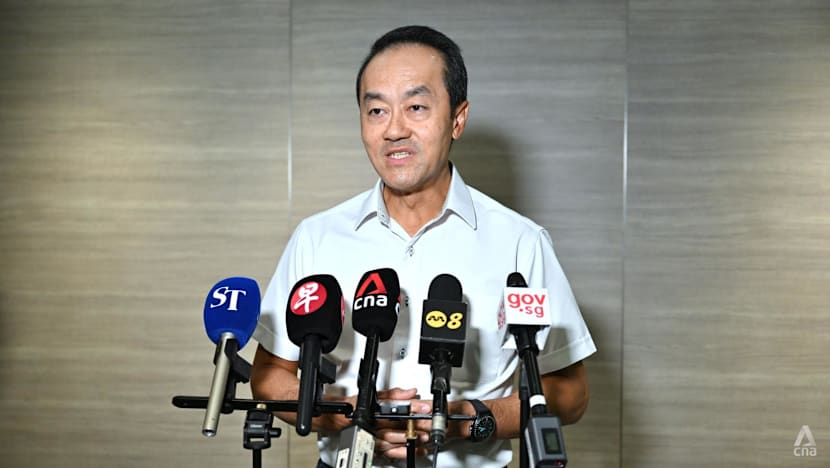 Senior Minister of State for Manpower and Health Koh Poh Koon speaking to media on public health measures stepped up as measles cases rise globally and in Singapore at MOH on Feb 6, 2026. (Photo: CNA/Raydza Rahman)
Dr Koh added that authorities will work with international partners to monitor the trend of any viral outbreaks around the world.
"Our experts within CDA will also keep a close contact with their counterparts, and in this way, we have, so-called some form of early warning to alert us to any developing trends.
"Depending on the characteristics of the virus and the disease itself and the nature of our herd immunity here, we will then have to craft a series of measures and inform the public - something that I think all of us are quite familiar, having gone through COVID in the recent past."
Measles returned to the spotlight after the United States reported an outbreak early last year. Infections were confirmed in dozens of states, with Texas accounting for over 60 per cent of the outbreak.
Canada, which officially eradicated measles in 1998, saw thousands of cases last year.
According to the US Centers for Disease Control and Prevention, six of the top 10 countries with measles outbreaks between June and November 2025 are in Asia. The country with the largest number of cases is Indonesia, with 14,406 infections. Vietnam and the Philippines have also seen a rise in cases.