 2 months ago
96
2 months ago
96
After a year-long hiatus, chef Tomoo Kimura is back with Sushi Kimura Plus — a 650 sq ft, eight-seat restaurant built from 12 years of searching for the perfect space, complete with rare new ingredients and a renewed focus on personalised dining.
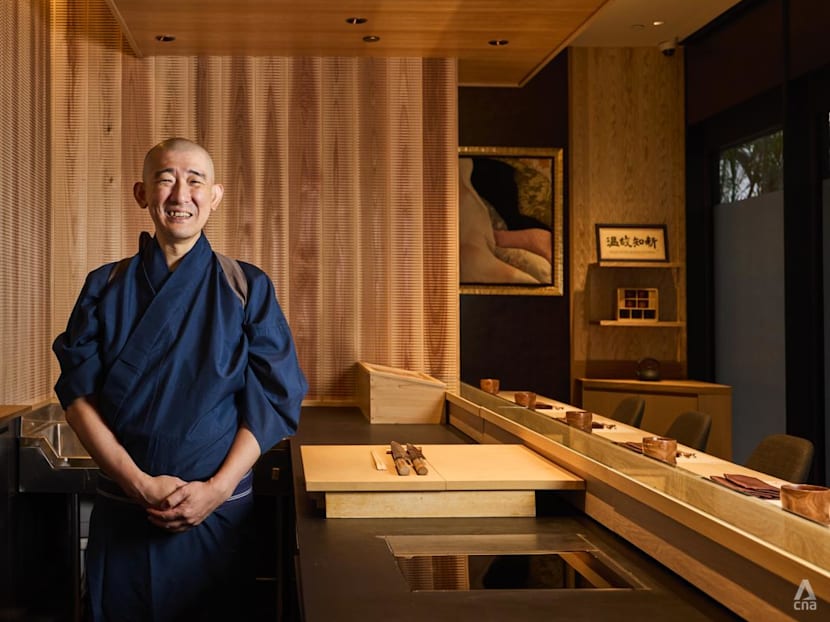
Chef Tomoo Kimura is gearing up to open his new restaurant, Sushi Kimura Plus. (Photo: CNA/Aik Chen)
New: You can now listen to articles.

This audio is generated by an AI tool.

After a year-long hiatus, Sushi Kimura returns as Sushi Kimura Plus.
The restaurant, which had a Michelin star when it closed in Nov 2024, is relaunching at the Conrad Singapore Orchard hotel in Cuscaden Road.
Currently hosting friends and regulars, it will officially open at the end of the month and begin taking reservations on Jan 2.
Sushi Kimura Plus is the culmination of a 12-year search for the perfect location, chef Tomoo Kimura told CNA Luxury.
While his previous restaurant had 22 seats, this has just eight.
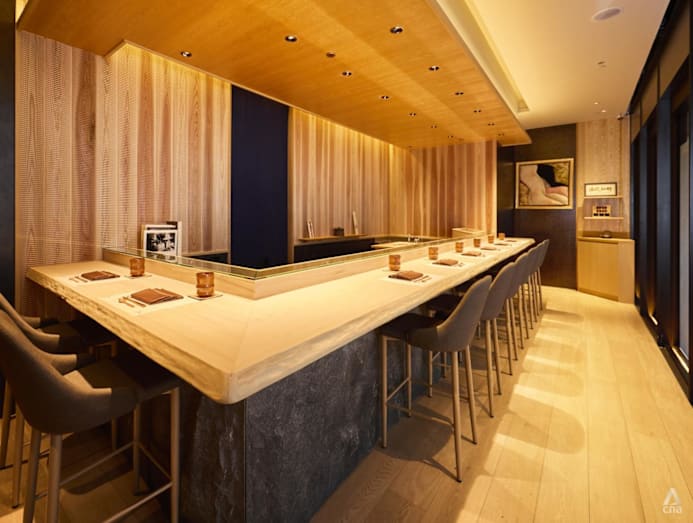 (Photo: CNA/Aik Chen)
“For over 12 years, I tried to find a unit this size,” he said, adding that a location within a hotel was on his wish list. He explained: “A sushi restaurant needs an exhaust and grease trap. Most small units don’t have those, and to install them would be a costly investment. I finally found this unit.”
Previously occupied by Shoukouwa Shinjidai, the restaurant has a cosy 650 sq ft of space. “This is, I think, my best layout,” said the 48-year-old who has lived and worked in Singapore for the past 14 years.
With just eight counter seats, “I don’t need to hire so many chefs and staff.” And, he can give personalised attention to each guest. “In the past, there had to be a minimum of three chefs, including me. Sometimes, when people are served by different chefs, the experience is different.”
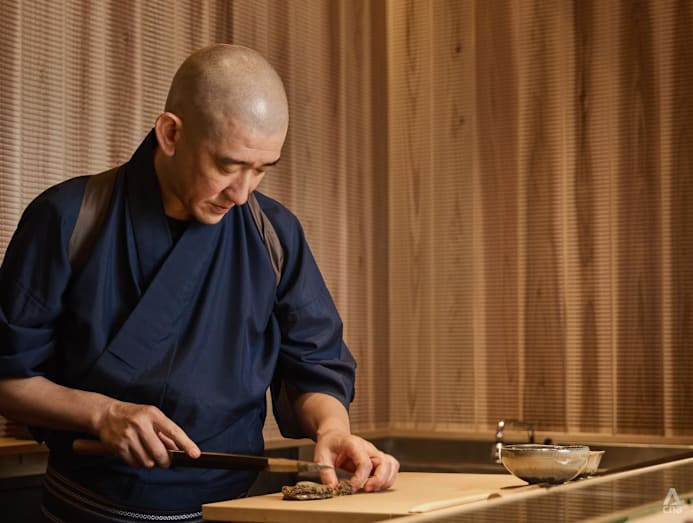 (Photo: CNA/Aik Chen)
There is also now just one fixed menu — lunch at S$250 and dinner at S$380 — instead a choice of two or three menus.
Famous for sourcing produce directly from farmers and fishermen in Japan, Kimura is also returning with some new ingredients he’s excited about after spending the last year travelling and cooking at events. “The supply is much stronger than before,” he said.
For example, he’s added three new farmers to his lineup, one of whom grows organic radishes in Akita prefecture, and then smokes them. “The smoked radish pickles you get on the market are factory-made. They’re very hard and too smoky. But this one is still tender and the smoke is not so strong — just nice for sushi. The quality is totally different.”
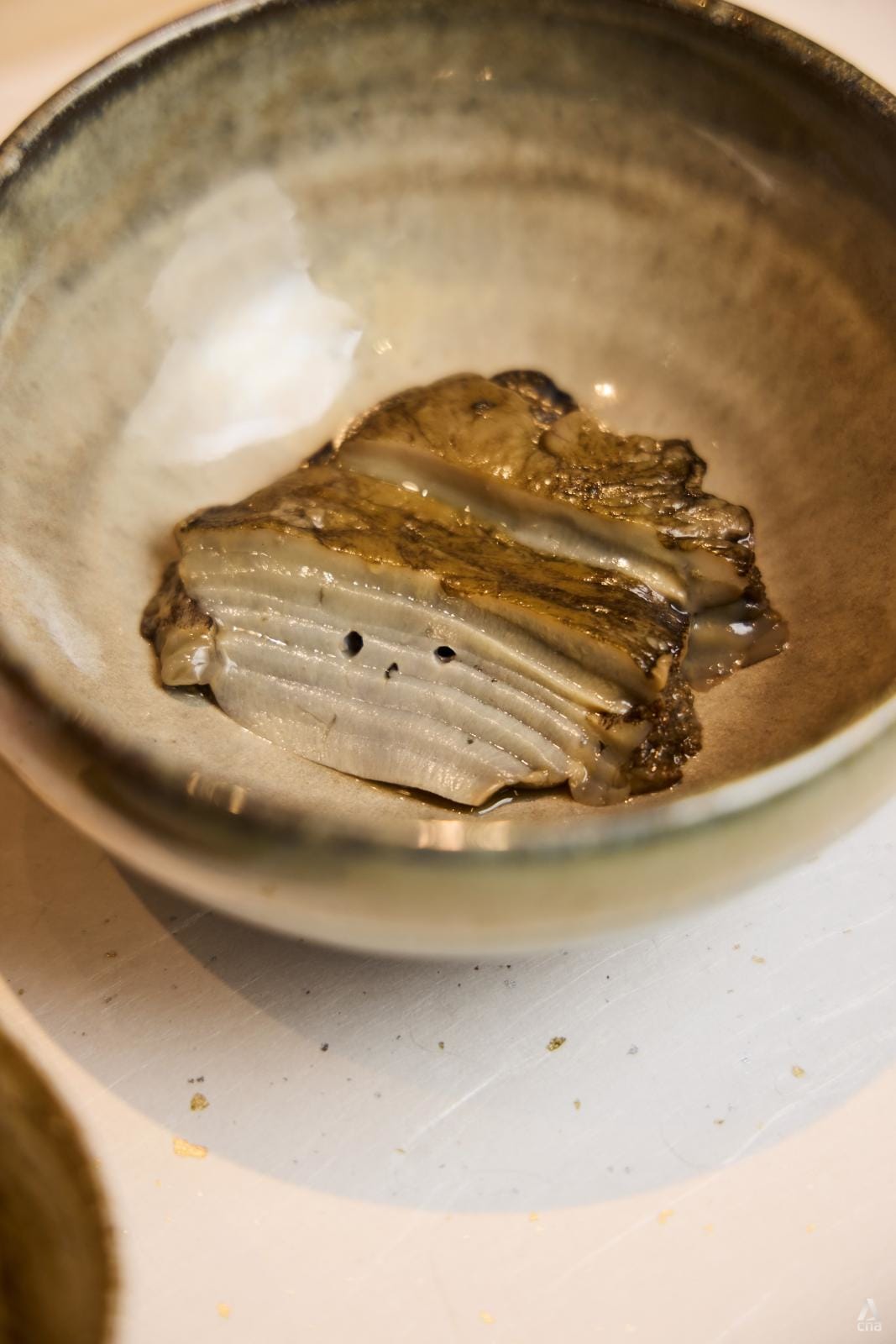 The freshest abalone is served with a sauce made with its own liver (Photo: CNA/Aik Chen)
There’s also a new Atsuba Aosa seaweed from Kochi prefecture, which he found via a longtime friend; it will be used to flavour the shari as well as in soups. “This is a very unique item — a special, freshwater seaweed. It’s very precious and rare. Even in Japan, everybody wants to use it, but it’s very rare.”
His career is 28 years old, he pointed out, so he’s been able to form many relationships not only with producers but also with chefs cooking at a similar level. “So, we can find exactly what we want.”
This includes wasabi that grows at the base of Mount Fuji, rice that is cultivated in very limited quantities by “my friend, the best organic farmer in Yamagata prefecture” and white fish caught in his hometown in Kanagawa prefecture by another friend, “one of the most famous fishermen who also does spear hunting. Most of the two- and three-michelin star restaurants in Japan — not only sushi, also Chinese and French restaurants — use his fish because the quality is totally different.”
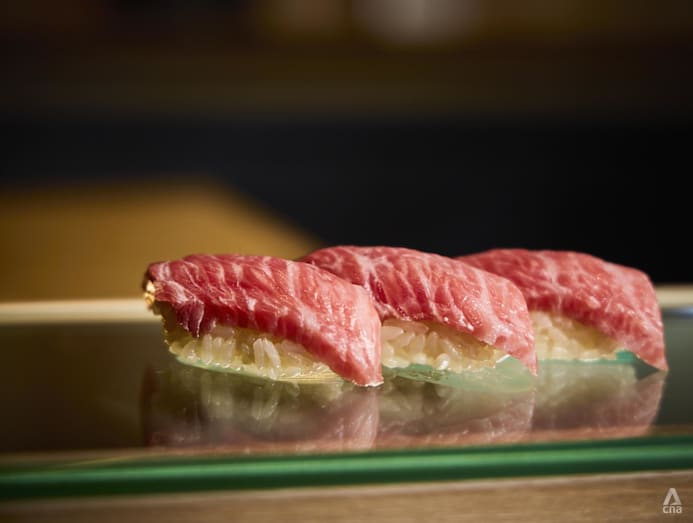 (Photo: CNA/Aik Chen)
He has new toys to play with, like a top-of-the-line rice cooker from Japan that was specially ordered to be compatible with Singapore’s voltage specifications. Instead of cooking rice in a claypot over fire the traditional way, which relies on the chef’s expertise and experience, “it can be programmed, so anybody can use it, even junior chefs”. And, the rice is “nicer”, he said.
In a climate where staffing costs are astronomical, smart processes like these make a difference. At the previous Sushi Kimura, “We could still make profits, but we couldn’t grow.” Here, with fewer seats, “We still can grow.”
He’s now also the sole owner, so he doesn’t have to answer to business partners about profit margins. “If I can pay my staff their salaries and our earnings are stable, that is good enough. I think this is my strongest point compared to the old place,” he said, explaining that he doesn’t have to think about things like cutting costs or passing costs on to the customer. “I still have responsibilities, but the purpose of the business is different.”
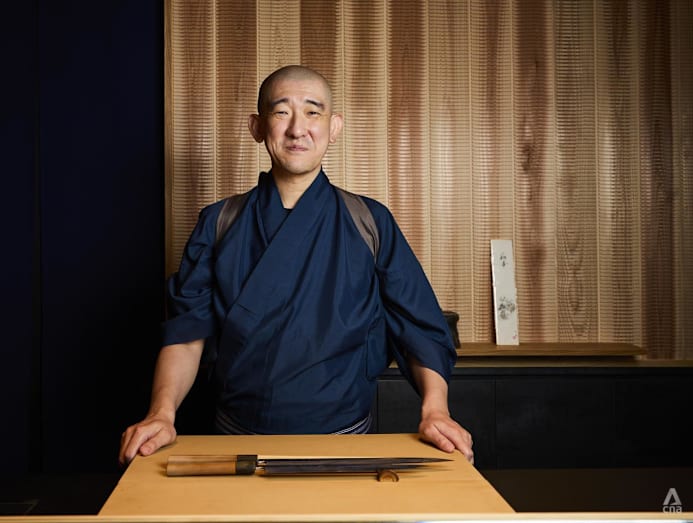 (Photo: CNA/Aik Chen)
With new plates from a Japanese potter friend on their way, and artwork by an artist friend made using kimonos that belonged to his ancestors five generations ago going up on the walls, the restaurant is almost ready to welcome its guests.
“Luckily, my regulars haven’t forgotten me,” he quipped. They have sent congratulatory messages and inquired about making bookings.
“I hope to be here for a minimum of 20 years,” Kimura mused. “Hopefully, I can make sushi until I’m 80 years old.”
What would make him the happiest? If customers’ grown-up children return to dine, he said. “My longest customers have been coming for 14 years. Back then, their children were six or seven. Now, they’re over 20 and they bring their girlfriends, boyfriends. This is the happiest thing — to see family generations still remember me.”
Sushi Kimura Plus is at 1 Cuscaden Road #01-03, Conrad Singapore Orchard.