 2 months ago
71
2 months ago
71
NEW DELHI: India is polishing a new gem in its economic crown – lab-grown diamonds.
While it trails the glitter of the natural diamond trade, the industry is expanding fast – growing at nearly 15 per cent per year, according to analysts.
This comes as India seeks to boost its position as the world’s leading integrated diamond hub.
CHEAPER THAN MINED DIAMONDS
For jeweller Shaurya Taneja, the future is already on display in his showroom.
Nearly half of the pieces he sells are made not from mined stones, but from diamonds grown in laboratories that sparkle just as brightly but are far more affordable.
Synthetic diamonds can sell for 50 to 90 per cent less than their natural counterparts. A one-carat mined diamond that costs about US$1,000 could have a lab-grown equivalent priced at just a few hundred dollars.
That price difference is resonating with younger, more cost-conscious buyers.
“You won't be too sad if the diamond falls out or if you lose a diamond, because you could just get it as easily replaced and at a cheaper price point," explained Taneja.
Beyond affordability, lab-grown diamonds also do not carry the ethical baggage long associated with the mining industry, such as human rights abuses and environmental damage.
Industry data suggests India’s lab-grown diamond market, currently worth about US$400 million, could more than triple to over US$1.5 billion within the next decade.
While India is unlikely to rival China – which still dominates global synthetic diamond production – analysts believe the South Asian country has a different advantage.
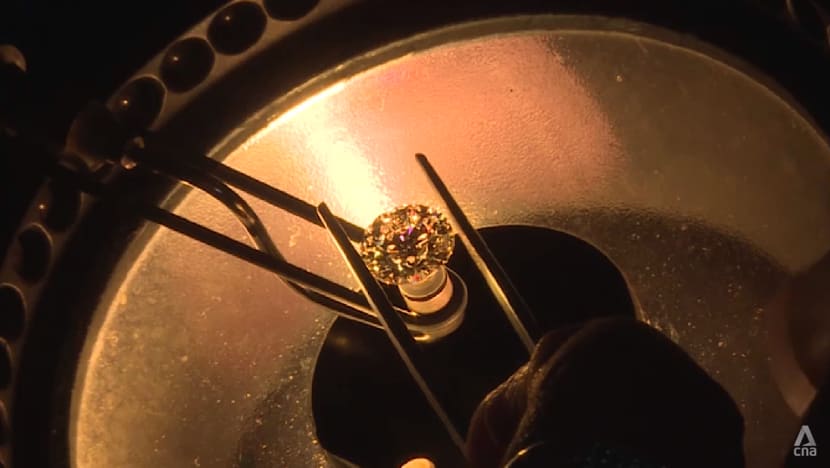 India already cuts and polishes 90 per cent of the world’s diamonds, both natural and synthetic.
CUTTING, POLISHING ADVANTAGE
India already cuts and polishes 90 per cent of the world’s diamonds, both natural and synthetic.
Much of that work happens in Surat in the western state of Gujarat – the country’s diamond capital – where lab-grown stones are now cut and polished alongside their mined cousins.
To move up the value chain, India is betting big on Chemical Vapour Deposition (CVD) technology, which is a cleaner, high-tech process used to grow diamonds layer by layer in controlled laboratory conditions.
With government backing, increased research and development, and lower import duties on diamonds, India hopes to become a one-stop shop for lab-grown gems.
India’s strength lies in integration, said Olya Linde, a partner at global management consulting firm Bain & Company.
She added that it is about owning the entire value chain – from growing stones and cutting them to selling finished jewellery in markets like Europe and the United States.
Yet at home, technology still collides with tradition, said observers.
For weddings and heirlooms, many Indians continue to see natural diamonds as the only true store of value, they added.
“Diamonds are an investment for our children’s future,” said New Delhi resident Rakesh Bacchawat.
“I consider lab-grown diamonds artificial, so I don’t think their value will appreciate much in the future.”
Another Delhi resident Nitesh Jain said: “Real diamonds can’t be compared to lab-grown diamonds. If you can’t afford it, buy the smallest diamond you can, but buy a real diamond.”