 2 months ago
75
2 months ago
75
Companies that rely on skilled workers to keep global trade moving are increasingly worried about the impact on long-term operations.
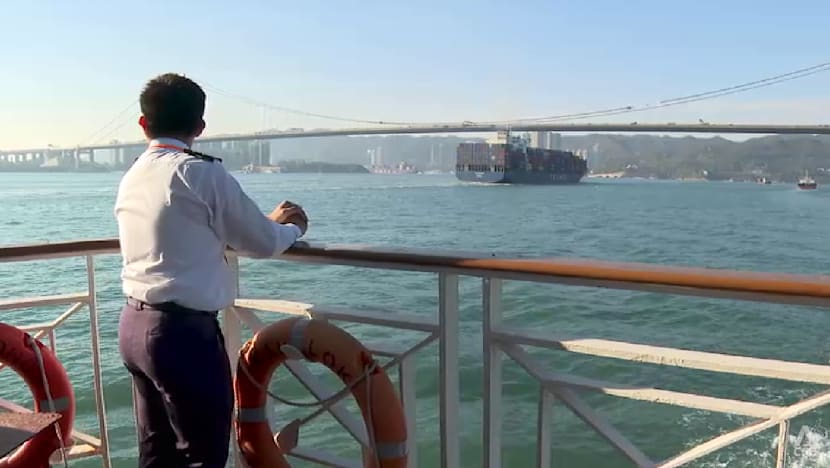
Hong Kong’s shipping industry is grappling with a talent shortage, raising concerns for one of the world’s busiest ports.
New: You can now listen to articles.

This audio is generated by an AI tool.

HONG KONG: Hong Kong’s shipping industry is grappling with a talent shortage, raising concerns for one of the world’s busiest ports.
In 2024, the number of people working in the shipping industry dropped by about 5 per cent from 2020.
Companies that rely on skilled workers to keep global trade moving are increasingly worried about the widening manpower gap and its impact on long-term operations.
WANING INTEREST
Ship management service provider Fleet Management Limited, which operates in major ports across Asia, said the shortage is becoming more widespread.
“At the moment, we have about 8 per cent shortage of that, and this is predicted to grow to 10 per cent in the next five to 10 years,” said its CEO Rajalingam Subramaniam.
“Even with the current geopolitical scenarios, global trade is increasing,” he added.
This comes even as United States President Donald Trump’s tariff war severely disrupted global logistics and supply chains.
Much of the shipping industry operates out of public view, making its importance easy to overlook, industry watchers said.
“Shipping provides or moves more than 80 per cent of global trade,” said Rajalingam.
“There's a growing need for manpower into this industry, but the pace of bridging the gap is not fast enough. It needs to move. It needs to accelerate faster.”
Industry players attributed one of the reasons for declining manpower to a waning interest in maritime careers.
Sean Tse, a final-year student at the Hong Kong Maritime Service Training Institute, said many of his classmates have dropped out of the two-year higher diploma programme in maritime studies.
The cohort shrank from 29 students in the first year to about 19 in the second year.
“The reason so many have left could be that some students, after a year, realised they are not sure about working in this industry and considered switching careers,” said Tse, whose ambition is to become a boat captain.
“Some students might develop personal relationships such as getting a girlfriend, and they worry that if they go to sea, they might lose their girlfriend,” added the 20-year-old.
“This makes them not want to pursue a maritime career.”
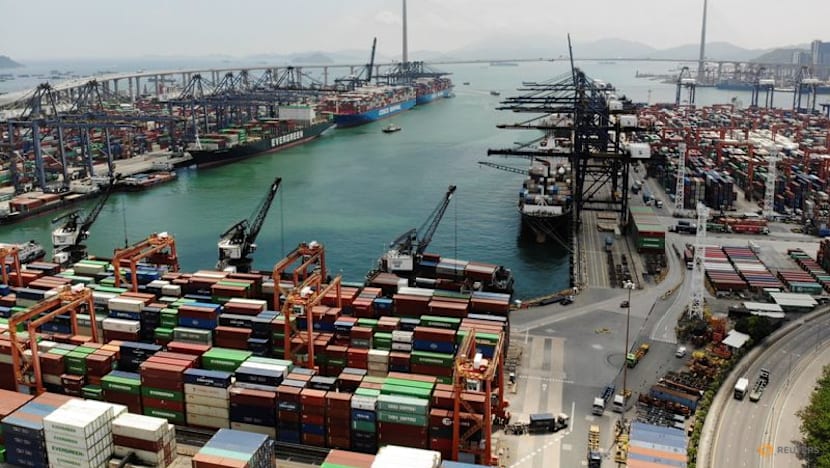 FILE PHOTO: An aerial view shows containers and ships at the Kwai Chung Container Terminal in Hong Kong, China June 7, 2021. Picture taken June 7, 2021 with a drone. REUTERS/Aleksander Solum/File Photo
INDUSTRY HUNGRY FOR TALENT
Despite the challenges, Hong Kong is exploring ways to attract more people to the sector.
The Maritime Professional Promotion Federation, for instance, organises tours of port facilities to spark interest in seafaring among the younger generation.
Such initiatives are aimed at exposing more young people to the industry at an earlier age and encouraging them to consider maritime careers.
Primary school student Jayden Ng is among those hoping to work at sea in the future.
“Working as a seafarer requires someone who has a sense of responsibility, and I think I am a responsible person,” he said.
The Hong Kong Polytechnic University, the city’s only university offering maritime studies, has also arranged various activities to show students that a career at sea is a viable option.
“After their seafarers' training, they can choose to work in companies like shipping lines, ship brokers and chartering companies,” said Judy Tong, a lecturer at the university’s logistics and maritime studies department.
“They may also consider furthering their studies as well. At the same time, for students who really want to develop their career, in the long term, they may go all the way to become captain within like eight to 10 years.”
Observers noted that spending months at sea is understandably a tough commitment for many.
However, Hong Kong Polytechnic University student Au Man Shan, who is in his final year studying international shipping and logistics, sees stability in the profession.
Au, who hopes to work as a marine officer, said career progression in the marine sector is clearly defined with a structured promotion pathway.
He added that while the job requires spending two to three years at sea before returning onshore, he has the support of his girlfriend and views the experience as a necessary step towards a long-term career in the marine sector.