 2 months ago
80
2 months ago
80
The historic club’s main gathering space has been reimagined with bespoke furnishings, rich textures and jewel-toned accents that balance heritage with contemporary polish.
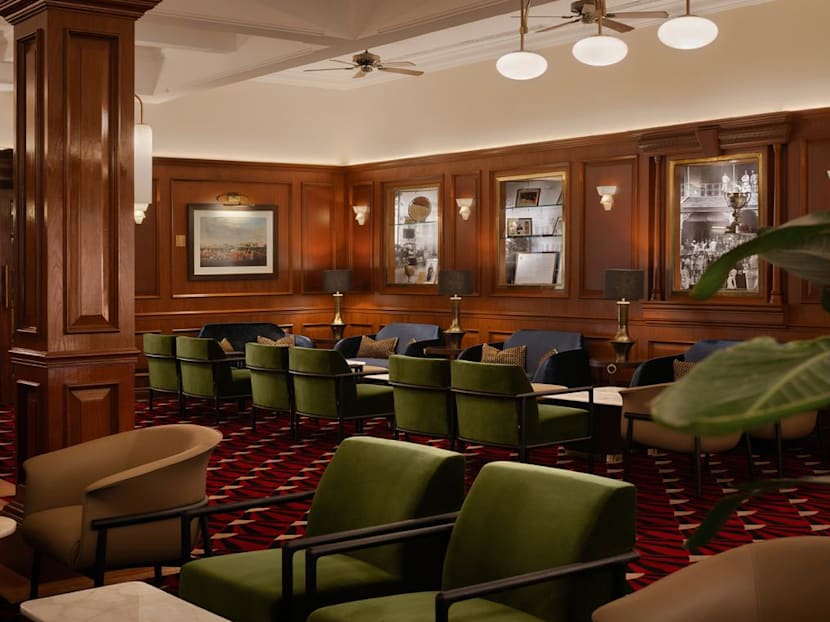
Singapore Cricket Club’s Main Lounge was refreshed in just 10 days but the planning took a year. (Photo: Studio HP & Seeck Photography)
New: You can now listen to articles.

This audio is generated by an AI tool.

The Singapore Cricket Club has been many things to many people since 1852: colonial bastion, postwar social hub, multicultural members’ institution. The silhouette of its low-slung clubhouse on Connaught Drive overlooking the Padang is among the most recognisable in the city. What it has almost never had, over those 174 years, however, is an interior that kept pace with the ambitions of its membership. That changed this past April when Rashi Tulshyan, the young founder of Singapore’s Studio HP, shut the doors of the Main Lounge for 10 days and emerged with something the club’s members almost certainly didn’t see coming.
Tulshyan didn’t wait to be discovered. A Parsons School of Design graduate who built her studio from scratch over nearly a decade, she keeps close tabs on what’s happening across Singapore’s design scene and caught wind of the club’s plans to refurbish the Main Lounge, its principal gathering space. She pitched hard, and more than once. “Multiple rounds,” she said. “Sharing a very clear vision was what essentially sealed the deal.”
Walking into the Main Lounge for the first time, she found a room of beautiful bones – classical cornices, dark panelled timber walls, handsome flooring, a well-loved bar – let down by everything layered on top of them. The last serious rethink had happened around 2003, part of a S$17 million (US$13.33 million) structural redevelopment that was itself the first substantial change to the building in almost 120 years. Since then, the lighting, furniture and carpets had quietly aged, and it showed. “The dated interiors were doing an injustice to what was actually a really impressive space,” Tulshyan said. “It just desperately needed the upgrade.”
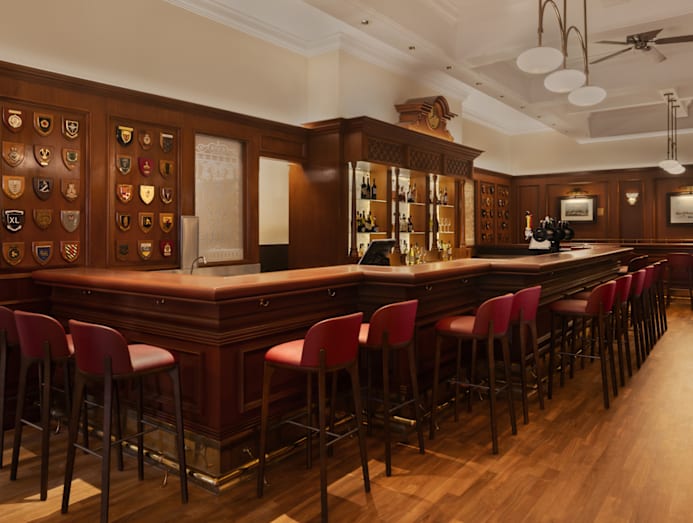 The refurbished bar at Singapore Cricket Club’s Main Lounge, where the redesign preserves the room’s heritage character while giving it a more polished, contemporary feel. (Photo: Studio HP & Seeck Photography)
The brief was delicate rather than bold: breathe new life into the Main Lounge without unsettling what its members loved about it. Stay broadly within the existing red and burgundy palette; preserve the spatial familiarity. Honour the history without being trapped by it. The harder challenge, she quickly realised, was demographic. The Main Lounge is one of those rare spaces where a 20-year-old and a 70-year-old might occupy the same corner sofa, each arriving with entirely different ideas of what comfort and elegance mean. “It’s a massive challenge to design a space that caters to all age groups,” she said, “such that everyone feels a sense of familiarity and inclusivity.”
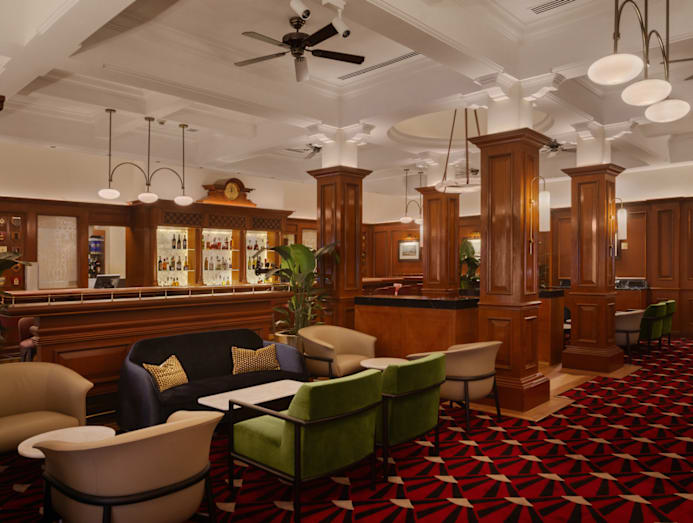 Rich reds, burgundy tones and a bold green accent define the refreshed Main Lounge at Singapore Cricket Club. (Photo: Studio HP & Seeck Photography)
Over the course of a year, before a single item was ordered, the colour story evolved through close observation, long conversations with the club’s committee and many rounds of iteration. Early instincts toward bolder layering and more contemporary pattern-mixing gave way to something richer and more considered: deep jewel tones, velvets, and one unexpected ace card.
“The sudden pop of green,” Tulshyan said, “was something we had to convince them on.” Fifty shades of green fabric were tested before the right one was found. That green became the connective tissue of the whole scheme – appearing in upholstery, and most strikingly in the stone-clad top of a custom-built buffet cabinet that solved one of the lounge’s longest-standing operational headaches.
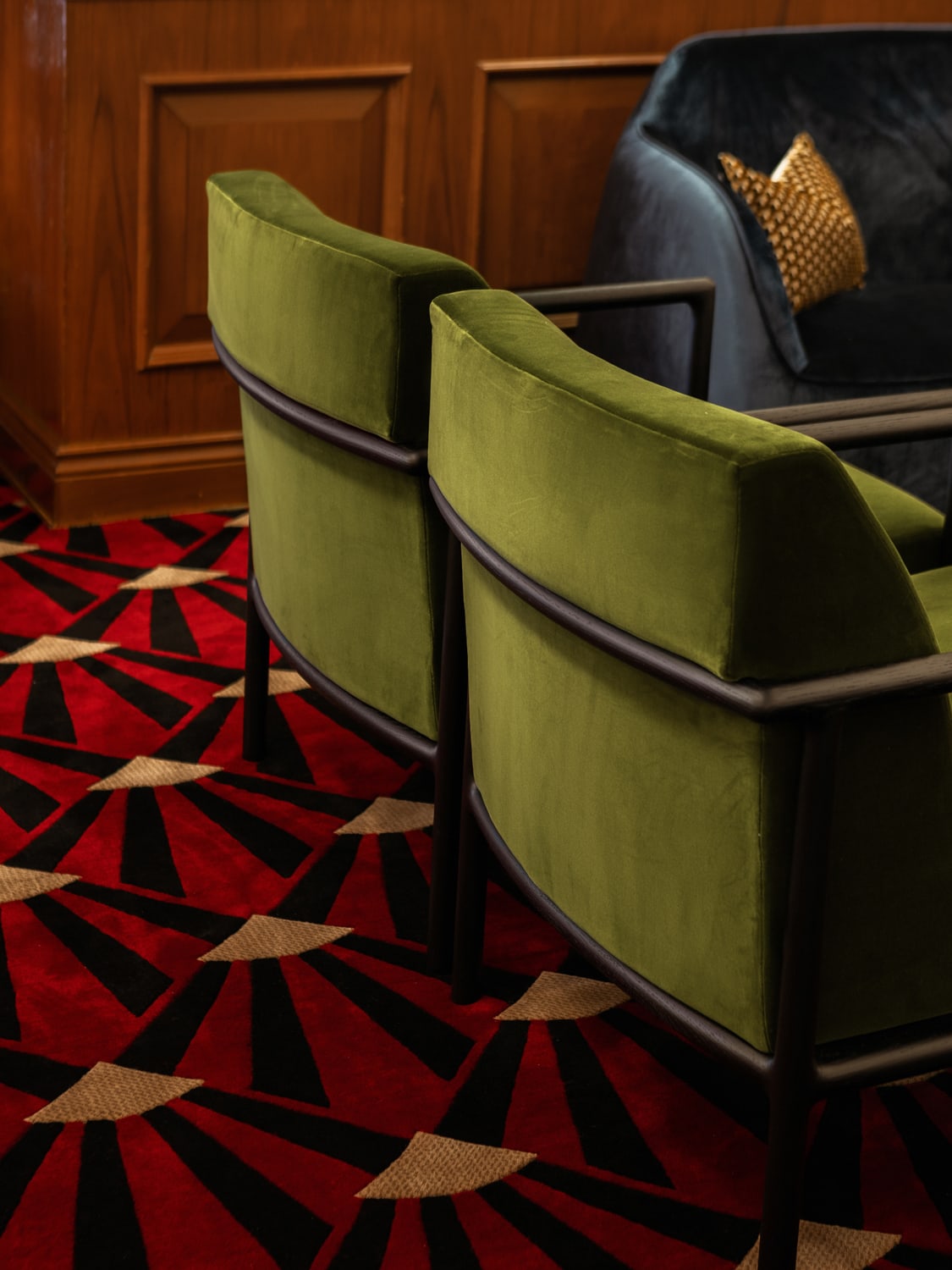 After 50 shades of green were tested, this final hue became the thread that ties together the space. (Photo: Studio HP & Seeck Photography)
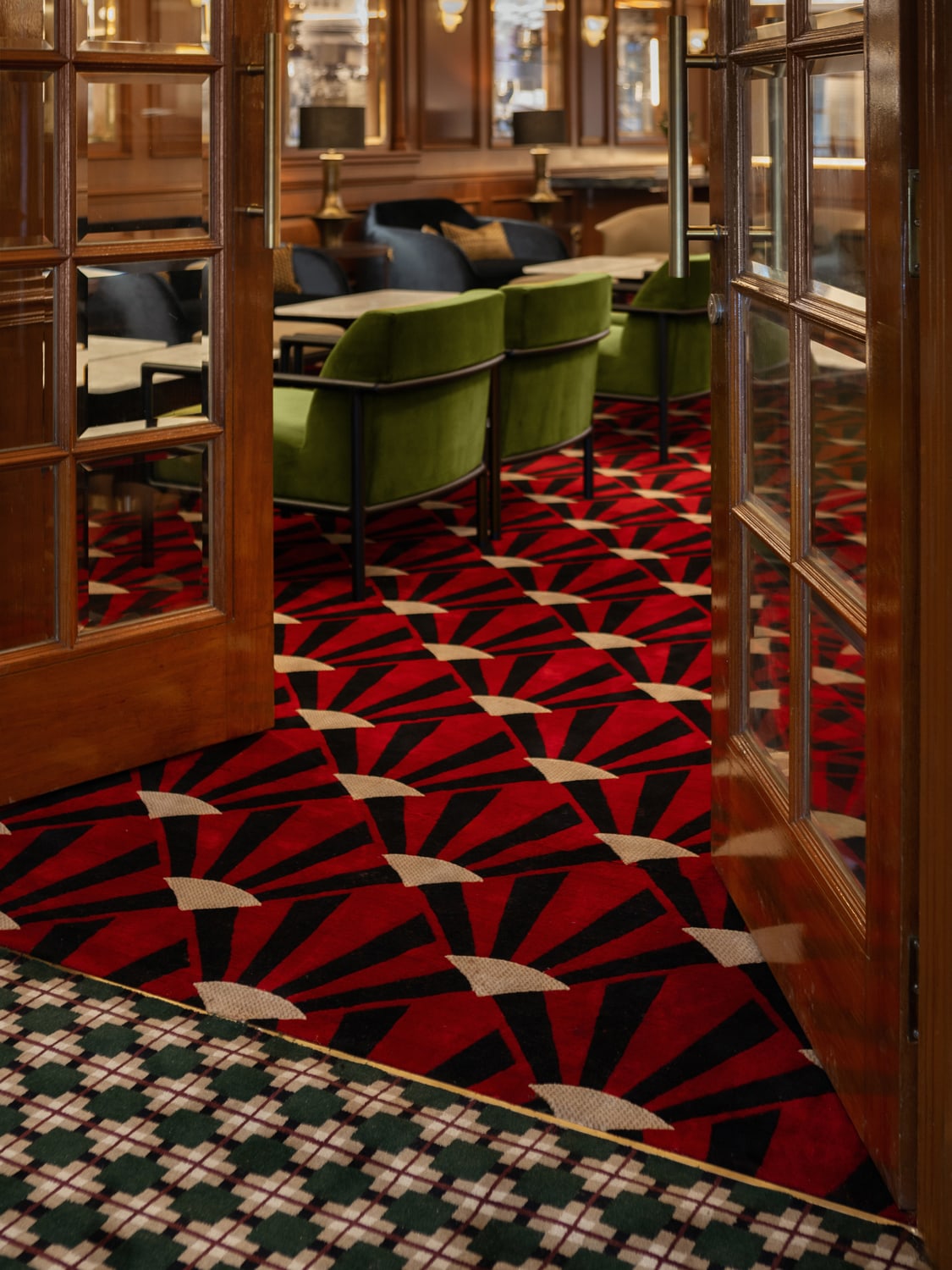 The custom wall-to-wall carpet was developed with Hassan’s Carpets after more than 15 handmade samples were reviewed. (Photo: Studio HP & Seeck Photography)
A bulky, immovable table that had dominated the room for over a decade was redesigned entirely. Now it folds away inside a bespoke cabinet wrapped around two pillars, invisible until service hours, and handsome when it isn’t.
The floor anchors everything. Tulshyan partnered with Hassan’s Carpets – a Singapore institution whose family roots in the trade go back to the 1930s, now in its fourth generation under Dania Hassan – to produce a fully custom wall-to-wall design. Over 15 handmade samples were picked over before the final was approved. Into the coffee tables and backlit bar panels came another material surprise: hand-polished crystal quartz, each piece individually placed.
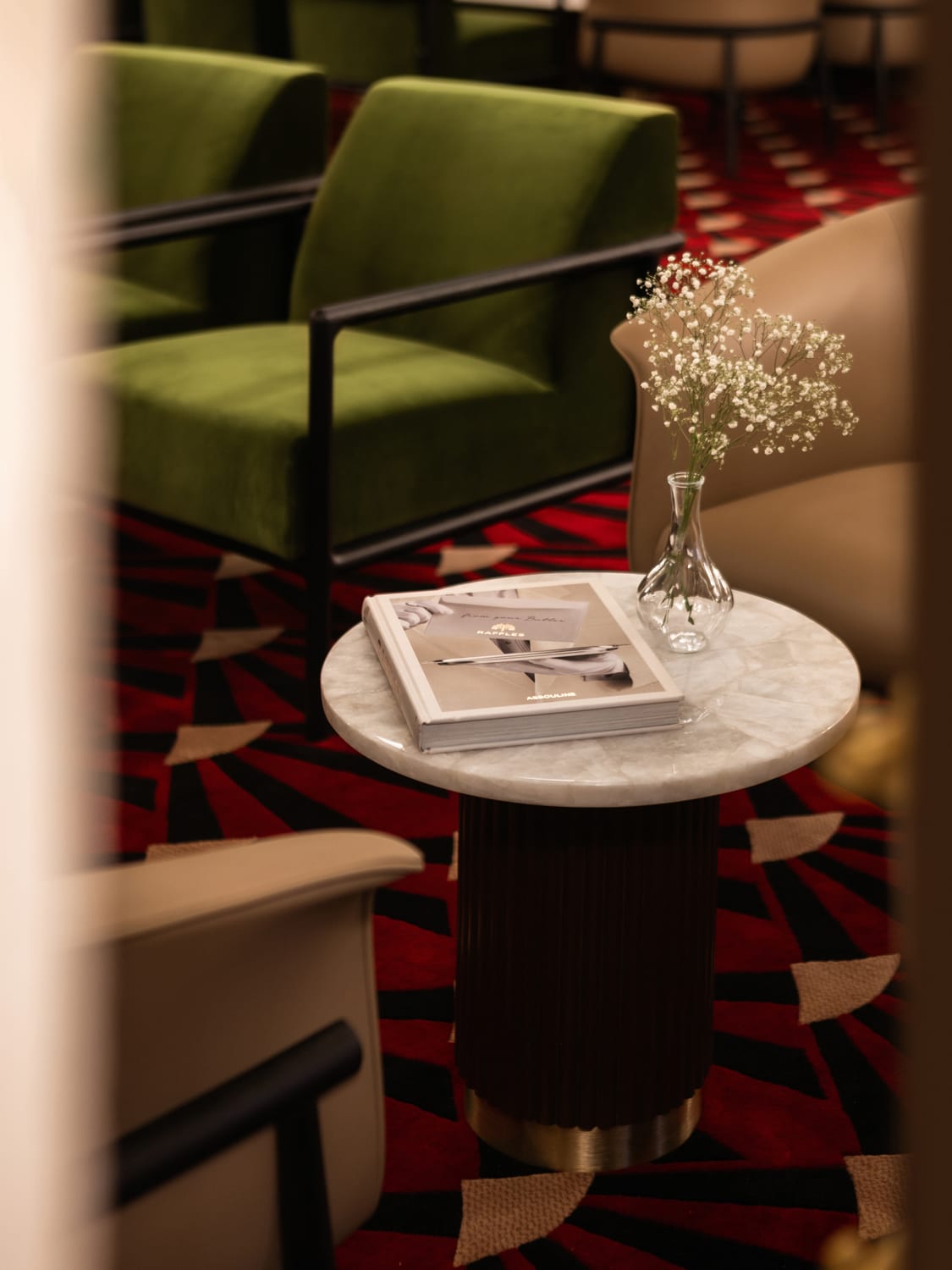 The coffee tables feature hand-polished crystal quartz, one of the material details introduced in the redesign. (Photo: Studio HP & Seeck Photography)
Then there was the matter of the installation schedule. Tulshyan had just 10 days. The Main Lounge, she pointed out, is the heart of the club. “If members had it their way, it would not close at all.” Every piece of carpentry was prefabricated off-site. Everything from overseas was warehoused locally well in advance. “It cost us our sanity,” she said with a laugh.
Studio HP has built its reputation in residential interiors, in the intimacy of private homes designed around individual lives. Tulshyan believes that foundation is precisely why this commission for the Singapore Cricket Club worked. “Without having understood the unique ways people think about spaces,” she said, “we wouldn’t have been able to deliver what we did.”
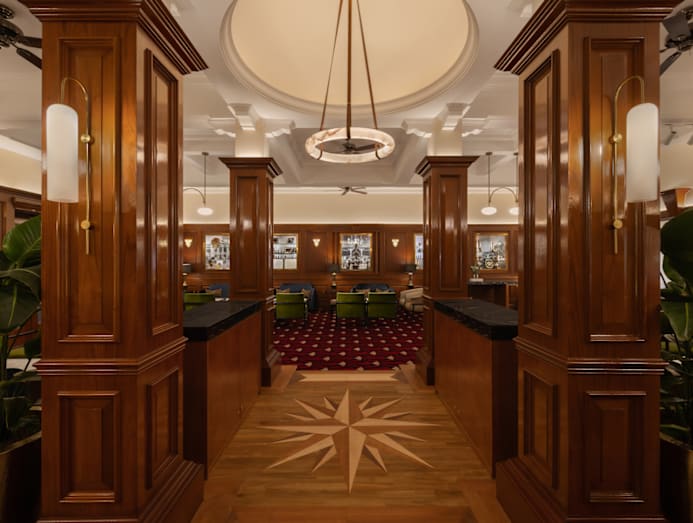 The space now feels more polished and contemporary, while retaining the timber panelling and familiar club atmosphere members know. (Photo: Studio HP & Seeck Photography)
What she and her team have accomplished here is technically the entry point to the club – a lounge, a bar, a carpet, a set of tables. But the confidence with which they’ve introduced colour, craft and a contemporary edge while carrying the full weight of 174 years of history suggests a studio that has found a metier well beyond its residential origins. One can only wonder what Tulshyan might do if handed the whole building.