 2 months ago
77
2 months ago
77
SINGAPORE: It has been a turbulent few months for refineries across Asia, including in Singapore, since the outbreak of conflict in the Middle East.
Within a week of the war breaking out, at least three refinery and petrochemical producers in Singapore declared force majeure due to disruptions in crude and feedstock exports through the Strait of Hormuz. This underscored Singapore’s vulnerability as a major refining and trading hub that depends on reliable crude oil imports to keep its operations running.
Adding to concerns over a fragile energy market, the United Arab Emirates (UAE) formally withdrew from the Organisation of the Petroleum Exporting Countries (OPEC) on May 1. Some have described the departure of the oil cartel’s third-largest producer as a blow to OPEC at a crucial time.
At first glance, the unexpected OPEC crisis appears to add further uncertainty to an already-fragile global energy market, but the impact thus far has been limited. For Singapore’s oil refinery and petrochemical industries, it may be more nuanced with possible opportunities in the longer run.
AN ASSESSMENT OF UAE’S OPEC EXIT
In the near term, the UAE’s exit from OPEC does not compound the immediate problem - that is the energy supply crunch caused by the Iran war.
Before the conflict, the UAE produced around 3 million to 3.5 million barrels of crude oil per day. It has the capacity to produce close to 5 million barrels a day, but was restricted by OPEC production quotas.
Today, however, quotas are not the main limitation. The real problem is logistics.
The Strait of Hormuz - through which about a fifth of the world's oil and gas transited before the Middle East conflict - remains heavily disrupted. As long as access through the strait is constrained, all Gulf producers face a “hard cap” on exports.
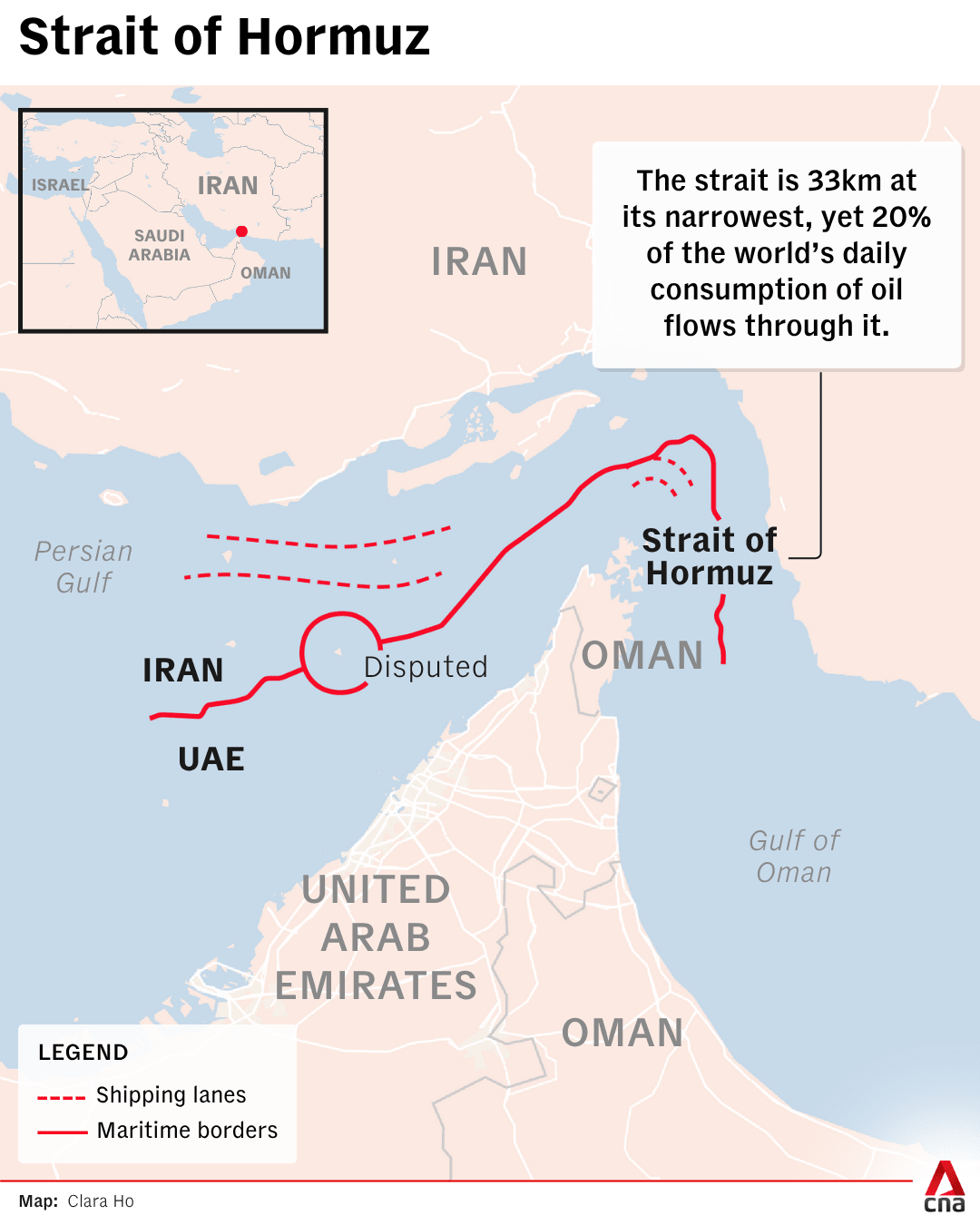
The UAE can bypass the strait via an existing pipeline to the port of Fujairah but that route allows for only around 1.5 to 1.8 million barrels per day, well below its full production potential. This means that regardless of OPEC status, the UAE is severely limited by how much additional oil it can deliver to international markets.
Oil prices in the coming months will remain driven mainly by war risks, shipping delays, higher insurance costs and supply disruptions, rather than the UAE’s OPEC exit. This has been the case so far, with initial declines in oil prices due to the UAE’s announcement quickly offset by risks associated with the war amid stalled US-Iran negotiations.
The more significant implications will emerge only after the conflict eases and oil flows through the crucial strait return closer to normal.
Once that happens, the UAE will no longer be bound by OPEC’s production limits. Analysts expect production by the Abu Dhabi National Oil Company (ADNOC) to possibly rise to around 4.4 million barrels per day within one to two years of normalised shipping conditions.
This could weaken OPEC’s ability to tightly manage global oil supply. With one of the largest, lowest-cost producers operating independently, competition among exporters, especially for Asian markets, is likely to increase. Over time, the world may see cheaper oil on average, albeit with more frequent price swings.
WHAT THIS MEANS FOR SINGAPORE
Singapore - a major refining centre in Asia with three refineries that have a combined capacity of about 1.2 million barrels per day - is particularly exposed to these changes. Refineries here have since cut back on output while looking at sources outside of the Middle East.
Last year, more than 70 per cent of Singapore’s crude oil came from the Middle East. The UAE was Singapore’s largest supplier, accounting for over 40 per cent of the country's overall crude imports in 2025, based on data from the International Trade Centre.
This reliance is no accident. Singapore’s refineries are designed to produce fuels that power the regional economy: jet fuel for aviation, diesel for transport and industry, and marine fuel for shipping. To do this efficiently, refineries typically run a medium-sour crude mix, which is cheaper and offers more stable margins than lighter, sweeter oils.
UAE crude fits Singapore’s needs well. It delivers high yields of jet fuel and diesel, has predictable sulphur content and supports steady refinery operations. Supply contracts from the UAE are also seen as reliable, supported by ADNOC’s logistics network and transparent pricing benchmarks.
By contrast, alternative sources can be less stable.
Those from West Africa can fluctuate because of under-investment, political instability and pipeline vandalism leading to production pauses, while supplies of US crude have to contend with competition from domestic markets and elsewhere during geopolitical crises. In the meantime, Russian oil continues to face sanctions and trade restrictions.
But disruptions in the Middle East have forced Singapore’s refiners to turn to these expensive alternatives from the Americas and Africa, resulting in a squeeze on margins and lower yields for oil products. Already, data in early May showed Singapore’s combined onshore oil product stocks fell to their lowest in more than nine months.
The ripple effects go well beyond oil refining. Petrochemical producers, airlines, shipping companies and manufacturers all depend on a steady energy and feedstock supply, with disruptions translating into increased costs and uncertainty.
This is why a more market-driven UAE can be good news for Singapore refiners in the form of better access to suitable and competitively priced crude oil. That will in turn help strengthen their negotiating position with suppliers.
Greater competition among oil exporters will also help stabilise feedstock availability for petrochemicals and other industries, such as fuel trading, storage, marine bunkering, logistics and commodity finance, even if prices remain volatile.
However, any potential benefits from the UAE’s move will be delayed, as long as normalcy does not return to the Strait of Hormuz. Even after the waterway fully reopens, recovery could take months as production ramps up, tankers reposition and infrastructure is assessed for damage. The UAE has also said it will accelerate the construction of a new oil pipeline, but that will take time.
Until then, refineries and petrochemical producers look set to face continued turbulence.
Bernard Aw is Chief Economist for Asia Pacific at Coface.