 3 months ago
260
3 months ago
260
SINGAPORE: Amazon ended local fulfilment in Singapore because it could not leverage its strengths against rivals in Southeast Asia’s highly competitive e-commerce landscape, industry observers said.
"Amazon is known to be very rational in making its decisions – and likely Southeast Asia is not a market where it has a high chance of winning," said Mr Jianggan Li, CEO of venture outfit Momentum Works.
Regional platforms compete on price and volume of unbranded sellers, "not a play that Amazon has traditionally been strong at", he added.
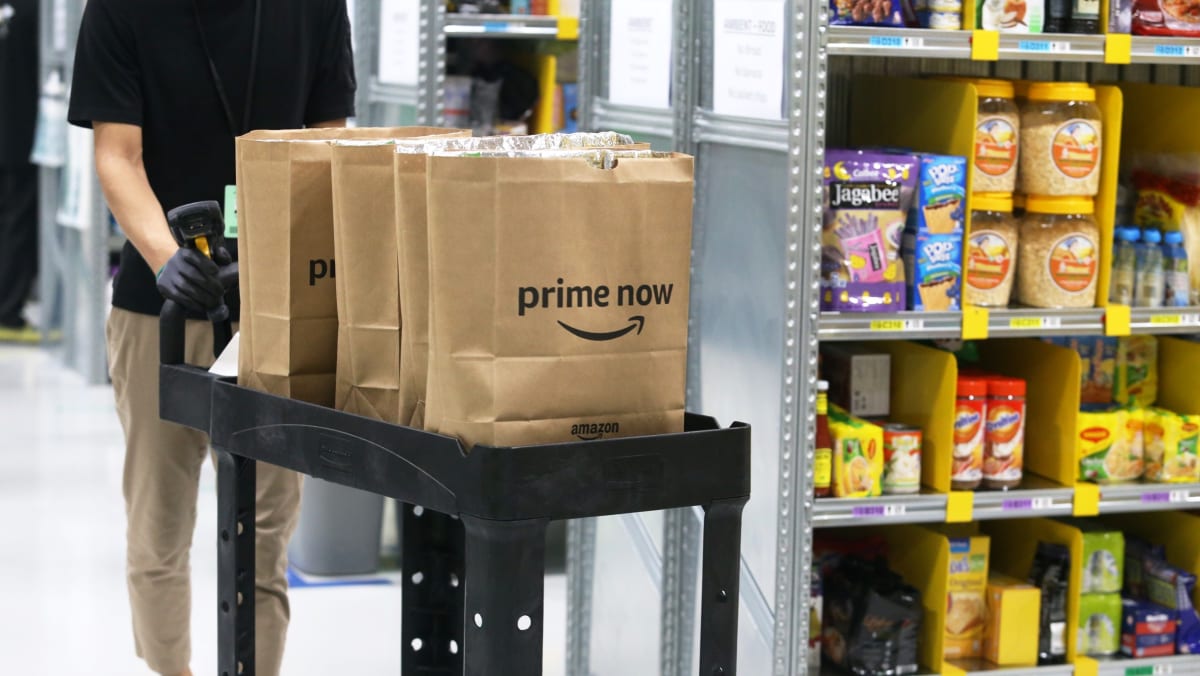
The tech giant announced it will phase out local fulfilment, including Amazon Fresh grocery delivery, and stop working with third-party sellers on Amazon.sg.
This will result in layoffs of “less than 10 per cent” of its total workforce in Singapore, the company said. It employs about 2,500 people locally.
Going forward, Amazon.sg will focus on international offerings from its United States, Japan and Germany stores. Nearly 80 per cent of local customers already shopped for such products in 2025, it said.
MARKET DOMINATED BY CHINESE-ORIGIN PLAYERS
Southeast Asia's e-commerce market has grown to US$157.6 billion (S$201.5 billion) in gross merchandise value, with more than 98.8 per cent of market share consolidated around three platforms – Shopee, TikTok Shop and Lazada – according to a Momentum Works report in April.
Shopee, owned by Singapore-based Sea, leads the region, followed by ByteDance-owned TikTok Shop and Alibaba-owned Lazada.
Amazon first entered Southeast Asia via Singapore in 2017. Many platforms in the region were initially inspired by the tech giant, said Momentum Works' Mr Li.
“However, over the years, Chinese e-commerce players have evolved a different set of playbooks involving high leverage of China’s supply chain, refined category operations, as well as content commerce and heavy reliance on content as a competitive lever.
“Chinese-originated or inspired e-commerce platforms have adapted that set of playbooks well in Southeast Asia,” he said.
“Content commerce” refers to a blend of sales and media-driven marketing like livestreaming. This is something that platforms like TikTok Shop and Shopee have grasped better than Amazon, said Mr Li.
In Singapore, Amazon accounts for 6 per cent of the city-state's US$5.9 billion gross merchandise value, according to Momentum Works.
It captured "a good niche of premium customers, but whether that niche alone justifies the investment has always been a question mark", Mr Li said. Amazon has no local presence elsewhere in Southeast Asia.
SINGAPORE AS FULFILMENT HUB
Singapore made little sense as a fulfilment hub for Southeast Asia, said analyst Alex Szabo, founder of advisory outfit TeakCharge.
“Supplier bases are in China, Vietnam and Indonesia. Last-mile economics in fragmented destination markets do not benefit from a centralised Singapore warehouse.”
The local market is also too small to justify the cost of building fulfilment capabilities at scale against entrenched incumbents, he added.
KeaBabies, a homegrown baby and maternity brand that hit US$90 million in sales on Amazon last year, said its focus on international fulfilment means it has not sold on Amazon.sg since 2020.
Co-founder Jane Neo said: “The local market is too small for us to scale and our products are designed and developed to cater to US consumers, so the product fit is not right for Singapore.”
The company’s factories are located in China, and its customers are mostly in the US, Canada, Germany and Australia.
Amazon brought its "US playbook" to Singapore, but the market did not respond as anticipated, Mr Szabo said.
In the US, Amazon Prime bundles on-demand video, music, fast delivery and grocery chain Whole Foods in a way that subsidises grocery losses.
In Singapore, Amazon's Prime Video sits behind Netflix and Disney+, Amazon Pay trails ShopeePay and GrabPay, and grocery delivery faces FairPrice, Cold Storage and Sheng Siong – which have decades of supplier relationships – as well as Grab and Foodpanda, which have bolted grocery onto existing rider networks at near-zero marginal cost.
“Every service had to stand on its own commercial logic, and grocery on its own does not work in Singapore,” said Mr Szabo.
With the market highly concentrated, he expects the next decade of e-commerce in Singapore to be about consolidation rather than new entrants.
LIMITED IMPACT ON LOGISTICS PARTNERS
Ninja Van, a local carrier for Amazon.sg, said the platform accounted for a modest share of its parcel throughput and the impact on its business is limited.
“The capacity freed up by this change will be absorbed organically into our existing pipeline. We do not anticipate any structural changes to our fleet or headcount as a result,” said Mr Kooh Wee Hou, Ninja Van’s head of commercial in Singapore.
“If anything, we see this as an opportunity to redirect capacity toward higher-growth segments of the market.”
He added that Singapore's e-commerce and logistics market remains “fundamentally healthy”, with consistent growth from regional and domestic platforms and the business-to-business segment.
UPS also said its services “have not been, and will not be, affected by this announcement”. Other local carriers like SingPost and J&T Express declined to comment.
Watsons Singapore, whose Amazon.sg partnership ends on Jul 6, did not directly address queries on sales volume, with a representative saying business operations "continue as usual across all channels".