 3 months ago
96
3 months ago
96
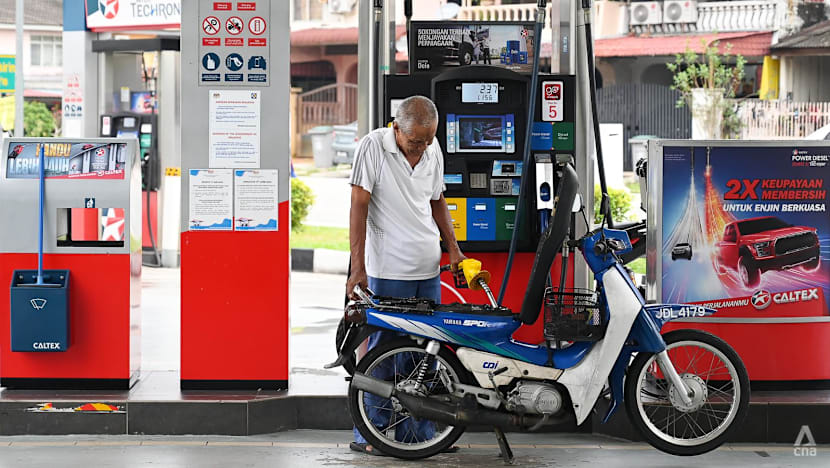
A man fuels his motorbike with RON95 petrol at a petrol station in Johor Bahru on Oct 17, 2024. (Photo: CNA/Zamzahuri Abas)
New: You can now listen to articles.

This audio is generated by an AI tool.
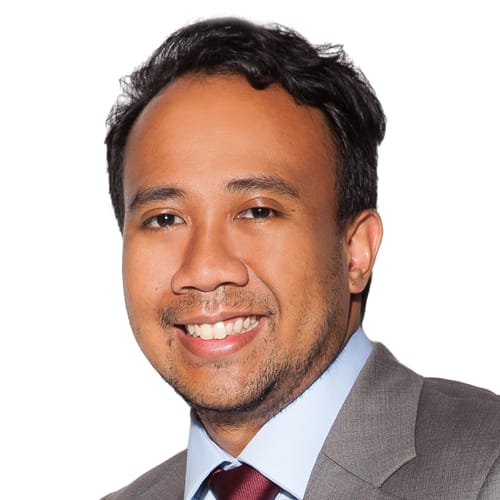
KUALA LUMPUR: Malaysia is projected to save at least RM2.5 billion (US$636.8 million) in RON95 fuel subsidies this year, Prime Minister Anwar Ibrahim said, as he doubled down on the government’s decision to maintain blanket subsidies for all locals in a more targeted way.
“The government did not adopt the World Bank's recommendation - and that of some economists - to float fuel prices and only provide cash assistance to the poor,” Anwar told parliament on Wednesday (Feb 11).
He added that if Malaysia followed the World Bank’s proposal, inflation would have spiked, further burdening the people.
Malaysia's government previously spent RM20 billion a year on blanket subsidies for RON95 petrol, which Anwar had said unfairly benefitted top earners as well as foreigners.
On Wednesday, he noted that the untargeted subsidies had also resulted in excessive leakages, including misuse and cross-border smuggling. This placed heavy pressure on public finances, and the government had no choice but to reform fuel subsidies.
Anwar, who is also Finance Minister, had announced last September that all Malaysians, regardless of income, would enjoy subsidised RON95 prices of RM1.99 a litre, down from the previous RM2.05 a litre.
As part of the move, subsidised RON95 fuel was capped at 300L a month.
To target subsidies for locals, foreigners with Malaysia-registered vehicles must now pay the unsubsidised RON95 price of about RM2.60 a litre, whereas previously they could benefit from the subsidy as eligibility was tied to the car but not nationality.
The RM2.5 billion savings projected for 2026 is a result of a reduction in subsidy leakage, Anwar said, noting that it is also subject to global crude oil price fluctuations and exchange rates.
“Syndicates smuggling to neighbouring countries have also been curbed,” he said.
Anwar also expressed appreciation towards the public's “vigilance” in reporting attempts by drivers of foreign-registered vehicles to purchase RON95.
“This attitude is commendable, as it not only defends the rights of Malaysian citizens but also reflects national pride and identity,” he said.
Foreign-registered cars must fill up with the higher-grade RON97 fuel, which costs RM3.10 a litre.
300L SUBSIDY “ENOUGH”
On Wednesday, Anwar added that previous proposals had suggested limiting RON95 fuel subsidies to households earning below RM13,000 per month.
Still, the government rejected the idea as it would adversely affect civil servants, farmers and smallholders.
As part of the government’s plan to reform fuel subsidies, Anwar had originally announced in his Budget 2025 speech in October 2024 that subsidies for RON95 fuel would be cut for Malaysians in the top 15 per cent of the country’s income group.
The original proposal was expected to save about RM8 billion annually, higher than the projected savings of between RM2.5 billion and RM4 billion a year with the current arrangement.
But the government said last September it accepted the “trade-off” of not maximising the savings, acknowledging that the country faces cost of living pressures.
However, in a post-Budget 2026 forum last October, the World Bank questioned the government’s estimated annual fiscal savings of at least RM2.5 billion.
Apurva Sanghi, the bank's lead economist for Malaysia, said the projected savings appeared to hinge on foreigners and high-income Malaysians paying the full market price for RON95, assuming the latter group exceeded the 300L cap.
“But how many foreigners or Malaysians actually do that? … It would be nice to see the math, and we haven’t seen it from the Ministry of Finance,” Sanghi said, as quoted by business publication The Edge Malaysia.
Sanghi added that Malaysia could draw lessons from its own diesel subsidy reform in June 2024, where diesel prices were floated and the impact on lower-income groups was cushioned through the government’s RM200 Budi Madani cash handouts for lower-income groups, as well as farmers and smallholders.
In December, Anwar had rejected the World Bank’s proposal to float RON95 prices, saying that his government’s approach of targeted blanket subsidies is “prudent”.
Anwar insisted on Wednesday that floating RON95 fuel prices would have caused consumer prices to rise.
“This conventional economic approach does not reflect the reality of cost-of-living challenges, which affect not only the poor but also the middle-income group,” he said.
“Instead, the government took an innovative path based on digital technology to ensure that RON95 subsidies continue to benefit Malaysians, while eliminating leakage to foreigners and the commercial sector.”
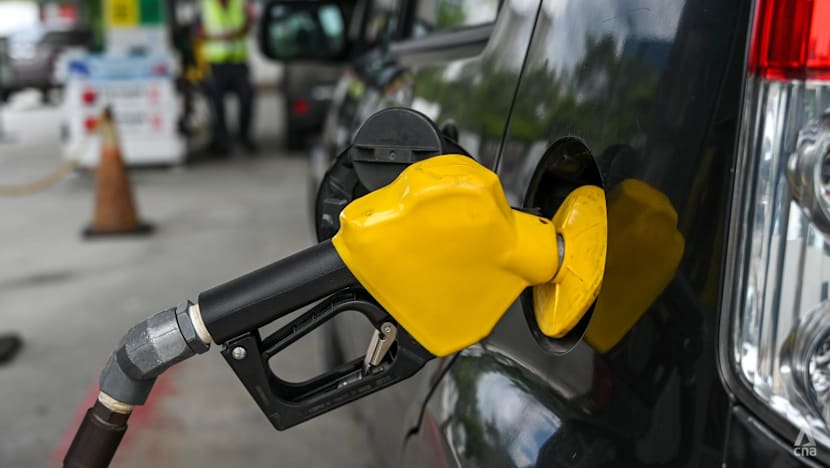 A car being filled up with RON95 fuel at a petrol station in Malaysia. (Photo: CNA/Fadza Ishak)
The premier was referring to how, since measures last year, Malaysians must validate their MyKad - their national identity cards - at the pump before filling up with subsidised RON95.
This system recorded an average of 3.1 million transactions per day, or up to 96 million transactions per month, proving that RON95 purchasing “remains smooth”, he said.
“Using MyKad has proven that subsidies can be delivered more securely, orderly, and efficiently,” Anwar added.
The 300L monthly cap for subsidised RON95 was also sufficient, he noted, as data shows the average usage is around 100L per month, with 90 per cent of users consuming less than 200L monthly.
Anwar stressed that fiscal savings from fuel subsidies are redirected to benefit the people.
This includes funding the expansion of public assistance programmes such as Sumbangan Asas Rahmah, which distributes RM100 to all Malaysians aged 18 and above.
“This means even as we pursue reform, the rights and welfare of the people remain protected,” Anwar said.
In January, a Malaysian man who holds Singapore permanent residency was fined RM9,000 for obscuring the number plate of his Singapore-registered car to fill it with RON95 petrol in Johor.
The case made headlines after the man was caught on video that went viral on social media.