 3 months ago
82
3 months ago
82
The proposed reforms come against the backdrop of years of political polarisation in Bangladesh, where power has traditionally been concentrated in the office of the prime minister.
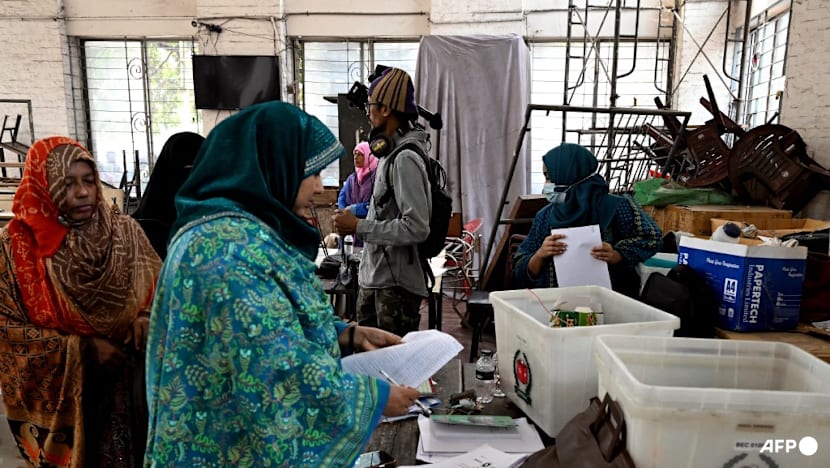
Election officials check ballot boxes before being dispatched to polling stations in Dhaka on Feb 11, 2026 ahead of Bangladesh's general elections. (Photo: AFP/Mohd Rasfan)
New: You can now listen to articles.

This audio is generated by an AI tool.


DHAKA: Bangladesh is heading to the polls on Thursday (Feb 12) to not only decide who forms the next government, but also to vote in a national referendum that could reshape the country’s system of governance.
Voters will determine whether to endorse structural changes that could alter how power is exercised at the highest levels of the state.
The referendum is widely seen as a pivotal democratic moment for the South Asian nation of more than 170 million people.
They will also elect 350 lawmakers in Bangladesh’s first election since a student-led uprising toppled former prime minister Sheikh Hasina in August 2024.
WHAT THE REFERENDUM IS ABOUT
Ali Riaz, special assistant to Muhammad Yunus, the chief adviser of Bangladesh’s interim government, told CNA that the referendum ballot presents a clear and straightforward choice.
“The referendum is asking people a very simple question: whether they would like to see changes in the system of governance, as well as constitutional measures,” said Riaz, who is also the former head of the country’s Constitution Reform Commission (CRC).
This has been broken down into four major areas, including issues over a bicameral parliament, he added.
Bangladesh currently operates under a unicameral parliamentary system. The introduction of a second chamber would mark a significant structural shift, potentially altering legislative scrutiny and representation.
If the referendum passes on Thursday, the reforms will be overseen by a constitutional reform council comprising elected members of parliament, with a deadline of 180 days to complete the process.
Riaz, who played a crucial role in drafting the proposed reforms, acknowledged the timeline is ambitious but said groundwork has already been laid through months of political consultations.
The referendum is on the July National Charter 2025, which is the culmination of the CRC’s work. The commission was formed by Yunus in 2025 after Hasina’s ousting, in efforts to amend the governance of the country.
The 180-day deadline to complete the reforms is aimed at articulating them in legal and constitutional language, he added.
“We don't consider it as (a way) to implement any punitive measures, because that would create more confusion. That would create instability.”
On whether future governments would be legally bound to implement the reforms, Riaz pointed to a political commitment signed by parties on Oct 17 last year, which makes the reforms legally binding.
If voters reject the referendum, Riaz said the current constitutional framework would remain unchanged.
"I expect that that's not going to happen. But evidently, if it is a no, that means the current constitution, the current system, remains, and it would be at the disposal of the majority party,” he noted.
PREVENTING CONCENTRATION OF POWER
The proposed reforms come against the backdrop of years of political polarisation in Bangladesh, where power has traditionally been concentrated in the office of the prime minister.
Rights groups and opposition parties have frequently raised concerns over checks and balances, the independence of institutions, and the credibility of past elections.
Riaz said one of the central goals of the referendum is to prevent the re-emergence of one person ruling the country.
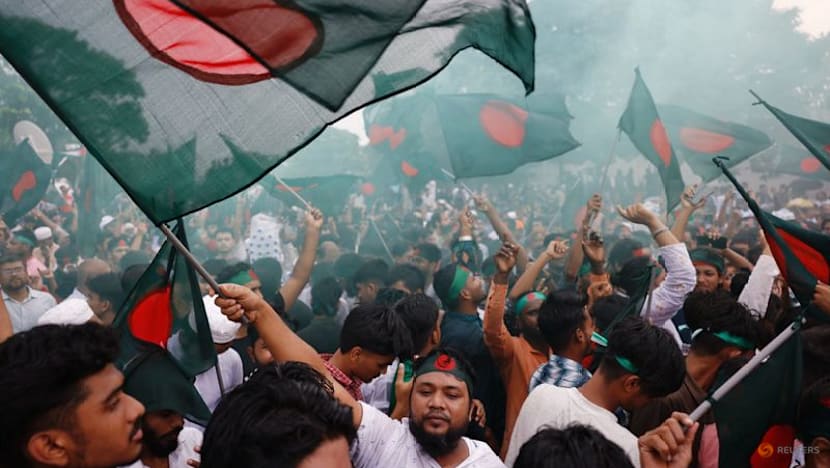 People wave flags during celebrations marking the one-year anniversary of student-led protests that led to the ousting of Bangladeshi then-Prime-Minister Sheikh Hasina, at Manik Mia Avenue, outside the parliament building, in Dhaka, Bangladesh, Aug 5, 2025. (Photo: Reuters/Mohammad Ponir Hossain)
"(Some) of the major issues were the concentration of power and non-accountability. Hence, political parties have agreed that there will be a time limit (of 10 years) for the prime minister,” he added.
“The second thing that we proposed, and the parties have agreed to, (is) having the parliamentary committees be headed by the opposition, so (this) would actually restrain the power of the prime minister.”
He stressed that the proposed reforms are not meant to limit the prime minister’s power but instead make them more accountable and “prevent any kind of concentration on a single hand”.
BENCHMARKS FOR CREDIBILITY
Bangladesh has experienced political unrest and election-related violence in previous cycles, and opposition parties have at times rejected results, alleging irregularities.
When asked what his minimum benchmarks are for calling the upcoming election a credible one, Riaz emphasised acceptance of the outcome by political actors.
"I hope … the political parties would break the cycle of: ‘If I don't win, the election is not fair’. That's one of the critical elements. But that's the political culture,” he said.
“With respect to the success or the benchmarks, I would say (I will look at) how the people are reacting to it. It's not only the (poll) numbers, but also look at how they're participating in it.”