 3 months ago
83
3 months ago
83
Japanese voters have handed Prime Minister Sanae Takaichi a powerful mandate, delivering her Liberal Democratic Party (LDP) and coalition partner Japan Innovation Party (Ishin) a crushing victory in Sunday’s (Feb 8) lower house election.
The ruling bloc secured 352 of the 465 seats in the chamber – a two-thirds supermajority that allows the government to override the upper house and initiate constitutional amendments.
It is the first time since World War II that a single party has achieved such a margin in Japan’s lower house.
The scale of the win, described by analysts as an “avalanche” in a snowstorm election, comes at a critical juncture for Japan.
The nation’s political scene has been marred in recent years by scandals, shifting alliances and revolving-door leadership while grappling with an ageing population, rising living costs and increasingly complex regional geopolitics.
Observers say Sunday’s result could signal a break from that volatility.
“I think Japan will be in a relatively stable period for at least a few years,” said Kurt Tong, managing partner at strategic advisory firm The Asia Group.
“Voters have clearly exhibited they want a strong LDP that delivers for the people. This has been a large exercise in accountability.”
TAKAICHI'S POPULARITY DRIVES LDP REVIVAL
The victory marks a stellar turnaround for the LDP, which has been on a political decline in recent years.
But analysts say the win was driven less by party loyalty and more by Takaichi’s personal appeal. Local media polls show her approval rating at nearly double that of her party's.
“The LDP (had not) done enough to garner the confidence again of the Japanese voters. So, a lot of credit is due to Takaichi,” said Sheila Smith, a John E Merow senior fellow for Asia-Pacific studies at think-tank Council on Foreign Relations.
Tong described the campaign as a calculated risk that paid off, as voters braved mid-winter conditions to show their support.
“She managed to win this gamble by playing off of her personality,” he told CNA’s Asia First programme.
“She rallied a strong electoral effort on short notice, projecting a clear communication and a sense of stability at a time when the Japanese public (is) collectively looking for strong leadership.”
Still, Tong cautioned that the LDP must prove it can translate political dominance into tangible results.
“The party still has branding problems, and needs to prove to the Japanese public that it's a new, cleaner, results-oriented party.”
Analysts said Takaichi – Japan’s first female prime minister – is particularly popular among women as well as younger voters, the latter reached through social media campaigning.
She also managed to claw back conservative voters who had drifted to right-wing parties in recent elections.
“The LDP had been losing voters to the right because the last few prime ministers have been centrist moderates,” East Asian expert Lim Tai Wei told CNA938.
“She's the first since her mentor Abe to win back the right voters, which is the LDP’s traditional power base,” he added, referring to the late former Prime Minister Shinzo Abe.
A MANDATE BUILT ON THE ECONOMY
Analysts say voters were primarily motivated by economic concerns, with inflation and household costs topping the list of priorities.
“She resonates with the voters as she (has promised) to reduce the pains of inflation and gradually increase salaries and economic growth of the country,” said Lim, who teaches at Soka University in Tokyo.
Smith said Takaichi is expected to move quickly now that legislative obstacles have largely been removed.
“She's quite bullish – she wants to invest heavily, create a government stimulus for innovation and tech sectors, and help small- and medium-sized businesses,” she said.
“We should expect her to move expeditiously now that she's got a lower house that will be able to pass whatever she puts forward.”
Takaichi has pledged measures including freezing the sales tax on food and rolling out expansionary spending aimed at boosting growth and encouraging companies to raise wages.
Immigration also featured in voters’ concerns. Takaichi has taken a more cautious approach to foreign labour, tightening criteria while planning to accept about 1.23 million migrant workers by March 2029 to address labour shortages.
“What she’s done is not to discontinue immigration, but to be more cautious and fine-tune policies,” Lim said, adding that the approach appears to have reassured voters who felt previous policies were too expansive.
On defence, analysts expect Takaichi to take a forward-leaning stance. Tong said increased spending would likely focus on closing security gaps – particularly in cybersecurity – rather than overt power projection.
Still, her hawkish security agenda is unlikely to sit well with China, which has accused Japan of edging back towards militarism.
While her supermajority gives her the ability to pursue constitutional reform, analysts say it is unlikely to be a near-term priority.
Instead, attention is expected to remain on domestic economic policy, boosting defence capabilities and pragmatic diplomacy.
DRUMMING UP FOREIGN RELATIONS
Since taking office in October last year, Takaichi has shown a strategic yet personable approach to diplomacy.
She has drawn headlines for her informal style, from a K-pop drumming session with South Korean President Lee Jae Myung to watching baseball with United States President Donald Trump.
The 64-year-old is due to travel to Washington in March for a second meeting with Trump.
Analysts expect Takaichi to prioritise Southeast Asia early in her tenure, echoing the regional focus of her mentor Abe.
“(She will want to) express Japanese enthusiasm and show leadership … on areas where a middle power can make constructive contributions,” said Tong.
On China, Lim noted that deep economic links make stabilising ties essential, despite recent tensions over Takaichi’s remarks on Taiwan. China is Japan’s largest trading partner, while Japan is among China’s top foreign investors.
“The two are intertwined economically. They have to find a way to at least tune down the temperature … to create the right atmosphere for future talks,” he said.
MARKETS CAUTIOUSLY OPTIMISTIC
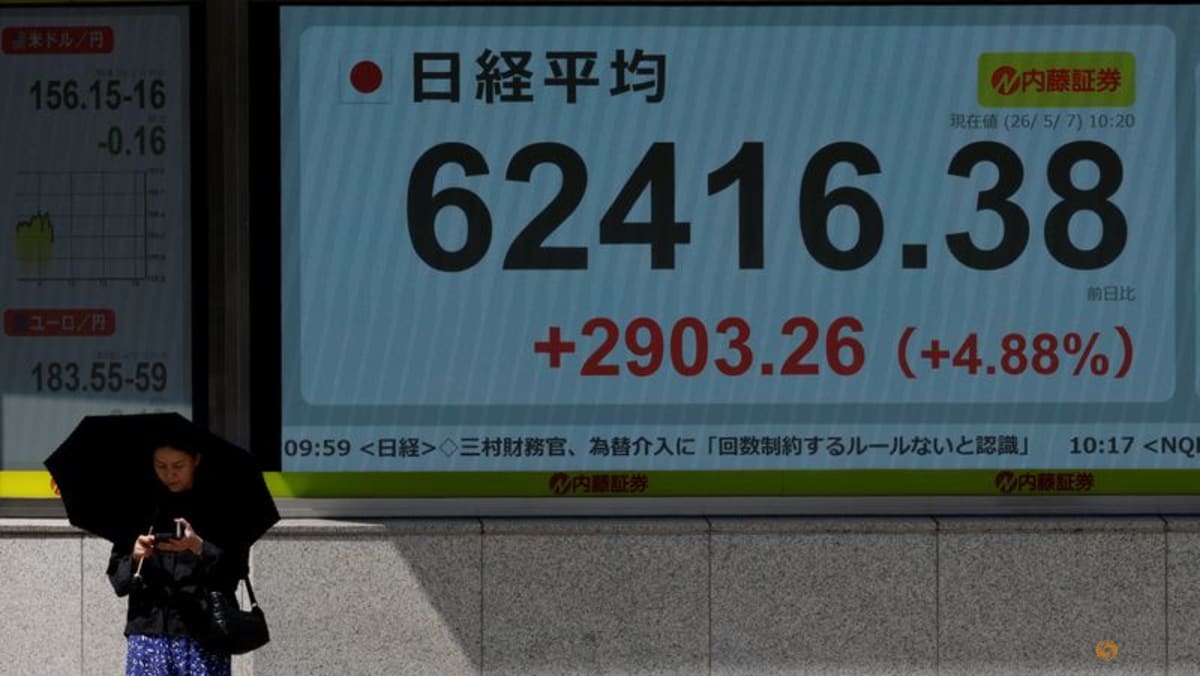
From a market perspective, analysts see continued strong interest in Japanese equities and direct investment, supported by strong exports, booming tourism and growth sectors such as semiconductor chips.
Naomi Fink, chief global strategist at Amova Asset Management, said the challenge now lies in balancing inflation control with campaign promises.
“Now, the real work begins,” she said. “It is really getting that balance right – of giving the Bank of Japan the freedom to control inflation, as well as providing the temporary measures necessary to fulfil (voter expectations).”
While some economists believe tax hikes may eventually be necessary to address Japan’s debt, others say strong economic performance could delay such moves. Lim pointed to robust automobile exports and Japan’s status as a tourism powerhouse as potential buffers.