 3 months ago
77
3 months ago
77
SINGAPORE: The median monthly household income in Singapore rose to S$12,446 (US$9,250) last year, up from S$11,558 the year before, an increase of 6.8 per cent after adjusting for inflation.
After accounting for household size, the median monthly household income per household member rose by 7.5 per cent in real terms, from S$3,837 in 2024 to S$4,160 in 2025.
The figures were released on Monday (Feb 9) in the Key Household Income Trends 2025 paper by the Singapore Department of Statistics (Singstat).
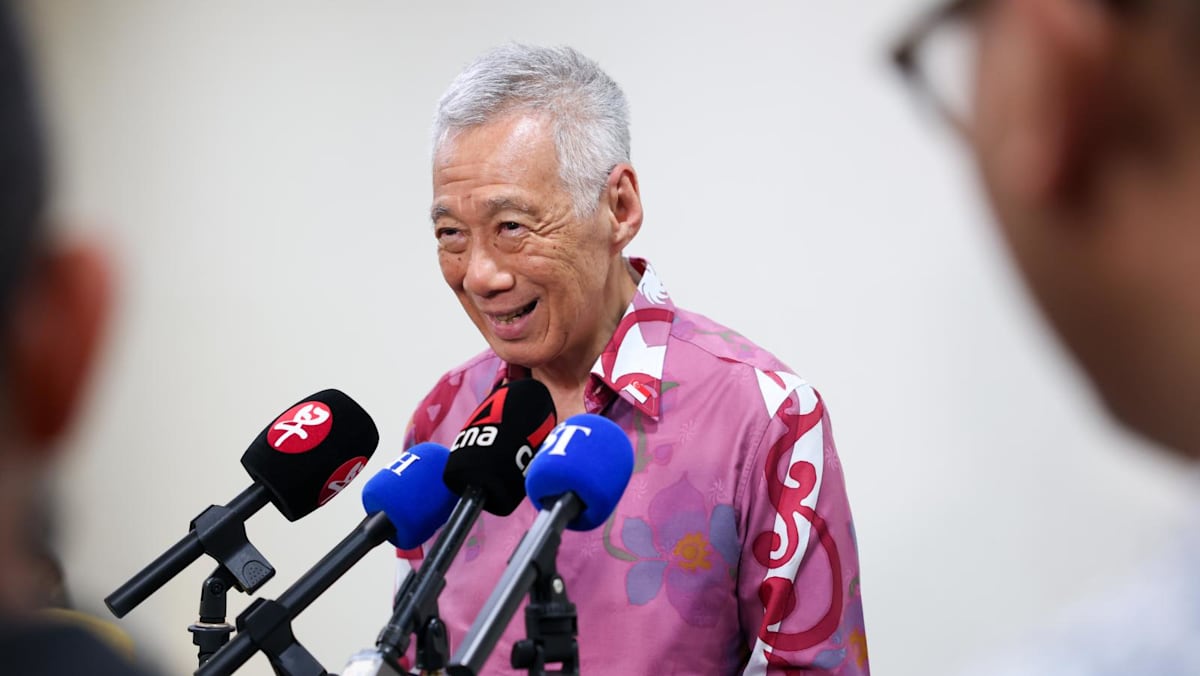
In a video posted on social media after the figures were released, Prime Minister Lawrence Wong noted that real wages across all income levels rose over the past 10 years.
"That means that for many Singaporean workers and households, wage growth has outpaced inflation," he added.
"Importantly, wage growth has been strongest for lower-income workers, faster than for those in the middle or at the top."
Previous reports computed household employment income, but from the 2025 report, the definition of household income has been expanded to include “market income”, which refers to income from work and outside of work, Singstat said.
Resident households now also include households where no one is employed.
“With an ageing population, there is a growing proportion of households comprising solely non-employed persons aged 65 years and over who do not have employment income, but may have income from non-employment sources such as rental, investments and annuities,” Singstat added.
“The expanded coverage therefore enables a more comprehensive analysis of household income trends.”
Non-employment income includes interest from savings or Central Provident Fund (CPF) balances, dividends from investments, contributions from other households, rental income and CPF or insurance payouts.
When asked about data sources and possible underreporting, Singstat said it relied mainly on administrative sources such as CPF and Central Depository data. Other income, including investments held with financial institutions, shares or rental income, is derived from surveys and is harder to track.
The Ministry of Finance said this was the first time Singapore was releasing market income data, noting that rising affluence and a growing retiree population meant more households now receive income from non-employment sources.
Some degree of underreporting and underestimation is expected for certain groups, especially wealthier households, because non-employment income is collected through survey data, the ministry said.
INCOME GROWTH ACROSS DECILES
Households across all income deciles recorded growth in average monthly household income per member over the past decade.
After adjusting for inflation, those in the lowest income decile saw a 10.5 per cent increase in the last five years, while those in the highest decile saw a 1.4 per cent increase.
Singstat said that some resident households in the lowest 10 per cent owned a car, hired a domestic helper, lived in private property or had a household reference person aged 65 and over.
Employment income remained the largest source of household income, though its share fell to 79.6 per cent in 2025 from 81.1 per cent in 2024.
While income from work was the main source for households in the second to 10th deciles, households in the lowest decile relied mainly on non-employment income.
For this group, investment income, largely interest earned from CPF balances, made up 40.9 per cent of household income per member. Other income, mostly from CPF payouts and the Lifelong Income for the Elderly scheme, accounted for 37 per cent.
Rental income formed 3.2 per cent of income per household member in the lowest decile, with the remaining 19.2 per cent coming from work.
TRANSFERS, TAXES AND INEQUALITY
Households in the first to seventh income deciles received more in government transfers than the amount of taxes they paid.
On average in 2025, resident households received S$7,300 per household member in government transfers, down from S$7,725 in 2024. This was attributed to the end of one-off schemes introduced in 2024, including the Majulah Package and Cost-of-Living Special Payment.
Residents living in one- and two-room Housing and Development Board flats continued to receive the most support, averaging S$16,510 per household member, more than double the overall average.
For every dollar of tax paid by lower-income households, they receive about S$7 in benefits, said Mr Wong, who is also Finance Minister.
Middle-income households receive about S$2 for every dollar of tax paid, while the top 20 per cent receive about S$0.20, he said.
“So everyone contributes but those who are able contribute more. And everyone benefits, but those with greater needs receive much more. And that’s how we keep our system fair and equitable.”
The Gini coefficient, which measures income inequality, fell to a record low. A Gini coefficient of 1 indicates perfect inequality, and a lower figure indicates less income inequality.
Based on the new definition of household market income, Singapore’s Gini coefficient declined to 0.452 in 2025 from 0.460 in 2024, the lowest since such records began in 2014, Singstat said.
After accounting for government transfers and taxes, the figure fell further to 0.379, also the lowest since records began in 2015.
MOF said the Gini coefficient based on market income is higher because it includes non-employment income and a broader group of resident households, including those without employment income.
Combining employment and non-employment income leads to a more even distribution, lowering the coefficient, while expanding the definition of resident households increases it, MOF added.