 3 months ago
115
3 months ago
115
SINGAPORE: National Trades Union Congress (NTUC) secretary-general Ng Chee Meng will call for mandatory advance retrenchment notifications at this year's Budget debates, the labour movement said on Monday (Feb 9).
Currently, companies with at least 10 employees must notify the Ministry of Manpower if they retrench any employee within five working days after the employee is informed.
An administrative penalty of S$1,000 (US$790) can be imposed on an employer if it fails to do so.
Wilful disregard may result in strong enforcement action, although the Tripartite Guidelines on Mandatory Retrenchment Notifications do not specify what form this may take.
The notification is meant to enable tripartite partners to help retrenched employees find alternative jobs and identify relevant training to enhance their employability.
Manpower Minister Tan See Leng previously said in parliament that not requiring advance notice strikes a balance between allowing employers enough time to finalise their decisions and collate the required information for submission, while still allowing for prompt provision of assistance to affected workers.
There have been reports of employers that did not give workers or their unions advance notice of retrenchment, such as bakery chain Twelve Cupcakes and e-commerce company Lazada.
In addition, Mr Ng will call for enhanced job support from companies to help retrenched workers access more jobs.
He will also ask the government to strengthen existing support, such as the Jobseeker Support Scheme for the involuntarily unemployed, as job disruptions driven by artificial intelligence (AI) become more frequent, said NTUC.
Singapore's 2026 Budget will be delivered on Thursday and debated in parliament thereafter.
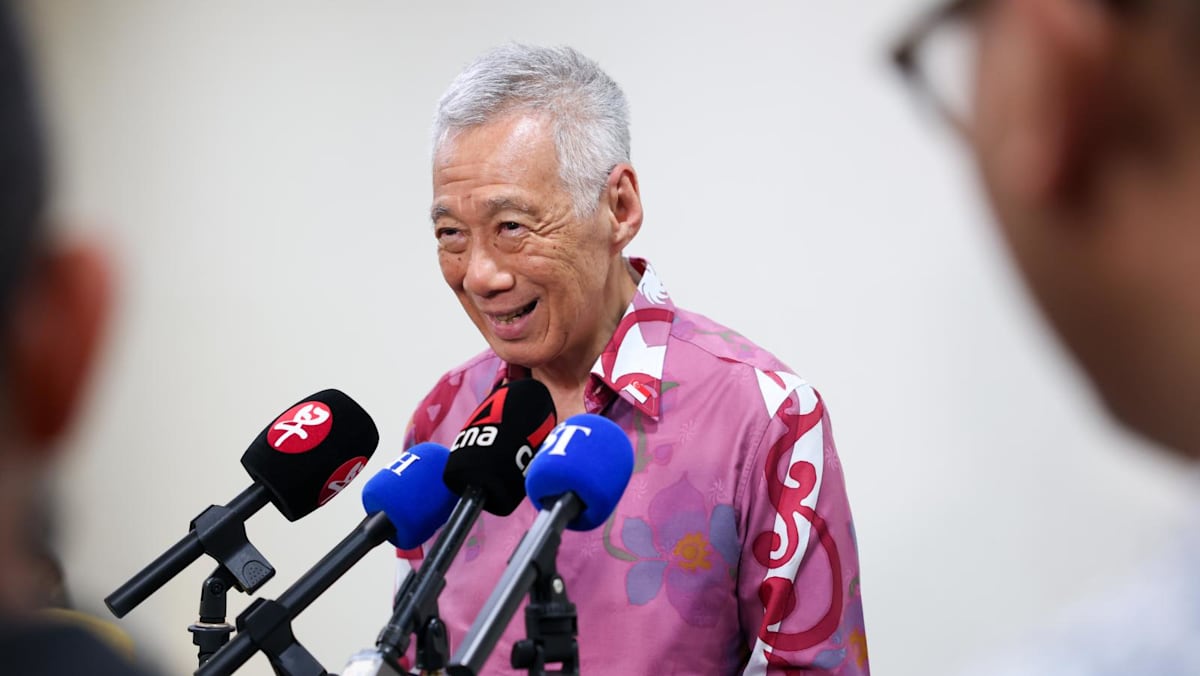
"One area we are very focused on is to see how we can enable our professional white-collar class," Mr Ng told reporters on Monday.
"We know that our PMEs are worried about AI impact on their jobs," he said, referring to professionals, managers and executives. "We know too that many are very willing to adapt, upskill. And in the Budget, we will be seeking to advocate for support for them in upskilling."
According to a 2025 NTUC survey, 56 per cent of PMEs felt that they need to develop their skills to remain relevant, reflecting concerns about keeping up with AI disruptions.
PMEs make up 45 per cent of NTUC's membership base, which surpassed 1.4 million in 2025.
TRANSFORMING BUSINESSES, WORKERS
Mr Ng said that PMEs need "timely training and tangible support", both in employment and in the event of retrenchment, so that they do not have to navigate challenges alone.
He also said that NTUC is stepping up efforts to see how its company training committees can augment businesses and professionals, such as accountants and doctors, that will be impacted by AI.
"Good progress" was being made in NTUC's efforts to scale up cluster company training committees by working with sizeable companies for sector-level transformation, he added.
Company training committees bring union leaders and management together to develop company-level business transformation plans that enhance productivity.
As of December 2025, more than 800 projects had been approved under a S$70 million grant to support company training committees. The grant is expected to benefit close to 10,000 workers.
Nearly one in six projects under the grant are related to finance, accounting and procurement roles, and these have benefited close to 1,700 workers, said NTUC.
This reflects strong demand for sectoral transformation, and is having a significant impact on PME roles in finance operations, accounting, procurement functions, and finance and administrative support roles, said NTUC.
Mr Ng was speaking during a visit to public accounting firm SIN Assurance PAC, which has tapped the company transformation committee grant to adopt AI-related technology to improve productivity.
The firm has reduced labour-intensive manual audit processes by using an online quality management tool and robotic process automation.
Audit manager Eer Jia Han said that its employees are now better able to apply their professional judgement to higher-risk and more complex areas, strengthening audit quality and the reliability of their assurance conclusions.
"We do not regard AI and automation as threats to employment but as enablers of higher-value work," said SIN Assurance managing partner Dax Teo.
"By embracing technology and harnessing its capabilities as a force multiplier for all of us, we can transform disruption into opportunity."