 3 months ago
78
3 months ago
78
SINGAPORE: More multinational companies (MNCs) from Europe and North Asia are looking to set up bases in Singapore, amid efforts to expand their footprint across Southeast Asia.
According to the Singapore Manufacturing Federation (SMF), many of these firms are working with local companies to support their regional growth, drawn by Singapore’s strong ecosystem and capabilities in advanced manufacturing.
But with tariffs remaining a key concern, the association said firms need stronger support to navigate the uncertainty while staying competitive.
This comes amid the manufacturing industry being a main driver of Singapore’s gross domestic product growth for 2025, said the Ministry of Trade and Industry on Tuesday (Feb 10).
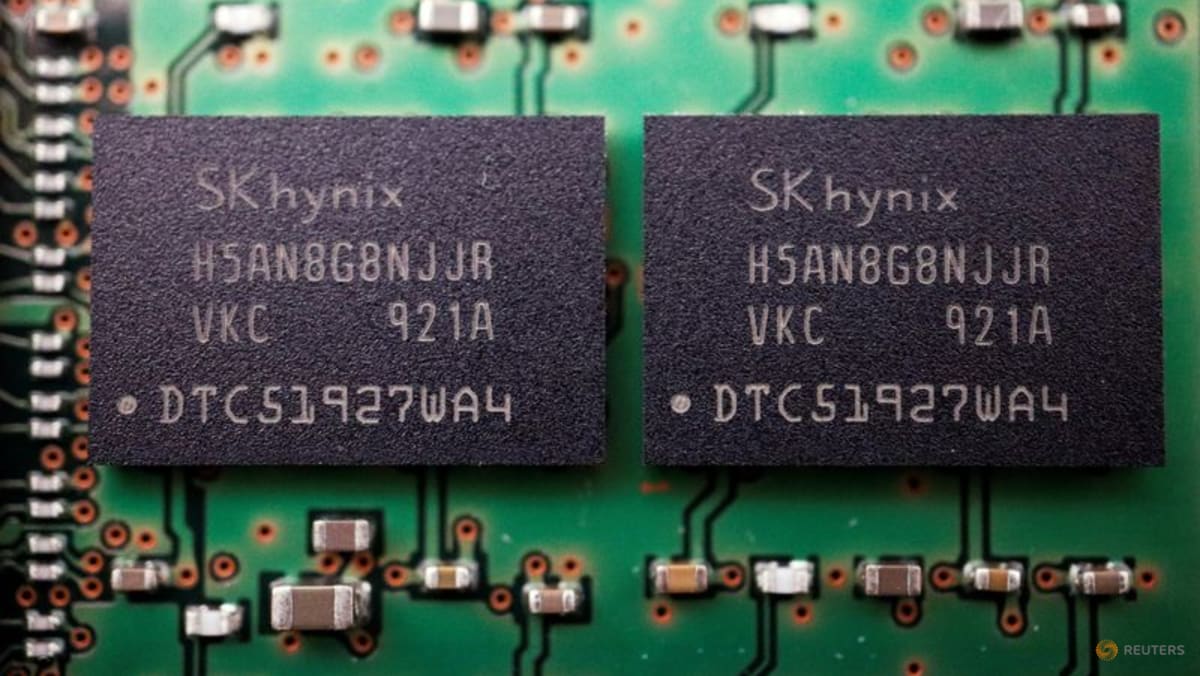
The ministry noted that, in particular, the electronics cluster of the manufacturing sector and the machinery, equipment and supplies segment of the wholesale trade sector grew robustly on account of strong artificial intelligence-related electronics demand.
GROWING DEMAND FROM SEMICONDUCTOR SECTOR
One Singapore manufacturing firm seeing growing interest from overseas companies is ATC Globe Holdings. It upgraded its facilities from 2023 to 2025 to better support high-value precision machinery work.
Its managing director Marcus Sia said demand from the semiconductor sector has picked up, prompting the firm to invest ahead of time.
“Our key customers for semiconductors – they already informed us, for the next few quarters, (manufacturing) is going to be ramped up,” he told CNA, adding that these clients have asked the company to prepare by making the necessary capital investments and recruitment plans.
“In fact, we already saw there's a slight increase in our semicon business right now. So partly also because of AI, (the business is) coming up very strong,” he added.
The firm, which provides plating and surfacing finishing services, expects to see demand go up by some 30 per cent next year.
It recently collaborated with the Agency for Science, Technology and Research to develop a special coating for business class seats on Singapore Airlines flights.
Mr Sia said the company is looking to further expand its facilities in Singapore, with several companies from Europe and the United States approaching to collaborate on projects in the region.
CONTINUE ADOPTING TECH: SMF
The upcoming Johor-Singapore Special Economic Zone is also proving to be a key draw, offering firms opportunities to diversify their production capacity across borders.
“At the beginning of 2025, we do see healthy uptake in terms of enquiries … (they come from) markets from North Asia to Europe,” said SMF CEO Dennis Mark.
“(They are) looking at this as a very interesting proposition, and also they see this proposition (as) forward-looking and forward-planning.”
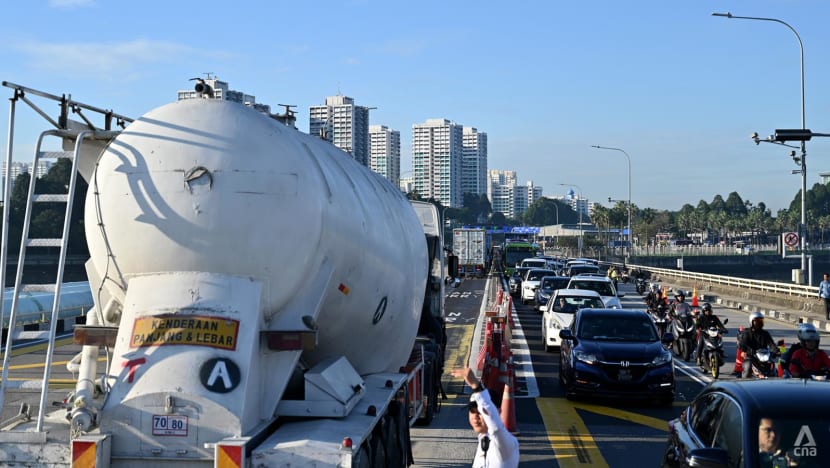 Vehicles crossing the Johor-Singapore Causeway. (Photo: CNA/Zamzahuri Abas)
However, SMF noted that to fully benefit from the broader regional ecosystem, local manufacturers – especially small and medium-sized enterprises (SMEs) – must continue upgrading their capabilities.
The federation said SMEs are moving into areas traditionally handled in the US and Europe, such as precision engineering, which can provide a cheaper and closer option for international partners seeking to expand in Southeast Asia.
“Our ability to be agile and our readiness to adopt new technology have always been our key differentiation,” noted Mr Mark.
He added that this allows multinational companies to shorten their development cycles and bring solutions to market faster.
Interest is not limited to established multinationals but also includes newer firms looking to use Singapore as a springboard into the region, said Mr Mark.
To remain attractive, he said local manufacturers must continue transforming their workforce, including through job redesign and upskilling initiatives.
“We are also working with agencies to look at a job redesign framework that can help companies to uplift existing workers and upskill them for more complex jobs moving forward,” he added.
“SMEs are looking for a simplification of grant processes. So, there's a strong call to review and streamline some of the grant processes (to) make it easier and less complex, to give (SMEs) more impact to the marketplace.”
Against a backdrop of global economic uncertainty and ongoing supply chain shifts, SMF said Singapore remains well positioned, particularly if firms take a proactive and regional approach.
Mr Mark said companies are increasingly exploring new technologies, including advanced robotics and AI – but scaling such technologies from pilot projects remains a challenge.
“We do see … enhanced interest coming from Europe,” he added.
“They can expand their business here as a base with ease … and further expand into Southeast Asia, for example, where they can feel safe with their intellectual property and also (have) a trusted partner.”