 3 months ago
106
3 months ago
106
In October 1929, the first-ever privately purchased aeroplane in Malaya arrived in Singapore. After being assembled in a workshop, the Avro Avian aircraft was wheeled to the showroom of Malayan Motors, located at 14-20 Orchard Road. It remained on display before its owner, H Stratton-Brown of Kuala Lumpur, came south to collect it.
For something like this to happen at the same address in 2025 – almost a century later – would be inconceivable. It therefore makes it particularly precious that the information was unearthed and brought to light. The good news is there is so much more where that came from.
Today, this Orchard Road unit is one of four that make up Temasek Shophouse, a social impact hub that is home to Temasek Trust – the philanthropic arm of Temasek Holdings – among others. The spot where the plane was exhibited is now Banyan Cove, a beautifully restored ground-floor event space with a double-volume ceiling – one that easily invites the imagination to fill it with small planes and cars.
The rest of Temasek Shophouse is equally storied. All four buildings were constructed in the early 20th century, during the interwar years, and were occupied by different owners and tenants. For instance, one was a distributor of international films; another had a secret vault hidden underground; a third operated a bar and restaurant.
Fortunately, they were gazetted for conservation by the Urban Redevelopment Authority, which recognised them as one of only a handful of remaining street blocks along Orchard Road. In addition to protecting their architectural and interior features, the histories within these walls have also been thoroughly researched and, where possible, preserved.
CLEAR GUIDING PRINCIPLES
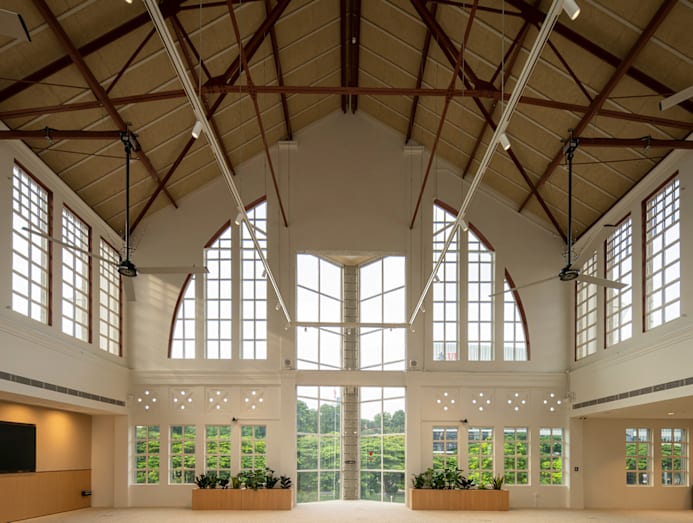 Tembusu Canopy is a second event space within Temasek Shophouse. In a past life, it hosted a badminton court for recreation and tournaments. (Photo: Temasek Shophouse)
The version of Temasek Shophouse that was restored and unveiled in September this year – located at 16, 22, 28 and 38 Orchard Road – is, in fact, a second edition. When it first opened in 2019, it occupied only 28 Orchard Road. In 2023, it closed for renovation and expansion, resulting in a threefold increase in floor area to about 68,000 sq ft. Surbana Jurong led the architectural works, while Studio Lapis served as conservation consultant.
“The COVID-19 pandemicnot only taught us that we need to connect physically with one another, it also surfaced a lot of ground-up groups and people who built their businesses for purpose and with intent,” said Yvonne Tay, general manager of Temasek Shophouse. “Civil society has nicely come of age and it was the right time to provide more support, resources and spaces to uplift the non-profit ecosystem.”
These realisations coincided with the observation that the buildings adjacent to the original unit were empty. After discussions with their landlord, the Singapore Land Authority, the decision was made to rent them to “create a bigger social impact hub and meet the evolving needs of changemakers out there”.
Tay said that the project was guided by three design principles. to honour the heritage of the buildings, which together represent about 400 years of history. Second, to celebrate community – so people from all walks of life can visit and feel welcome. Finally, to foster a regenerative future, with sustainability embedded in the design.
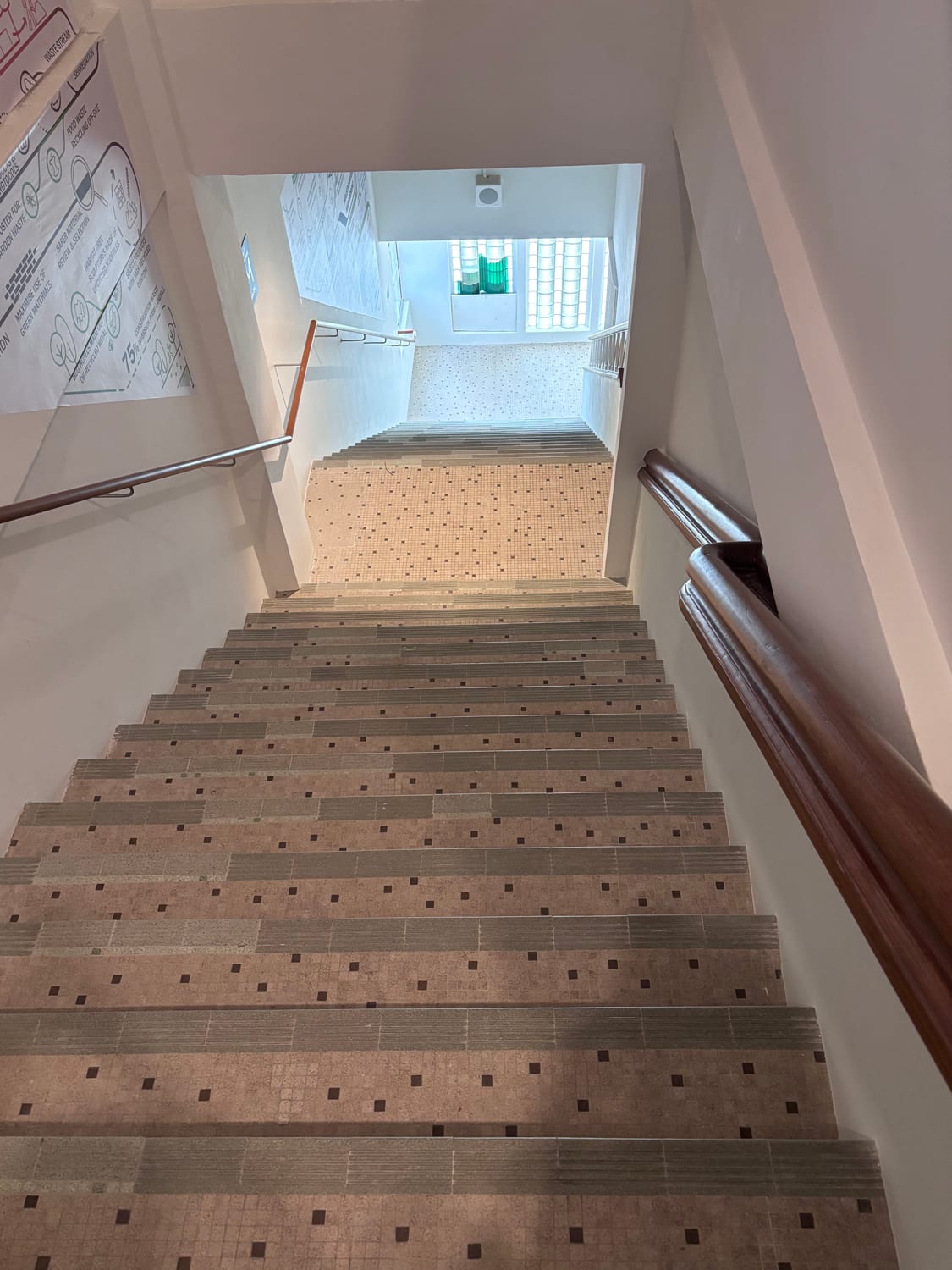 Beautifully restored mosaic tiles in the stairwell inside Number 16. (Photo: Low Shi Ping)
With such a strong foundation to work on, Eng Jia Wei, conservation consultant at Studio Lapis, was understandably enthusiastic to be part of the team. “Our approach followed the conservation principle of maximum retention and minimum intervention, ensuring historic elements were preserved wherever possible, while sensitively accommodating the building’s adaptation to a new function,” she said.
Her process began with archival research and field investigations to understand the site’s history, as well as the buildings’ intactness and the condition of their fabric. Significant elements for retention and restoration were then identified, before working closely with the project team to sensitively integrate them into the new spatial needs, structural and service requirements. In the construction stage, she and her team advised on restoration works on site, ensuring that historic features were repaired using appropriate methods and materials.
“What is really amazing about this project is that the teams were all aligned in our ethos and philosophy. By always going back to the objectives of why a social impact hub and why preserving stories is important, the approach lent itself towards a common goal,” said Tay.
COSMOPOLITAN ORCHARD ROAD
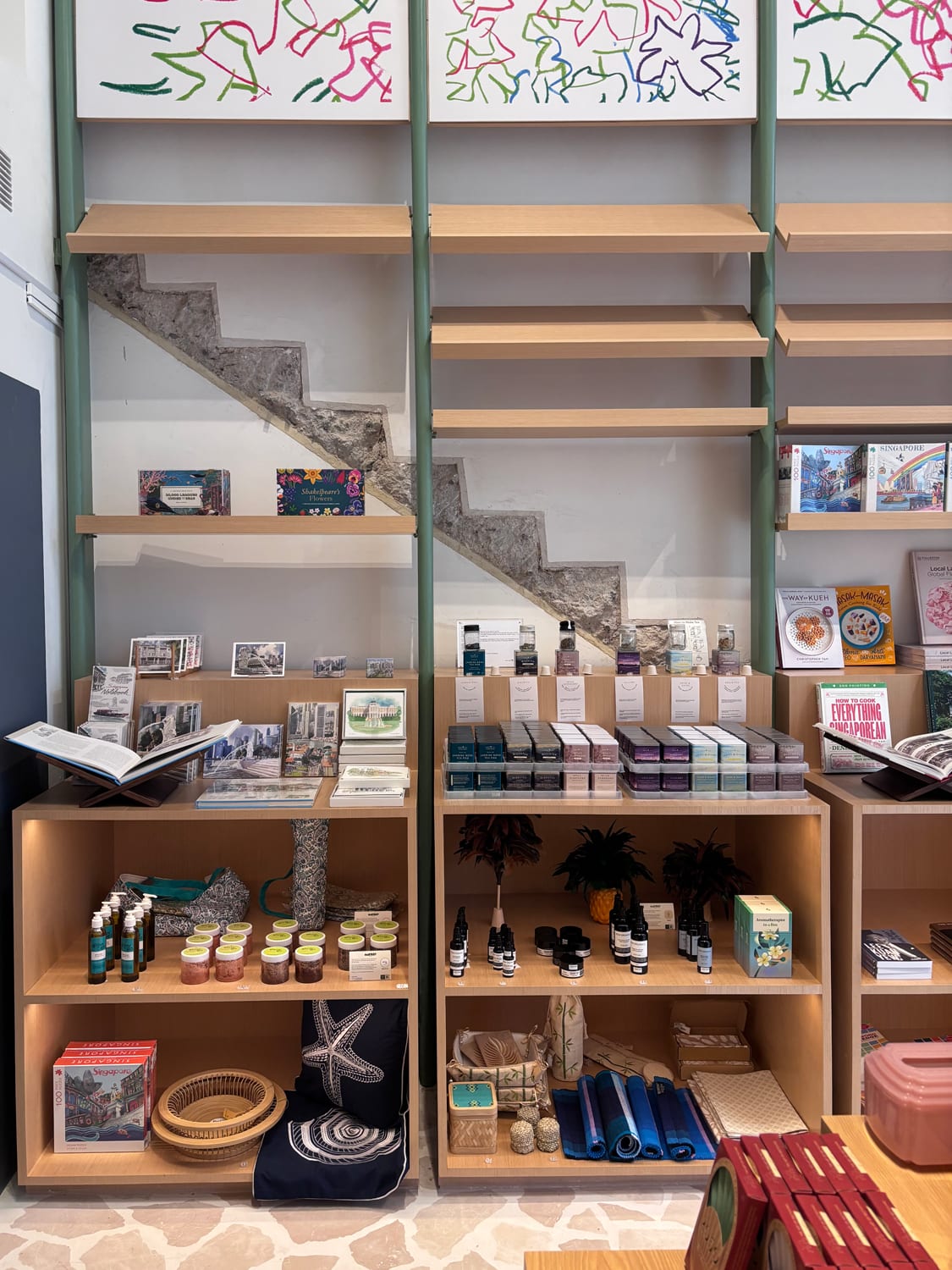 Imprint of a staircase that was removed on a wall at Martket by ABRY. (Photo: Low Shi Ping)
Today, Temasek Shophouse stands in all its restored glory along Orchard Road. What is most striking about its facade is how, despite being built around the same period, each unit has a distinct appearance that has been carefully preserved.
“The interwar years of the 1920s and 1930s were a time of remarkable architectural diversity. New construction technologies – especially the increasing use of reinforced concrete – made bolder forms possible, while international influences, such as Art Deco and early Modernism, began shaping the local built environment. As a result, buildings constructed only a few years apart often adopted very different stylistic expressions,” said Eng.
The first, number 38, immediately next to MacDonald House, is the “youngest”, having been completed last, in 1938. As the slimmest of the quartet, it is Early Modern in style, with streamlined forms and minimal ornamentation. Past tenants include Orchard Bar & Restaurant and Flower City Bar. More notably, it was designed by Ho Kwong Yew, Singapore’s first locally born registered architect, who also designed Haw Par Villa.
Beside it is number 28, completed in 1928. It has a predominantly Neo-Classical composition with emerging Art Deco influences and was significant for its departure from heavy ornamentation. It also broke new ground as one of the first buildings in Singapore to introduce spiral staircases, found on its rear facade.
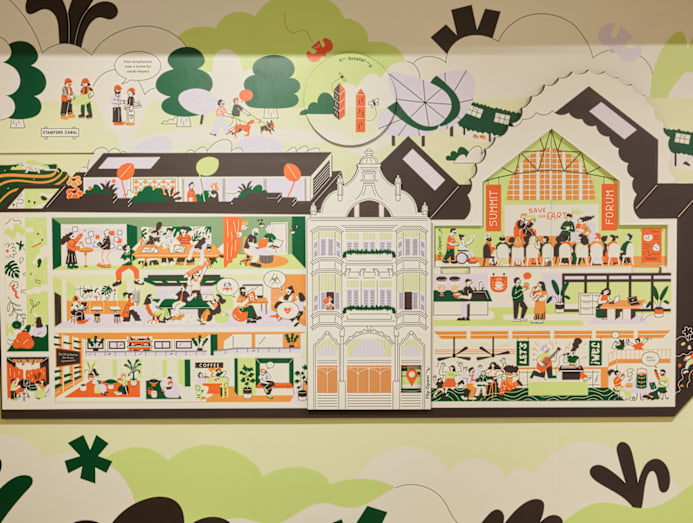 This wall features an introduction on what Temasek Shophouse is all about. (Photo: Temasek Shophouse)
It is numbers 22 and 16, though, that steal the show. Completed in 1921 following a commission by Jewish merchant David Joseph Elias, number 22 is the oldest and has an eclectic facade with Indo-Saracenic arches and a curved Flemish gable. Both an architectural and cultural landmark, it first opened as Midfilm House, owned by Middle East Films – a distributor of international films and a supplier of equipment to local cinemas.
Number 16 was completed in 1927 and has an Art Deco styling, marked by strong geometric motifs, including a scallop-edged arched gable and triangular bay window. The architecture was designed by Swan & Maclaren of Raffles Hotel fame. From intricate ornamental plasterwork to the diverse patterns and colours of its mosaics and tiled dadoes, the interiors showcase craftsmanship, construction techniques and evolving design trends from the 1920s to the 1950s.
The building began life as the showroom and workshop for Malayan Motors. Set up by the Wearne brothers, it was where small aircraft and cars from brands like Morris, Rolls-Royce, Rover and Studebaker were displayed and sold.
“Different owners, architects and businesses brought their own aesthetic preferences, commercial ambitions and cultural backgrounds to their respective developments,” said Eng. “As a result, the contrasting styles of the buildings reflect not only the evolving design trends of the period, but also the cosmopolitan character of early Orchard Road and the diverse identities and communities who shaped it.”
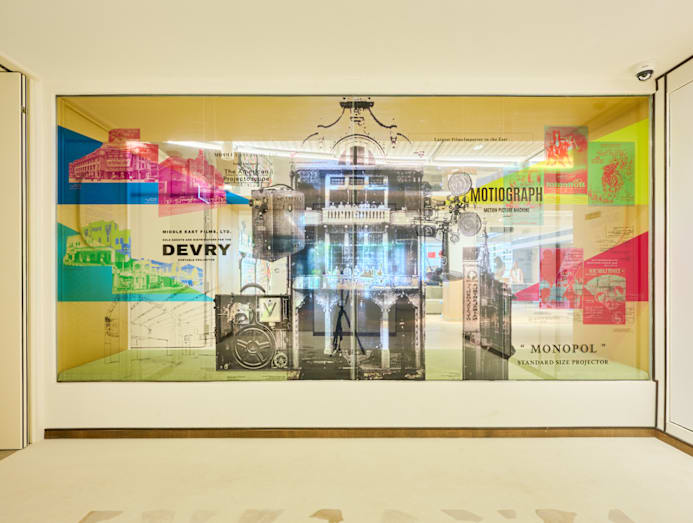 Mid-Film Distribution (Midfilm House) was a historic film distributor at Number 22. (Photo: Temasek Shophouse)
ACCOMMODATING DIVERSE FUNCTIONS
Occupying four unique buildings meant that the architects renovating the interiors of Temasek Shophouse were faced with four different layouts. Leading the charge to introduce some semblance of congruence was Ivy Koh, the executive director and Singapore lead for architecture and design at the SJ Group (Surbana Jurong).
“We wanted the units to operate as a whole, while retaining their individual character,” said Koh. “We therefore introduced a connecting spine, so that you can cross from one building to the other, like a single complex.”
Some techniques to do this include having a meandering common corridor, which was eventually inserted at the rear on level one. While this was not possible to replicate on the upper floors, the team created zig-zagging walkways by opening up sections of the party walls. The exception was number 38, where a mezzanine was added on level three to connect to the third floor of number 28.
Where floor heights differed, ramps were used in place of staircases to ensure accessibility and smoothen the transition. Two new sets of staircases needed to be installed to meet modern building standards. Rather than demolish sections of the interiors to fit them, they were located in the rear courts of the development. “This minimised the impact on the historic fabric,” added Eng.
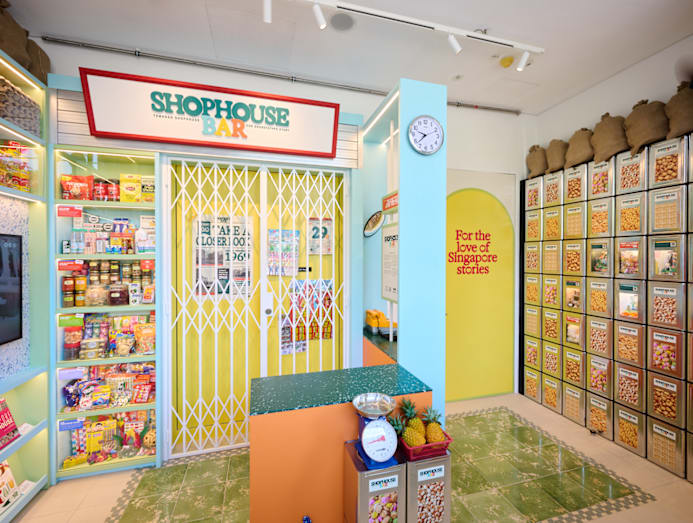 Shophouse B.A.R. (Photo: Temasek Shophouse)
Another important consideration was accommodating the programming that Temasek Shophouse envisioned in the public realm. Visit it today and there is a range of functions. The ground floor of number 38 has an installation that pays tribute to Singapore’s heritage, known as Shophouse B.A.R. (Books, Artefacts, Reflections). Behind it is a media studio.
Enter through number 28 and the double-volume Living Room opens up, complemented by social enterprise Foreword Coffee in one corner. Its counter is clad in terracotta-coloured bricks salvaged from other parts of the shophouse during construction. The back doors open onto a garden landscaped to attract birds, bees and butterflies.
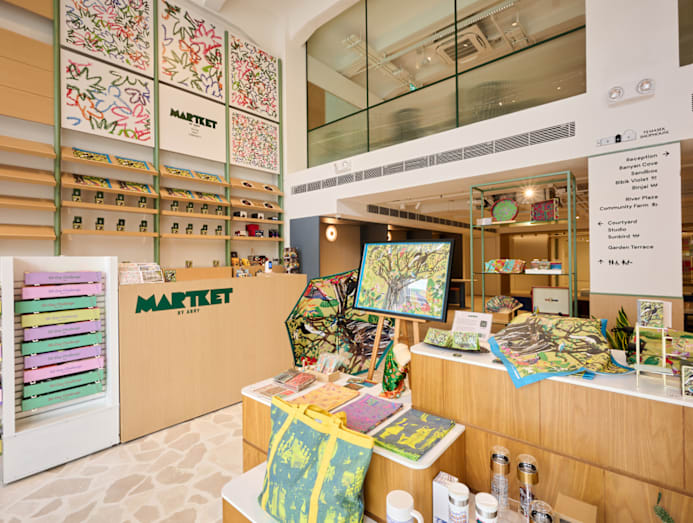 Martket by ABRY. (Photo: Temasek Shophouse)
Number 22 houses retail concept Martket by ABRY, the very same spot where Midfilm House used to have a shop. In neighbouring number 16, the former showroom of Malayan Motors is now the event space Banyan Cove. Walk further in and Peranakan cafe-bakery Bibik Violet takes pride of place.
“All this took a lot of consideration. Where is the best placement for each space? How do we ensure that there is adequate segregation and security between the public circulation and office areas? It took several iterations to land on the ideal configuration for everything,” said Koh.
Tay added: “It was a bit of a musical chairs or finding pieces to fit a jigsaw puzzle.”
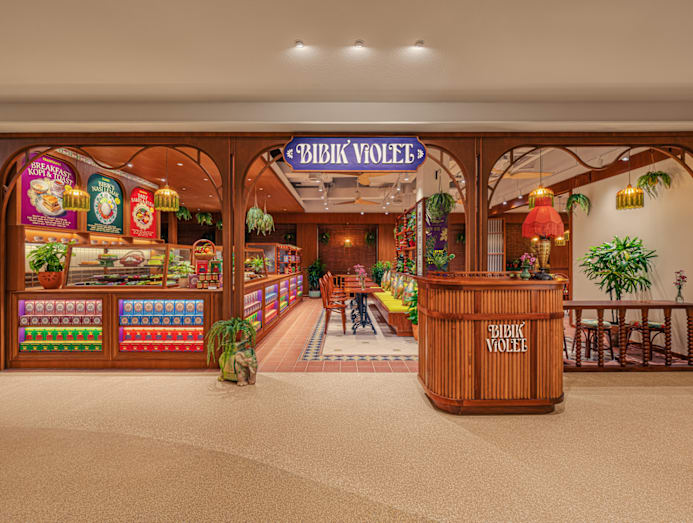 Peranakan cafe-bakery Bibik Violet. (Photo: Temasek Shophouse)
ENDLESS HISTORICAL DISCOVERIES
The extensive deliberation was bolstered by how the shophouses kept throwing up surprises as renovations proceeded. One of the most memorable for Koh was the discovery of a secret vault below number 22. Located where the lift core was planned, it had been placed there by a past tenant who had been a bullion dealer.
“We were piling for the lift core for a few days but made little progress. Then we realised we were hitting the remnants of a hidden safety vault made of a concrete-and-steel structure,” she recalled.
“It broke some machines, and we had to stop work and think quickly about what to do,” Tay chimed in. “In the end, the construction company brought in a diamond saw blade to cut up what turned out to be layers and layers of impenetrable material, including ball bearings with spikes.”
While no gold bars were found, an equally precious discovery for Tay was a ghost sign on a column directly in front of Shophouse B.A.R. – and it went on to inform the space’s name. Running down the column are Chinese characters that translate literally to “alcohol shop”, followed by the words “BAR & RESTAURANT”. These were found under layers of paint and reference the past tenant of number 38.
This presented a dilemma for the team. Tay recalled: “Do we cover it up since we are a social impact hub? But we also thought that we should honour our heritage. It turns out that in the past, a bar was simply a place where people went for a drink. In the end, we decided we should be proud and pay homage to it.”
 A ghost sign on a column directly in front of Shophouse B.A.R. (Photo: Low Shi Ping)
Another ghost sign that has been retained is on the third-floor party wall between numbers 22 and 16. Only a handful of letters on the original signage remain visible: IS, C and AKER. They are part of a painted advertisement that rose above the showroom, when it was only two storeys tall, promoting the Wearne brothers’ Morris and Baker cars. The rest is hidden behind the conserved structural beam and adjacent walls, preserving an evocative connection to the site's automobile past.
Step away from the ghost sign and the room opens into Tembusu Canopy, a second event space within Temasek Shophouse that rises up to a maximum height of 11.5m. In a past life, it hosted a badminton court for recreation and tournaments. Long concealed by a false ceiling, its expansiveness was revealed only after a sharp-eyed team member spotted a cat ladder by the window. Climbing it led to the surprise: remarkably intact coffered ceilings and cornices.
To conserve the space and prepare it for a higher live-load capacity, the level three slab was strengthened from above. To conserve the space and prepare it for a higher live-load capacity, the level three slab was strengthened from above. The original slender mild-steel window frames were reinstated using modified profiles that support thicker glass for improved acoustic and thermal performance, while maintaining the original proportions.
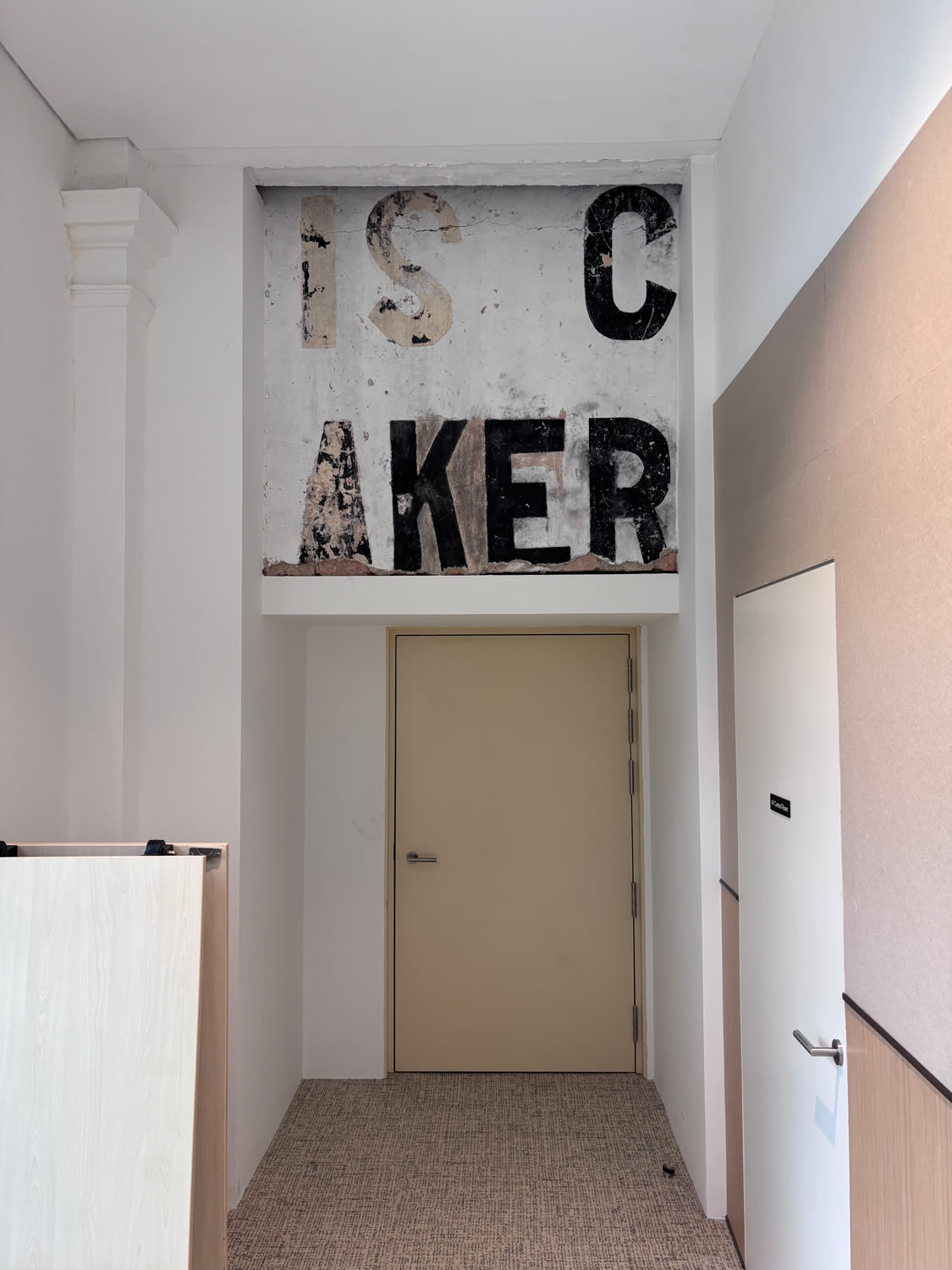 Another ghost sign at Tembusu Cove. (Photo: Temasek Shophouse)
The ceiling and steel trusses were left exposed to retain the historic grandeur, paired with suspended fans mounted on a lightweight, independent support. Air-conditioning is discreetly installed along the sides, and electrical services are concealed beneath raised flooring to reduce visual clutter and ensure reversibility.
Nearby is Eng’s personal highlight, on the top of number 22. A three-letter monogram, DJE, is superimposed onto the apex of the front facade. “At first, we couldn’t figure out what it was, until we consulted the historical records in the ‘Index of Lands’, which documented David Joseph Elias as the property owner,” she said, adding that it was quite challenging to restore it, drawing a parallel with medical surgery.
Another obstacle involved Shanghai plaster – a historic finish made of granite chippings set in a cement binder to achieve a granolithic appearance. Found on all the facades except number 22, and inside parts of number 16 (including Tembusu Canopy), it had to be restored and conserved.
All later paint layers had to be carefully removed to reveal the original Shanghai plaster finishes. After multiple iterations of repair mixes to closely match the existing surface where replacement was needed, the authenticity of the historic material was preserved.
Apart from the process being painstaking, slow and meticulous, it also limited the aesthetics. While the facades today appear darker than expected, the authentic patina was embraced as part of the building’s historic character.
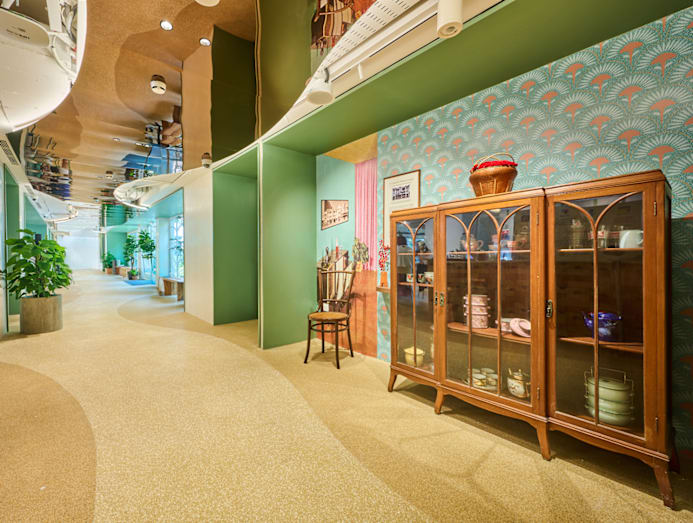 The corridor along Block B. (Photo: Temasek Shophouse)
“It was very nerve-wracking, because we had almost no control over it. But to do conservation also means protecting the integrity of what was. We just had to unpeel the layers and do the restoration works,” explained Tay.
One fun fact: Dhoby Ghaut – including the spot where Temasek Shophouse now stands – marks the eastern start of Orchard Road. Less than 300m away is 1 Orchard Road, home to the YMCA. It’s easy to imagine the rich and famous flocking here to peruse new automobiles and visit the cinema to learn about the world.
Tay is eager to inject that same spirit into this end of the enclave again, to encourage people to get acquainted with social impact and philanthropy, “Buying cars and films are probably no longer as exciting for some today, but maybe doing good and doing well could be what today's generation will appreciate.”
Koh is glad to have been part of the team that created the spaces to make all this possible: “Restoration and conservation enable the buildings to regenerate for another 100 years or more.”
Eng concurred: “Conservation is a forward-looking process. It is about inheriting an asset from past generations, caring for it, adding your own layer of history, and passing it on to the next generation.”
Temasek Shophouse has clearly done all this and more. Hopefully, in 100 years’ time, history will judge it as favourably as we now judge Malayan Motors and its Avro Avian aeroplane.