 4 hours ago
2
4 hours ago
2
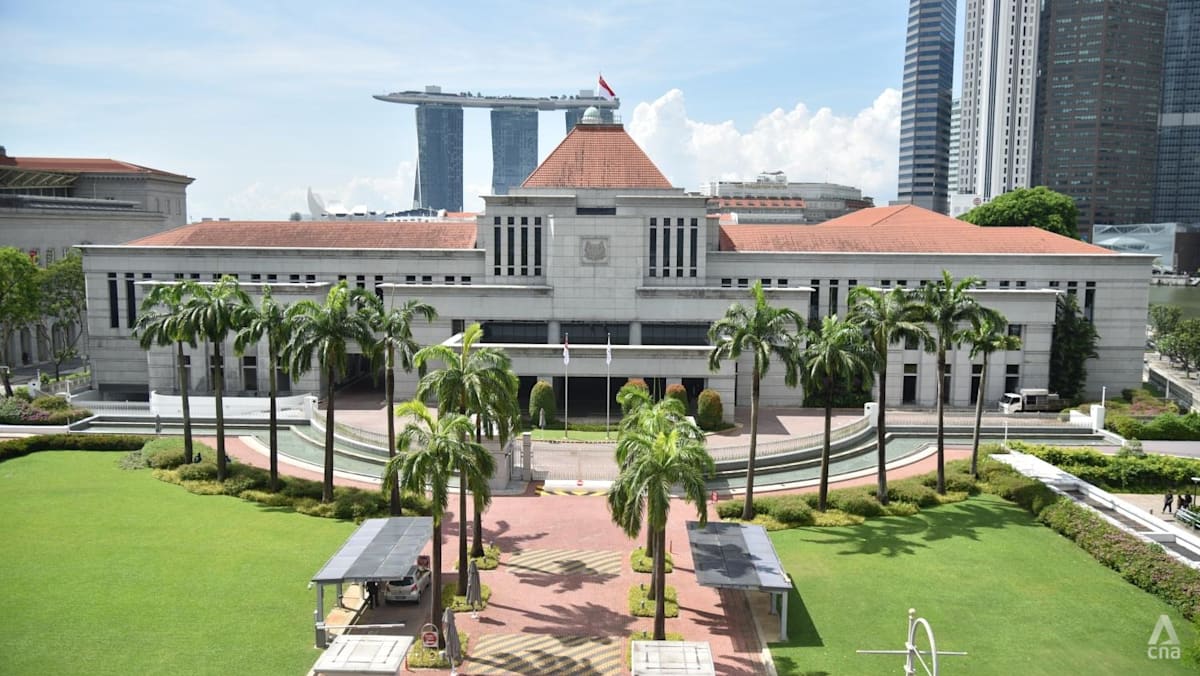
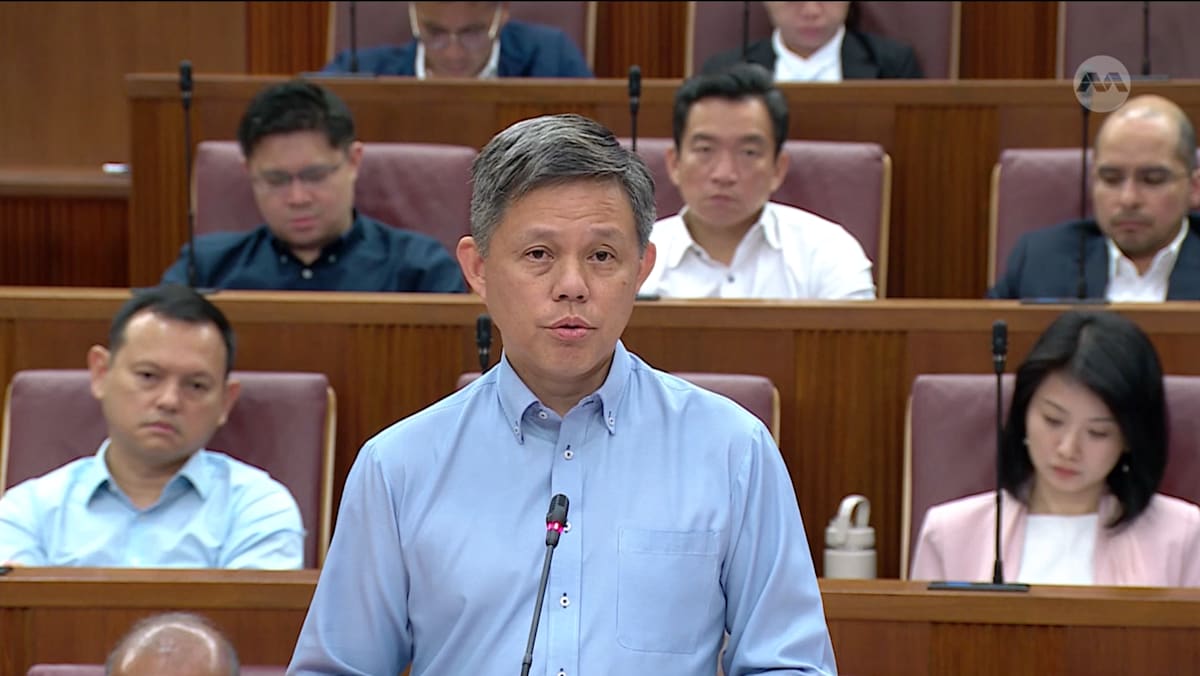
SINGAPORE: Singapore Airlines’ (SIA) ability to serve Singaporeans is not affected by the company’s investment in Air India, Transport Minister Jeffrey Siow told parliament on Tuesday (Sep 8).
Mr Siow was responding to MP Kenneth Tiong (WP-Aljunied), who asked whether losses from SIA’s foreign associates have been assessed against its capacity to provide essential transport services, given that the airline is a designated operating entity under the Civil Aviation Authority of Singapore Act.
Mr Tiong also asked whether such losses, or a continuing pattern of them, would trigger the Act's requirement to notify the Civil Aviation Authority of Singapore (CAAS) of any event that could materially impede its ability to provide an essential transport service.
Mr Siow said SIA is required to report any events or irregularities that may materially impede or impair such services, but losses in a foreign associate do not necessarily meet that test on their own.
“The relevant question is whether such losses or anything else reach the point of materially constraining the resources available for SIA's fleet maintenance or network operations here," he said.
“That is a judgment based on facts. We are nowhere close to this scenario. At present, there is no reason for us to doubt SIA's ability to deliver air services in Singapore.”
Mr Siow noted SIA’s core business had one of its strongest years, with record revenue, high operating profit margins and a record number of passengers carried.
SIA has been open about the Air India investment, he said, discussing it with shareholders at its annual general meeting in July and setting out its considerations in a letter to the Business Times on Aug 29.
“Through Air India, SIA gains deeper access to one of the largest aviation markets in the world by passenger traffic and a strategic location or onward connections to Europe and the Middle East,” said Mr Siow.
“Many overseas investment returns will not necessarily emerge immediately. Whether a specific investment in Air India proves valuable is for SIA and its shareholders to answer.”
SIA owns 25.1 per cent of Air India. Scrutiny over the investment has grown since a Reuters report last month cited sources as saying that Air India is seeking a further US$1.5 billion in support from owners Tata Sons and SIA, just months after it posted a record annual loss.
“TENUOUS” LINKS
Mr Siow said Mr Tiong had “drawn an imaginary link” between SIA's overseas investment and its ability to maintain air services in Singapore.
He pointed to Mr Tiong’s Facebook posts in which the MP asked what would happen "if this deal goes bad", whether Temasek would be "their backstop" and what it would mean for Singaporeans' taxes and quality of life.
In his Facebook post, Mr Tiong also said it was "unfortunate" that questions about the Air India deal have become entangled with racist comments, which he condemned.
Mr Siow said he was glad Mr Tiong agreed that no one should "seek to exploit racial divisions for political purposes", but said his public rhetoric "goes beyond the question that he puts before this house".
“He has drawn these multiple tenuous linkages, dressed them up in emotive terms, insinuated that through SIA's investments, Singaporeans somehow owe Air India a living, and suggested that SIA is not making its investment decisions on a commercial basis, but for some other reason. There is no basis for this.”
In a supplementary question, Mr Tiong noted SIA is in net debt and posted a net loss for the quarter as of Jun 30. Airline turnarounds that have worked show results within three years, he said, while Air India had planned for five and its losses doubled last year.
The Indian aviation hub is also seeing more competition, he said, and SIA does not control Air India, meaning future injections could hinge on Air India’s own requirements.
“I support SIA's ability to make its own decisions, but I do not support further cash infusions from Temasek to stand behind a decision that, on these facts, reasonable members of the public are questioning,” he said.
Mr Tiong asked whether the government would rule out direct support through Temasek if “Air India goes wrong”, and whether there is a limit or return threshold on further cash to Air India given its status under the Critical Firms Act.
“This cannot be a blank cheque, least of all on a minority stake. We ask because through the reserves, Singaporeans are SIA's stakeholder of last resort, and the stakeholder of last resort needs to know where the line is,” said Mr Tiong.
Mr Siow replied that Air India’s finances are not SIA’s finances, and its losses do not automatically become SIA’s liabilities.
SIA’s debt sits in non-current, long-term borrowing such as five- or 10-year bonds with generally low interest rates, he said, and current liabilities remain “well within” SIA’s cash reserves of over S$10 billion.
“It's easy to criticise, but I suspect it is much harder for the member to tell us what SIA should do, and so I would suggest that the best course of action is to leave the board and the management of SIA to make the decisions because it is their duty and their responsibility to do so,” said Mr Siow.
On the impact to Temasek and Singapore's reserves, Mr Siow said the government does not judge Temasek on any single holding, and a portfolio of its size, over S$500 billion, will always contain investments with different risks and time horizons.
In more than 50 years of operation, he added, SIA has only requested funding from Temasek during the COVID-19 pandemic, when the government provided significant support for the whole aviation sector, not just SIA.
Mr Tiong reiterated the need to understand the risk limits. He also “categorically” rejected racism and xenophobia, questioning why they are brought into a “purely commercial matter”.
India remains a “very, very complicated” market, he said, citing conglomerates Adani and GMR’s potential to set up their airlines and noting that low-cost carrier IndiGo controls 67 per cent of the domestic market.
“I note that in other aviation businesses, such as SATS, for instance, these businesses do actually have some degree of operational control, whereas with Air India and SIA, it's a completely different story. It's a minority stake; we don't have operational control. So therefore we need to evaluate this investment very, very carefully.”
Mr Siow said Mr Tiong is entitled to question whether SIA’s investment would succeed, but has “gone much further” by “leaping without evidence”.
“Members may ask difficult questions, but the claims we make must be grounded in facts, not exaggerated speculation that creates needless public alarm. Singaporeans deserve public debate that examines risks honestly, explains them responsibly, and remains anchored on truth and logic,” he said.
SINGAPORE AIRLINES RESPONDS
SIA said in a statement on Tuesday that Air India’s transformation is a “complex, multi-year programme and is not expected to be linear”.
The airline set up Vistara as a joint venture with Tata Sons in 2013. Following Vistara’s consolidation into Air India in November 2024, SIA holds a 25.1 per cent stake in the enlarged Air India Group.
An SIA spokesperson cited several challenges facing Air India, including the prolonged closure of Pakistani airspace to Indian carriers, the impact of last year's Air India crash, the depreciation of the Indian rupee against the US dollar, supply chain disruptions, the loss of a key market due to the Middle East conflict and sustained high fuel prices.
“At the same time, Air India has made tangible progress across customer experience and operational performance,” said the spokesperson.
SIA noted that Air India's net promoter score, which reflects how likely customers are to recommend a brand, has increased by more than 70 points since November 2022. In May, the carrier received a four-star airline rating from review site Skytrax, while Air India Express was certified as a four-star low-cost airline, “on par with leading international carriers”.
“SIA and Tata Sons have both publicly acknowledged that there is still much work to be done,” said the spokesperson. “Both remain committed to supporting Air India’s long-term transformation programme.”
As at Jun 30, 2026, SIA had S$10.48 billion in cash reserves, comprising S$9.10 billion in cash and bank balances and S$1.38 billion in fixed deposits. SIA also has access to S$3.24 billion in committed, undrawn lines of credit.
“Any requests for additional capital will be evaluated under the group’s disciplined capital allocation framework, taking into account Air India’s business strategy, the SIA Group’s operating cash flow, and our investment requirements for new aircraft and products,” the spokesperson said.