 3 months ago
243
3 months ago
243
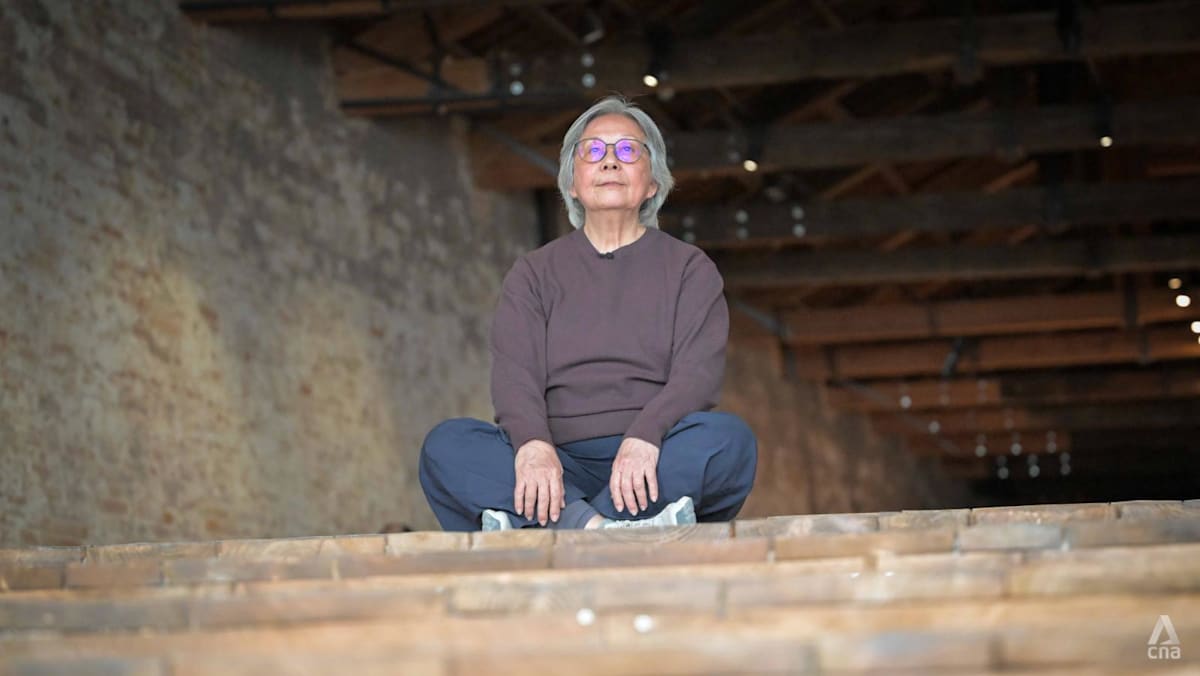
Singaporean artist Amanda Heng created A Pause inside the Singapore Pavilion at the ongoing Venice Biennale. The 74-year-old tells CNA Lifestyle how the idea of rest and her ageing body shaped the installation, which invites visitors to slow down, reflect and experience stillness.
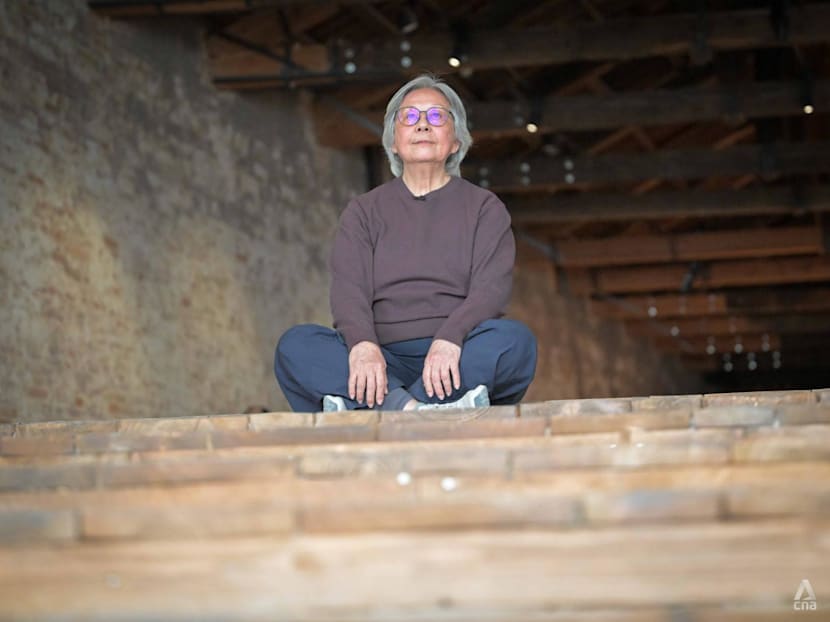
Amanda Heng at the Singapore Pavilion on May 5, 2026. (Photo: CNA/Lim Li Ting)
New: You can now listen to articles.

This audio is generated by an AI tool.

The streets of Venice have always been busy and crowded, packed with tourists throughout the year. And with the 61st Venice Biennale in full swing, it's busier and more crowded than ever in the Italian city, as the event famously regarded as the "Olympics of the art world" draws even more people.
But somewhere inside one of the old buildings of a complex of former shipyards and armories known as the Arsenale, a Singaporean has prepared a space for people to take a moment to just rest.
Performance artist Amanda Heng has transformed the Singapore Pavilion into site-specific installation called A Pause. It's a space for rest and observation, where wide, wooden steps encourage visitors in as sunlight pours through massive windows.
Look out and you'll catch a glimpse of the Venetian streets. You can choose where to sit, lean or lie down – and decide how long you want to linger.
“The idea of rest is within us. It’s something we possess from birth – now forgotten because of modern life that emphasises more on speed, competition and a rapid way of living,” the 74-year-old explained.
“Find the moment for yourself. Listen to your own body and find the most comfortable way to experience the space," Heng continued.
A significant figure in the contemporary arts scene of Singapore since the 1980s, Heng is a Cultural Medallion recipient who has had her work featured in major biennales and art festivals. Most recently, she was included in the all-women group show Fear No Power: Women Imagining Otherwise at the National Gallery Singapore, which runs until November.
From walking a pet stool down the street to setting up a table to encourage people to have conversations while plucking beansprout, Heng's body-centric practice spans nearly four decades.
These two, titled Walking The Stool and Let's Chat respectively, are among her well-known performance pieces. Heng uses everyday gestures and ideas to explore gender roles and societal expectations in her practice.
And it's no different in Venice. Inspired by the city's many bridges, Heng uses the ordinary and familiar element of their steps and her observations of people using them to create A Pause.
The steps are unusually shallow – at 10cm high and from 50cm to 4m in width – and naturally slow down visitors’ movement as they wander towards the large windows of the building.
Heng and curator Selene Yap had also decided to embrace these windows as a key feature of the pavilion, after noticing how visitors in previous years would gravitate towards them as a form of visual respite.
“It is interesting how the design directs our gestures, our activities. In a way this precisely speaks about what I wanted to say – how to slow down,” said Heng.
Yap said the idea was to “adopt the building’s material language as it is” in order to assimilate the pavilion into the existing architecture. In fact, the steps are made of larch wood, the same type of timber found in the floorboards of the Arsenale’s Sale d’Armi where the Singapore Pavilion is located.
“The dimensions of this space invites different postures of rest. You could choose to stand. You could lie. You could sit down. You could lean. It's basically your body telling you what it wants to do," added Yap.
Within A Pause there's also a curved wooden structure housing a dual-channel video work featuring Heng and some Venetians engaging in different acts of rest as well as moments of mundanity. You see a man splayed across an armchair, a woman taking a walk through the streets, a shot of birds flying across a field.
Filmed in real time, the video shows the different ways Venetians find peace amidst their busy urban lives, juxtaposing these with her own to offer a different cultural context.
“These ideas about rest do not mean you have to do a specific thing to be considered at rest. Some people move around but the mind relaxes and unwinds," she said.
Interestingly, the video also features the act of walking as a form of rest for Heng and a few of the participants. This comes as no surprise as walking is also a considerable part of Heng’s practice, appearing in different contexts and various works.
Her well-known work Let's Walk, which began in 1999, sees Heng walking backwards down the street with a high heeled shoe in her mouth and a mirror guiding her path. It was in response to the 1997 Asian financial crisis, during which women were turning to plastic surgery to keep their jobs. It was Heng's commentary on how a woman’s beauty seemed to be more important than her capabilities.
“That experience of walking in that manner becomes the art,” said Heng.
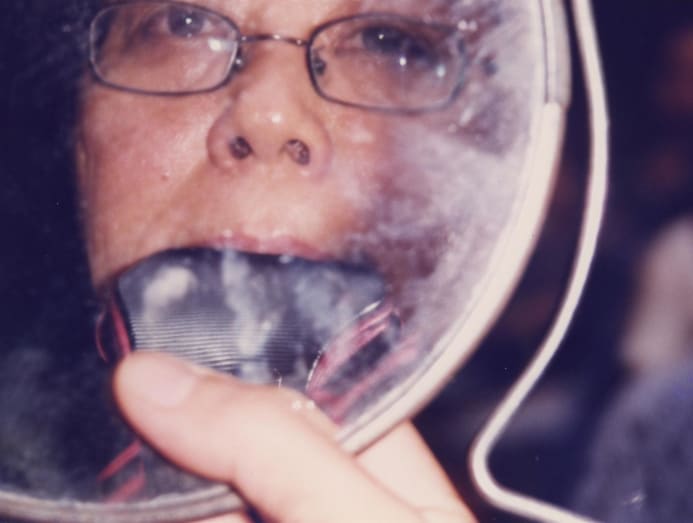 Let's Walk by Amanda Heng features the artist walking backwards with a high-heeled shoe in her mouth while holding a mirror. (Photo: Amanda Heng and National Gallery Singapore Library & Archive)
Heng also sees the body as the through thread across her work.
Also featured in the Singapore Pavilion is Heng’s series of black and white photographs titled Parts Of My Body.
First made in 1990, the reprints feature close-ups of Heng’s body, from an eye to her breast, inviting viewers to consider how time and memory exist in the body.
“I am maybe moving from the physical forms of the studies of the body from the beginning. Now, looking inwards to find an inner strength of stillness for our renewal.”
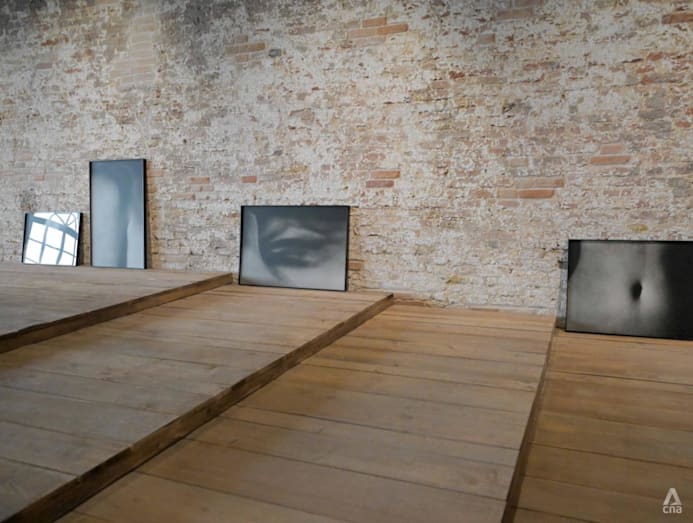 Parts of My Body by Amanda Heng at the Singapore Pavilion on May 5, 2026. (Photo: CNA/Lim Li Ting)
At 74, Heng is the oldest artist to stage a solo presentation at the Singapore Pavilion. And she’s confronting ageing with a new sense of urgency.
The idea of rest was, in fact, inspired by Heng’s experience of being a caregiver for her mother before she passed on in 2023, as well as her own relationship with her body as she gets older.
“Rest becomes more important. The body becomes more conscious of that because you naturally feel you need to rest more. You move around more slowly, you respond to things slower than before. This is a very natural process, it’s just that we never pay attention to it.”
Resting, walking, bodies, ageing – Heng weaves all of these together in A Pause, not just as ideas for visitors to think about but also for herself.
“The urgency comes about with questions of, ‘Am I able to continue with my performance? How am I going to continue with it?’ And the other urgent thing is my own age, how to cope with my life and all of the realities.”
The intersection between art and lived experience has always been central to Heng’s work.
“My art and my life merges. I don’t separate them. They are one.”