 3 months ago
170
3 months ago
170
SINGAPORE/KUALA LUMPUR: Cheryl Tan, 37, finds herself returning to the same express bus operators when booking a return trip between Singapore and Kuala Lumpur.
The Malaysian and Singapore permanent resident told CNA other operators felt “less safe”, describing the uncertainty she experienced on some of her past trips.
In Malaysia, coaches that offer long-haul domestic services and across the southern border to Singapore are commonly known as express buses.
“You could have multiple stops along the way, or one time we had to change buses in the middle of nowhere,” said Tan, a singer and vocal coach who tries to visit her hometown near Petaling Jaya, Selangor once a month.
“I don't know how well-rested the drivers are.”
 Cheryl Tan (left) with her sister at a cafe in Petaling Jaya in December 2025. (Photo: Cheryl Tan)
Recent express bus accidents in Malaysia
In November 2022, 16 Singaporean passengers on an express bus heading to Kuala Lumpur were injured when their bus rammed into the rear of a trailer along the North-South Expressway in Melaka.
In July 2023, two people died after a tourist bus travelling from Singapore to Kuala Lumpur hit a bridge pillar on the right side of the North-South Expressway in Negeri Semblian, before swerving to the left and hitting another car.
Then in January 2024, a teenager was killed and three passengers were injured after a bus travelling from Singapore to Kuala Lumpur collided with a motorcycle on the same expressway in Melaka.
In June 2025, 15 university students died after their private charter bus travelling from Terengganu to Perak hit the back of a multi-purpose vehicle on the East-West Highway in Perak.
Collapse Expand
A series of serious accidents involving express buses on Malaysia’s roads - including one in June 2025 that saw 15 university students killed in Perak - have driven home the poor safety standards in the industry.
Since Prime Minister Anwar Ibrahim personally ordered a probe into the Perak crash, authorities announced several measures to improve the safety and convenience of express bus passengers.
These include ramping up enforcement of rules like mandatory seat belts and having a second driver for longer distances amid the festive season. Malaysia will also launch a database to weed out errant drivers with poor safety records.
As for convenience, Transport Minister Anthony Loke said his ministry will add more central hubs in Kuala Lumpur for express buses plying the Singapore route, and make boarding more seamless through QR codes on tickets for buses departing the Malaysian capital’s main hub - the Southern Integrated Terminal (TBS).
“Let’s be honest - these measures didn’t come out of thin air; they came out of body bags. Malaysia has a painful, recurring history of fatal express bus crashes,” said Rahman Hussin, co-founder of MY Mobility Vision, a transport think tank in Malaysia.
“Every major crash cycle triggers public outrage, media scrutiny, and political pressure. This time, the ministry appears to be moving from reactive grief to proactive governance, and that’s commendable.”
After the fatal Perak crash, Loke announced on Jun 11 last year that the authorities will launch a driver record database to improve hiring and bar high-risk drivers from roads.
Weeks later on Jun 29, the Road Transport Department (JPJ) announced that drivers and passengers on newer express buses must wear seatbelts from Jul 1, with initial enforcement targeting buses manufactured from January 2020.
And earlier this month, JPJ said it would ramp up special enforcement operations on heavy vehicles including express buses ahead of the Chinese New Year period, with measures focusing on drivers’ licenses, compliance with driving hour limits, vehicle conditions and having second drivers on trips exceeding 300km.
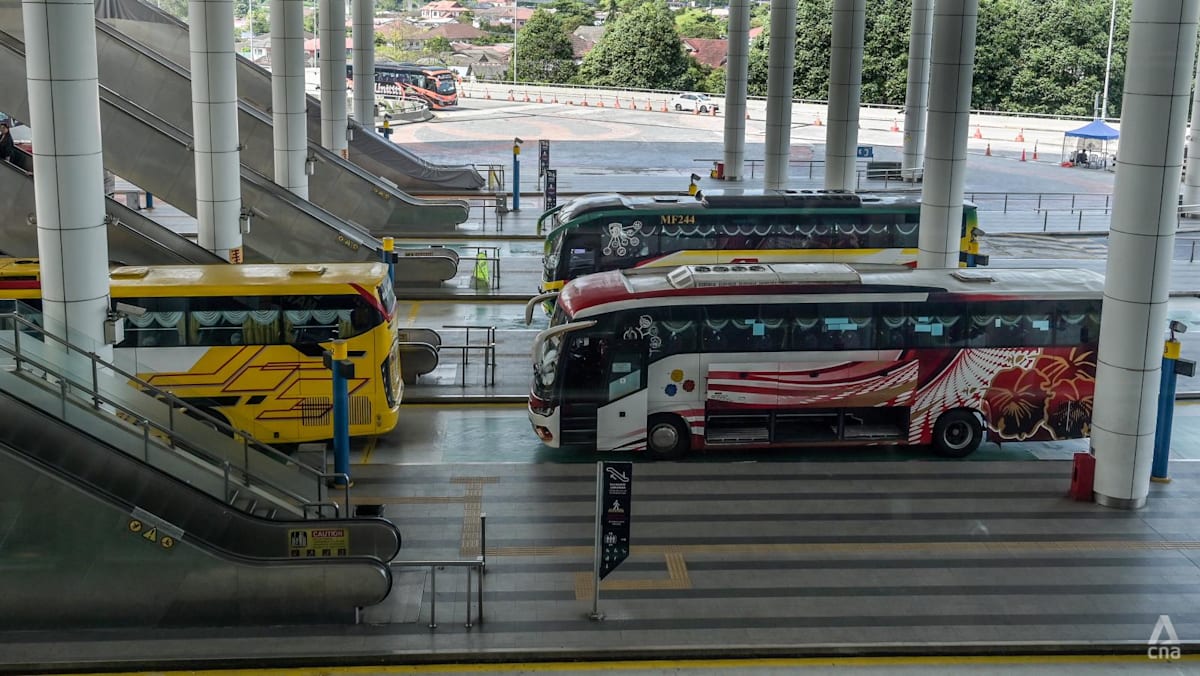
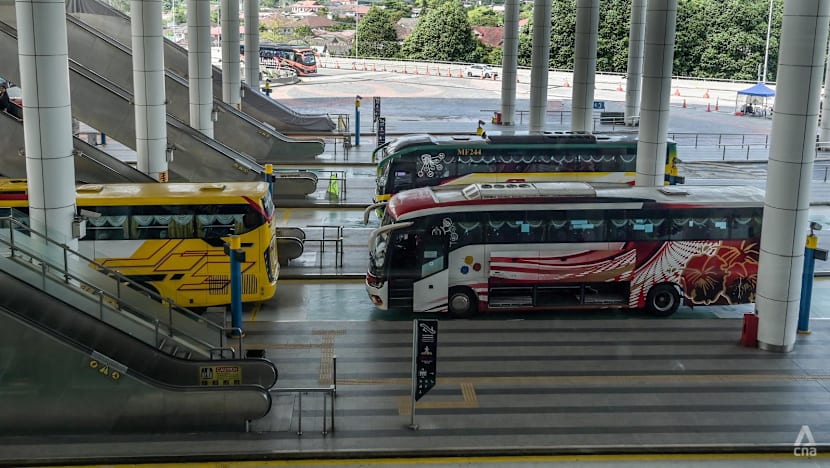 Express buses at the Southern Integrated Terminal (TBS) in Kuala Lumpur. (Photo: CNA/Fadza Ishak)
“It will not only be through traditional roadblocks, but also plainclothes officers boarding buses,” Loke reportedly said.
“Enforcement is not meant to be punitive but to safeguard the industry’s future. If we want to grow and gain public confidence, operators must cooperate and ensure safety standards are upheld.”
SAFETY MEASURES
While transport experts, operators and express bus passengers welcomed the new measures, pointing to some improvement in safety standards, they said more could be done.
Last June, local newspaper Utusan Malaysia reported that 38 accidents involving buses took place in the first five months of 2025, citing police statistics.
There were 104 bus accidents in 2023, before this figure fell to 61 accidents in 2024, the report said.
In the 203 bus accidents reported from 2023 to May 2025, 39 deaths, 68 major injuries and 197 minor injuries were recorded.
Factors contributing to accidents include exceeding the speed limit, improper maintenance, mechanical failures, and pressure from operators, police analysis showed.
Rahman told CNA the tougher measures reflected a “genuine attempt to course correct”, but remain piecemeal rather than structural.
For instance, he said the driver database lacks “teeth” in terms of forcing greater compliance, as he called for the system to be linked to real-time monitoring of express bus drivers.
On Jan 21, Malaysia’s Land Public Transport Agency (APAD) said the database will hold records on over 60,000 bus and lorry company operators and indicate whether their drivers are eligible to be on the road.
The database, expected to be launched in the first quarter of 2027, will be linked to agencies like the Royal Malaysia Police, National Anti-Drug Agency and JPJ.
Rahman said the database should be linked to fatigue detection and GPS tracking systems in buses, with mandatory rest compliance alerts and automated flagging when a driver exceeds their permitted working hours.
“The technology exists; several countries already mandate it. We don’t need to reinvent the wheel,” he said.
Driver fatigue is a main cause of serious road crashes, said Suret Singh from the Road Safety Council of Malaysia, adding that authorities should also ensure that replacement drivers are well-rested and fit to drive.
He feels JPJ should be more flexible in enforcing the second driver rule by letting express buses without sleeper cabins switch drivers at approved locations, instead of just checking if both drivers are on the bus.
“Having a second driver onboard a bus without a proper sleeper cabin causes fatigue to the second driver without proper rest and a place to sleep,” Suret told CNA.
He said the Malaysian authorities, however, “deserve due credit” for firmly implementing seatbelt wearing compliance in express buses, suggesting that this will help reduce serious injuries and deaths in crashes by at least 50 per cent.
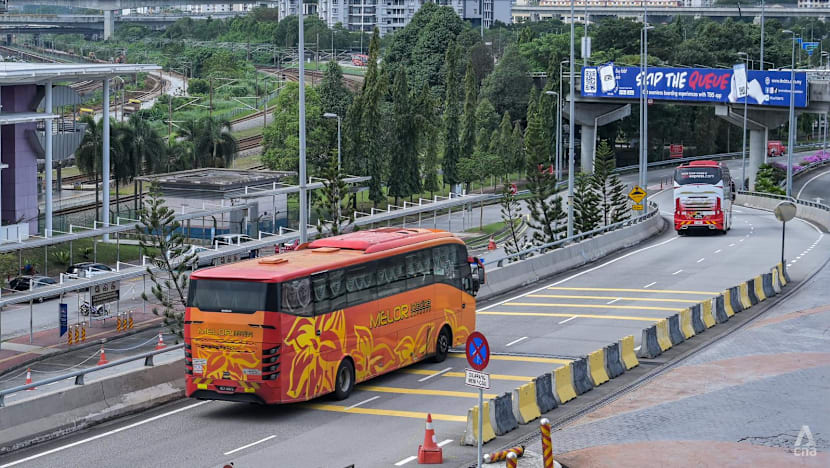 Express buses on the road in Kuala Lumpur, Malaysia. (Photo: CNA/Fadza Ishak)
Since the fatal Perak crash, road safety expert Law Teik Hua has observed a “notable shift” in authorities’ tone and pace of action.
“While it is still too early to assess the overall impact of their actions, there is no denying the fact that the overall level of enforcement activity is now more visible,” he said.
Law, an associate professor at Universiti Putra Malaysia, pointed to a reported increase in roadblocks and spot checks to inspect driving data, vehicle permits and seat belt use.
“Nevertheless, the consistency of enforcement will remain the decisive factor in the success of measures,” he added.
The “problem” with enforcement in Malaysia, Rahman said, is that it tends to spike during festive seasons and then taper off.
“Safety cannot be seasonal. It needs to be 365 days a year, consistently applied, with real consequences for non-compliance,” he said.
In response to questions about tighter enforcement operations and their consistency, a JPJ spokesperson referred CNA to local media coverage of its recent enforcement blitz over the Chinese New Year period, which ran from Feb 9 to Feb 22 nationwide.
The operation urine-tested 381 express bus drivers for drugs and found three drivers with positive tests, said JPJ deputy director general Jazmanie Shafawi at a press conference on Feb 16.
Officers also inspected more than 4,200 buses in depots and terminals across the country. Three buses were seized for offences like an invalid driver’s vocational licence and expired road tax.
Golden Coach, a Singapore-based operator which runs Malaysia-registered express buses, maintained that its drivers have abided by JPJ rules, including the 90kmh speed limit on highways and having a second driver for longer journeys.
“Sometimes, (JPJ) officers check the buses along the journey,” its general manager Leong Ying Ken told CNA at its office in Havelock.
To remind drivers of the rules of the road, the company has a list of its regulations on the main door of its office, he added.
“I think the measures are good; the passengers (feel) very safe,” said Leong, referring to the tighter rules and enforcement in Malaysia.
 Golden coach general manager Leong Ying Ken and Connie Lee, 61, customer service officer discussing bus booking schedules at the operator's office in Havelock. (Photo: CNA/Lan Yu)
Law Cheok Green, chief executive of Malaysian coach operator Aeroline, said that the company has seen safety improvements over the years through collective stakeholder efforts, adding that its buses are compliant and have seat belts installed.
However, Law said that he hopes to see other reviews of regulations he feels have been “hindering the industry from improving even more”.
These include Malaysia’s shorter 15-year statutory bus lifespan - extended from 10 years in 2021 - compared with the 20-year and 25-year limits in Singapore and Australia respectively, said Law, noting that the rule applies regardless of maintenance standards.
“In a way, this forces Malaysian express bus operators into an artificial race against time to recuperate their investments, an unnecessary pressure that detracts us from investing more into safety and quality.”
Law also pointed out that the 90kmh speed limit for heavy vehicles has led to “multiple shockwaves” due to the speed differential between faster moving cars and slower moving buses on the North-South Expressway. The standard speed limit for cars on the North South Expressway is typically 110kmh, though this may be reduced along stretches such as toll plazas or heavy traffic sections.
“This increases the incidence of vehicle-to-vehicle accidents due to the sudden need to brake,” he said, referring to the different speed limits between buses and cars.
Law suggested that the government could look to Australia’s highway system, where most vehicles travel at a commonly accepted median speed and study an optimal bus speed that balances efficiency and safety.
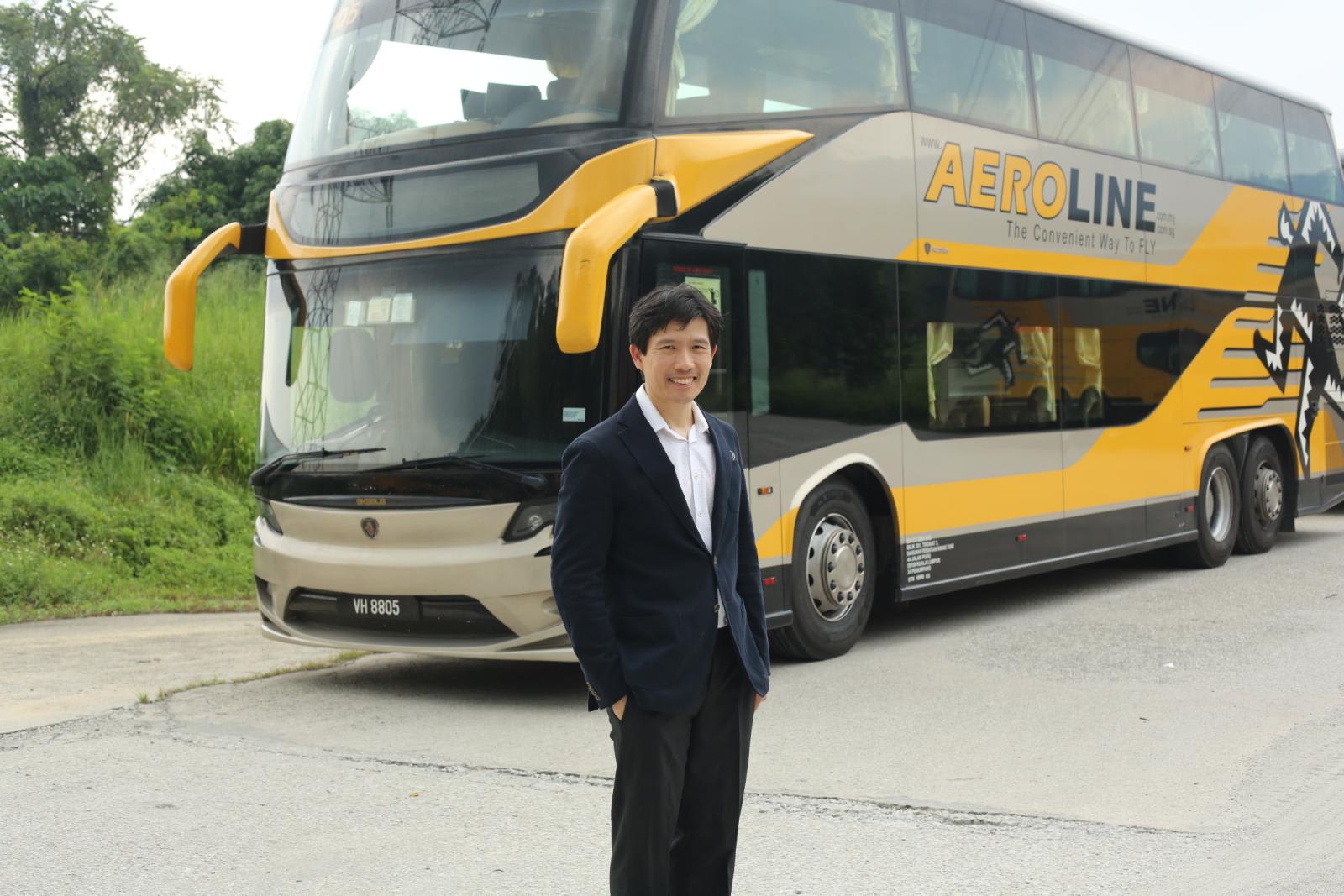 Aeroline chief executive Law Cheok Green said that the company has seen safety improvements over the years through collective stakeholder efforts. (Photo: Law Cheok Green)
Separately, Singaporean commuter Hen Chu Yang said he does not have any safety concerns when taking an express bus from Singapore to Kuala Lumpur.
But the marketing specialist, 37, feels bus companies should mandate more regular rest stops at shorter intervals for drivers operating longer trips.
“I've had four- to five-hour long rides before the driver made a pit stop for refreshments,” he told CNA.
Hen welcomed increased enforcement operations as a safety measure, though he warned this could come at a cost for passengers.
“I think it is a positive improvement provided passengers are willing to accept longer journeys,” he said.
Malaysian Wan Muhammad Faizal Wan Mansor, 47, said he has always observed two drivers on the express buses he takes from Kuala Lumpur to Terengganu - a roughly six-hour journey - two to three times a month.
The engineering supervisor was waiting to board his bus at TBS, the main Kuala Lumpur bus terminal with airport-style boarding gates, large seating areas and ample eateries.
TBS was bustling with passengers but not overcrowded when CNA visited on Feb 12 ahead of the Chinese New Year period, with some queues at mobile ticketing stations.
If the ramped up enforcement on express buses is “for safety, it’s good”, Wan Muhammad Faizal said, although he admitted he prefers quicker journeys. He said this usually happens on night coaches when drivers take the opportunity to speed.
“During the day, officers set up speed traps, so drivers will follow the speed limit. At night, there is less enforcement,” he said.
“I’ve never had issues taking these coaches so far.”
Singaporean Balaji Hariharan, 27, said express bus safety is improving, pointing to measures enforced by Malaysia like mandatory seat belts and speed limiters.
But the engineer feels Singapore-registered buses are more well-maintained than their Malaysia-registered counterparts, attributing it to what he believes are “more stringent” requirements in Singapore.
Meanwhile, Tan wonders if this was why she has to switch to a Singapore-registered bus in Singapore when returning from Kuala Lumpur on her monthly home visits.
“Are they doing that because Malaysian buses don't meet the safety standards, so it must be Singapore buses within Singapore?” she asked.
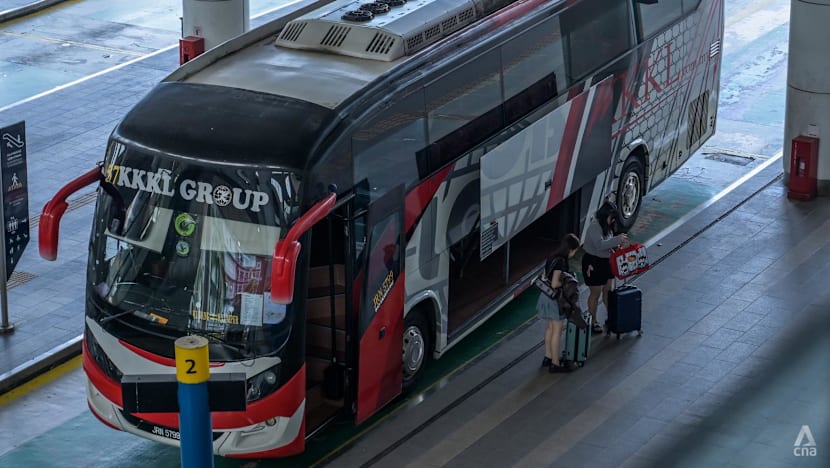 Passengers disembark from an express bus in Kuala Lumpur. (Photo: CNA/Fadza Ishak)
“PROTECTIONIST” LIMITATIONS
The reality is that this is due to a reciprocal arrangement between Singapore and Malaysia. For the most part, the two countries allow only locally-registered buses to operate as express buses within their borders.
In parliament last December, Loke said that Singapore buses were not allowed to operate as express buses in Malaysia as it would disadvantage the local bus operators.
According to The Star, Loke said Singapore had requested that Malaysia allow its express buses in return for Malaysian buses operating there, but he pointed out that Singapore’s system only recognises tour buses and scheduled buses.
“Tour buses bring visitors into the country, which benefits Malaysia, and we do not ban them,” Loke said in response to a supplementary question on inspections and safety compliance on buses.
“But if a tour bus operates as an express bus selling tickets for scheduled routes, that is not allowed and action will be taken.”
While Rahman from MY Mobility Vision said he understands the Malaysian government’s “protectionist logic” to help local operators survive, he stressed that this arrangement does not benefit passengers.
“Restricting Singapore tour buses from running express services may protect local operators in the short term, but it limits passenger choice and potentially keeps service quality artificially low,” he said.
“When operators know passengers have nowhere else to go, the incentive to improve weakens.”
Both countries should operate on a regulated reciprocal framework, where Singapore operators can ply designated routes in exchange for Malaysia operators getting equal access, with harmonised safety and licensing standards, Rahman added.
Singapore’s Land Transport Authority (LTA) told CNA that it is still in discussions with Malaysia on allowing Singapore buses to run express services there and have no further updates at this point.
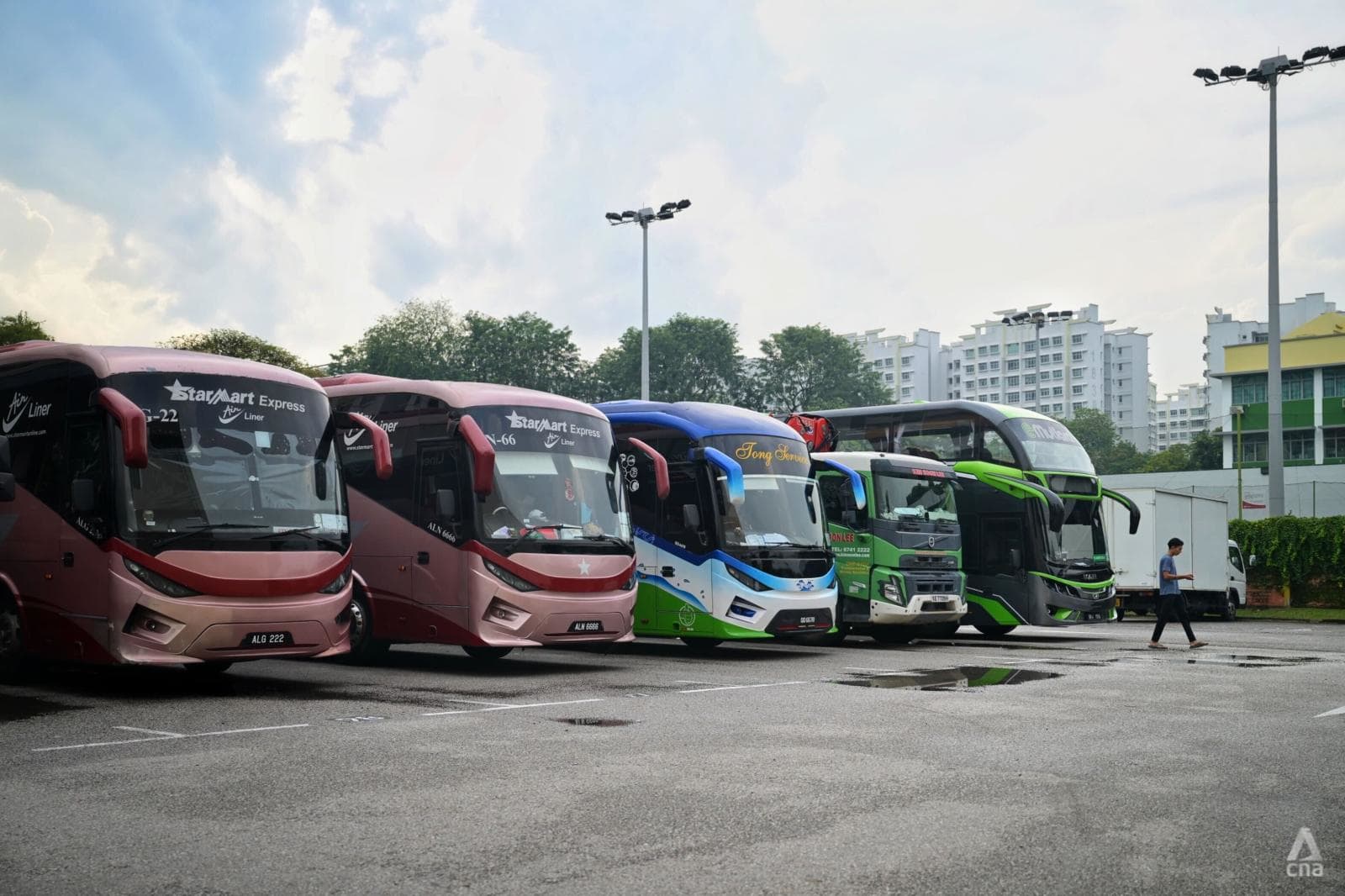 Buses shuttling between Malaysia and Singapore parked at the carpark outside Boon Lay Shopping Centre on Feb 23, 2026. (Photo: CNA/Lan Yu)
Meanwhile, Golden Coach general manager Leong warned against adding Singapore operators to the mix, saying that this might crowd the market.
“Then you’ll have to see who cannot survive … if you fetch two to three people in one trip, you won’t make much money,” he said.
It is worth noting that Golden Coach is a special case.
The company’s Malaysian arm operates Malaysian-registered buses in Singapore under LTA’s Intercity Express Bus Services scheme, meaning its passengers can remain on the same bus throughout the cross-border journey.
This scheme refers to scheduled bus services travelling between Singapore and Malaysia beyond Johor Bahru, and can be run only by Malaysian bus operators with a single stopping point in Singapore.
Hariharan, the engineer, cited some unpleasant experiences with other operators that had required him to switch buses.
One of them did pick-ups at various locations in Singapore before transferring passengers to a different bus at the Johor Bahru checkpoint. In the opposite direction, Hariharan claimed that he had to transfer from a "premium" coach to a more common two-by-two seater bus on the Singapore side.
“It is inconvenient for sure and I feel like we are not getting our money’s worth,” he said.
“These premium buses retail at S$88 (US$69.40) on off-peak and S$158 during the Chinese New Year peak period, and I expect to experience the premium buses retail throughout my journey.”
Meanwhile, Hen said while he prefers a seamless no-transfer experience when taking an express bus to Malaysia, this was not a deal breaker.
“It's only inconvenient when the bus company does not communicate the proper arrangements, like being given a bus number to swap to but getting bumped to another bus,” he said.
“It is also a problem when a bus company doesn't honour the booking arrangements.”
CRACKDOWN ON ILLEGAL DROP-OFF POINTS
Some passengers were left disgruntled when express bus operators changed drop-off locations after bookings were made, due to a crackdown by Malaysian authorities on illegal drop-off points.
Last November, Singaporean Dudley Lin, 35, booked an express bus from Singapore to Kuala Lumpur that promised a drop-off at Berjaya Times Square, but was surprised to see the drop-off changed to TBS two days after payment was made.
The IT consultant showed CNA a WhatsApp message from the operator informing that its usual drop-off points were “prohibited by authority” and will be relocated to TBS “until further notice”.
Lin said operators should ensure such changes are made known before tickets are booked, noting that otherwise, passengers would “definitely be inconvenienced” if they had to make a “drastic” change of plans, considering traffic conditions in Kuala Lumpur.
“They should be made clear as pertinent information like location and time are required before planning for a trip anywhere,” he said.
To ease congestion in Kuala Lumpur and improve passenger safety, Malaysian authorities had relocated express bus hubs from downtown locations like Berjaya Times Square and Corus Hotel to TBS, a 30-minute drive out of town. Corus Hotel, a short walk from the Petronas Twin Towers, has since ceased operations.
The move attracted public attention last year, when Malaysian express bus operator Aeroline was directed by APAD to suspend its trips between Nov 6 and Dec 5 for continuing to let passengers get on and off at unapproved spots.
In response to public feedback, Malaysia’s Transport Ministry announced on Jan 21 that it had identified three major shopping malls to serve as licensed public transport hubs for express bus services between Kuala Lumpur and Singapore.
Among these hubs, the Lalaport Transport Hub in downtown Kuala Lumpur began operations in February. The other two - One Utama in Petaling Jaya and IOI City Mall in Putrajaya - would first need to upgrade existing facilities to ensure passenger safety, Loke said.
Authorities are also evaluating another mall, Sunway Pyramid in Subang Jaya, as a potential transport hub.
 A dusk shot of Sunway Pyramid, a major shopping mall in Klang Valley. (Photo: Sunway Malls)
Hen, the marketing consultant, said that the move to use the identified shopping malls may reduce congestion by allowing authorities to control and monitor traffic flow. But he believes that the high frequency of Singapore-Kuala Lumpur express buses could present “operational challenges”.
“During peak travel seasons such as public holidays and festive periods, the concentrated arrival of buses at limited drop-off locations could lead to bottlenecks and crowd management issues,” he said.
Meanwhile, Hariharan feels that TBS is well-positioned to serve as the main hub for express buses in Kuala Lumpur, considering it is air-conditioned, filled with plenty of seats and has a 24-hour food court and convenience stores.
“With the introduction of QR code based boarding, there is no need to exchange online tickets for a physical boarding pass. All in all, it's better than boarding from city centre locations for me, if I take public transport to TBS,” he added.
On Feb 3, Loke announced that all tickets for express buses departing TBS and sold through online travel agents must feature QR codes, allowing passengers to enter the boarding gates without first needing to print physical tickets at the terminal.
The move followed public complaints on long wait times at TBS counters before being allowed into the departure area, Loke reportedly said.
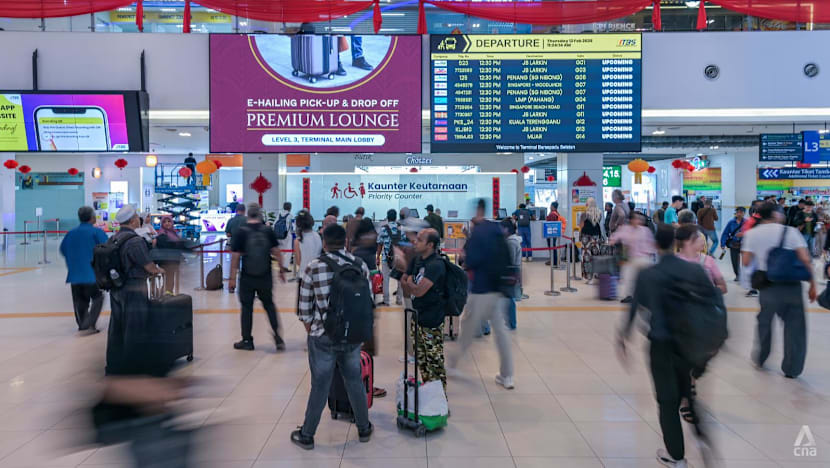 Passengers walk through the concourse at TBS. (Photo: CNA/Fadza Ishak)
It is expected to improve crowd congestion as an estimated 30,000 to 40,000 passengers are expected to pass through TBS daily during the Chinese New Year period.
The “elephant in the room” with TBS, Rahman from MY Mobility Vision said, is last-mile connectivity.
“You arrive at TBS at midnight, then what? There’s no reliable feeder bus, Grab surge pricing kicks in, and you’re stranded,” he said, calling for real-time bus tracking, bus delay notifications pushed to passengers’ phones, and upgrades to terminal facilities.
“Airlines have been doing this for years, why can’t buses?”
But Rahman praised the move to license the three malls as hub terminals, noting that the government acknowledged convenience and compliance can go hand in hand.
“You can regulate and meet passengers where they already are. That’s pragmatic policymaking, and I applaud it,” he said.
Still, the deeper issue with Malaysia’s express bus industry lies in its business model, Rahman said, highlighting that operators run on razor-thin margins.
“When the economics are brutal, corners get cut on maintenance, on driver welfare and on safety protocols. You cannot enforce your way out of a business model problem,” he said.
Rahman called on the government to evaluate if current licensing and fare structures allow operators to be both profitable and safe.
“If they can’t be both, something is fundamentally broken,” he said.