 3 months ago
105
3 months ago
105
SINGAPORE: The United States' new 15 per cent blanket tariff on imports may narrow Singapore's edge over regional peers, but analysts said on Monday (Feb 23) that the country remains well-positioned to weather the shift.
“Given that the tariffs are applied broadly, Singapore loses a slight competitive edge as the playing field is now levelled at 15 per cent,” said Ms Raisah Rasid, global market strategist at JPMorgan Asset Management.
Mr Barnabas Gan, chief economist at RHB, echoed that view, saying the “levelled playing field” could erode some of Singapore’s export competitiveness.
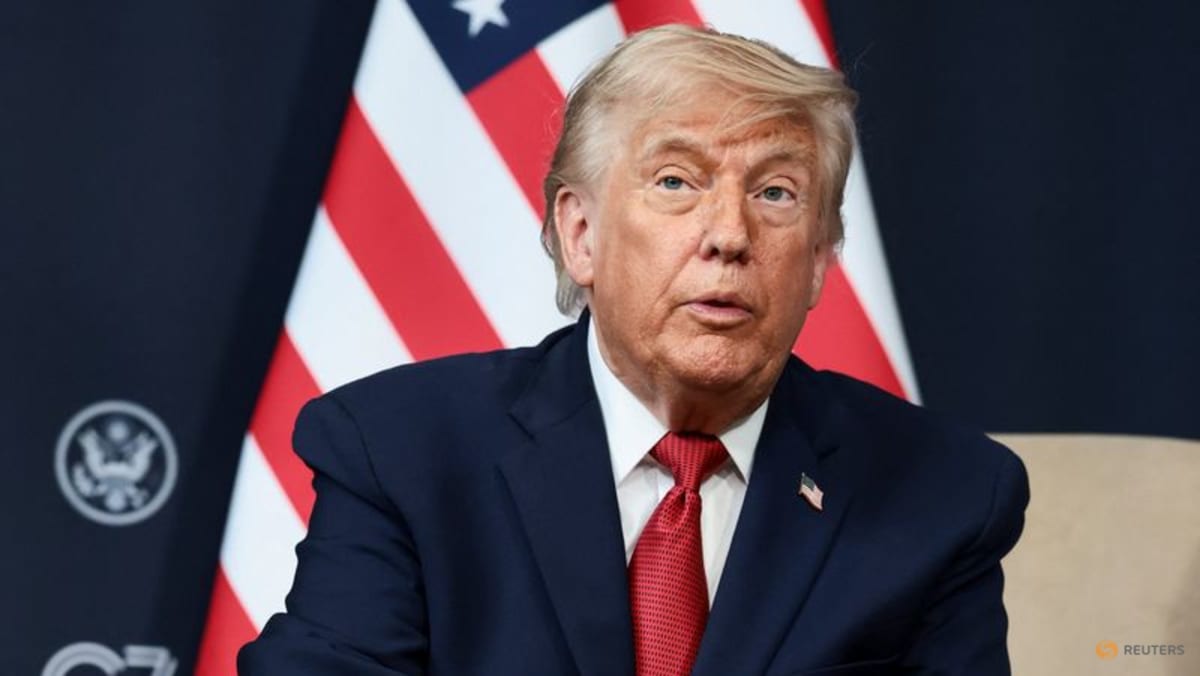
US President Donald Trump announced the new tariff rate over the weekend, although details of how the new tariff will be implemented have not been released yet.
Deputy Prime Minister Gan Kim Yong said on Sunday that Singapore is seeking clarity from Washington about the tariffs, and that the 15 per cent rate is likely to apply to Singapore.
Singapore was previously subject to the baseline 10 per cent levy, while some other countries faced steeper reciprocal tariffs.
Despite the increase, Singapore's effective tariff burden remains the lowest in the region by a wide margin, according to Maybank Securities economist Brian Lee.
He said Singapore will likely see a 1.8 percentage point increase in US tariffs to about 6.9 per cent on an effective basis.
“This effective tariff rate remains the lowest in ASEAN by a wide margin,” he said, noting that exemptions from last year’s reciprocal tariffs are still in place.
“Singapore remains the ASEAN country with the largest share of exempted goods (such as semiconductors, electronics and pharmaceuticals). Exempted goods comprise more than 60 per cent of Singapore’s US-bound shipments,” he added.
SINGAPORE’S STRENGTHS
Singapore’s competitive advantage lies “beyond the rudimentary calculation of tariff rate differentials”, added Mr Edward Lee, chief economist at Standard Chartered.
“Competitiveness will encompass many other aspects, such as institutional stability, policy credibility and stability, robust financial capability, connectivity, productivity, expertise,” he said.
The Economic Strategy Review aims to increase Singapore’s comparative advantage further so that the country is more anchored in new and growth sectors, he added.
“This will help to improve the resilience of our economy,” he said.
RHB’s Mr Gan also pointed out that Singapore has strong technical capabilities in precision engineering, aerospace components, pharmaceuticals and other high-value manufacturing segments.
These strengths “continue to set (Singapore) apart”, he said.
The advantages are “further reinforced” by Singapore’s reputation as a trusted and reliable trading partner, he added.
FISCAL BUFFERS
Singapore also has financial reserves to tap on if needed, analysts said.
Maybank’s Mr Lee noted that the fiscal surplus for the financial year 2025 came in higher than expected and can be drawn down if needed.
“Singapore has abundant fiscal dry powder to roll out additional support measures to cushion the economic impact,” he said.
Strong economic growth is also expected this year, said Mr Heng Koon How, head of markets strategy at UOB.
“We have a lot of budget that is available, a lot of flexibility,” he told CNA938.
If small- and medium-sized enterprises or exporters need help, or if workers need assistance, Singapore would be able to provide support, he said.
EFFECT ON MARKETS
On Monday, Singapore’s benchmark Straits Times Index closed 0.47 per cent higher.
Mr Thilan Wickramasinghe, head of research at Maybank Securities Singapore, said it is too soon to gauge the overall impact to Singapore.
“We think markets are awaiting more clarity on the new tariff implementation and what it means to existing trading agreements,” he said.
But he struck an optimistic tone, noting that the Singapore market has been an overall beneficiary of global geopolitical uncertainty.
“It offers a certainty premium with policy, fiscal and political stability,” he said, adding that the recent Budget 2026 provided additional support for market resilience.
Singapore has been resilient and defensive, said Mr Jeremy Tan, CEO of Tiger Fund Management.
“During volatile times, there has been a lot of capital flowing to Singapore. There's a lot of blue chips, there's a lot of (dividends) that investors find comfort in, in this kind of volatility,” he told CNA’s Asia First.
JP Morgan Asset Management’s Ms Rasid said investors should focus on sustainable trends such as advanced semiconductor packaging, artificial intelligence applications and adoption, and green energy.
These could provide tailwinds for semiconductor and telecommunication-related stocks, she said.