 3 hours ago
2
3 hours ago
2
The US Federal Reserve has raised interest rates by 25 basis points as it battles stubborn inflation, with more hikes potentially on the way.
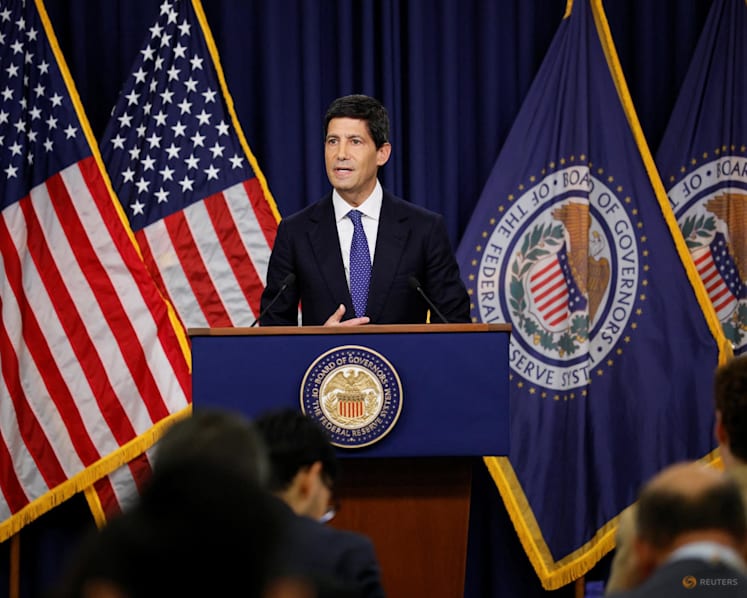
Federal Reserve Chairman Kevin Warsh holds a press conference following a two-day meeting of the Federal Open Market Committee (FOMC) at the Federal Reserve in Washington, DC, US, on Sep 16, 2026. (Photo: Reuters/Evan Vucci)
New: You can now listen to articles.

This audio is generated by an AI tool.

SINGAPORE: The US Federal Reserve has raised interest rates as it battles stubborn inflation, with analysts divided over whether the move marks the beginning of a new hiking cycle.
On Wednesday (Sep 16), the Federal Open Market Committee (FOMC) voted unanimously to lift its benchmark interest rate by 25 basis points to between 3.75 and 4 per cent - its first increase since 2023.
The move matters well beyond the United States. Higher US rates can strengthen the dollar, put pressure on Asian currencies and financial markets, and influence decisions for central banks across the region.
The Fed's decision marks a sharp turnaround from expectations earlier this year, when economists and markets broadly expected the US central bank to hold rates. By the eve of Wednesday’s meeting, however, investors had largely priced in a quarter-point hike.
And Fed policymakers now think more tightening may be needed, despite US President Donald Trump’s repeated calls for rate cuts.
So what changed, how much higher could US rates go – and what could that mean for Asia?
Why raise rates now?
The simplest explanation is that inflation is still too high - and the US economy has remained strong enough for the Fed to do something about it.
The central bank aims for inflation of 2 per cent over the longer run, measured using the personal consumption expenditures price index. Inflation has remained above that target for more than five years.
And fresh data has given policymakers reason to remain concerned. The August Consumer Price Index released last week came in at 3.4 per cent.
Hostilities in the Middle East and Trump’s tariff policies have only added to price pressures. Warsh said inflation had been “too high” for “too long”.
Normally, the Fed might be reluctant to respond to high inflation by raising rates if the economy were already struggling. But it isn't.
The US economy has continued to grow, and the labour market has remained relatively resilient.
That has given the Fed confidence that the economy can withstand higher borrowing costs while it focuses on getting inflation under control.
“What’s changed is Chair Warsh’s leadership in being more proactive in taking action to bring inflation back to target,” said Tai Hui, Asia Pacific chief market strategist at JP Morgan Asset Management (JPMAM).
While inflation has moderated from peak levels, it has remained elevated enough to prompt additional action from the FOMC, noted TransUnion vice president and head of US research and consulting Michele Raneri.
“At the same time, labour market conditions have remained relatively resilient with unemployment rates holding steady in recent months, providing the Fed the confidence to raise rates at this time,” she said.
Morgan Stanley’s chief US economist Michael Gapen noted that the Fed had acknowledged recent disinflation in the US but appeared to want to speed up the process.
“The forecasts show the Fed still believes inflation will come down next year; it will just take a higher policy rate to get there,” Mr Gapen said.
How do higher interest rates bring inflation down?
When the Fed raises its benchmark rate, borrowing generally becomes more expensive across the US economy.
That can mean higher rates on mortgages, car loans and business borrowing.
Consumers may put off big purchases. Companies may think twice about expanding or investing. Spending slows.
Slower demand can in turn reduce pressure on businesses to raise prices, helping to cool inflation.
That is the theory, at least.
The problem is that the effects of monetary policy take time to filter through the economy, and raising rates too aggressively carries risks. Higher borrowing costs can weaken economic growth and employment, which is why the Fed has to balance its goal of stable prices with its mandate to support maximum employment.
The calculation facing policymakers is therefore whether inflation poses a greater risk than the potential economic damage caused by tighter monetary policy.
What does this mean for Asia?
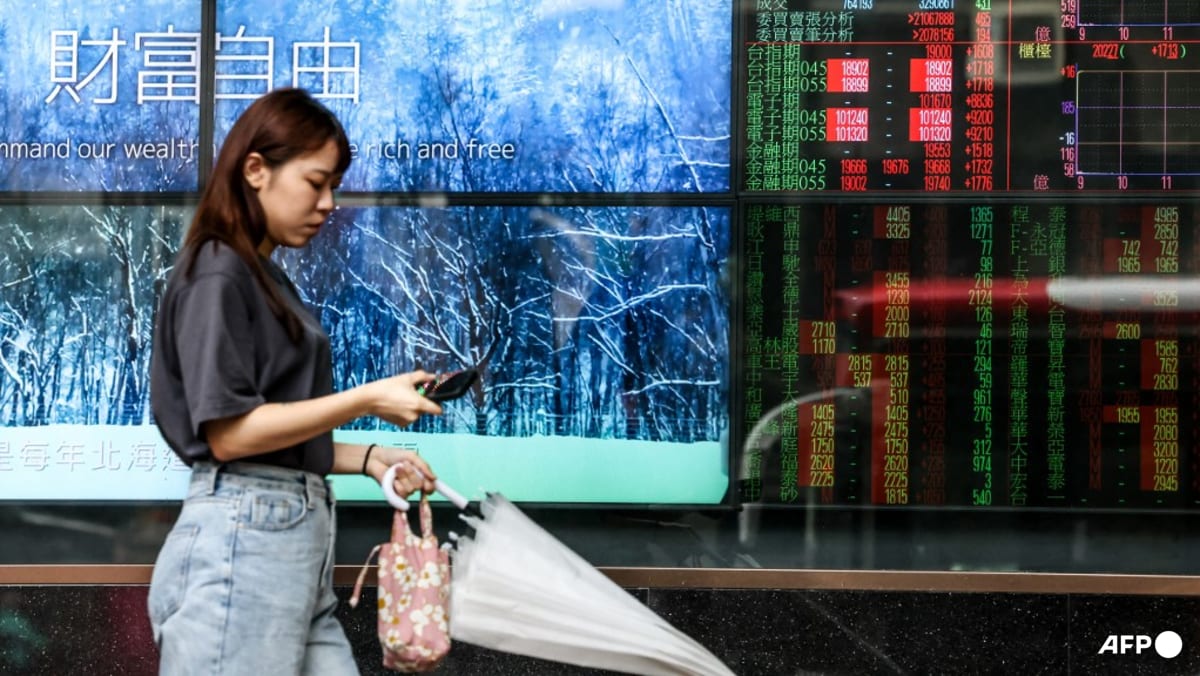
For Asia, one of the most immediate consequences could come through currencies.
Higher US interest rates can make dollar-denominated assets more attractive to investors, supporting the US currency and putting pressure on other currencies.
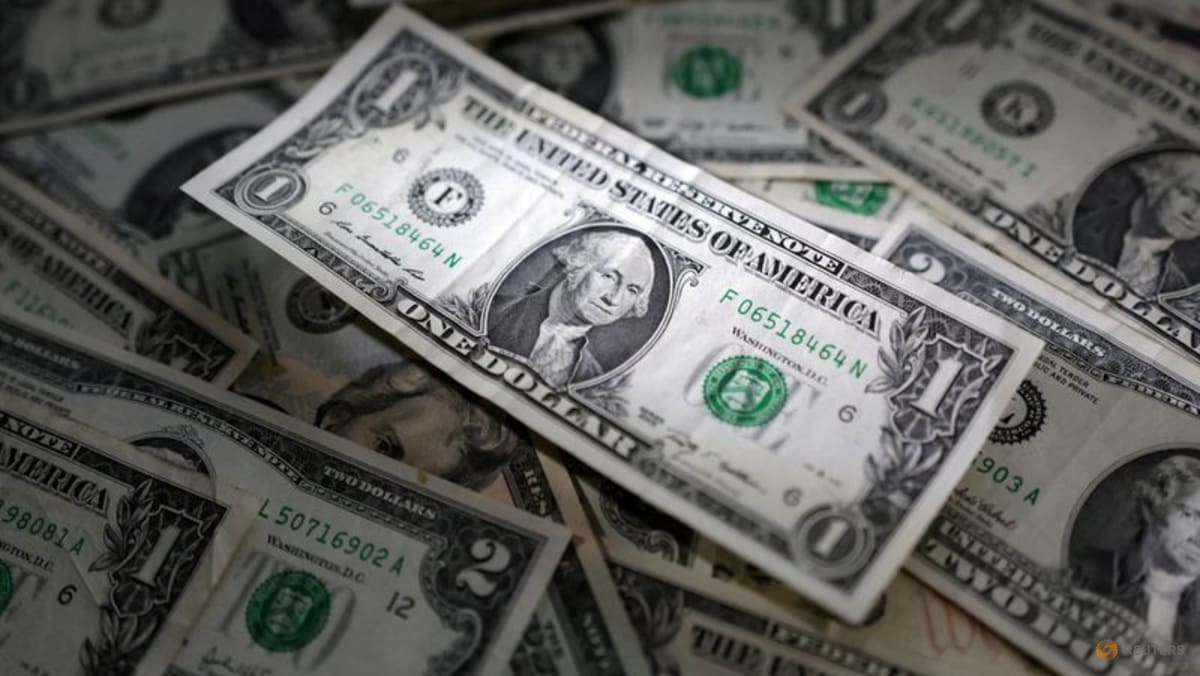
Already, the US dollar rose to a seven-week high following the Fed's decision as markets reassessed how high US rates could go.
"(Warsh) definitely sounded more hawkish than expected, and the fact that he provided guidance on future hikes surprised the markets, causing them to reprice policy higher, which ultimately pushed the dollar higher," said Carol Kong, currency strategist at Commonwealth Bank of Australia.
The dollar is expected to appreciate further, Ms Kong said. This may in turn further pressure Asian currencies if it continues to stay elevated.
A stronger US dollar can make imports priced in dollars more expensive for Asian economies. It can also tighten financial conditions, particularly for companies and governments with dollar-denominated debt.
UOB economists similarly expect the US dollar to remain supported, particularly if the Fed decides on two more rate hikes.
Higher rates could make some US assets relatively more attractive, potentially drawing capital away from Asia and putting further pressure on Asian currencies, they added.
Still, BlackRock’s Asia Pacific head of global fixed income Navin Saigal said the increase in interest rates should continue to support activity across Asia.
“The Fed’s hike is a response to inflation that is accompanying a strong and resilient US economy, one that should remain supportive for global activity, trade flows and corporate fundamentals across Asia,” he explained.
And a Fed hike does not necessarily mean central banks across Asia will follow suit.
Mr Saigal noted that inflation trends differ substantially across Asian economies and from those in the US.
That gives central banks in the region varying degrees of flexibility to respond to their own individual domestic conditions, Mr Saigal said.
For homeowners in Singapore, a Fed hike also does not translate immediately into higher mortgage repayments.
Many floating-rate home loans here are pegged to the Singapore Overnight Rate Average (SORA), which reflects the cost of borrowing Singapore dollars overnight between banks, rather than the US Federal Reserve's policy rate.
While US interest rates can influence Singapore's financial conditions, SORA ultimately reflects conditions in the local Singapore-dollar market.
This means changes in market rates may take time to filter through to mortgage repayments.
Are more rate hikes coming?
While the FOMC has suggested further tightening, analysts are split over whether the central bank will continue raising rates.
The projections also do not amount to a promise. Future decisions will depend on incoming economic data, particularly inflation and employment.
JPMAM’s Tai said US interest rates are expected to remain elevated in the medium term and into 2027, although he sees limited chances of rates returning to above 5 per cent.
With few immediate signs that inflation will ease substantially, particularly amid continued uncertainty in the Middle East, the Fed may need to tighten policy further to bring inflation back towards its target, he said.
But Mr Tai noted that the Fed may wait until December before making its next move, given that October’s FOMC meeting falls just days before the US mid-term elections.
Similarly, Macquarie Group’s head of economics David Doyle said he expects 50 bps in further hikes, with 25 bps likely to come each in December and the first quarter of 2027.
Mark Cabana, co-head of global rates research at Bank of America Securities, shared a similar view – with further tightening to come in October and December.
“Chair Warsh believes that rates need to be higher. They need to start to slow the economy, bring inflation back down, and until he sees signs of that, then the path of least resistance is going to be higher rates,” Mr Cabana said.
Interactive Broker’s chief strategist Steve Sosnick noted that inflation would likely have to slow more quickly than expected for the Fed to not raise rates again.
“With markets already pricing in another hike, particularly in December, a meaningful improvement in inflation could persuade policymakers to hold off. Otherwise, further tightening remains the likely path,” he said.
But some analysts are less hawkish.
UOB economists said in a note that while they expect two more hikes in December and the first quarter of 2027, this is not the start of a long series of hikes.
Rates should be on hold for the rest of next year as inflation eases in the later part of 2027, they added.
OCBC Group Research’s head of FX and rates strategy Frances Cheung said she does not expect an aggressive rate hike cycle following this decision.
Although August's inflation reading remained above the Fed's target, there was no further acceleration in headline inflation, she said.
Ms Cheung also noted that current interest rate levels are “somewhat restrictive” in aiming to cool inflation.
That said, future policy decisions remain highly data-dependent amid uncertain geopolitical developments, she added.
Natixis chief US economist Christopher Hodge similarly said the latest move could turn out to be a one-off hike.
Although raising rates while inflation is already slowing is unusual, he said policymakers may conclude that only a small amount of additional tightening is needed to accelerate the disinflationary process.
“We don’t think policymakers will think more than a nudge would be needed to help the disinflationary process, but incoming inflation prints will continue to be decisive," he said.
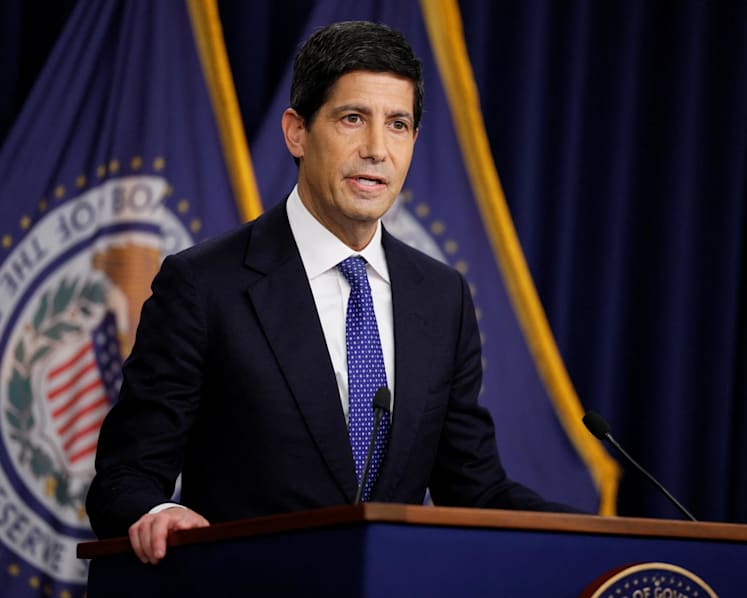 Federal Reserve Chairman Kevin Warsh holds a press conference following a two-day meeting of the Federal Open Market Committee (FOMC) at the Federal Reserve in Washington, DC, US, on Sep 16, 2026. (Photo: Reuters/Evan Vucci)
What about Trump's calls for lower rates?
Trump on Wednesday delivered his most pointed criticism yet of Warsh and the FOMC, hitting out at the decision to raise rates despite his repeated calls for lower borrowing costs.
"Interest rates in the United States should be 1 per cent, or less, because we are the best credit in the world - by far," he wrote on Truth Social, his social media platform.
"Lower the interest rates for the United States of America, and fast!" he said.
Trump, a frequent critic of former Fed chair Jerome Powell, had been more supportive of the central bank's leadership after Warsh, his own pick for the job, took charge earlier this year.
But the president has repeatedly made clear that he wants interest rates to be substantially lower.
BofA Securities’ Cabana said the decision to raise rates is a “big, independent stamp of approval” for the Fed.
The central bank is moving in a direction the president has explicitly opposed, he said, underscoring the Fed's operational independence in setting monetary policy.
“Even though the president might want rates lower right now, the Fed's job is to get inflation under control, and then it can consider making that happen,” Cabana said.
“But until then, rates have to go higher in order to get better control on inflation.”
Want an issue or topic explained? Email us at digitalnews [at] mediacorp.com.sg. Your question might become a story on our site.