 3 months ago
140
3 months ago
140
DEVON, England: As energy security concerns grow alongside volatile oil prices, a game-changing innovation in hydropower could make it possible to generate and store clean energy on ordinary hills – not just mountains or dams.
Engineers in the county of Devon, southwest England, are testing a new approach that replaces water with a dense, mineral-rich liquid.
This development could bring reliable power to communities in areas once considered unfeasible.
The technology, developed by energy storage company RheEnergise, comes after years of chemical and engineering research.
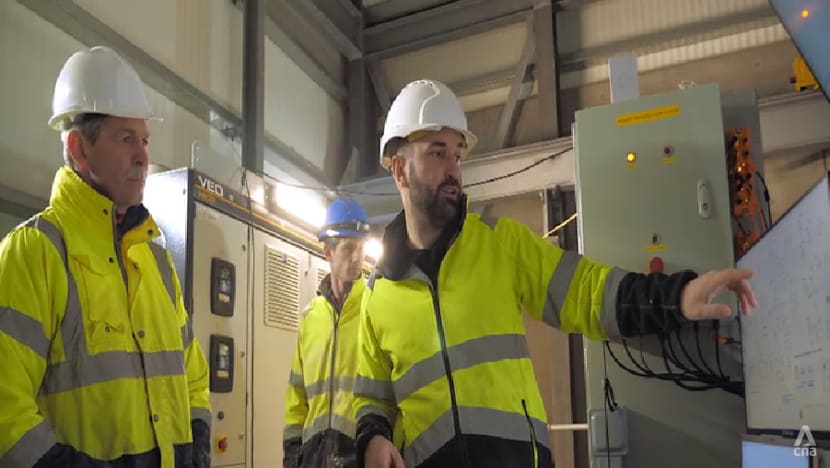 Engineers are testing a new approach that replaces water with a dense, mineral-rich liquid.
PROVIDING RELIABLE POWER
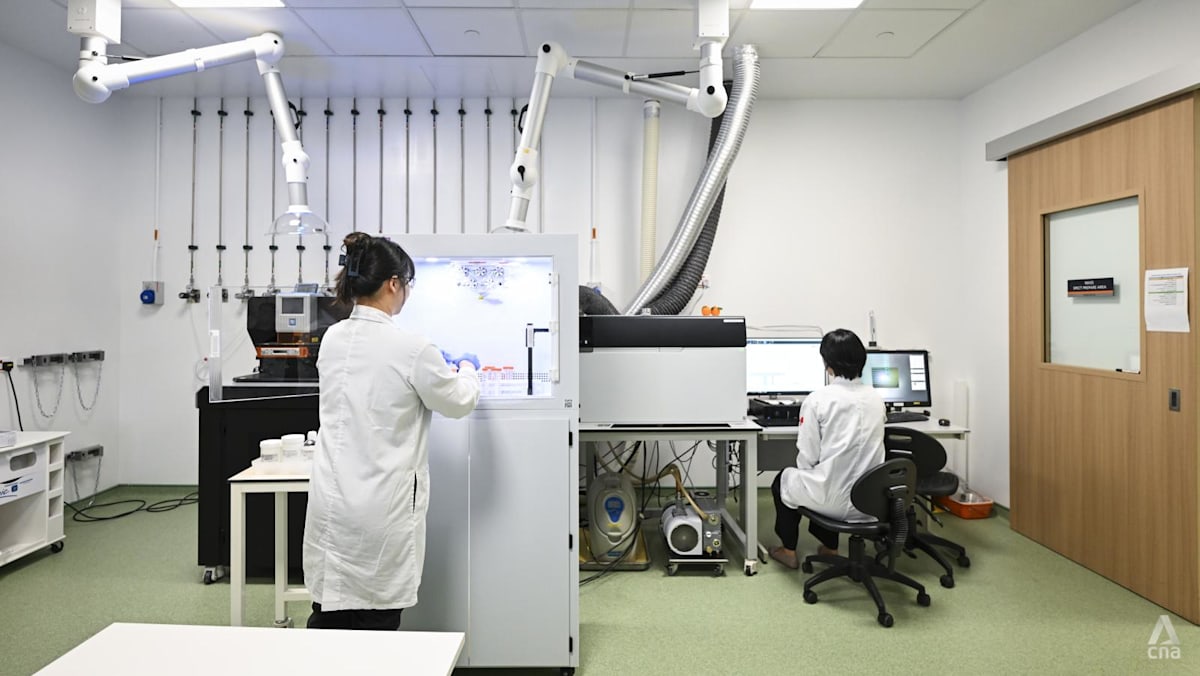
“We've been having to work with a very unique fluid which has never been made before. It is very, very dense,” said Peter Hawkins, an integration engineer at RheEnergise.
“We've had issues with things like pumping, transferring, mixing it effectively and quickly, storing it and getting machinery to work with this extremely high-density fluid,” he added.
“We've ended up with a fluid which is two-and-a-half times denser than water, and yet it behaves very much like water when it's put through turbines and pumps.”
That density is what makes the system more efficient in generating and storing electricity.
Like conventional hydropower, the liquid is stored at height – in a reservoir at the top of a hill – and released downhill through underground pipes to drive turbines, generating electricity. It is then pumped back up when demand is low.
But because the high-density liquid stores more energy per litre than water, far less volume is needed. This allows smaller facilities to be built on gentle hills instead of steep mountainous terrain.
STORING ENERGY AT SCALE
The pilot project in Devon sits on an 80m-tall hill made from discarded quarry rock.
RheEnergise believes its technology offers a low environmental impact solution that can generate electricity regardless of weather conditions.
The company says this could open up access to hydropower in parts of the world where large-scale projects were previously not feasible.
Rather than competing with wind or solar, it sees the technology as a solution to one of the biggest challenges facing renewable energy: Storing energy at scale.
RheEnergise CEO Stephen Crosher said the world will need dramatically more storage capacity – as much as 50 times the current levels.
“You need different solutions that can scale globally, which is exactly what we are looking to do. We are part of the answer to the energy transition to decarbonise the world – store the electricity, create stability (and) create lower prices for consumers.”
Interest in the system is growing, with visitors from around the world coming to the Devon site to assess its potential for their own regions.
RheEnergise hopes to have its first full-scale plant operational within the next few years, capable of generating 20 times more power than the current pilot.
STAYING COMPETITIVE
Hydropower has been used for thousands of years and remains one of the most established forms of renewable energy.
However, experts say the sector must evolve to stay competitive, particularly as falling costs in solar and battery storage make other technologies increasingly attractive.
Joe Butchers, a lecturer in engineering principles at the University of the West of England, has observed the benefits of smaller-scale hydropower plants.
“In comparison to wind in particular in the UK, where there’s been quite a lot of supportive government measures for offshore wind, it requires innovation for hydropower to compete on a cost basis with wind,” he noted.