 3 months ago
120
3 months ago
120
LONDON, March 6 : European stocks slipped along with U.S. futures on Friday as the U.S.-Iran war drove fresh concerns about oil supplies, prompting traders to rethink their expectations for central bank rate cuts.
Benchmark global and U.S. oil prices hit their highest levels since mid-2024. U.S. Treasuries fell for the fifth day in a row, while the dollar rose.
Futures for the U.S. S&P 500 and Nasdaq indexes fell 0.29 per cent and 0.38 per cent respectively.
Europe's STOXX 600 index dipped 0.15 per cent in choppy trading, undoing an earlier rise of almost 0.5 per cent as oil prices appeared to stabilise.
QATAR WARNS OF DRAMATIC IMPACT ON ENERGY MARKETS
Qatar expects all Gulf energy producers to shut down exports within weeks and drive oil prices to $150 a barrel, wreaking extensive economic damage, the country's energy minister told the Financial Times in an interview published on Friday.
"The warning from Qatar's energy minister that a prolonged conflict could bring down economies around the world has again rattled financial markets," said Susannah Streeter, chief investment strategist at Wealth Club.
U.S. crude oil prices rose to $84.90, the highest since April 2024, and were last up 4 per cent at just below that level.
Brent crude futures rose to the highest since July 2024 at $87.66 a barrel. They were on track for a 20 per cent weekly jump, the largest such increase since Russia launched its full-scale invasion of Ukraine in February 2022.
TRADERS SLASH RATE CUT BETS
Money market traders who bet on interest rates are now predicting around 35 basis points of reductions from the U.S. Federal Reserve this year, down from roughly 55 basis points a week ago.
U.S. 10-year Treasury yields rose 2 basis points (bps) on Friday to 4.17 per cent and were on track for a weekly increase of 20 bps, the largest move since April 2025.
The biggest impact of fears over energy supplies was felt in Europe, however, which is far more reliant on oil and gas imports.
Traders now think the European Central Bank will raise interest rates by the end of the year, after scrubbing out previous bets on a cut.
They now see just a 60 per cent chance of one Bank of England rate cut this year, after betting on two cuts in February.
"Oil is firmly in the driving seat, with moves feeding straight through into inflation expectations and the rate outlook," said Matt Britzman, senior equity analyst at Hargreaves Lansdown.
"We’d expect volatility to remain elevated while that uncertainty persists."
STOCKS SLIDE AS DOLLAR GAINS
The conflict in the Middle East convulsed global markets this week and left investors seeking the safety of cash, as they sobered up to the fact that the war could drag on longer than initially anticipated.
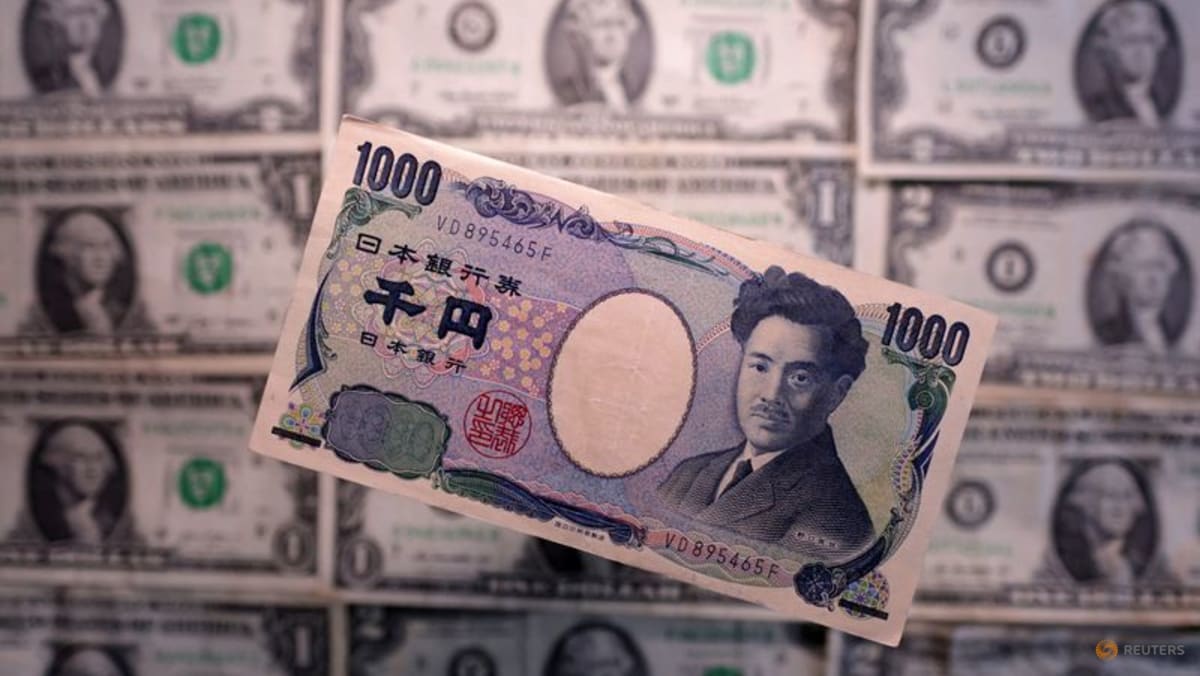
The dollar index, which tracks the currency against six peers, rose 0.18 per cent on Friday and was on track for a 1.6 per cent weekly increase, the most in over a year.
The MSCI all-world stock index was on track to drop 2.7 per cent in the biggest weekly fall since March 2025.
MSCI's broadest index of Asia-Pacific shares outside Japan fell 0.2 per cent and was set to fall 6 per cent for the week, its steepest weekly drop since March 2020.
Potentially market-moving U.S. data, including non-farm payrolls, is due at 1330 GMT (8:30 a.m. ET).
Spot gold was little changed at $5,086 an ounce, though it was headed for a 3 per cent weekly fall.