 3 months ago
173
3 months ago
173
SINGAPORE: At 32, Mr Bhavin Punjabi thought he would already be settled down.
Instead, his days are filled with other priorities – building his career, keeping fit, travelling and spending time with his 95-year-old grandfather.
Like many Singaporeans his age, marriage has taken a back seat.
“I want to get a stable job at this age, (there’s a) certain income that I want to achieve first before settling down,” the operations manager at Zenko Superfoods told CNA.
Describing himself as content with his routine and comfortable being alone, Mr Bhavin said dating comes with high expectations, shaped by practical considerations such as finances, housing and career.
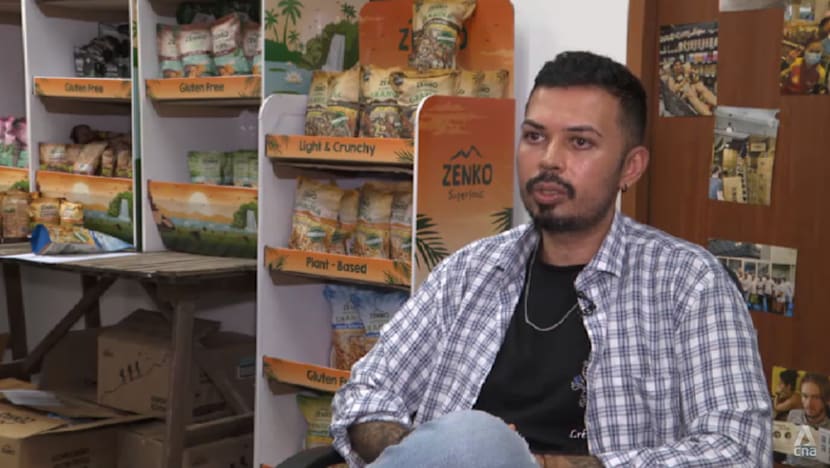 Mr Bhavin Punjabi is among a growing number of Singaporeans choosing to delay relationships and focus on personal priorities.
He added that many people his age are trying to become the “best version of themselves” before they enter the dating pool.
“I’m quite happy where my life is right now,” he said. “I would love to settle down and find someone, but I’m not really stressing on it right now.”
“I think love, in this current generation, might be secondary.”
MORE WAITING LONGER FOR MARRIAGE
Mr Bhavin’s experience reflects a broader shift in how Singaporeans approach relationships and family life.
Singapore’s total fertility rate fell to a record low of 0.87 in 2025, with Deputy Prime Minister Gan Kim Yong in February describing the trend as an “existential challenge”.
More Singaporeans are also staying single for longer. Data shows marriages fell 7 per cent year-on-year in 2024, with the steepest drop among those aged 25 to 34.
At the same time, people are marrying later – around 31 for men and 30 for women – delaying parenthood or opting out altogether.
Together, these shifts are pushing relationships later in life.
Changing priorities – from careers to personal goals – are shaping these decisions, experts say.
WHEN DATING FEELS LIKE WORK
One of the biggest changes is how young people experience dating, said Dr Kalpana Vignehsa, senior research fellow at the Institute of Policy Studies.
“For a lot of young people, they see dating as a time management problem,” she said.
That is very different from the past, when dating was often seen as something fun, she added. Now, for some, it feels like another item on an already packed to-do list.
Part of the pressure comes from living in today’s hyperconnected digital world.
“They’re expected to be always on, even in a relationship,” Dr Kalpana said. “What does it mean if they don’t respond straight away?”
Many also delay dating while in school, only to find that it becomes harder once they start work.
“The best place to meet someone is school,” she said. “If you put it off … the stress of that experience is much higher because it takes on greater meaning in your life.”
She added that structural factors such as housing timelines and the “biological clock” can further raise the stakes.
HIGHER EXPECTATIONS, MORE CHOICES
Dating agencies say singles are now entering the dating scene later, often after establishing themselves professionally.
Ms Violet Lim, co-founder and CEO of Lunch Actually Group, said Singaporean daters are often quick to judge whether someone is worth seeing again. That can mean fewer second dates, even when chemistry takes time to build.
She also said clients today have more expectations than before.
“People have a lot more parameters,” she said. “It’s no longer just about … do they tick certain boxes? They are looking for quite a lot of boxes.”
Some are also less willing to compromise once they have built a certain life for themselves.
“They feel that I’ve already achieved a certain lifestyle … it doesn’t make sense if I’m going to be with someone, and I need to change my lifestyle for something that I feel is for the worse,” she said.
Women, in particular, are delaying relationships as they become more financially independent, she noted. But higher expectations can make it harder to find a match.
“The type of guys that they are looking for are also the type of guys that everybody else is looking for,” Ms Lim pointed out.
 A dating app interface.
Dating apps have added another layer of complexity, creating what she called a “paradox of choice”.
“They think that they have a lot of choices, they are also less likely to choose or to commit.”
This can lead to what she calls an “elevator dating syndrome”, where people keep searching for someone better.
Another dating platform is seeing similar shifts.
Ms Lee Jing Lin, co-founder of Kopi Date, said more singles today are looking not just for a serious relationship, but a healthier way to date – with greater emphasis on emotional readiness and compatibility.
She added that “dating app fatigue is very real”, with many feeling “worn down by swiping, ghosting and shallow conversations”.
As a result, more are seeking intentional, in-person interactions that feel “more human and less gamified”.
REDEFINING ADULTHOOD AND SUCCESS
Experts say these changes reflect a broader shift in how Singaporeans define adulthood.
“It used to be that getting married and having kids (was) the mark of adulthood,” said Professor Paulin Straughan from the Singapore Management University’s School of Social Sciences.
Today, independence and financial stability are seen as more important milestones.
“You are an adult when you are independent … when you have a professional career … and that kind of stability marks adulthood,” she told CNA’s Singapore Tonight.
Delaying marriage often means delaying children – or deciding not to have them.
Mr Bhavin said many people his age are weighing the same considerations.
“A lot of Singaporeans are opting out for kids … maybe expectations are too high … or the cost of living also comes into play.”
Dr Kalpana added that marriage and parenthood in Singapore can feel like high-stakes decisions, shaped by pressures around success, expectations and the fear of falling short.
“There’s a huge amount that couples give up when they choose to become parents,” she said, including career growth and income.
A LONG HISTORY OF FAMILY PLANNING
These shifts in attitudes and Singapore’s low fertility today stand in sharp contrast to the country’s past:
 Singapore's rapid population growth prompted the government to introduce family planning policies in the 1960s.
- Post-World War II: Too many babies
Rapid population growth raises concerns over food shortages, overcrowding and household finances. - 1965: Family planning becomes policy
With a population of over 1.8 million and about 60,000 births a year, the government launches a Five-Year Family Planning Programme. - 1966: A national push
The Singapore Family Planning and Population Board is set up, offering low-cost contraceptives and clinical services. - 1970s: “Stop at two”
The campaign intensifies, backed by penalties such as higher childbirth fees, reduced tax relief and lower housing priority for larger families. Incentives are also offered for sterilisation.
 A poster from Singapore’s “Stop at two” campaign. (Photo: SFPPB collection, courtesy of NAS)
- Mid-1970s: Policy success
Fertility falls to replacement level and continues to decline. - Mid-1980s: A turning point
The concern shifts from overpopulation to the risk of population decline. - 1987: Policy reversal
“Stop at two” is replaced with: “Have three, or more if you can afford it.” - Incentives return
Penalties are removed and replaced with support measures, including tax rebates, childcare support, leave schemes, housing support and eventually the Baby Bonus.
THE ROAD AHEAD
Experts say Singapore is likely to see more people remain single, by choice or circumstance.
“I think that by and large, we're going to see the emergence of two groups,” said Prof Straughan.
One group will continue to aspire towards marriage and family life.
“This is the group where government policies are very important because then, we continue to encourage those who want to have children, and we partner them to the best of their ability,” she said.
The other group will remain single, which is “inevitable in a modern city-state like ours”, Prof Straughan added.
Singles have often been seen as being “in transition” to marriage. But as their numbers grow, she said this group deserves closer attention.
Even as trends shift, there is still room to better support those who do want families, said Dr Kalpana.
This needs to go beyond financial incentives to address the real trade-offs of parenting.
Easing those burdens and creating a more supportive environment could make parenthood feel more manageable, she added.
Despite the delays, the desire for connection has not disappeared.
Mr Bhavin, for one, has not ruled out marriage.
But for now, he is taking things one day at a time. “I’m just enjoying the moment,” he said.