 3 months ago
123
3 months ago
123
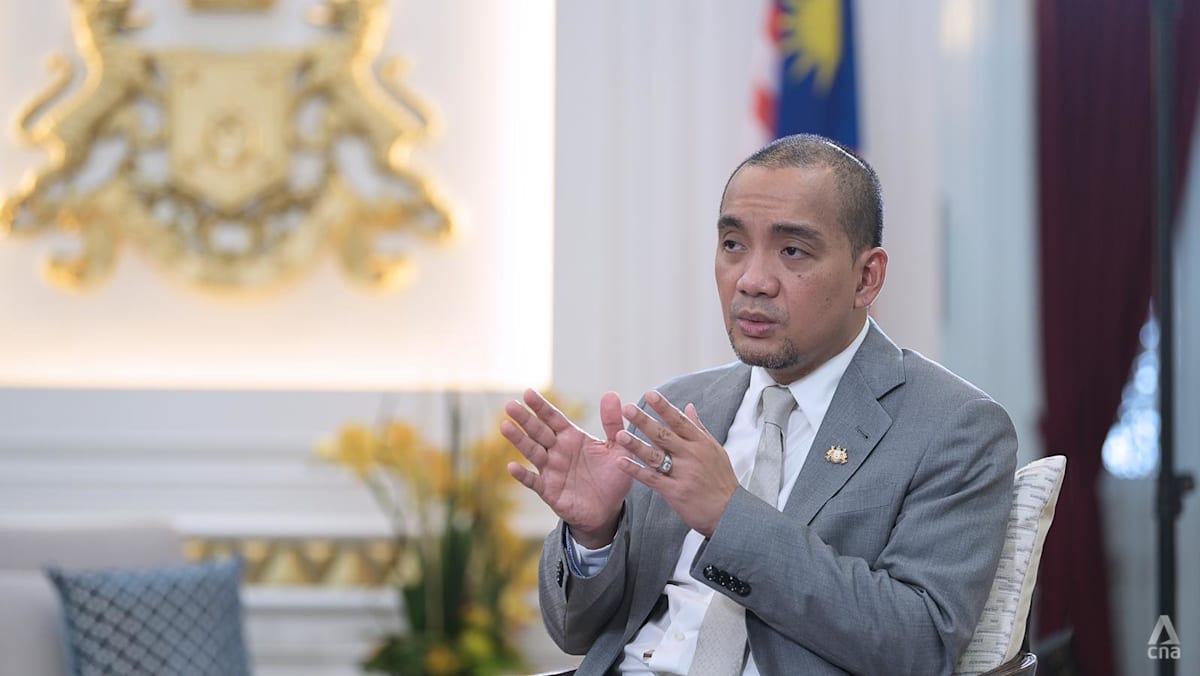
KUALA LUMPUR: Malaysia Foreign Minister Mohamad Hasan said that any decision pertaining to the Malacca Strait cannot be made unilaterally, adding that countries in the region adopt a consensus-based approach on maritime security.
He further noted that Malaysia, Singapore, Indonesia and Thailand shared a “watertight understanding” of the issue and conducts joint patrols along the strait to ensure the safe passage of ships.
“Whatever is to be done in the Strait of Malacca must involve the cooperation of all four countries. That is our understanding - it cannot be done unilaterally,” Mohamad was quoted as saying by local news agency Bernama while speaking at a forum on Wednesday evening (Apr 22).
“This is because when we entered into a joint agreement on patrols and the security of the Strait of Malacca, that was the basis – there are no unilateral decisions.
“ASEAN is entirely based on consensus. Even at the sub-committee level, everything is based on consensus,” he said, referring to the Association of Southeast Asian Nations.
The Malacca Strait is a narrow waterway in Southeast Asia connecting India via the Andaman Sea to China and East Asia via the South China Sea. It is one of the world's most important and busiest shipping lanes, handling over 25 per cent of global trade.
Mohamad’s comments came amid geopolitical tensions in the Middle East, with a chokepoint at the Strait of Hormuz after the United States and Israel attacked Iran on Feb 28. The war is now in its eighth week.
Since its closure, global energy supply has been squeezed, with Southeast Asian governments scrambling to secure alternative fuel sources and roll out measures to cushion rising fuel costs.
Earlier on Wednesday, while speaking at a financial symposium in Jakarta, Indonesia Foreign Minister Purbaya Yudhi Sadewa floated the idea of imposing a levy on ships passing through the Malacca Strait in a bid to push the country’s strategic position along global trade and energy routes.
Purbaya said the idea, backed by President Prabowo Subianto, was inspired by Iran’s plans to charge ships passing through the Strait of Hormuz. But Purbaya acknowledged that implementing such a policy would not be straightforward and that the Indonesia government currently still views the proposal as an initial idea.
Any levy would require agreement with Malaysia and Singapore, which also share territory along the Malacca Strait, local media quoted him as saying.
Meanwhile, Singapore Foreign Minister Vivian Balakrishnan said on Wednesday morning that shipping lanes through the Malacca and Singapore straits must remain open to all. He further stressed that Singapore would not support any effort to restrict them.
“The right of transit passage is guaranteed for everyone,” the minister said in a fireside chat at a CNBC event in Singapore. “We will not participate in any attempts to close or interdict or to impose tolls in our neighbourhood.”
He added that Malaysia, Indonesia and Singapore are trade dependent economies which know that it is in their interest to keep the Malacca Strait open.
“Between the three of us, we have a cooperative mechanism, not to collect tolls, but to keep it open and to maintain that position. The point here is that all three countries have a strategic interest and are strategically aligned in keeping it open. That is not something which you can take for granted in many other places,” he said.
Earlier in February, Mohamad said that coordinated patrols by Malaysia, Indonesia, Singapore and Thailand have significantly improved maritime safety in the Malacca Strait, with current frameworks effective in preserving stability, after India had expressed interest to join security patrols there.
Indonesia, Malaysia, Singapore and Thailand are members of 11-member ASEAN.
Formed in 1967, the association aimed to accelerate economic growth, social progress, and cultural development, while promoting regional peace, stability, and security through collaboration and adherence to the principles of the United Nations Charter.