 3 months ago
183
3 months ago
183
Safety measures include clear signage cordoning off the shooting zones, with red-and-white tape and orange cones marking the perimeter.
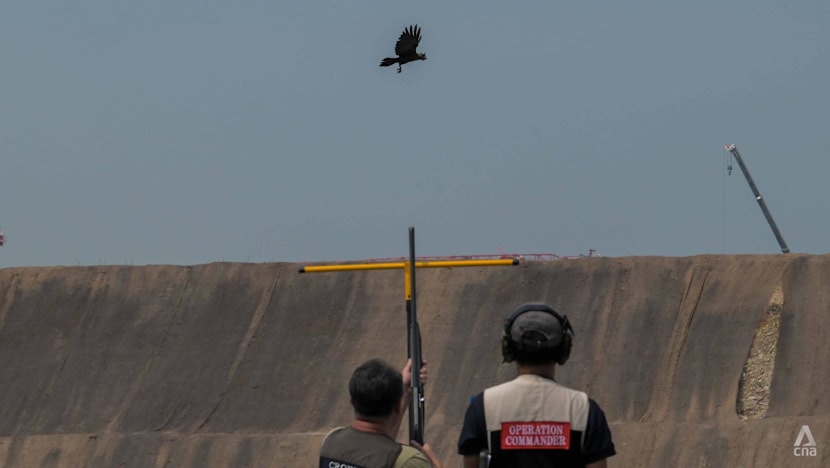
Wildlife contractors during the crow shooting operation at Bulim Avenue Heavy Vehicle Park in Jurong on April 2, 2026. (Photo: CNA/Lim Li Ting)
New: You can now listen to articles.

This audio is generated by an AI tool.

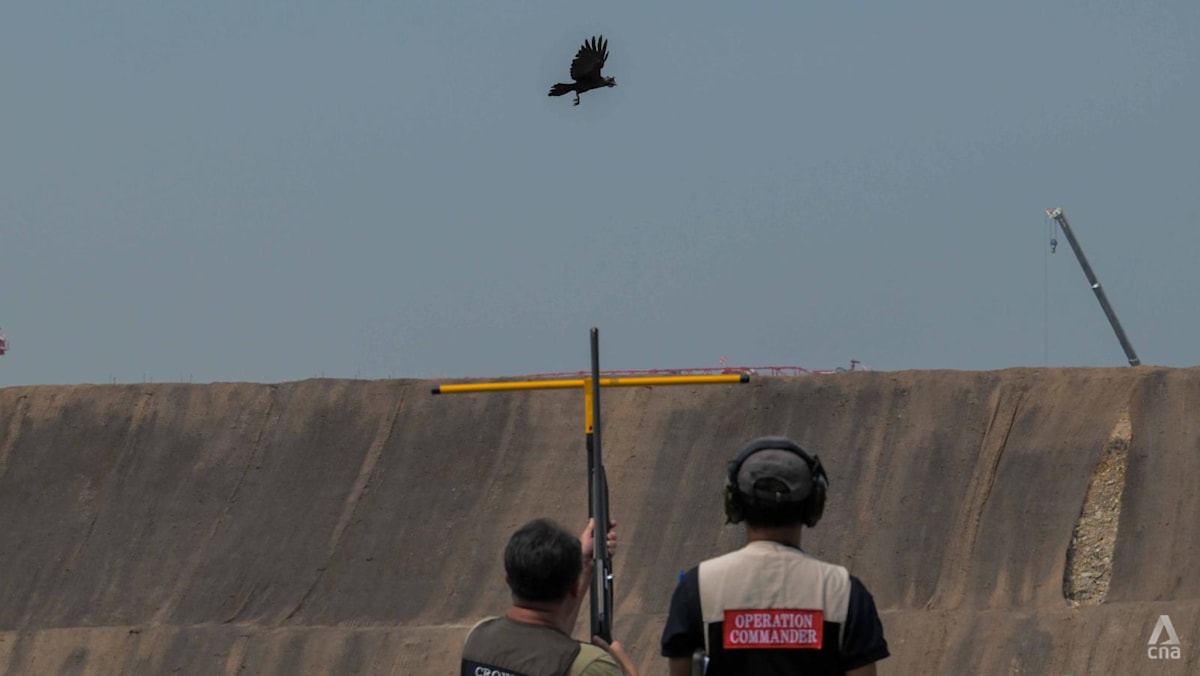
SINGAPORE: Turning his shotgun to the skies, a trained marksman shot down one crow after another at a Jurong heavy vehicle park on Thursday (Apr 2) afternoon, in an effort to manage the area's growing crow population.
Over a 30-minute window observed by the media, gunshots rang out in Bulim Avenue Heavy Vehicle Park in Jurong, with the shooter managing to down six crows while they were still in flight.
As he did so, a reserve shooter waited in the distance, ready to step in to continue the culling efforts – a physically demanding task in the afternoon heat.
Thursday's operation eventually ended with 16 crows downed, said the National Parks Board (NParks).
It took the total number of crows shot to 40, since NParks' operations began on Mar 24, following a halt in 2020.
Jurong is among the first nine districts where shootings are carried out, before being progressively scaled up to more areas. The others are Bishan, Kranji, Punggol, Sembawang, Tampines, Toa Payoh, Woodlands and Yishun.
Thursday’s operation was organised by NParks and observed by the media. It comes after Minister for National Development Chee Hong Tat first announced the planned resumption of crow shooting in February, citing a rise in crow-related feedback and crow attacks since Singapore stopped crow shooting six years back.
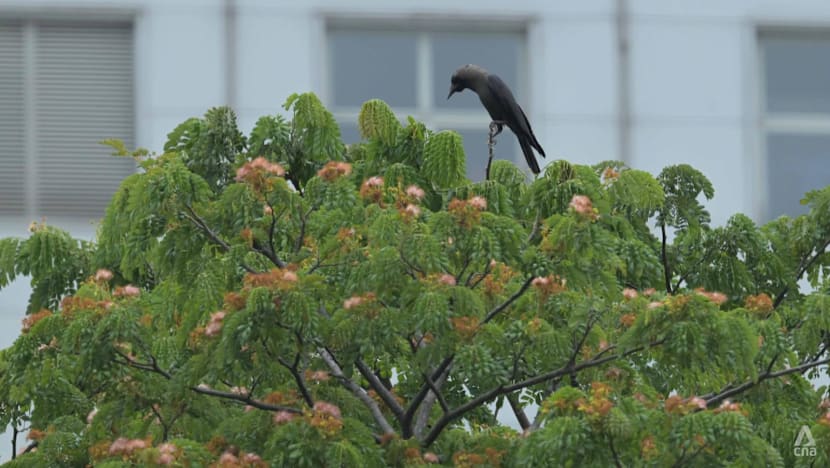 A crow spotted at a tree near Bulim Avenue Heavy Vehicle Park in Jurong on April 2, 2026. (Photo: CNA/Lim Li Ting)
Last year, the Municipal Services Office received about 15,000 crow-related feedback, three times more than in 2020.
Reports of crow attacks also increased by fourfold to more than 2,000 cases over the same period. NParks removed close to 9,000 crow nests islandwide last year, up from over 600 in 2021.
The number of crows trapped and removed also rose from more than 1,800 in 2021 to over 13,000 in 2025.
At the Jurong site, auxiliary police officers – donning vests with logos of SATS Security Services – were also on site to secure the perimeter and safeguard the weapons used in the operations.
Devices were used to lure the birds into the shooting zone, including a robotic crow with flapping wings that also mimics a crow's call.
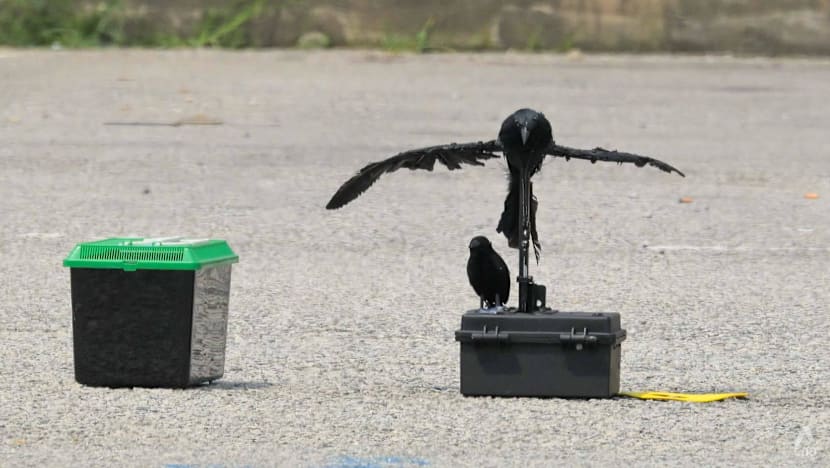 Crow callers were used to attract crows by mimicking their vocalisations during the crow shooting operation on April 2, 2026. (Photo: CNA/Lim Li Ting)
The gun shoots a shell consisting of hundreds of pellets as large as a grain of rice.
Each fallen bird is left on the ground initially, so that contractors from certified wildlife management firms can pick them up at the end of the session and place them in biohazard bags. The bags are to be incinerated.
One bird was seen to have flown a distance away after being shot during the operation, before plummeting to the ground. A contractor, who was eyeing it through binoculars, rushed across the car park to retrieve it.
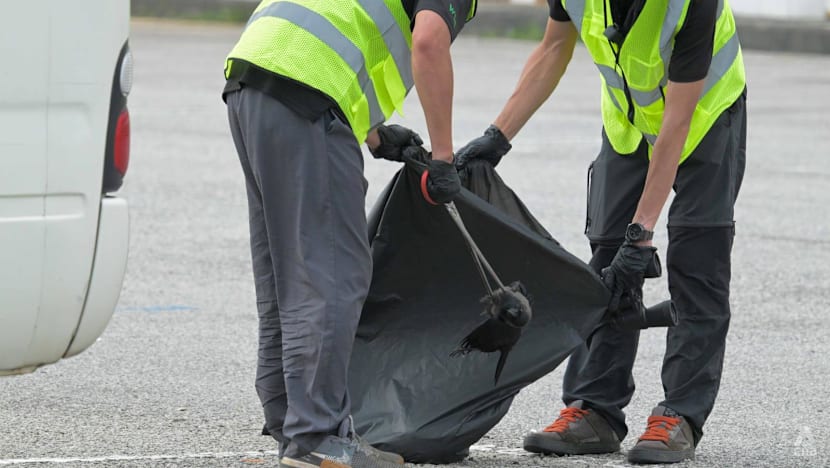 Wildlife contractors picking up a dead crow after a crow shooting operation on April 2, 2026. (Photo: CNA/Lim Li Ting)
The shooters adhered to strict safety measures, such as only shooting upwards.
There was also clear signage cordoning off the shooting zones, with red-and-white tape and orange cones marking the perimeter to prevent any unauthorised access.
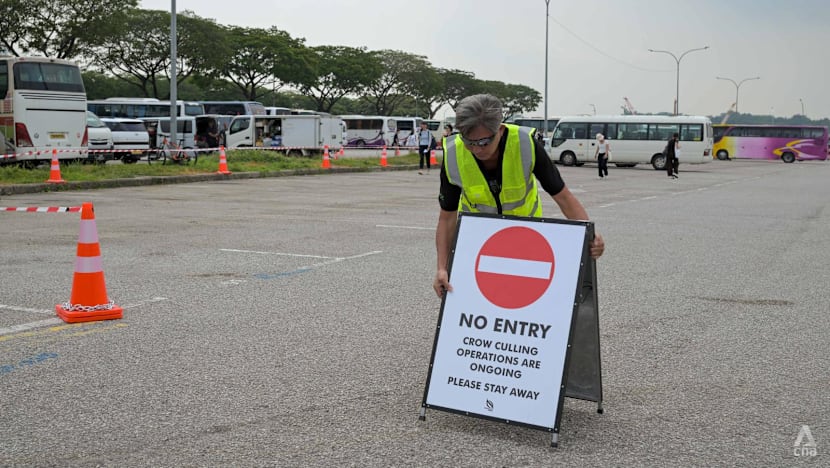 Wildlife contractors cordoning off the shooting zone for the crow shooting operation at Bulim Avenue Heavy Vehicle Park on April 2, 2026. (Photo: CNA/Lim Li Ting)
The radius of the safety zone around the shooter typically ranges from 15m to 100m, said Mr Soh Ze Bin, NParks’ director for wildlife management and outreach.
Each member of the team also has their role clearly labelled on the back of their vests, such as “crow culler” and “operation commander”.
“House crows are a non-native invasive species to Singapore. It poses a threat to our local biodiversity, and in great numbers, they also cause disamenities to our residents, causing incessant noise and also soiling and safety issues,” said Mr Soh.
He said that shooting is a last resort, with other measures including trapping, nest removal and reducing food sources for the birds.
Before each culling exercise, NParks also reaches out to residents in nearby housing estates to inform them, so that they will not be alarmed, said Mr Soh.
COMPLEMENTING EXISTING EFFORTS
Crow shooting operations were stopped in 2020 following incidents in which pellets from shotguns struck nearby homes.
This time round, the shootings are being carried out by licensed wildlife management contractors who are certified in the handling of firearms, NParks said.
In the past, volunteer shooters from the Singapore Gun Club were involved in cullings, but the programme ended in the early 2010s after crow shooting licences were not renewed.
The authorities also enlisted the services of Certis CISCO at one point, but that also stopped after an auxiliary police officer was jailed for killing crows with a shotgun and without a safety officer present.