 3 months ago
75
3 months ago
75
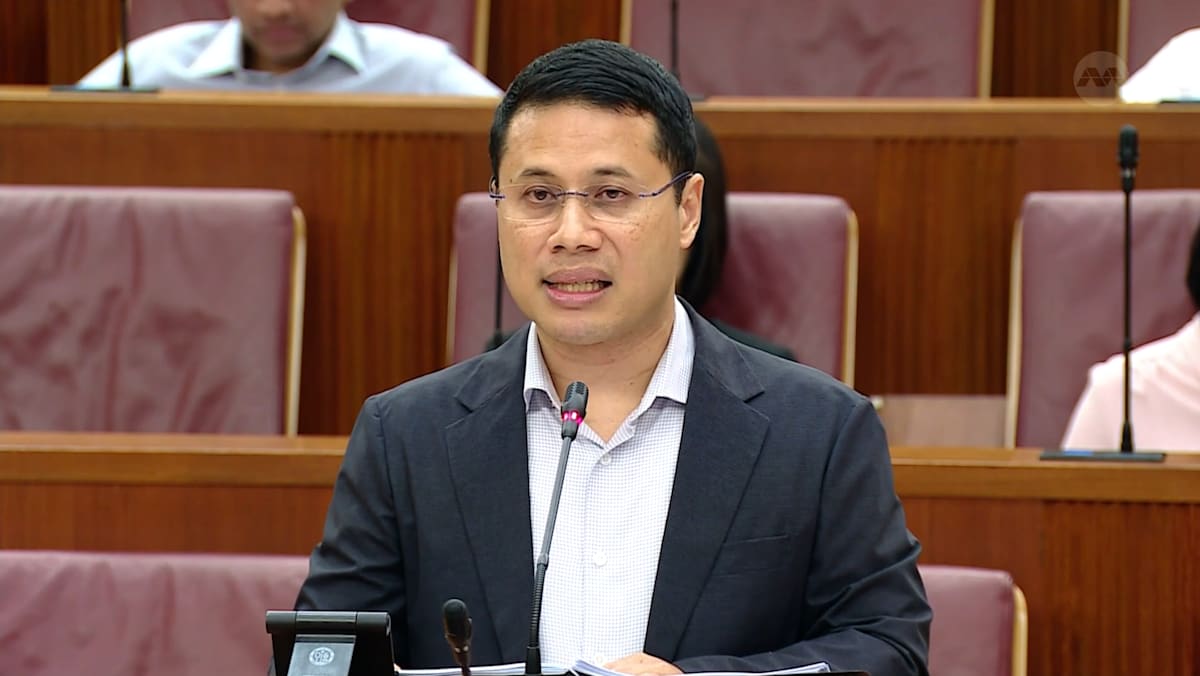
SINGAPORE: Singapore does not mandate retrenchment benefits because a “balanced approach” that provides business flexibility while protecting workers achieves better outcomes, Senior Minister of State for Manpower and Health Koh Poh Koon said in parliament on Wednesday (Feb 4).
While retrenchment benefits are not required, the Tripartite Advisory on Managing Excess Manpower and Responsible Retrenchment specifies a prevailing norm of two weeks to one month’s salary per year of service.
In unionised companies, the norm rises to one month’s salary per year of service. The advisory was last updated in January 2023.
On Wednesday, Dr Koh said that around nine in 10 eligible employees received retrenchment benefits from 2020 to 2025.
Of these, around eight in 10 received benefits of at least two weeks’ salary per year of service, in line with the prevailing norm.
This was based on data submitted by companies with at least 10 employees, which are required to notify the Ministry of Manpower (MOM) of any retrenchment.
Dr Koh was responding to questions on retrenchment benefits raised by Workers’ Party chief Pritam Singh (WP-Aljunied) and National Trades Union Congress assistant secretary-general Patrick Tay (PAP-Pioneer).
Mr Singh had pointed to reports about contentious retrenchments in 2025.
CNA previously reported that MOM was looking into retrenchment exercises conducted by unionised company Twelve Cupcakes, which allegedly did not give workers advance notice; and travel platform Agoda, which allegedly told employees not to approach authorities or risk losing retrenchment benefits.
Mr Singh asked if the government would consider a differentiated guideline for bigger companies with more than 25 employees to give retrenchment benefits above the prevailing norm, rather than a “one size fits all” approach.
He drew a parallel to the Workplace Fairness Act – a new piece of legislation against discrimination – where bigger companies with more than 25 employees follow a differentiated regime.
“Companies with more workers were deemed to have more resources to comply, while those with less were exempt, even though they still have to comply with the spirit of the law through the Tripartite Guidelines (on) Fair Employment Practices,” said Mr Singh, referring to the anti-discrimination framework.
In reply, Dr Koh said tripartite partners have “deliberated extensively” on whether to make retrenchment benefits mandatory regardless of company size, and on whether the minimum quantum of benefits should be specified in law.
“We concluded that a balanced approach to protect workers while at the same time providing business flexibility would achieve better outcomes for both workers and businesses,” he said.
Pointing to how there are many reasons why retrenchments take place, Dr Koh laid out the government’s considerations.
“Imposing strict conditions such as legally mandating retrenchment benefits may affect the viability of companies who are already in financial difficulties, and put existing employees – other employees who may still be in employment with the company – at risk of also being retrenched,” he said.
“Mandatory retrenchment benefit may also result in employers becoming more hesitant to offer long-term or permanent contracts to employees,” said Dr Koh.
He added that stipulating a minimum quantum of retrenchment benefits in law would likely result in that quantum becoming the norm.
This could mean that “even when companies are able to give more, they may then say, if this is the only thing that is required by the law, let’s just do the minimum as required and not go beyond that”.
This would not benefit workers in situations where the employers are actually able to pay higher retrenchment benefits, said the senior minister of state.
Labour Member of Parliament Mr Tay said he had noticed anecdotally that some multinational companies were setting caps on retrenchment benefits that fell below the “prescribed benchmark” of 25 years of service.
These lower caps could range from 12 to 15 years, especially for professionals, managers and executives, said Mr Tay.
He asked if MOM was doing anything about this.
Dr Koh said MOM would have to continue to engage multinationals on this as some may follow norms they bring from other jurisdictions or their home countries.
“Through a more interactive understanding between the unions and the companies, we hope to socialise them to the norms that are here,” he said.