 2 months ago
83
2 months ago
83
A blockbuster legal battle between Elon Musk and OpenAI has ended in a decisive victory for the creators of ChatGPT - but not before exposing deep tensions over mission versus money and the future of artificial intelligence.
After a three-week trial, a US jury ruled on Monday (May 18) that Musk waited too long to bring his lawsuit against OpenAI and its leadership, including CEO Sam Altman and president Greg Brockman.
The decision shuts down - at least for now - one of the most closely watched legal showdowns in tech.
Here’s what we know about the trial, the courtroom drama and the questions it has raised about who controls AI and how it should be built.
What is the case about?
At the heart of Musk’s lawsuit was a sweeping accusation that OpenAI had betrayed its founding mission.
Musk, the world’s richest man, was a co-founder of OpenAI, which launched in 2015 as a nonprofit meant to develop safe artificial intelligence for the benefit of humanity.
After investing US$38 million in its first years, Musk accused OpenAI CEO Sam Altman and his top deputy of shifting into a moneymaking mode behind his back.
The billionaire argued that the pivot to a for-profit structure - alongside deep ties to investors like Microsoft, Amazon and SoftBank - violated the founding mission.
In court, Musk repeatedly described OpenAI as a charity.
"It was specifically meant to be for a charity that does not benefit any individual person. I could've started it as a for-profit and I specifically chose not to," Musk testified. "There's nothing wrong with having a for-profit organisation, you just can't steal a charity."
"If we make it ok to loot a charity, the entire foundation of charitable giving in America will be destroyed," Musk testified on the first day of the trial. "That’s my concern.”
Musk sought about US$150 billion in damages from OpenAI and Microsoft, a major investor, to be paid to OpenAI's nonprofit. Musk also argued for the removal of Altman and Brockman.
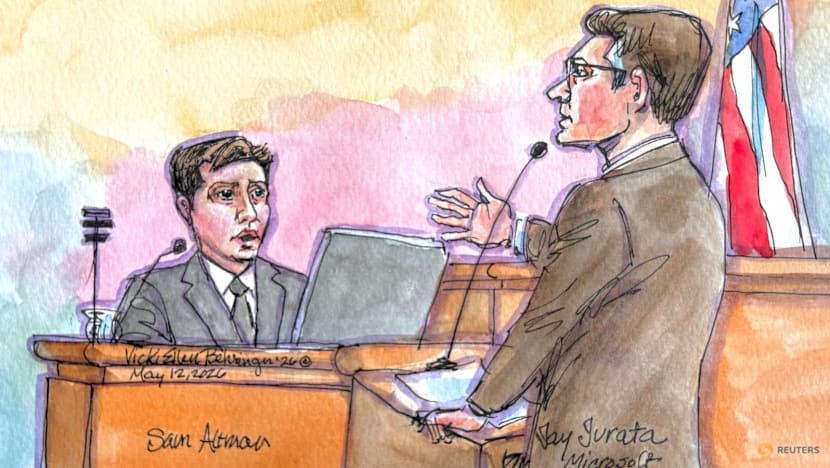 OpenAI Chief Executive Sam Altman is questioned by Microsoft attorney Jay Jurata during Elon Musk's lawsuit trial over OpenAI's for-profit conversion at a federal courthouse in Oakland, California, US, May 12, 2026 in a courtroom sketch. (Image: Reuters/Vicki Behringer)
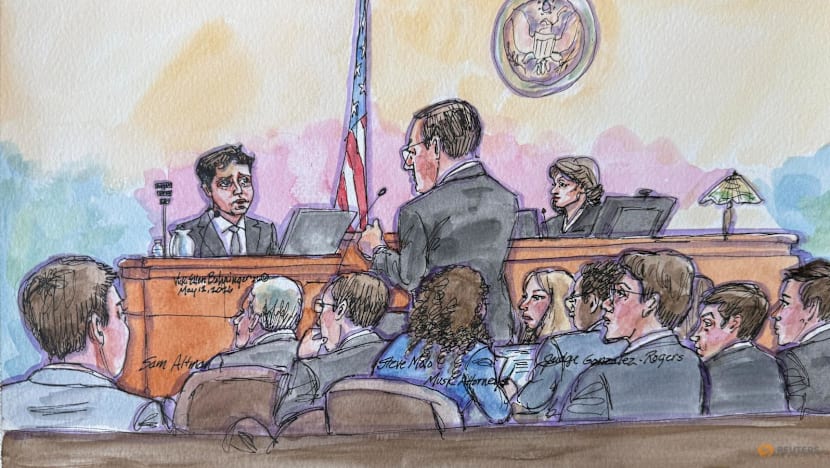 OpenAI Chief Executive Sam Altman is cross-examined by Elon Musk's lawyer Steve Molo during Musk's lawsuit trial over OpenAI's for-profit conversion at a federal courthouse in Oakland, California, US, May 12, 2026, in a courtroom sketch. (Image: Reuters/Vicki Behringer)
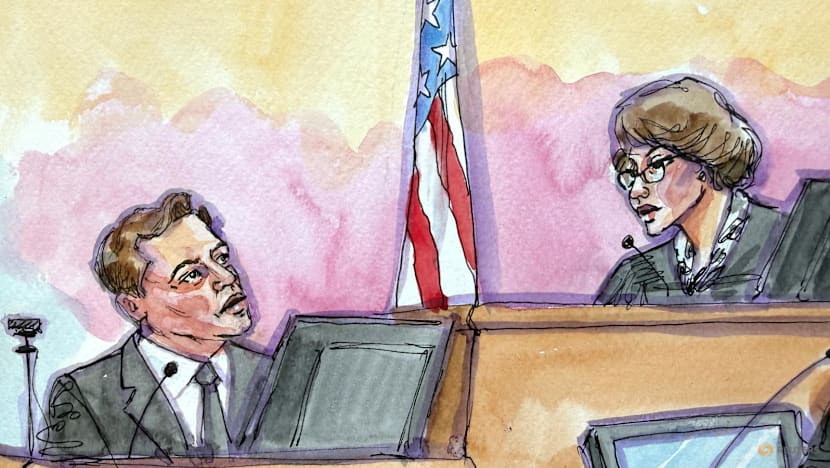 Elon Musk speaks with US District Judge Yvonne Gonzalez Rogers during his cross-examination, during Musk's lawsuit trial over OpenAI's for-profit conversion at a federal courthouse in Oakland, California on Apr 29, 2026 in a courtroom sketch. (Image: Reuters/Vicki Behringer)
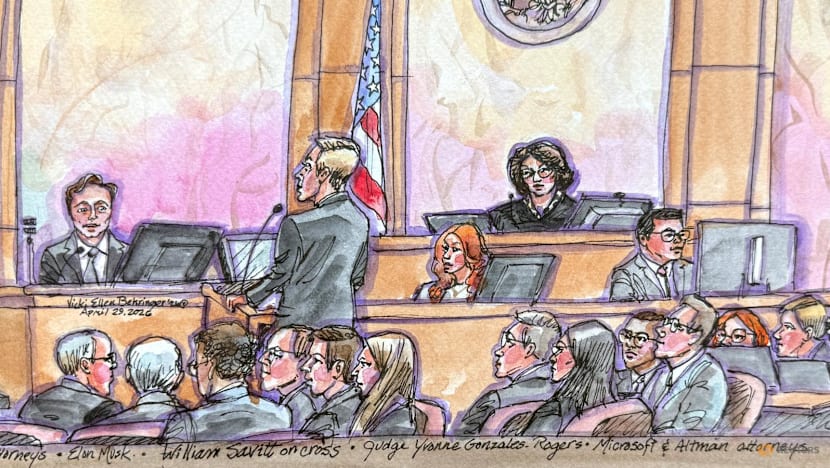 Elon Musk is cross-examined by OpenAI attorney William Savitt during Musk's lawsuit trial over OpenAI's for-profit conversion before US District Judge Yvonne Gonzalez Rogers at a federal courthouse in Oakland, California on Apr 29, 2026, in a courtroom sketch. (Image: Reuters/Vicki Behringer)
OpenAI's counter: A fight over control
OpenAI argued that Musk knew years ago about plans to create a for-profit entity, as building advanced AI would require vast capital.
Lawyers argued that Musk’s case was motivated by a desire to take over the company.
"What he cares about is Elon Musk being on top," William Savitt, a lawyer for OpenAI and Altman, said in his opening statement.
"We are here because Mr Musk didn’t get his way."
Altman testified that Musk once pushed for as much as 90 per cent ownership and resisted formal commitments to shared governance. At one point, Musk also floated merging OpenAI with Tesla, which he leads, as a way to secure funding.
Lawyers also highlighted what they described as inconsistencies in Musk’s account of OpenAI’s early days, accusing him of "selective amnesia".
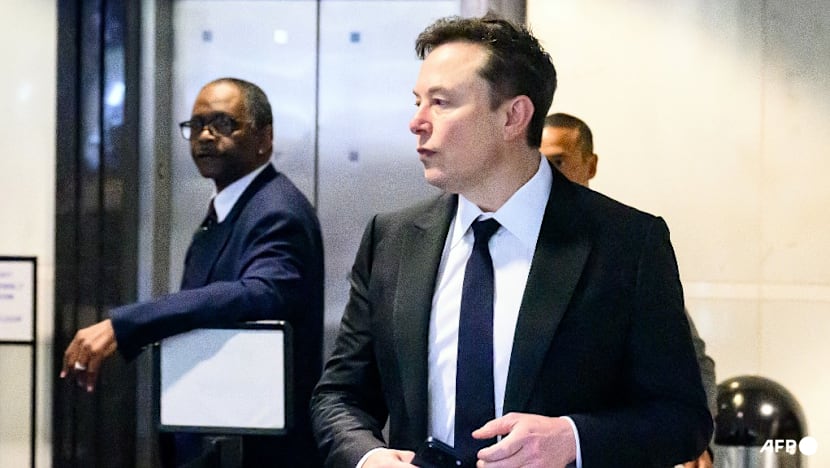 Elon Musk arrives at the federal courthouse during proceedings in the trial over his lawsuit against OpenAI in Oakland, California on Apr 30, 2026. (Photo: AFP/Josh Edelson)
Clash of the tech titans
The trial often resembled a Silicon Valley drama.
Musk cast himself as a naïve idealist who helped create OpenAI to guard against existential AI risks.
"I came up with the idea, the name, recruited the key people, taught them everything I know, provided all of the initial funding," the SpaceX CEO said. "I gave US$38 million essentially for nothing, which they used to build a company worth US$800 billion. I was literally an idiot.”
Musk was visibly annoyed during the trial as he called out OpenAI's lawyer for asking questions "designed to trap me".
OpenAI’s lawyer Willian Savitt responded: "Mr Musk, you are a brilliant man", before doubling down on his line of questioning.
Swapping his usual T-shirt, jeans and sneakers for a dark suit and tie, Altman struck back when Musk's lawyer asked if he had always told the truth.
"I'm sure there have been times in my life when I didn't," Altman said.
He also said Musk had demanded "90 per cent of the equity" in 2017 and "refused to commit in writing" to sharing power.
Altman said he had no choice as "we did not think that artificial general intelligence should be under the control of a single person".
Old journals and a secret intermediary
Every day in the courtroom, Greg Brockman, the president and co-founder of OpenAI, took extensive notes on yellow notepads.
During his questioning on May 4, his old journals took centre stage, with Musk's lawyer highlighting some of the most embarrassing excerpts.
Brockman wanted to make money, writing, "financially, what will take me to US$1B?" He also wanted "to convert to a b-corp without him (Musk)", a reference to a private company with social and environmental standards.
The journal recorded his concerns about a plan to "steal the non-profit from him (Musk)" as "pretty morally bankrupt".
Brockman pushed back, saying the notes were incomplete and taken out of context.
"There's nothing in there I'm ashamed of," Brockman said, claiming that the journal did not include details of an outburst from Musk in 2017 in which the billionaire ripped a painting off the wall before leaving the room.
Brockman's shares in the company are now worth US$30 billion.
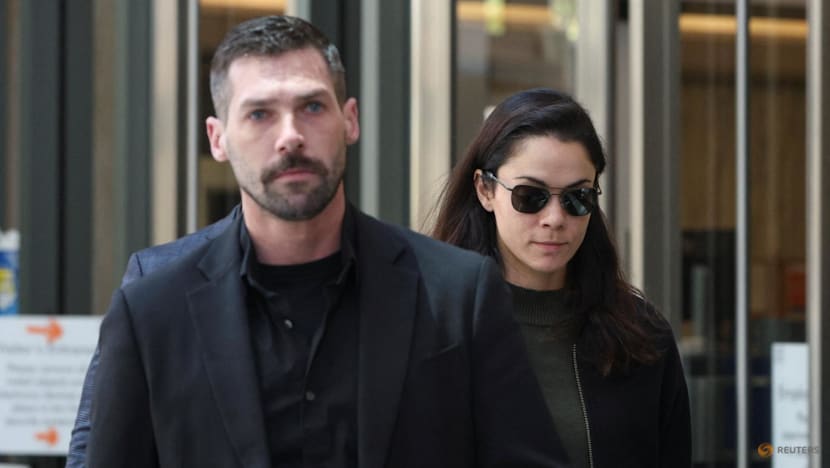 Shivon Zilis walks outside a federal courthouse as the trial in Elon Musk's lawsuit over OpenAI's for-profit conversion continues, in Oakland, California, US, May 6, 2026. (Photo: Reuters/Manuel Orbegozo)
Another key figure was Shivon Zilis, the mother of four of Musk’s children.
Zilis, who was appointed to the OpenAI board from 2020 to 2023, was asked about her awkward role as both Musk's colleague at Neuralink and Altman's friend.
OpenAI accuses her of working as a mole for Musk.
Her testimony, and particularly her private messages, were central to OpenAI’s argument that Musk had inside visibility into the company’s strategic shift years earlier.
Zilis responded to questions briefly and, at times, sarcastically.
"Relationship is a relative term," she said when asked about her relationship with Musk, before conceding, "there have been romantic moments".
The verdict
The ruling did not address the central claim that OpenAI abandoned its founding mission.
Instead, the jury concluded unanimously that Musk had missed the legal window to sue. He filed the case in 2024, years after he was allegedly aware of OpenAI’s shift.
The ruling effectively barred his claims under a legal threshold issue known as the statute of limitations.
Musk has vowed to appeal, arguing the jury "never actually ruled on the merits".
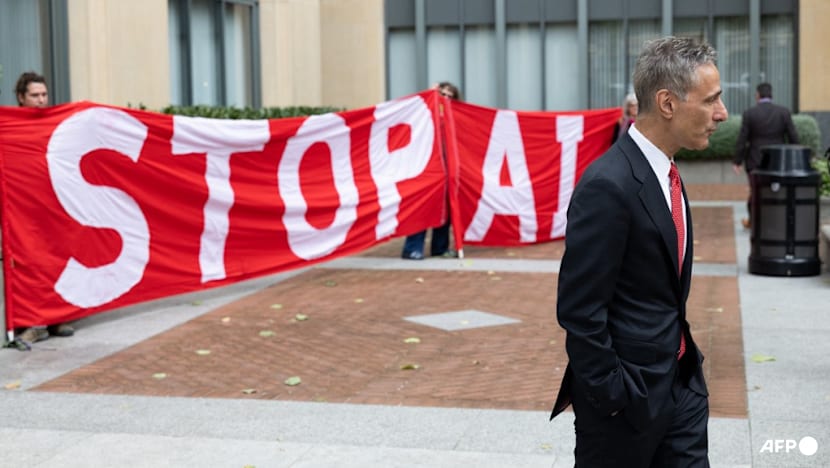 OpenAI's attorney William Savitt walks to a press conference outside the courthouse at the Ronald V Dellums Federal Building on May 5, 2026 in Oakland, California. (Photo: AFP/Getty Images/Benjamin Fanjoy)
Why the trial matters in the AI race
For OpenAI, the ruling removes a major legal threat.
Analysts said the decision clears the runway for OpenAI to continue scaling aggressively, backed by billions in investment and its flagship product, ChatGPT.
However, observers said OpenAI's public face, Altman, must now address the challenges to his reputation after multiple witnesses in the trial described him as a liar.
Dan Ives, an analyst at Wedbush, said the verdict removed a significant overhang to a potential OpenAI IPO that could value the company at US$1 trillion.
"This is a huge win for Altman and OpenAI despite the scrapes and bruises on Altman's persona and leadership," he said.
The decision also comes at a pivotal moment for the wider AI industry. Musk’s own AI company and Anthropic, founded by former OpenAI leaders, are also moving toward potential IPOs.
Beyond the corporate implications, the trial has exposed deeper fault lines shaping the AI race.
Can organisations founded on public-interest missions maintain those ideals once billions in capital enter the equation? OpenAI argued that building frontier models demands billions, forcing even mission-driven organisations to adopt hybrid or profit-oriented structures.
At the same time, testimony about equity demands and takeover attempts raised a central question of who should ultimately control technologies as powerful as AI? What happens if one company wins the race to artificial general intelligence?
The trial was widely seen as a critical moment in the broader debate over the future of AI, both in how it should be used and who should benefit from it.
"This is a question that many companies will face," Stavros Gadinis, George R Johnson Professor of Law at the University of California Berkeley, told Reuters.
"The problem that OpenAI tried to solve, the problem that Anthropic is trying to solve, is a problem typically those in those companies require very large investment of capital, with very high catastrophic risk, and at a pace of development that governments are not able to regulate. So this combination of circumstances will come up again and we will have to wait for another case."
Source: Agencies/CNA/gs(zl)