 3 months ago
173
3 months ago
173
For many companies, the next phase of artificial intelligence (AI) is no longer about building models, but putting them to work in real-world settings. This phase, known as inference, involves processing real-time data and generating responses for users.
Unlike training, which can often take place in lower-cost locations further from end users, inference typically requires systems to be closer to users and network hubs to minimise delays.
To meet this need, Digital Realty plans to invest more than S$4.3 billion in new data centre developments in Singapore, bringing its total potential investment to nearly S$7 billion. The company has almost doubled its local headcount over the past three years and aims to grow its workforce to 400 by 2030.
“This shift is creating new demands on digital infrastructure, particularly around connectivity, latency and data governance,” said Ms Serene Nah, managing director and head of Asia Pacific at Digital Realty, who was recently recognised in Data Centre Magazine’s 2026 Top 100 Women in Data Centres.
SINGAPORE EMERGING AS A LEADING AI HUB
Singapore is well placed to support companies running AI at scale, Ms Nah said, citing its connectivity and regulatory environment. “Data sovereignty is a real driver, especially for regulated sectors, and it shapes where certain workloads need to sit,” she said. “High-value, latency-sensitive inference needs to be located in trusted hubs like Singapore.”
The policy landscape is also evolving alongside industry needs. In January, Singapore introduced its Model AI Governance Framework for Agentic AI, providing guidance on the responsible use of enterprise agentic AI.
Digital Realty, which serves more than 5,500 customers globally, sees Singapore as a key base for its Asia Pacific operations. “We take an ‘in-country, for-country’ approach,” Ms Nah said. “Nearly 90 per cent of our Singapore team are local, and we want to continue investing in building capabilities for the long term.”
The company is also investing in workforce development through programmes such as the Institute of Technical Education’s Work-Study Diploma and partnerships with institutions including the National University of Singapore. Earlier this year, it hosted a Digital AI Open House for students from NUS’ Tembusu College.
Its local operations continue to expand. Digital Realty opened its APAC office at IOI Central in July last year and plans further growth, alongside capabilities such as its Global Command Center, a 24/7 monitoring and response hub.
Beyond its core business, the company supports community initiatives through partnerships with non-profits such as Willing Hearts, Food from the Heart and the Singapore Children’s Society.
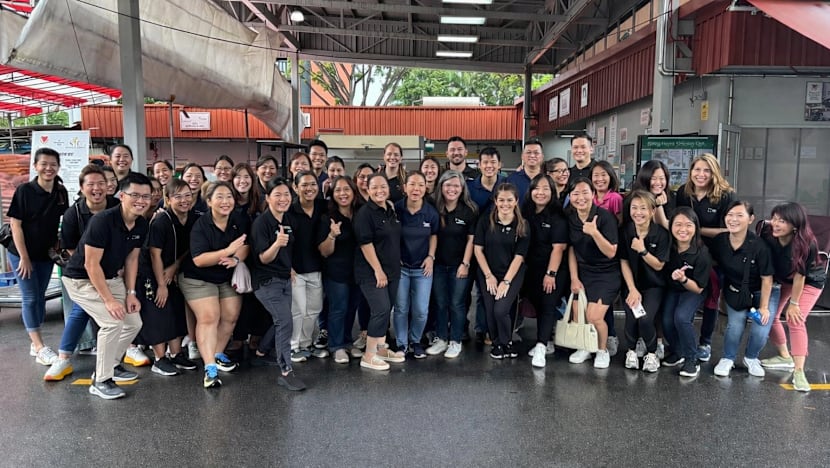 Digital Realty employees volunteering with Willing Hearts as part of its community initiatives in Singapore.
BALANCING PERFORMANCE WITH GOVERNANCE
Growing use of AI is prompting companies to reassess how these systems fit into existing IT infrastructure. Many operate across multiple cloud platforms, increasing the need for secure and reliable connections between infrastructure providers, cloud services and enterprise systems.
Some are also turning to dedicated environments, often described as private AI, where systems run on infrastructure built for specific needs. “In Singapore, we’re already seeing this across financial services, technology, logistics and healthcare,” said Ms Nah.
These sectors often face strict regulatory requirements, making decisions about where data and systems are located more critical. Ms Nah said Digital Realty works with customers to design infrastructure that meets both performance and governance requirements.
TESTING SYSTEMS BEFORE DEPLOYMENT
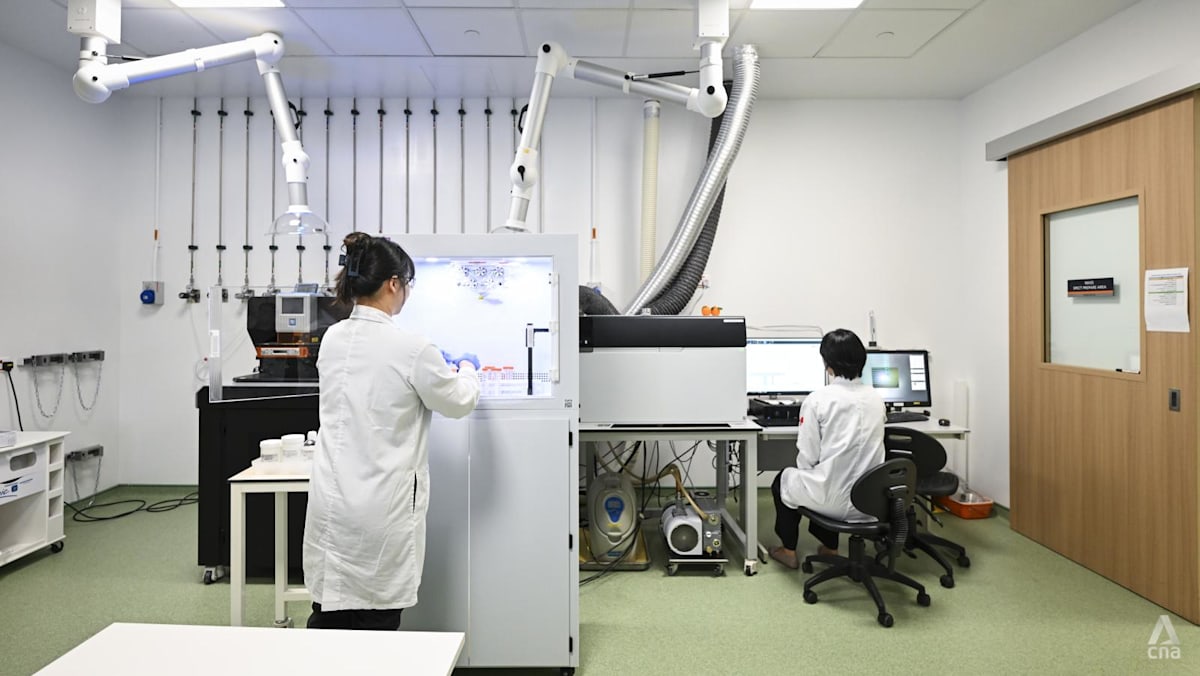
One challenge for companies expanding AI use is assessing whether their infrastructure can handle complex workloads before committing significant resources. To address this, Digital Realty plans to launch its Digital Realty Innovation Lab (DRIL) in Singapore in the third quarter of 2026 at its Loyang facility.
First introduced in Ashburn, Virginia, in September last year, the lab provides a supported environment to develop, test and run AI and hybrid cloud solutions before scaling them.
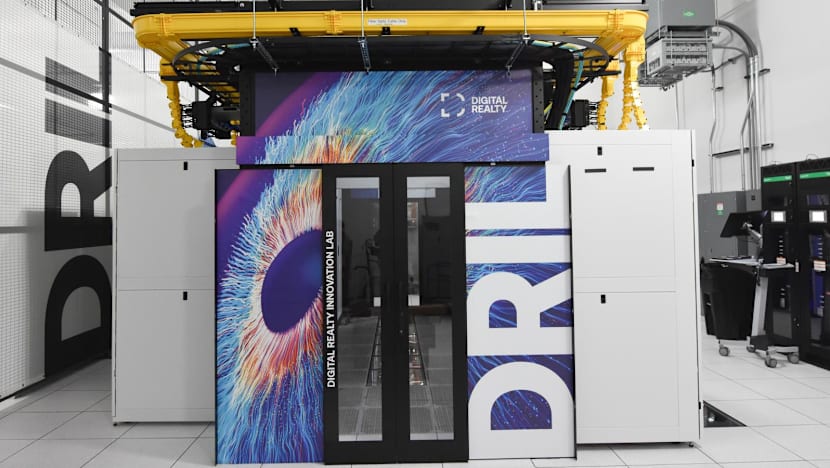 The Digital Realty Innovation Lab supports testing and scaling of AI and hybrid cloud solutions before deployment.
“With DRIL, we bring together infrastructure components, technology partners and data centre designs so customers can validate what they need before deploying at scale,” said Ms Nah. “With strong interest in private AI and inference deployments in Singapore, we see DRIL as a way to shorten the learning curve and support production AI.”
A MORE SUSTAINABLE ECOSYSTEM
As AI adoption accelerates, questions remain about how to sustain this growth, particularly in land- and energy-constrained Singapore.
Ms Nah, who is also vice-chair of the Asia Pacific Data Centre Association, said discussions between industry and government – including those linked to the Green Data Centre Roadmap – are focused on improving efficiency and increasing the use of cleaner power. This may lead to a more distributed model, where some workloads are handled in nearby markets while Singapore remains central for latency-sensitive AI and cloud connectivity.
The company has also achieved 100 per cent renewable energy coverage for its Singapore operations, reflecting its commitment to sustainable growth.
Ms Nah added that building a resilient digital ecosystem goes beyond infrastructure. “Behind every facility is a community of expertise working together – engineering, operations and customer support. We are investing in people, not just infrastructure.”
She also pointed to developments in quantum computing, noting that Digital Realty has worked with partners on quantum-AI data centre initiatives.
Looking ahead, Singapore’s strength may lie in balancing technological progress with trust, governance and sustainability, she said. “Success means attracting the right mix of industries and workloads that create long-term value. We help customers deploy AI in ways that are trusted, resilient and sustainable.”
Find out how Digital Realty is enabling the next phase of AI deployment in Singapore.