 2 months ago
105
2 months ago
105
The entire preparatory process and actual infrastructure development can take "well over 15 years" based on the experience of others, and the move does not mean that Singapore has decided to deploy nuclear energy, said PM Wong.
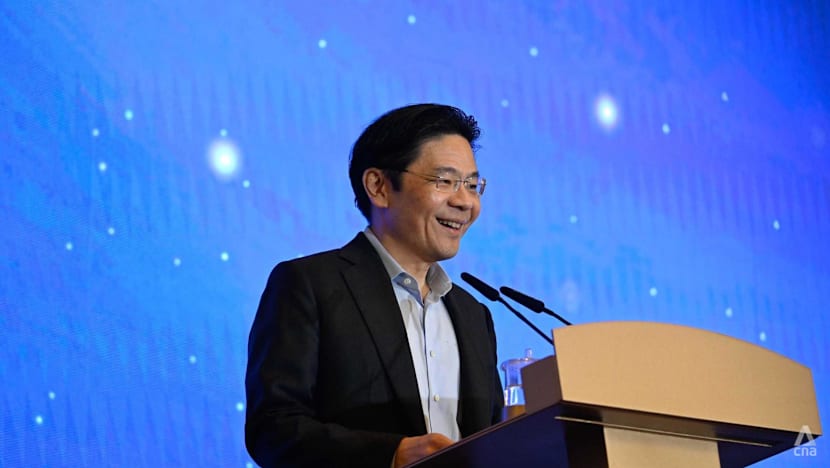
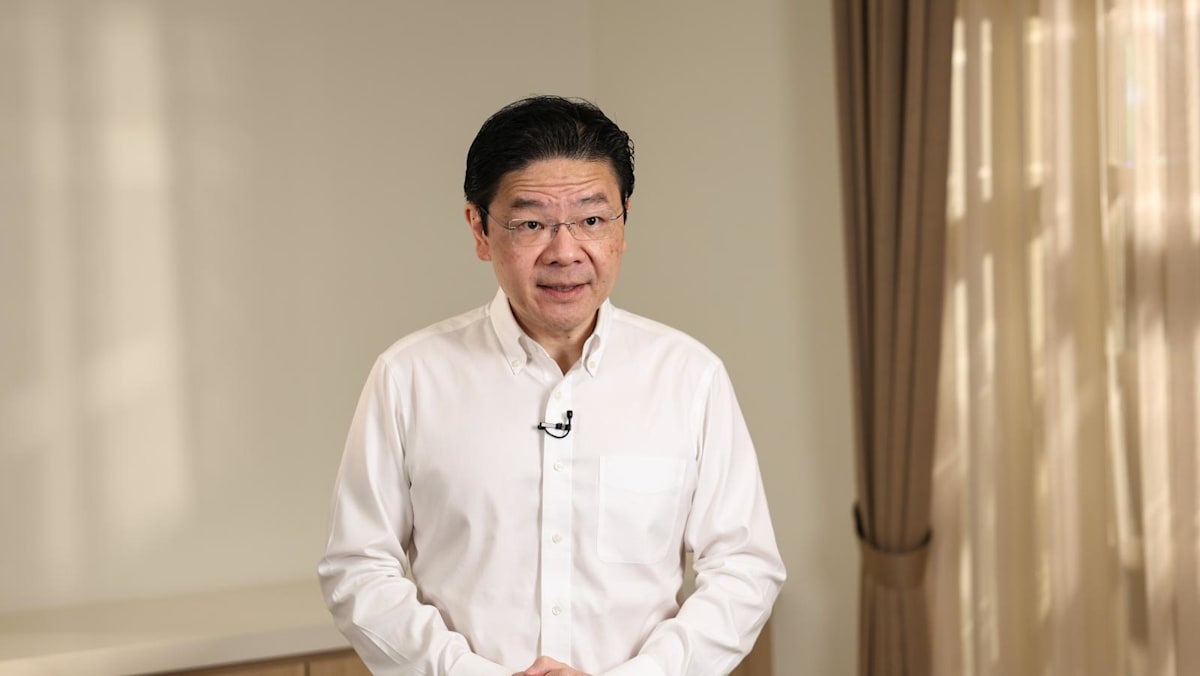
Prime Minister Lawrence Wong delivers his speech at the Energy Market Authority's 25th Anniversary Gala Dinner at the Shangri-La Hotel on May 19, 2026. (Photo: CNA/Wallace Woon)
New: You can now listen to articles.

This audio is generated by an AI tool.

SINGAPORE: From 2027, Singapore will be embarking on an assessment by the International Atomic Energy Agency (IAEA) to gauge the country's ability to make an informed decision on adopting nuclear energy, Prime Minister Lawrence Wong said on Tuesday (May 19).
"Safety will always be our overriding priority. As a small and densely populated city-state, we have no margin for error," said Mr Wong at the Energy Market Authority's (EMA) 25th anniversary gala dinner at Shangri-La Singapore.
"We must be confident not just in the technology itself, but in the entire supporting ecosystem around it – regulation, security, emergency response, and waste management, amongst other things."
In a joint press release, the Ministry of Trade and Industry, Ministry of Sustainability and the Environment, EMA and National Environment Agency (NEA) said that Singapore will embark on the first of three phases of the nuclear readiness review.
Also known as IAEA's Integrated Nuclear Infrastructure Review (INIR), each phase comes with key milestones that have to be reached in order to guide countries in their understanding of the commitments and obligations associated with developing a nuclear power programme.
The move does not mean that Singapore has decided to deploy nuclear energy, said Mr Wong.
Based on the experience of other countries, the preparatory process and infrastructure development can take more than 15 years, he said.
The review comes under IAEA's "milestones approach", which reflects the international best practices on nuclear energy deployment based on decades of international experience, the joint statement said.
Phase 1 involves countries assessing their own capabilities before making a decision on whether to develop a nuclear power programme.
This assessment will be a key milestone in Singapore's nuclear capability building journey and enable the IAEA to better understand Singapore's current stage of development and provide more tailored support, the joint statement said.
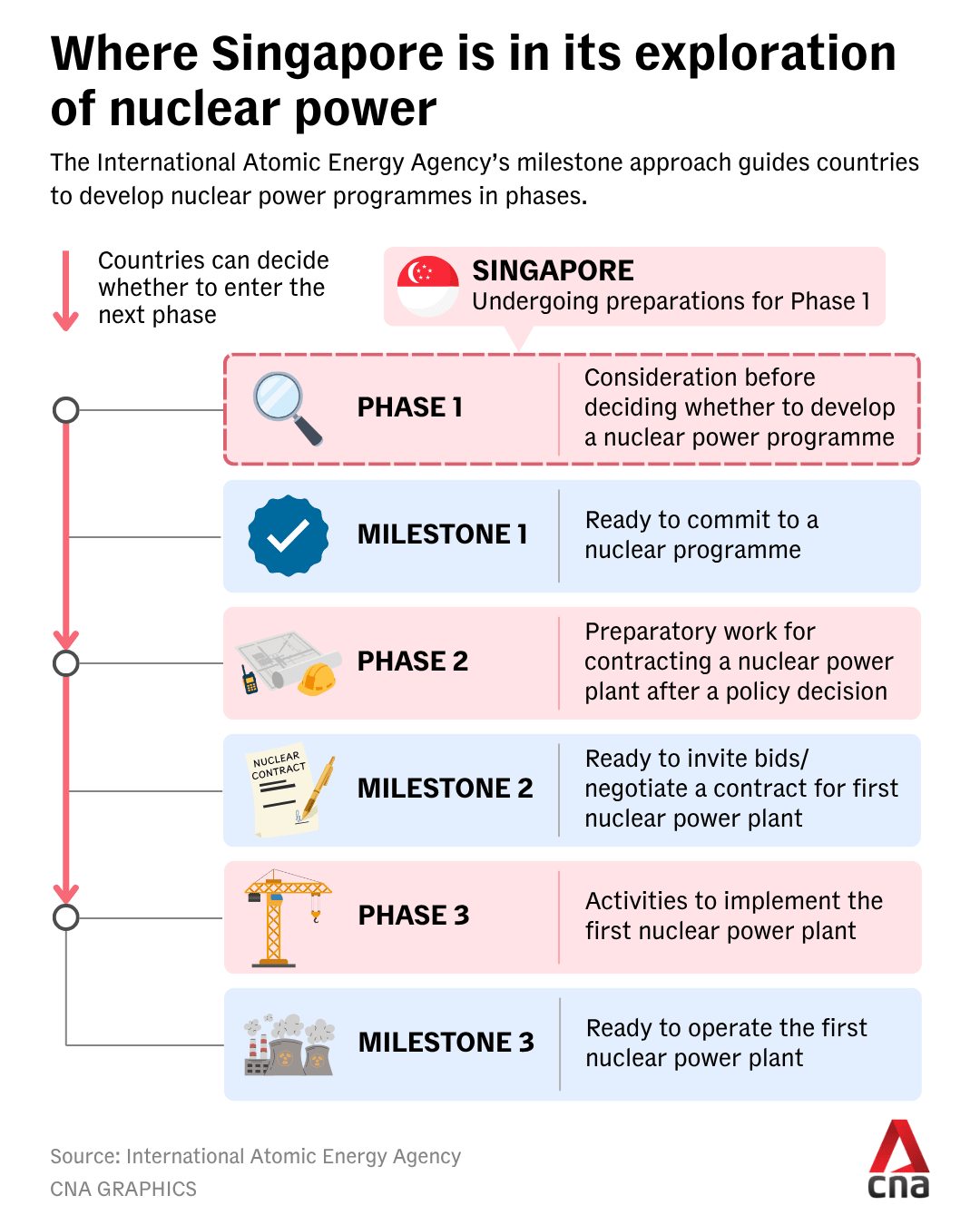
The INIR is an independent and voluntary assessment by IAEA for countries considering embarking on or expanding their nuclear power programme.
It ensures that the national infrastructure required for the safe, secure and sustainable use of nuclear power is developed and implemented in a responsible and orderly manner, a factsheet provided by the government agencies stated.
"We intend to share the results of the INIR mission to keep the public informed on our activities and strengthen Singaporeans' understanding of nuclear energy," the factsheet added.
Mr Wong said the public will be kept informed throughout the process, and that the IAEA's independent findings will be shared when the first phase of the review is completed. This includes any risks and challenges highlighted, and the overall assessment of Singapore’s readiness and progress.
Mr Wong added that the government will approach this "rigorously and thoroughly".
Singapore will accept the conclusion that nuclear is not the right path should such findings emerge from IAEA's review or from Singapore's own studies, he added.
"But even then, the effort will not be wasted. Because the capabilities we build and the knowledge we accumulate will still be valuable, especially as nuclear power becomes part of the energy mix in Southeast Asia," he added.
Singapore's considerations are "even more demanding" because of its unique circumstances, Mr Wong said.
To this end, he said the country has been taking steps towards building its capabilities and expertise in the potential source of clean energy.
The announcement comes after Singapore signed a five-year cooperation framework with the IAEA earlier this year to strengthen nuclear capabilities.
In March, NEA said it will commission three studies on nuclear safety and the environmental impact of such power facilities. The studies are meant to examine international safety standards and regulatory frameworks, as well as environmental considerations tied to nuclear power facilities.
Singapore has been studying the potential of nuclear energy for more than a decade, establishing the Singapore Nuclear Research and Safety Institute in 2025 to conduct studies on nuclear safety and build expertise in the country.
THREE STEPS TO REACH THE FIRST MILESTONE
Before a country can construct its first nuclear power plant, the necessary legal, regulatory, safety, security and technical foundations must be in place, said the factsheet.
To this end, IAEA's approach defines three milestones that the country must first meet.
A country is deemed to have reached its first milestone of "being ready to make a knowledgeable commitment to a nuclear power programme" if it completes three steps under the INIR mission.
Step one involves the preparation of a self-evaluation report to assess the country's development in 19 areas, including its ability to manage nuclear safety, radioactive waste and its emergency planning capabilities. This is already ongoing for Singapore, the factsheet said.
19 nuclear infrastructure issues to be assessed
The IAEA's approach looks at the development of a national infrastructure for nuclear power around these 19 areas:
National position
Establishing the government’s position and strategy on nuclear energy as part of a national energy programme.
Nuclear safety
Building a safety framework in line with IAEA's safety standards for countries embarking on a nuclear power programme.
Management
Developing the policies, regulatory frameworks and institutional capabilities needed to support a nuclear power programme, including the role of the owner-operator in managing the project.
Funding and financing
Managing the costs and financial risks associated with nuclear power projects.
Legal framework
Establishing national laws covering nuclear safety, security, safeguards and civil liability for nuclear damage.
Safeguards
Putting in place systems to ensure nuclear material and technology are used for authorised purposes.
Regulatory framework
Includes the establishment of a regulatory body that has oversight of nuclear facilities and activities.
Radiation protection
Includes implementing safety features in the design for nuclear power plants, and adopting safeguards to protect workers from radiation exposure.
Electrical grid
Ensuring a grid system can support the operation of a nuclear power plant.
Human resource development
Developing an effective workforce to support a nuclear power programme.
Stakeholder involvement
Engaging the public and other parties to promote transparency and build confidence in decision-making related to nuclear power.
Site and supporting facilities
Evaluating and developing suitable sites for nuclear installation while keeping in mind safety requirements.
Environmental protection
Managing environmental impacts associated with a nuclear power programme.
Emergency planning
Establishing a framework for preparedness and response for radiation emergencies.
Nuclear security
Measures to ensure the security of the facility and its materials.
Nuclear fuel cycle
Managing how nuclear fuel is sourced, processed and used during reactor operations.
Radioactive waste management
The storage, treatment, transport and disposal of radioactive waste and spent nuclear fuel.
Industrial involvement
Developing domestic sectors to participate in and support a nuclear power programme.
Procurement
Establishing a procurement system to ensure the successful operation and maintenance of nuclear facilities.
Collapse Expand
Step two, which is tentatively set for 2027, involves the main INIR mission, in which the requesting country would host a week-long plenary interview conducted by IAEA experts. The IAEA will publish key mission findings after.
Step three, which is the finalisation of the mission report, is expected to take place between 2027 and 2028.
The report will detail IAEA's observations, recommendations and suggestions so that the country can make an informed decision.
Singapore will then use IAEA's report to develop a national action plan to chart out any additional work required to reach the first milestone, the factsheet said.
In response to queries from CNA about the timeline for Singapore to make a decision on nuclear energy adoption, a government spokesperson reiterated the three steps of the INIR phase 1 mission.
The spokesperson added that the government is closely monitoring the advancements in the nuclear energy space "so that we are ready to make an informed decision on the safe deployment of nuclear energy when the technology is ready".
"Nonetheless, the field of nuclear energy requires a whole suite of capabilities to assess, operate and regulate this technology, and building these capabilities takes time. We are taking a phased approach towards building capabilities in the IAEA’s 19 infrastructure areas," the spokesperson said.
"This ensures that we consider the deployment of nuclear energy comprehensively, and any decision is backed by a mature ecosystem of experts and regulators."
Speaking to CNA on the IAEA's approach, Mr Ian Grant, the former deputy director general of operations in the United Arab Emirates' Federal Authority for Nuclear Regulation, said there was no fixed timeline for the completion of phase 1.
"The programme proper begins if or when the government takes a decision to proceed at the conclusion of phase 1 studies," Mr Grant, who is now an independent expert on nuclear energy, said.
"The IAEA indicates, based on its experience, that moving from phase 1 to construction and operation of a nuclear power plant takes at least 15 years."
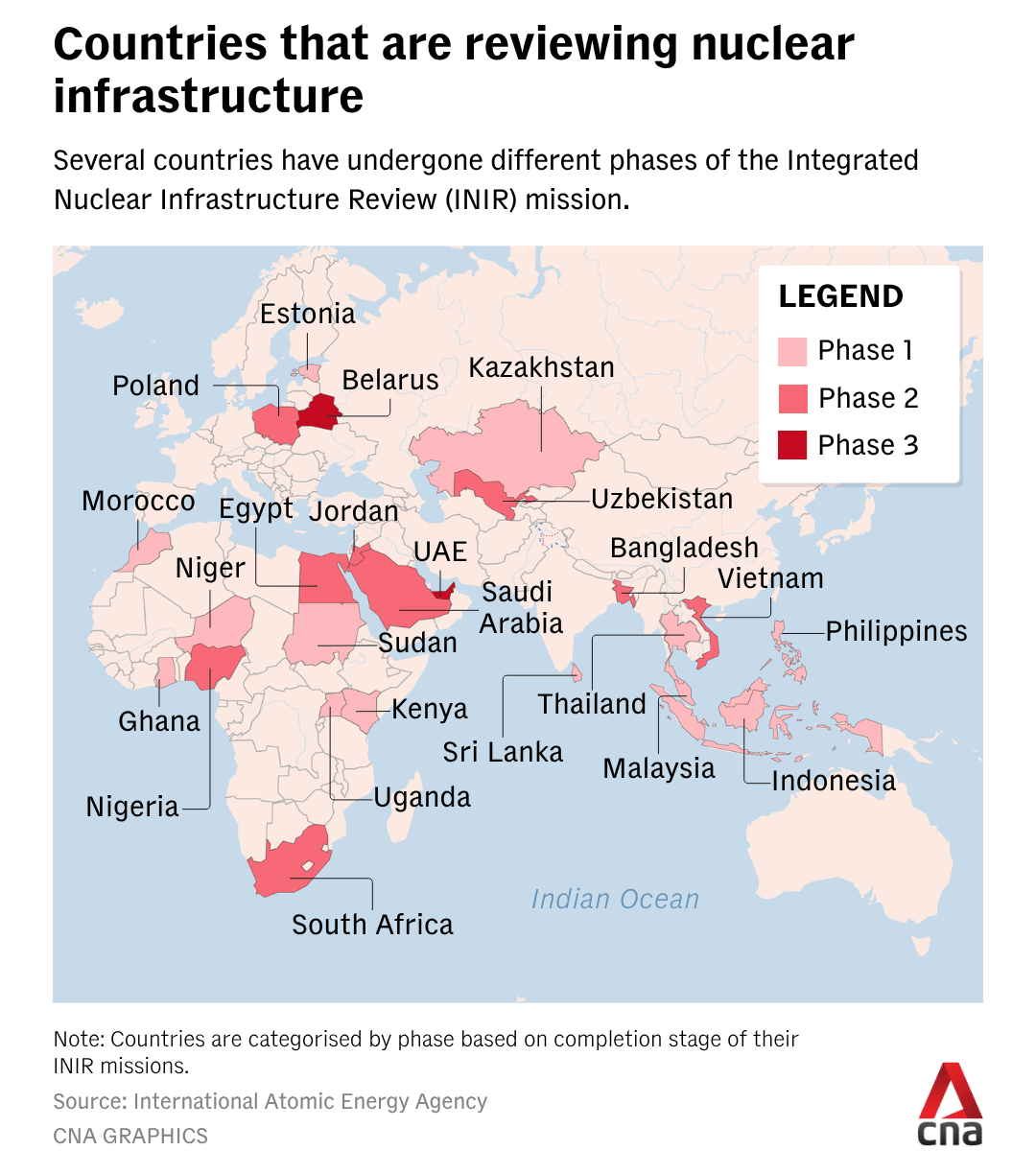
Sri Lanka, Thailand and Malaysia are among the countries known to have undergone only the first phase of the INIR mission, without progressing further in the process.
Poland and Vietnam are among the countries that have progressed to the second phase, while the United Arab Emirates and Belarus have moved on to phase three.
Mr Grant said some countries proceed based on their national circumstances, while others have paused or halted their plans altogether.
"Considerations include the government’s policy goals, the security of energy supplies, the availability of financing and public acceptance, to name a few," he added.
NUCLEAR ENERGY'S POTENTIAL IN SINGAPORE
"Nuclear energy has the potential to address Singapore’s energy security concerns while supporting our net-zero goals," the four agencies said, citing the benefits of the high energy density of nuclear energy that makes it a potential option for land-scarce Singapore.
The authorities added that any decision to deploy new energy technologies will be balanced against their safety, reliability, affordability and environmental sustainability "in Singapore's context".
At present, 95 per cent of Singapore's electricity is produced with imported natural gas, and the country is seeking to produce net-zero carbon emissions by 2050.
Singapore's reliance on fossil fuel makes it vulnerable to volatilities in the global market, while alternative sources of energy such as solar energy are insufficient to power Singapore's energy needs, the agencies said.
Senior fellow at S Rajaratnam School of International Studies at Nanyang Technological University Alvin Chew cited two main challenges with solar energy: Its intermittent nature and need for a large footprint.
Solar energy cannot serve as a stable and reliable source of baseload power needed for critical infrastructure, while nuclear energy can, Dr Chew said.
He referred to studies which showed that solar power can only provide up to 10 per cent of its electricity mix in 2050 due to Singapore's limited land.
"Nuclear energy is the densest form or energy available today and therefore, require lesser land space to generate the equivalent capacity of electricity," he added.
Singapore's exploration in other low carbon forms of energy, such as geothermal and hydrogen are still at its early stages.
In the factsheet, the four agencies said advancements in nuclear technology, such as small modular reactors (SMRs), have improved the safety of nuclear systems.
SMRs incorporate enhanced safety features without the need for human intervention or external power and require a small buffer zone in densely populated countries like Singapore.
Dr Chew pointed out that many existing SMRs run on light-water reactor technology, a scaled-down version of the conventional large reactors.
"Hence, technology associated with such SMRs are matured and reliable as they have been in operation for more than 50 years," he said, adding that Singapore can learn of the safety and security aspects of such SMRs.