 4 months ago
151
4 months ago
151
MOSCOW: Asian food is rapidly becoming part of daily life in Russia, with demand surging for everything from Korean noodles to Thai sauces – driven by shifting consumer tastes, the rising influence of pop culture and Moscow’s economic pivot towards Asia following Western sanctions.
What was once a niche trend is now reshaping shopping habits, restaurant culture and trade patterns across the country.
From Japanese ramen to Chinese beer, Asian products are increasingly filling supermarket shelves and restaurant menus in ways few Russians could have imagined before the Ukraine war began in 2022.
POP CULTURE FUELS DEMAND
In today’s Russia, Asian food is no longer a passing trend – it is becoming part of the mainstream.
The transformation is especially visible in major cities, where the number of noodle shops and ramen restaurants has jumped 41 per cent since 2023, according to data from Russian mapping service 2GIS.
One example is KONO, a self-service noodle eatery where customers can choose from dozens of Asian instant noodles and prepare them with different toppings.
There has been a huge appetite for such experiences, said KONO co-founder Anton Barkonov.
“It is interesting to people,” he added. “They seem to be a bit weary of typical restaurant format. They like new experiences – choosing, cooking, and it is at least exciting, not just potatoes.”
But the boom is being driven by more than novelty.
After Western sanctions and the withdrawal of many European suppliers, Russia sharply redirected trade towards Asian markets, accelerating shifts already fuelled by younger consumers and the growing popularity of Asian pop culture.
Sales of Asian food products have climbed significantly in recent years, according to observers.
South Korean brands, for instance, now dominate much of the instant noodle market.
Retailers are also rapidly expanding their range of Southeast Asian and South Asian products.
Analysts say younger Russians increasingly associate Asian cuisine with the music, films and online content they consume.
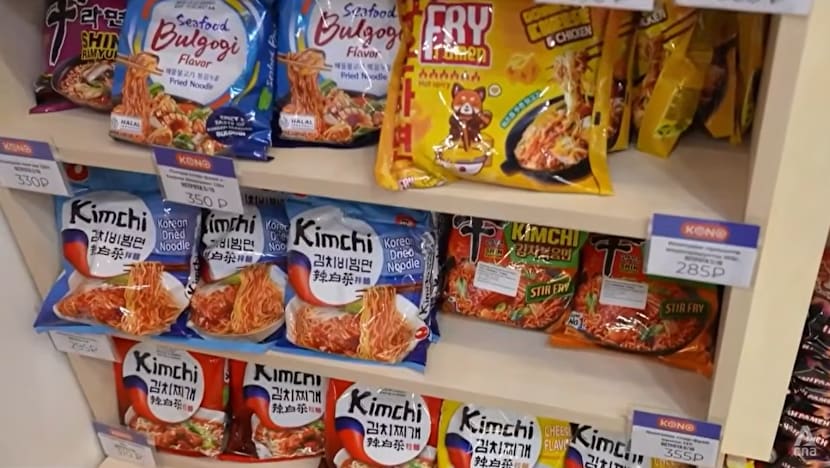 Sales of Asian food products have climbed significantly in recent years. South Korean brands, for instance, now dominate much of the instant noodle market.
COMPETITION HEATS UP
The rapid growth, however, has also intensified competition.
“When we first opened, many similar places started appearing,” said Sergey Lebedev, founder of Chiko, a food chain featuring Korean cuisine.
“People saw that it was popular, and a lot of brick-and-mortar noodle and self-service spots opened. The market quickly became saturated,” he added.
“Demand grew. Now, it’s not so easy for noodle shops because there are so many of them. Even large retail chains like Magnit have started opening their own. Demand is now almost fully satisfied, and to stand out from competitors we had to rethink our format.”
With sanctions limiting direct flights to many Asian destinations, social media has become a key gateway for Russians discovering Asian cuisine and culture.
“Asian food is becoming more popular – the atmosphere, the whole experience,” said Moscow resident Lev.
Restaurant owners say they are now working to make Asian cuisine more accessible to consumers outside Russia’s largest cities, where tastes remain more traditional.
They also believe restoration of direct flights to Asian countries could fuel even greater interest in the years ahead.