 3 months ago
128
3 months ago
128
As artificial intelligence (AI) applications grow in capability, so do their energy demands. Even routine tasks such as image generation can be energy-intensive. A 2024 study by Carnegie Mellon University researchers and open-source AI platform Hugging Face found that generating 1,000 images with AI tools consumes about 2.9 kWh on average – roughly equivalent to the energy needed to fully charge a typical smartphone per image, depending on the system’s computing requirements.
This is placing new pressure on data centres to scale capacity while rethinking how infrastructure is designed and operated. The challenge is no longer only about how much power is available, but how efficiently and sustainably it can be used.
Bridge Data Centres (BDC), a Singapore-headquartered data centre platform with hyperscale facilities across Asia Pacific, is addressing this by diversifying its energy sources through partnerships with renewable energy firms while optimising how its facilities consume power and water.
These efforts form part of a longer-term investment of S$3 billion to S$5 billion in Singapore to develop infrastructure that can support AI workloads while aligning with sustainability goals.
“Sustainability is central to BDC’s growth strategy,” said BDC CEO Eric Fan. “We have been investing in innovative technologies to enhance the environmental performance of our data centres, including reducing water usage and improving energy efficiency.”
DIVERSIFICATION WITH NEW ENERGY SOLUTIONS
Hydrogen is widely seen by industry experts as a cleaner alternative to fossil fuels and a potential pathway for decarbonisation. In March, BDC and Concord New Energy signed a memorandum of understanding (MOU) to jointly develop Singapore’s first barge-based hydrogen power generation solution tailored for next-generation AI digital infrastructure.
Under the MOU, the partners will explore hydrogen supply chain frameworks and long-term procurement models, including renewable power purchase agreements and integrated energy storage solutions. These efforts aim to support more sustainable and resilient energy options for the data centre sector.
BDC has also partnered global players in energy and energy storage, including EcoCeres and SK Innovation, to pilot clean energy solutions such as hydrogen and biomass, alongside energy storage technologies suited for tropical climates.
“In parallel, we are exploring new energy applications, including more flexible grid-side optimisation approaches to support a more resilient energy foundation for next-generation AI infrastructure,” said Mr Fan.
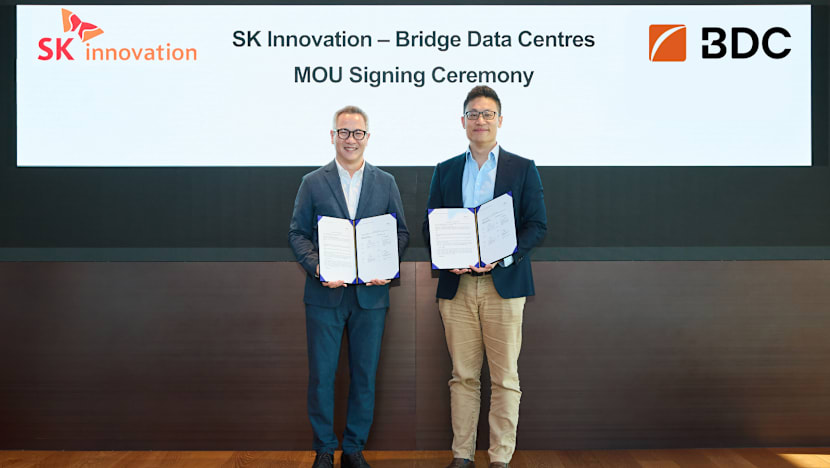 BDC signed an MOU with South Korean energy and chemical company SK Innovation to advance innovative energy solutions for next-generation data centres.
DESIGNING FOR AI-DRIVEN WORKLOADS
The rise of AI is also reshaping how data centres manage cooling, particularly in subtropical regions where temperatures are higher and humidity is greater.
At its MY06 campus in Sedenak, Johor, BDC was among the first hyperscale operators in Southeast Asia to deploy advanced liquid cooling technologies at scale, including cold plate liquid cooling, to support high-density AI workloads.
This initiative, among others, enabled the facility to achieve an annualised power usage effectiveness of below 1.2. MY06 Campus (Building 1) also achieved Singapore’s Green Mark Platinum Award under the BCA-IMDA Green Mark International for Data Centres 2024 – the first such recognition for a facility outside of Singapore.
BDC has also signed a partnership with BCA International to support the adoption of Singapore’s Green Mark standards in global data centre developments. Mr Fan said that BDC will continue working with Singapore’s built environment firms to advance green data centre practices and build partnerships that support its goal of achieving 100 per cent renewable energy usage.
In addition, BDC is working with technology partners such as Vertiv and Delta Electronics to explore more sustainable cooling solutions. Many of its partners work closely with leading chipmakers, which helps ensure that cooling, power and system architectures are developed to meet the demands of high-density AI computing.
RETHINKING WATER USE IN DATA CENTRE DESIGN
Water is another key resource that must be managed to support sustainable data centre operations.
BDC’s upcoming MY07 hyperscale campus in Ulu Tiram, Johor, is a case in point. The facility incorporates a water treatment plant directly within its data centre complex – a first in Malaysia. The plant uses membrane bioreactor and reverse osmosis technologies to treat effluent, or liquid waste, and convert it into high-grade water suitable for data centre cooling purposes.
“Since commencing operations in 2025, the plant has significantly reduced our reliance on potable water, allowing us to decouple our data centre operations from the community water supply as far as possible,” Mr Fan said. “This reflects how we are embedding sustainability into the design and long-term development of our digital infrastructure.”
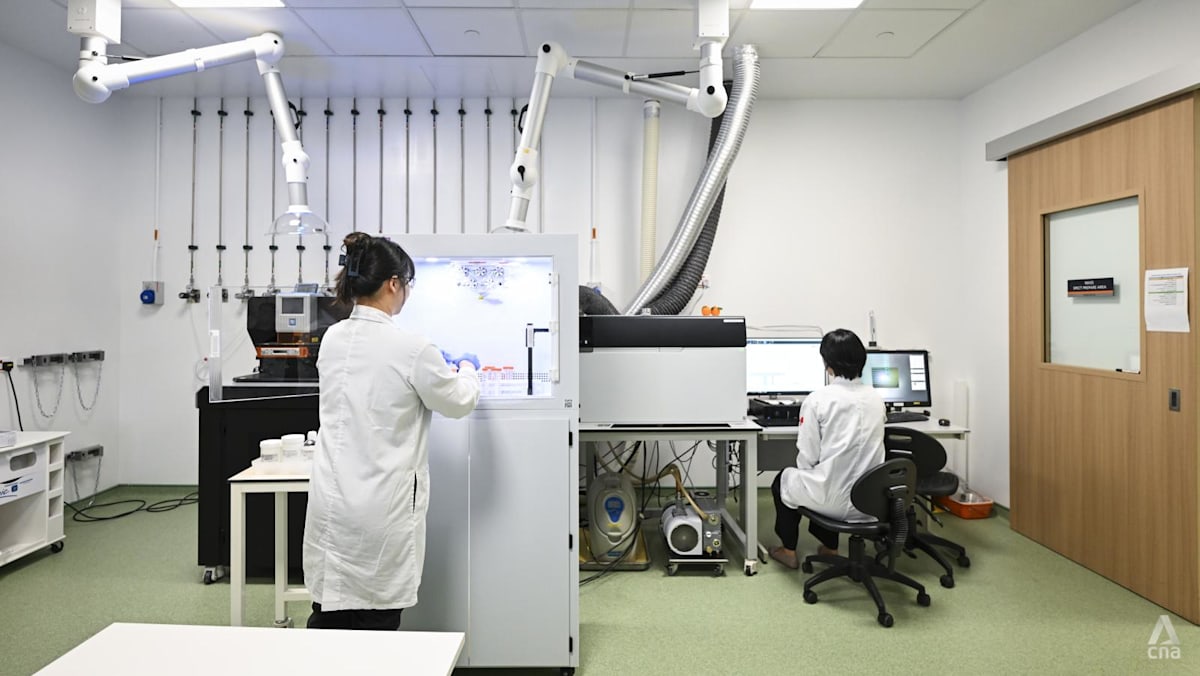
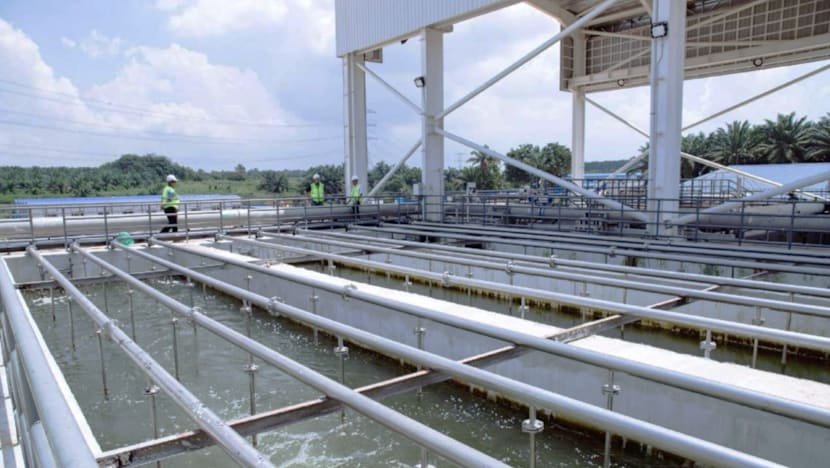 Since 2025, BDC’s water treatment plant has been converting effluent into high-quality cooling water for its upcoming 400MW campus.
BUILDING A FLOURISHING AI ECOSYSTEM
As AI adoption deepens, greater emphasis is likely to be placed on how data centres are designed from the outset, from energy sourcing to water use and cooling systems.
BDC’s initiatives aim to reinforce Singapore’s position as a regional hub for AI-ready digital infrastructure, while supporting broader efforts in sustainable energy innovation and green growth. They also contribute to Singapore’s goal of achieving net-zero emissions by 2050.
Mr Fan said: “Together, these innovations aim to create a new generation of digital infrastructure that integrates advanced power architecture, intelligent operations, high-efficiency thermal management and climate-adapted cooling technologies to support the evolving demands of AI computing.”
Learn more about Bridge Data Centres’ digital infrastructure projects in the Asia Pacific.