 3 months ago
111
3 months ago
111
A single malt whisky from Tasmania no longer sounds improbable, but it didn’t seem so long ago. In 2009, Hobart-based Lark Distillery put Tasmania on the map when it won Best Other Single Malt Whiskey at the World Whisky Awards in London. Five years later, Sullivans Cove went further still, claiming World’s Best Single Malt Whisky.
Those wins shifted global perceptions. Whisky production, once anchored in Scotland, has expanded across Japan, India, Taiwan, Canada and Australia. Tasmania, a cool, windswept island south of the mainland, has emerged as one of the most compelling outposts.
Lark and Sullivans Cove remain the state’s most recognised names, joined by distilleries such as Hellyers Road and Old Kempton, whose whiskies are now stocked well beyond Australia, including in Singapore. At this year’s World Whisky Awards, Tasmanian producers dominated – Lark’s long-serving master distiller, Chris Thomson, was named Best Master Distiller and Blender of the Year (Rest of World), alongside dozens of medals awarded to Tasmanian whiskies.
IT STARTED WITH TROUT
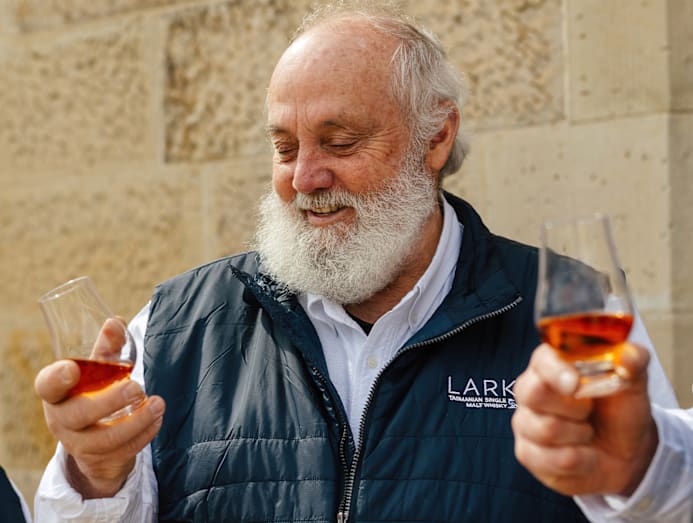 Bill Lark, founder of Lark Distillery. (Photo: Lark Distillery)
The origin story of Tasmanian whisky is riveting when Bill Lark of Lark Distillery tells it.
Inspiration struck in the Central Highlands during a trout-fishing trip in 1989, when Bill caught a four-pound brown trout. Later that night, while sipping a late-night dram with his wife, Lyn, and his in-laws to celebrate the catch, Bill wondered why Tasmania didn’t make its own single malt.
“We obviously grow good barley,” he said. “Our water is second to none, and our climate is every bit as good as parts of the world that make whiskey, like Scotland,” he recounted, sitting across from me in Hobart, with master distiller Chris Thomson beside him.
Bill’s wife, Lyn, encouraged him to give it a go – and he did. Unbeknownst to them, the Larks had sparked what would become Australia’s whisky industry.
Neither Bill nor Lyn – a land surveyor and a survey draftsperson – had any distillation experience at the time. Compounding the challenge, the Distillation Act 1901 banned small distilleries in Tasmania.
“I've never let being told how hard it would be stop me from doing anything,” recalled Bill, who lobbied the local MP, Duncan Kerr. Kerr, in turn, took the case to the Minister of Small Business and Customs, Barry Jones, resulting in an amendment to the legislation. Bill secured a licence in 1992 and founded Lark Distillery – the first Tasmanian distillery in 153 years.
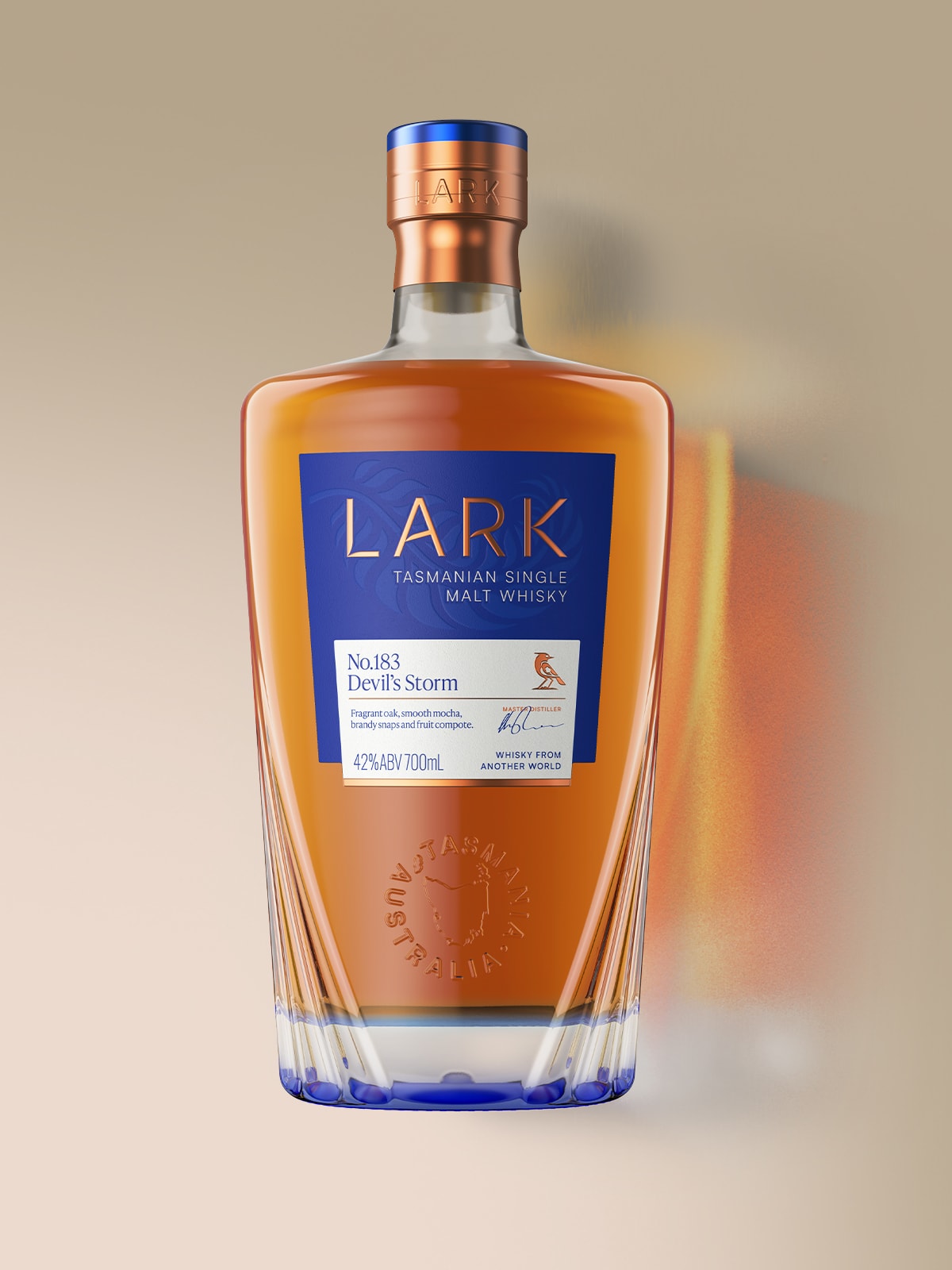 Lark Distillery's Single Malt Whisky Devil's Storm. (Photo: Lark Distillery)
Production choices quickly set Lark apart. The distillery uses wild yeast for a seven-day fermentation and matures its spirit in small casks. The cut is made using apple-wood-smoked water from Tasmania’s famed orchards – an unconventional technique that enhances balance, complexity and an umami character that has become the house signature.
From an early output of just 150 bottles a year, Lark Distillery now has 2.4 million litres of whisky maturing at its expansive 40-acre site in Pontville, a 30-minute drive from Hobart. Bill Lark has since been inducted into the Whisky Hall of Fame and was appointed a Member of the Order of Australia earlier this year.
Lark’s efforts paved the way for others to follow. Advice was freely given, techniques were shared, and a community emerged in which competition was secondary to collective legitimacy.
THE LONG GAME
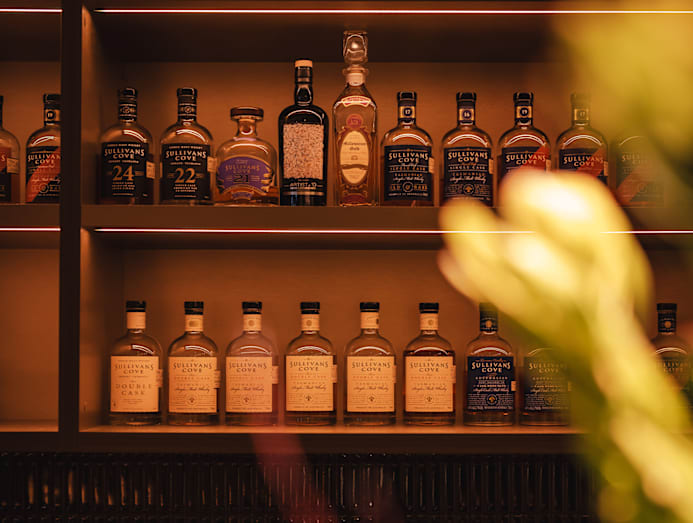 Whisky from Sullivans Cove. (Photo: Sullivans Cove)
Sullivans Cove, located closer to Hobart, in Cambridge, followed in 1994. Through four ownership changes, the philosophy remained consistent: whisky is a long-term pursuit.
The previous owner and master distiller, Patrick Macquire – also a fellow inductee of the Whisky Hall of Fame – reshaped the distillery by opening it to international markets and winning awards. He pared the range back to three core expressions – American oak, French oak and double cask. It was the French Oak cask HH0525 single malt that proved pivotal, catapulting Tasmania onto the world stage.
Now under the new ownership of Adam Sable, the distillery underwent an A$14 million (US$9.94 million; S$12.57 million) refurbishment, including new Forsyths stills and a state-of-the-art wood- and mocha leather–accented tasting room overlooking the Charentais alembic copper stills. The stills are inspired by Cognac – an essential point of difference. Heather Tillot, director of Whisky Creation, calls it their “unique angle”.
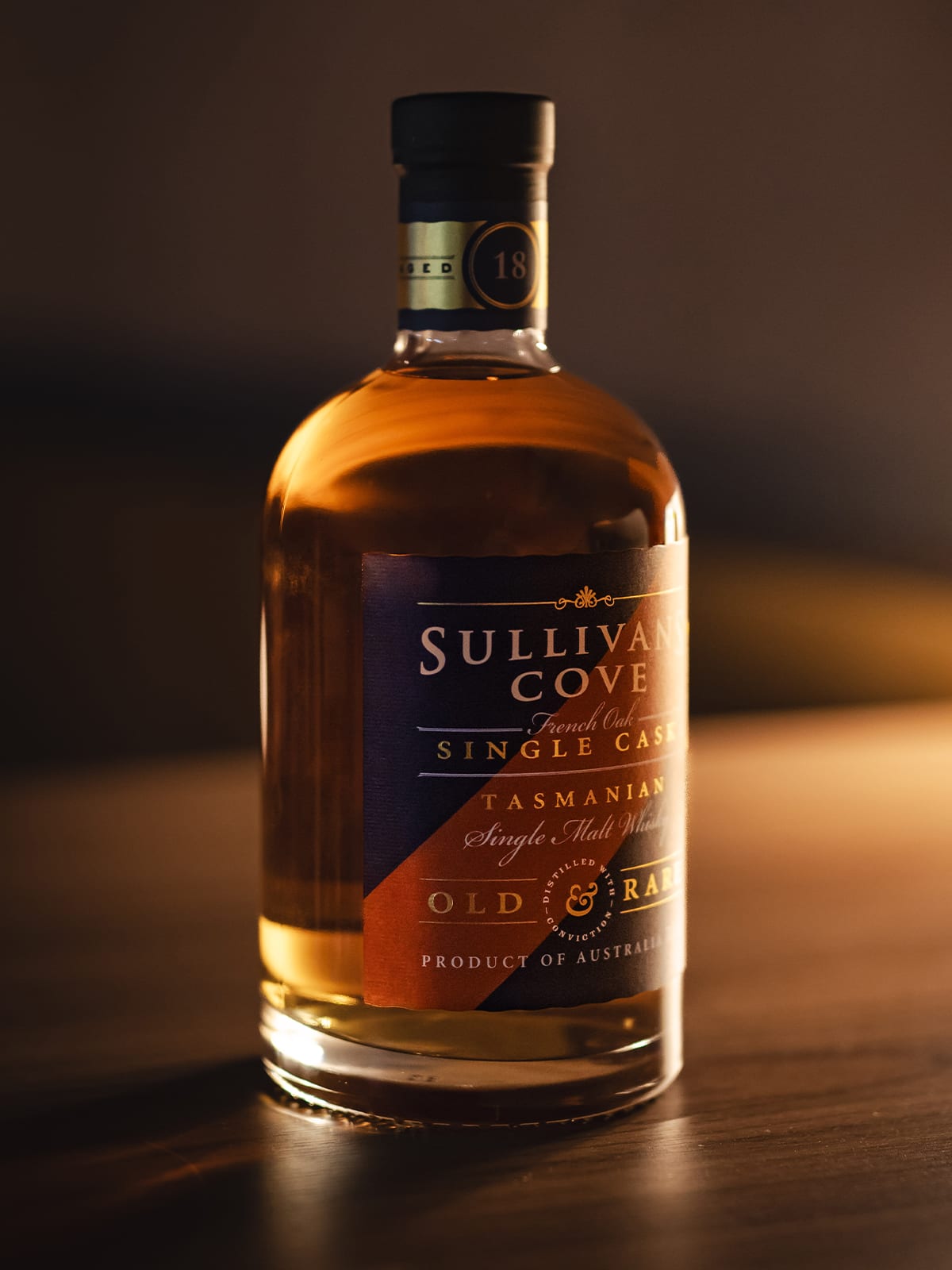 Sullivans Cove's Single Malt Whisky. (Photo: Sullivans Cove)
“Every person who has been part of the distillery, across each ownership era, has understood that producing exceptional whisky is a long-term endeavour,” she added.
Sullivans Cove has gained cult status for its unique approach and remains a collectors’ favourite.
LOCAL BARLEY, FRESH WATER, BARRELS AND PEAT
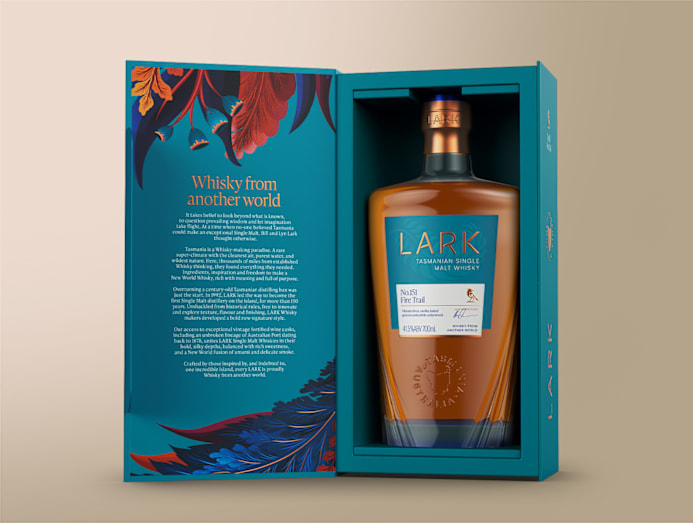 Lark Distillery's Single Malt Whisky Fire Trail. (Photo: Lark Distillery)
Tasmanian whisky draws heavily on local inputs. Barley, grown for the state’s beer production, provides a softer, oilier spirit. “We don't get the same high return of alcohol per tonne of barley as in other parts of the world, but what we are getting is a rich oiliness in the middle of the palate,” said Bill.
Peat sourced from the Central Highlands is accessed under tightly controlled licences.
Bill handed me a toasted peat cake during the site visit. Unlike Scotland’s medicinal peat, Tasmanian peat is gentler, with sweet, earthy aromas.
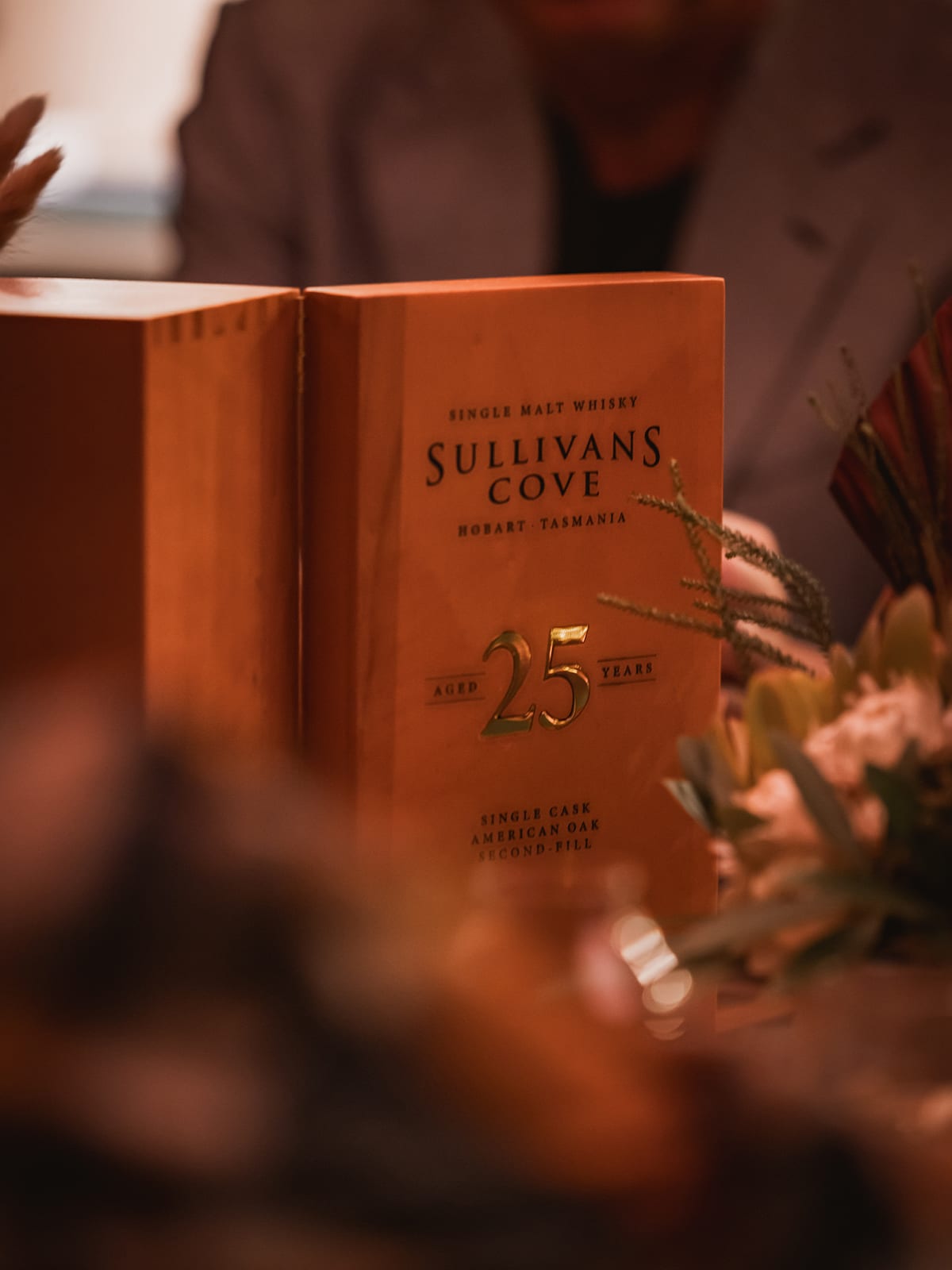 Sullivans Cove's 25 Years. (Photo: Sullivans Cove)
While many distilleries import international oak barrels, others, like Lark, opt for Australian fortified-wine barrels from producers such as Seppeltsfield Wines in the Barossa Valley. Tasmania’s cool, Southern Ocean-influenced climate creates wide diurnal shifts, allowing whisky to mature slowly and evenly.
THE SINGAPORE MARKET
That balance has helped Tasmanian whiskies find receptive audiences abroad. In Singapore, a market long dominated by Scotch and Japanese labels, Tasmanian bottlings are increasingly treated with respect.
 Lark Distillery's Single Malt Whisky Ruby Abyss. (Photo: Lark Distillery)
“Over the past 1.5 years, I’ve noticed a gradual increase in the presence of Tasmanian whiskies on the shelves of bars and boutique F&B establishments in Singapore”, said industry observer and Tasmanian whisky enthusiast Miguel Loh. Awareness, however, remains limited to more seasoned, research-oriented drinkers who actively seek out emerging whisky regions.
“Tasmanian whiskies are a very niche demand,” said Diego Aruad, managing director at La Maison du Whisky. Production remains small, he noted, and prices can be high in a market where international brands offer deep discounts.
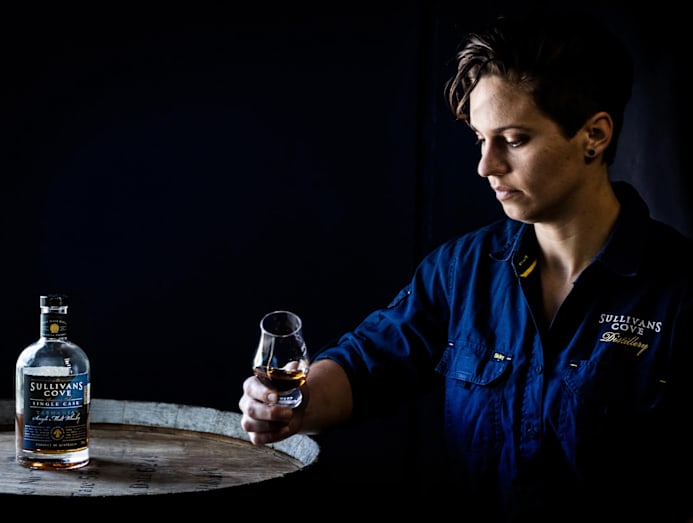 Heather Tillot, director of whisky creation at Sullivans Cove. (Photo: Nat Mendham)
Producers are responding. Lark has recently launched four new expressions exclusively for Asian markets, priced between S$150 (US$119) and S$350, with new packaging and a 700 ml bottle. Other producers, such as Hellyers Road, release annual special single cask bottlings in collaboration with La Maison du Whisky. Responding to Asian markets’ appetite for aged whiskies, Sullivans Cove recently launched a 25-year-old whisky – the oldest single malt bottled in Australia – for key Asian markets, including Singapore.
Tasmania’s whisky industry has become a draw for international visitors. Events such as Tasmanian Whisky Week, held in August, bring distillers and consumers together.
The Tasmanian Whisky and Spirits Trail links more than 30 distilleries across the state, encouraging visitors to plan a personalised journey through Hobart, the Midlands, Burnie, Devonport and beyond.
The distilleries are spread across the island, but the drives between them offer their own rewards: winding roads under the shadow of Hobart’s Wellington Mountain, clear waterways, and open stretches that speak to Tasmania’s remoteness and scale.