 1 month ago
55
1 month ago
55
The official line is straightforward: US President Donald Trump asked for a delay to his long-anticipated summit in Beijing with Chinese leader Xi Jinping, and it has been pushed back by “a month or so”.
According to the White House, moving the meeting allows Trump to remain in the US and manage the escalating war with Iran, including urgent efforts to reopen the Strait of Hormuz.
But beneath the surface, a more complex story emerges - months of growing frustrations, mismatched expectations, unanswered proposals and a distracted Trump administration, all compounded by geopolitical crosswinds.
The result is a latticework of concerns that was straining the lead-up to the summit long before missiles escalated Middle East tensions, leaving Beijing increasingly wary of the meeting and bracing for even lower expectations.
Trump did not give details on Mar 17 of the diplomatic exchange behind the rescheduling or exactly when the summit might come together, other than “in five or six weeks”.
This reflected in part huge questions over the war’s duration, its objectives and the extent of the collateral damage. Closure of the strait, a critical oil chokepoint, has already disrupted global energy markets and complicated Trump’s foreign policy agenda.
“We’re working with China. They were fine with it,” Trump told reporters, opting not to answer directly when questioned whether Tehran or Havana were now greater foreign policy priorities than Beijing.
“I look forward to seeing President Xi. He looks forward to seeing me, I think. But I do look forward to seeing, we have a good relationship with China.”
Analysts said that while the official rationale was credible, it was incomplete.
The headline explanation for postponing the summit was straightforward but “only the surface layer”, according to Denis Simon of the Quincy Institute, a think tank in Washington.
“When you look closely at timing, signalling and bargaining context, this decision reflects a much more complex mix of geopolitics, leverage-building and risk management,” he said.
Some of the elements of that complex mix were suggested by the timeline, starting when the two leaders met for roughly 100 minutes last year in South Korea, their first face-to-face meeting since Trump’s return to the White House.
In a tactical truce, the US agreed at the October summit to ease certain tariffs while China resumed soybean imports, suspended some rare earth export controls and stepped up fentanyl curbs.
Both sides framed it as a year-long cooling-off period, with early momentum driven by working groups on long-standing issues including trade, investment, agriculture, security and technology.
These groups met regularly through December, according to sources familiar with the preparations. The initial goal was to tee up concrete outcomes ahead of a landmark summit planned for early 2026 in Beijing - Trump’s first visit to China since 2017.
By January, the process had begun to slow. Beijing sent draft proposals to Washington, but received mostly silence in response, leaving Chinese officials puzzled by the lack of engagement, sources said.
One source suggested that a working group on investment appeared to have quietly faded, signalling a narrowing of ambitions amid political sensitivity over doing business with China as well as disappointment for Beijing.
China has sought more investment from the United States to counter domestic stagnation, circumvent US tariffs and blunt technological isolation, while Chinese companies have increasingly faced scrutiny and suspicion in the US.
Compounding the slowdown were logistical and substantive clashes over the proposed Beijing dates. Getting the summit back on track in short order could be difficult, analysts said.
“It is probably challenging to find a three-day window for Trump to go to China, but I’m confident he will go in the first half of this year,” said Bonnie Glaser, managing director at the German Marshall Fund of the United States. “The war has to end first, though.”
Two sources said China had initially preferred late April or early May to allow more preparation time and avoid overlapping domestic priorities. The US side, however, insisted on Mar 31 to Apr 2 and Beijing ultimately acquiesced, despite reservations.
One person said there had been disquiet from the Chinese side for weeks, partly because summit planning had started late and was disorganised. The source said Beijing had wanted the trip to start later in April, but Trump had pushed for the earlier window.
The Chinese side was willing to go along but their expectations for fruitful summit outcomes diminished. Ultimately, just the fact they would meet emerged as a deliverable, in hopes of stabilising ties, according to the source familiar with Beijing’s thinking.
The US was more eager to see the summit happen quickly while Beijing was more keen to see it come off well, according to another source familiar with the talks.
On Mar 18, White House spokeswoman Karoline Leavitt signalled the new timeline could slip beyond May, citing Trump’s domestic priorities and noting that Xi, too, was a “busy man”.
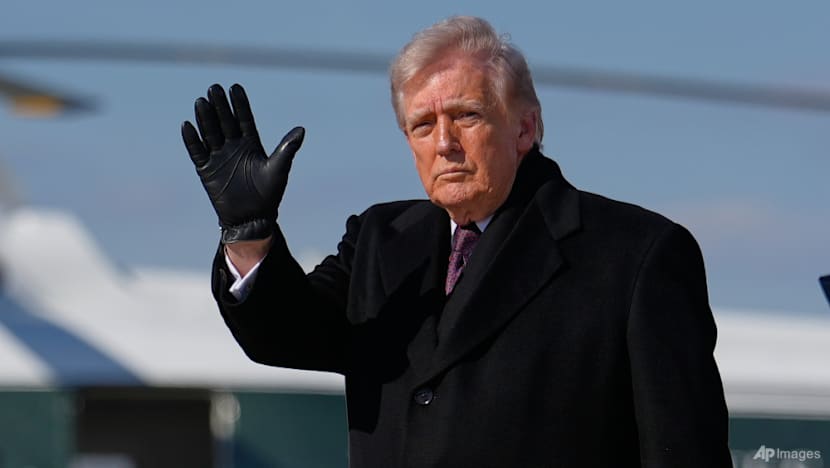 US President Donald Trump waves after arriving on Air Force One, Mar 18, 2026, at Joint Base Andrews, Maryland, after attending the casualty return at Dover Air Force Base, Delaware, for the six crew members of an Air Force refuelling aircraft who died when their plane crashed in western Iraq while supporting operations against Iran. (Photo: AP/Julia Demaree Nikhinson)
For Trump, who eschews preparation in favour of personal relations and his “gut”, the summit had been as much about photo opportunities and ceremony as the intricacies of bilateral trade and security strategy that required extensive preparation, analysts said.
The US push for “managed trade” - a formalised mechanism under which both sides would commit to balanced, equal-value purchases in designated sectors - was also central to the delay, a source said.
China has a long-standing and massive trade surplus with the US - a source of enduring tension - that was discussed in recent Paris talks with a “US-China board of trade” put forward as a potential solution.
US Trade Representative Jamieson Greer sought to include it as a leaders’ deliverable but the two sides were only beginning to sort out the details, with Washington moving slowly on prioritising what it would buy from China, sources said.
The effort was complicated by US reliance on Chinese components and goods that support domestic production and exports, requiring Washington to balance supply chain security while distinguishing job-threatening imports from those that supported re-industrialisation.
If achieved, managed trade could account for a big part of Trump’s midterm deliverables, ensuring that China buys more agricultural products and energy while protecting his “made in America” agenda.
The summit delay is seen by both sides as a way to iron out these details and close remaining gaps.
As preparations dragged into early March, the Iran war escalated dramatically when the Iranians closed much of the Strait of Hormuz, choking global oil flows and causing prices to soar.
Trump publicly appealed to China, a major importer of Middle Eastern oil, and the United States’ allies to contribute warships or other support to US efforts to reopen the strait. He later said the US did not need any help in its war with Israel against Iran.
But on Mar 20, Trump said “it would be nice” if countries like China, Japan, South Korea got “involved”.
Brian Wong, Assistant Professor in Philosophy at The University of Hong Kong, says rising tensions around the Strait of Hormuz are unlikely to fundamentally alter US–China relations, though disruptions could complicate diplomacy and global energy security.
Sources suggested that the war intensified Chinese unease. Hosting Trump amid an active conflict with Iran, a Beijing-friendly trading partner, risked poor optics and potential entanglement.
Despite Trump’s claims of spearheading the delay, Sourabh Gupta of the Institute for China-America Studies, a Washington think tank, said it seemed “fairly clear” that the Chinese side “sought a postponement of the Trump-Xi meeting during their talks in Paris”.
“They preferred not to host a US president at a time when he might have been undertaking a bombing campaign,” Gupta said, describing such an action as having “no basis in international law or driven by any genuine sense of an imminent threat”.
Beijing has remained tight-lipped on who asked for the delay. “China and the US remain in communication on President Trump’s visit to China, including the dates,” said Liu Pengyu, spokesman with the Chinese embassy in Washington. “I have nothing to add.”
According to Simon of the Quincy Institute, Trump’s demand that China share the burden of reopening the Strait of Hormuz “transformed the trip from a diplomatic engagement into a bargaining chip”.
“China may be asking: Is this a trap? Beijing is doing what is comfortable right now: delay, deflect and compartmentalise,” he said.
Simon added that Beijing was caught in a bind. Taking part would mean legitimising Trump’s actions in the Middle East, while rejecting them could destabilise the delicate relationship.
From Trump’s perspective, leaving Washington during a war was politically risky as a “failed or unproductive China trip would be costly domestically”, Simon said, adding that it would be easier to avoid diplomatic embarrassment after the war ended, stabilised or played out further by framing the later summit as a win.
While the two sides had different objectives leading into the summit, both saw it as important to steady relations, creating expectations that it would proceed barring a “black swan” event, analysts said.
Such unexpected developments have derailed relations in the past, such as the US shooting down of a Chinese balloon in 2023, and the collision of a US EP-3 spy plane and a People’s Liberation Army jet fighter off Hainan Island in 2001.
That said, the delay caused by the Israel-US war on Iran has not been enough of a direct irritant between Beijing and Washington to stir popular bilateral anger, making it more likely it will be put back on track, according to some observers.
However, others felt that while China had clearly been dissatisfied by the slow pace of pre-summit preparations and US engagement, the idea that Trump initiated the delay rang true on balance.
“There is no doubt that the Chinese were frustrated about the lack of preparations for the summit. But the prevailing view, I was told, was that the summit shouldn’t be postponed,” Glaser said.
“The Chinese recognise that the bilateral relationship requires leader-level guidance and could drift in the absence of regular meetings and phone calls between the top leaders,” she added.
Glaser noted that the two sides had laid out as many as four sit-downs between the leaders at a time of great turmoil and uncertainty. As compressed as the timeline had been from China’s perspective, any delay could create a knock-on effect.
“Postponing this summit could have negatively affected future planned summits. And even if little was achieved in this summit, later summits would build on it,” she said.
This article was first published on SCMP.
Source: South China Morning Post/lk(ws)