 3 months ago
127
3 months ago
127
CEBU: Southeast Asian countries are aiming to better coordinate their responses to future crises, taking in lessons from the ongoing Middle East conflict that has squeezed energy and other supplies, and roiled regional markets.
Foreign and economic ministers of the Association of Southeast Asian Nations (ASEAN) met on Thursday (May 7) to discuss the development of a “crisis communication protocol” at the ministerial level to ensure “coherent, timely, and coordinated response” to crises.
According to a statement released at the 48th ASEAN Summit, the ministers also exchanged views on the broader regional implications of the Middle East war.
They identified “practical, concrete response measures on strengthening energy security, safeguarding food security, and coordinating humanitarian responses”.
“Some proposals raised covered diversifying energy sources, suppliers and routes; enhancing food monitoring, information-sharing, and preparedness measures; and strengthening intra-ASEAN trade, investment, and supply chains,” the statement said.
The summit, which this year’s ASEAN chair Philippines is hosting in the central island province of Cebu, takes place amid the Middle East conflict involving the United States, Israel and Iran.
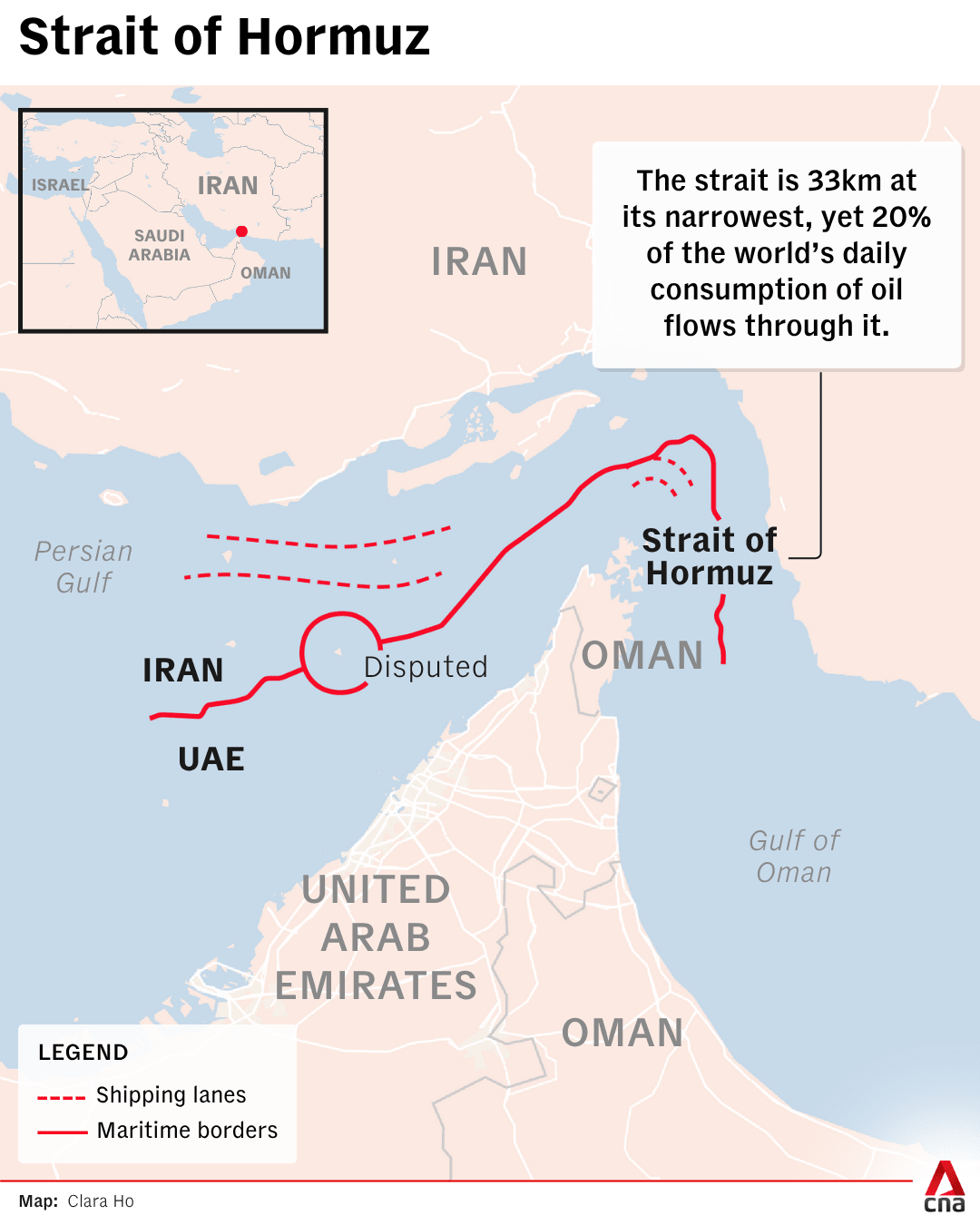
The conflict, which began on Feb 28 when the US and Israel launched attacks on Iran, has disrupted shipping traffic through the Strait of Hormuz, the waterway through which Asia obtains a significant share of its oil and gas.
Iran’s Revolutionary Guards' Navy said on Wednesday that safe transit through the Strait of Hormuz will be ensured with US threats coming to an end and new procedures in place, in its first reaction to Washington pausing operations to help stranded ships pass through the strait.
INCREASING COORDINATION
ASEAN has maintained that the conflict in the Middle East must be resolved diplomatically and peacefully, even as differences in energy exposure influence how members respond.
Countries like the Philippines and Vietnam are more reliant on energy imports from the Middle East and are looking to alternative suppliers like Russia.
Other ASEAN members such as Indonesia, Malaysia and Thailand have greater domestic capacity and are focusing on subsidies and price controls, analysts previously told CNA.
Given these differences, analysts cautioned that expectations for major coordinated measures remain modest, with national-level responses likely to dominate the summit.
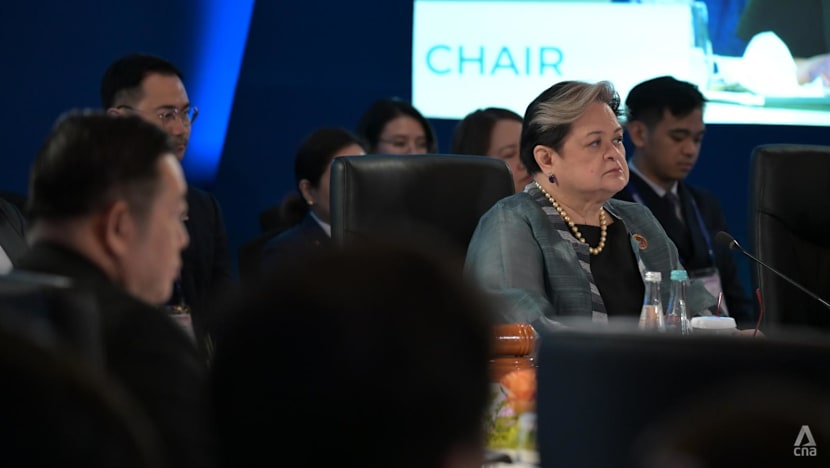 Philippines Secretary of Foreign Affairs Theresa Lazaro co-chairing the joint meeting of ASEAN foreign and economic ministers. (Photo: CNA/Jarupat Karunyaprasit)
But Thursday’s statement said ASEAN is committed to increasing coordination among relevant ASEAN sectoral bodies - including political-security, economic, and sociocultural - to “mount an effective and comprehensive response” to the conflict.
“Notably, the meeting endorsed for adoption at the 48th ASEAN Summit an ASEAN Leaders’ Statement on the Response to the Middle Crisis which will bring together ASEAN’s unified response,” it said.
A Philippine official confirmed on Thursday that ASEAN will issue a joint statement on how the regional bloc would respond to the Middle East crisis.
The summit included ASEAN’s newest member Timor-Leste, while Myanmar was represented by its Permanent Secretary of Foreign Affairs U Hau Khan Sum.
“The main purpose, really, here is for all the member states to be able to come up with measures that will help us respond not only to the current situation but also to other future crises,” said Dominic Xavier Imperial, deputy assistant secretary from the Department of Foreign Affairs.
Asked if the statement would include an appeal to warring parties to end the conflict, Imperial said there would definitely be a reference to that.
In comparison, different concerns were at the fore at the previous joint foreign and economic ministers’ meeting.
Held in Malaysia last October amid rising protectionism and intensifying global power rivalries, it saw calls for ASEAN not to be a passive bystander but a “proactive force for stability, openness and peace”.
External shocks such as escalating trade tariffs, supply chain vulnerabilities, and intense strategic competition between major powers compelled ASEAN to project greater coherence and agility, analysts said at the time.
The Associated Press reported on Thursday that ASEAN also plans to launch a contingency plan that upholds international law, sovereignty and freedom of navigation in response to the Middle East conflict.
This is based on a draft declaration seen by AP, that is expected to be issued by ASEAN leaders on Friday.
The contingency plan calls for an agreement on coordinated emergency fuel sharing, plans for a regional power grid, diversifying the region’s sources of crude oil, promoting the use of electric vehicles, and studying the use of new technologies, including civilian nuclear energy, AP reported.
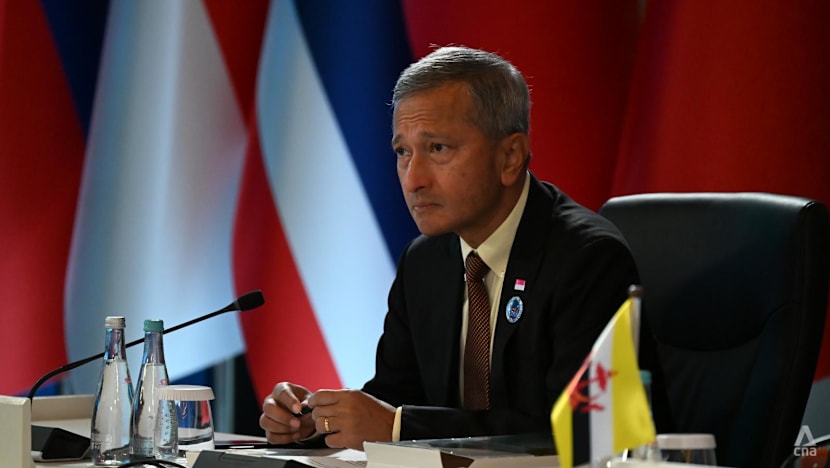 Singapore Foreign Affairs Minister Vivian Balakrishnan attends a meeting of ASEAN foreign ministers in Cebu, Philippines on May 7, 2026. (Photo: CNA/Jarupat Karunyaprasit)
UPHOLDING FREEDOM OF NAVIGATION
Gaps in a coordinated response to the conflict were seen as recently as two weeks ago, when Indonesia’s Finance Minister Purbaya Yudhi Sadewa floated the idea of imposing a levy on ships passing through the Malacca Strait.
Purbaya said this was part of a push to maximise the country’s strategic position along global trade and energy routes, and was inspired by Iran’s plan to charge ships passing through the Strait of Hormuz.
In the wake of Purbaya’s proposal – which he later said he was not serious about – Singapore’s and Indonesia’s foreign ministers stressed the importance of freedom of passage in the crucial strait.
The Malacca Strait is a major shipping lane for global trade and energy. It is primarily bordered by Indonesia, Malaysia and Singapore, and connects the Indian and Pacific Oceans.
According to the draft declaration seen by AP, ASEAN leaders will emphasise the “importance of upholding international law and ensuring that regional cooperation remains anchored in dialogue, trust and respect for sovereignty”.
Southeast Asia will “maintain open, transparent and predictable markets as well as secure and open sea lanes, and ensure freedom of navigation, the safe, unimpeded and continuous transit passage of vessels and aircraft in straits used for international navigation”, the statement said.
This will “preserve the unimpeded flow of essential goods, including food, energy and key inputs, in accordance with international law, particularly the 1982 United Nations Convention on the Law of the Sea”, it added.
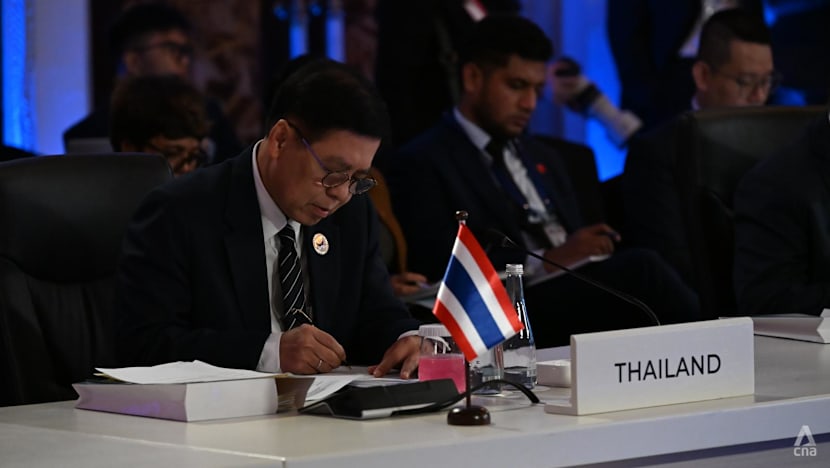 Thailand Foreign Minister Sihasak Phuangketkeow during a meeting of ASEAN foreign ministers in Cebu, Philippines on May 7, 2026. (Photo: CNA/Jarupat Karunyaprasit)
CAMBODIAN, THAI LEADERS MEET
Meanwhile, the leaders of Cambodia and Thailand will also meet on Thursday, the ASEAN media secretariat confirmed.
Reuters reported that the talks would be overseen by Philippine President Ferdinand Marcos Jr.
Deadly fighting erupted between the two neighbours in July and December last year over a border dispute. A ceasefire is currently in place although Cambodia has repeatedly accused Thailand of violations and occupying disputed border territory, accusations Bangkok rejects.
Troops remain deployed on both sides of the long-disputed 817-km border, with no formal resolution in sight.
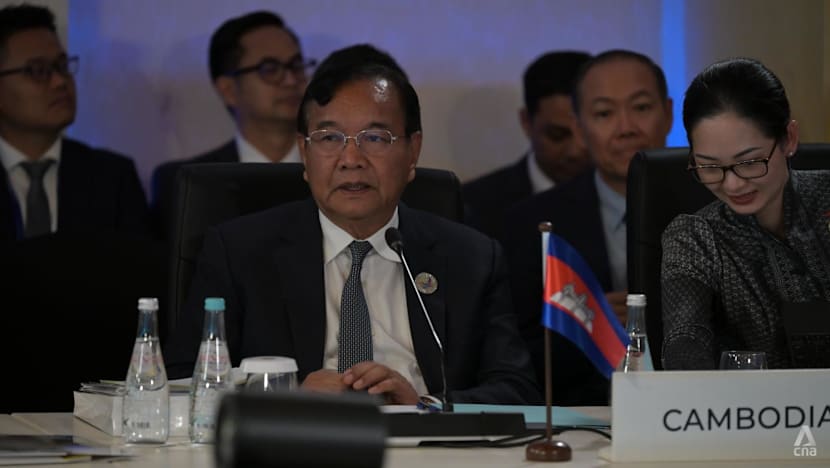 Cambodia Foreign Minister Prak Sokhonn at a meeting of ASEAN foreign and economic ministers in Cebu, Philippines on May 7, 2026. (Photo: CNA/Jarupat Karunyaprasit)
At a press conference following the meeting, the leaders of Cambodia and Thailand said they agreed to assign their foreign ministers to work together closely on practical confidence-building measures to restore trust and rebuild bilateral relations.
Cambodia Prime Minister Hun Manet said he and his Thai counterpart Anutin Charnvirakul discussed resuming all existing bilateral mechanisms, including the Joint Boundary Commission aimed at resolving boundary disputes.
“Our discussions focused on the de-escalation and trust-building measures to restore and consolidate a functioning framework for lasting peace and re-normalised relations,” he said.
Anutin said the two sides had taken a “major step” towards peace for the region.
“Thailand and Cambodia are two neighbouring countries. It is best that we avoid conflict. It only brings losses and suffering. Now is the time for us to look forward and walk this path together towards peace,” he said.
Source: CNA/Agencies/hz(cc)