 2 months ago
74
2 months ago
74
At least seven explosions and low-flying aircraft were heard around 2am local time on Saturday (Jan 3) in Caracas, while Venezuela's government says attacks also took place in the states of Miranda, Aragua and La Guaira.
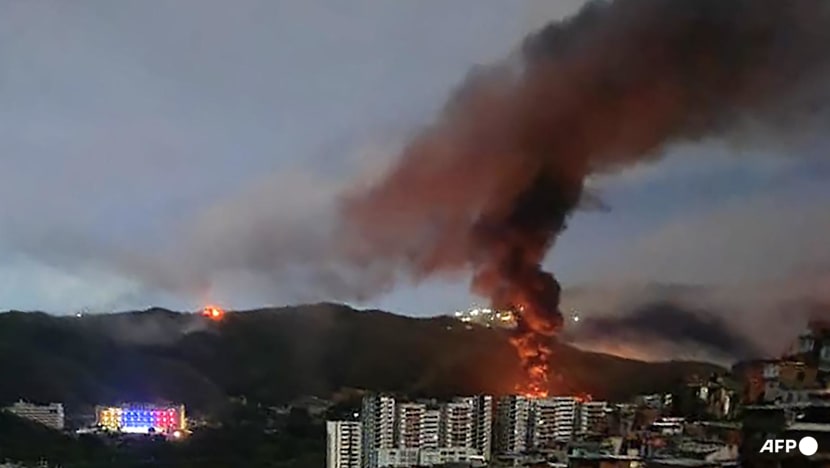
Fire at Fuerte Tiuna, Venezuela's largest military complex, is seen from a distance after a series of explosions in Caracas on Jan 3, 2026. (Photo: AFP/STR)
CARACAS: President Donald Trump said on Saturday (Jan 3) that US forces had captured Venezuelan leader Nicolas Maduro after launching a "large scale strike" on the South American country.
"The United States of America has successfully carried out a large scale strike against Venezuela and its leader, President Nicolas Maduro, who has been, along with his wife, captured and flown out of the Country," Trump said on his Truth Social platform.
Trump also said he would give a news conference at 11am local time (12am Singapore time) at his Mar-a-Lago residence in Florida.
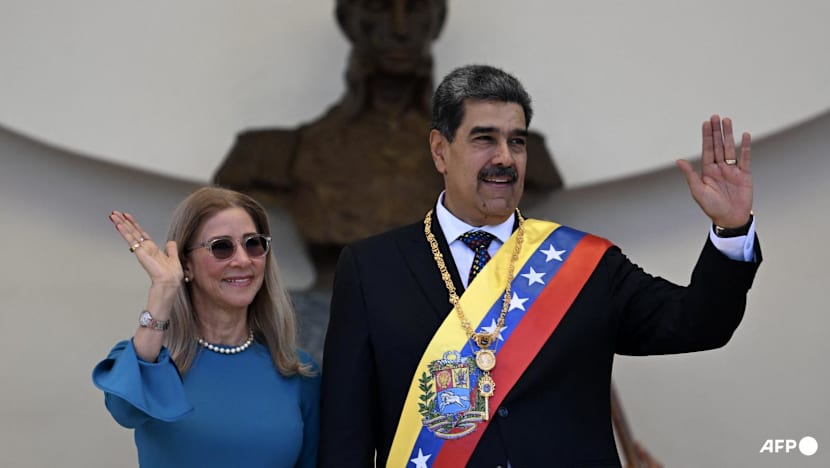 Venezuela's President Nicolas Maduro and his wife Cilia Flores wave to supporters as they leave the Capitolio after taking the oath during the presidential inauguration in Caracas on Jan 10, 2025. (File photo: AFP/Juan Barreto)
In an audio played on state tv, Vice President Delcy Rodriguez said on Saturday morning that the Venezuelan government does not know the whereabouts of Maduro or his wife Cilia Flores.
"We demand immediate proof of life of President Nicolas Maduro and the first combatant Cilia Flores," Rodriguez said.
Venezuela separately said in a statement it rejected the "military aggression" by the US.
Attacks took place in the capital of Caracas and the states of Miranda, Aragua and La Guaira, the statement said, prompting the country's government to declare a national emergency and call on social and political forces to "activate mobilisation plans".
"The objective of this attack is none other than to seize Venezuela’s strategic resources, particularly its oil and minerals, attempting to break the nation’s political independence by force. They will not succeed," the statement added.
Defence Minister Vladimir Padrino said in a video that the attacks struck civilian areas, and Venezuela is compiling information about dead and injured people.
Caracas will resist the presence of foreign troops, he added.
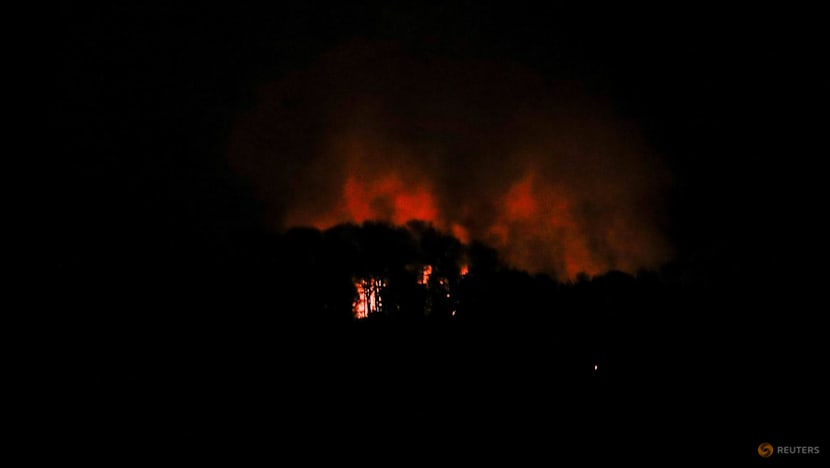 Smoke rises near Fort Tiuna, a military zone, during a full blackout, following explosions and loud noises, amid rising tensions between administrations of US President Donald Trump and Venezuelan President Nicolas Maduro, in Caracas, Venezuela, on Jan 3, 2026. (Photo: Reuters/Leonardo Fernandez Viloria)
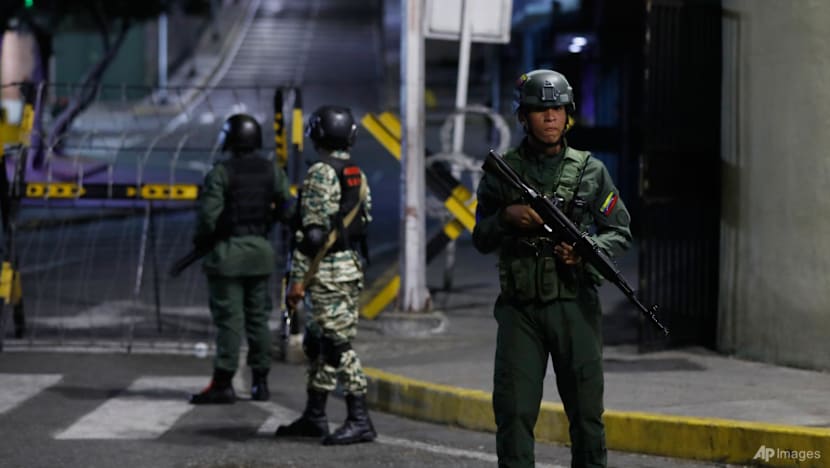 Soldiers guard the area around the Miraflores presidential palace after explosions and low-flying aircraft were heard in Caracas, Venezuela, on Jan 3, 2026. (Photo: AP/Cristian Hernandez)
CAPITAL HIT BY BLASTS
At least seven explosions and low-flying aircraft were heard around 2am local time (2pm, Singapore time) on Saturday in Caracas.
Smoke could be seen rising from the hangar of a military base in Caracas. Another military installation in the capital was without power.
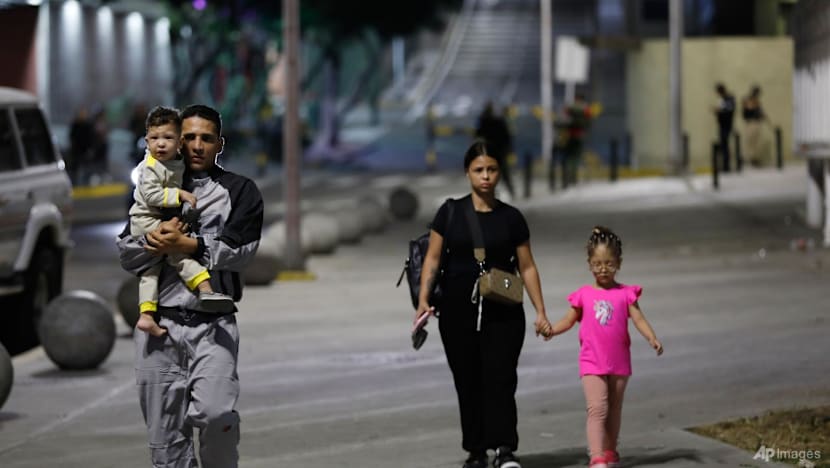
People in various neighborhoods rushed to the streets.
"The whole ground shook. This is horrible. We heard explosions and planes," said Carmen Hidalgo, a 21-year-old office worker, her voice trembling. She was walking briskly with two relatives, returning from a birthday party. "We felt like the air was hitting us."
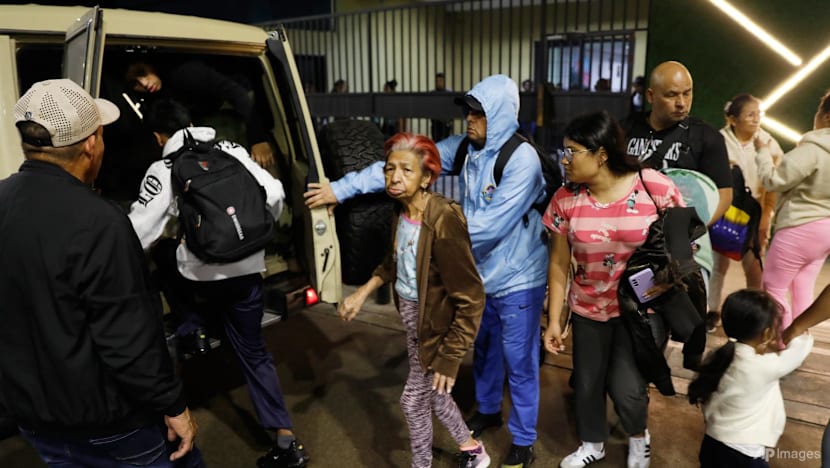 Residents evacuate a building near the Miraflores presidential palace after explosions and low-flying aircraft were heard in Caracas, Venezuela, on Jan 3, 2026. (Photo: AP/Cristian Hernandez)
 Pedestrians walk past the Miraflores presidential palace after explosions and low-flying aircraft were heard in Caracas, Venezuela, on Jan 3, 2026. (Photo: AP/Cristian Hernandez)
Venezuelan state tv did not interrupt its programming and aired a report on Venezuelan music and art.
The blasts come as the US military has been targeting, in recent days, alleged drug-smuggling boats. On Friday, Venezuela said it was open to negotiating an agreement with the United States to combat drug trafficking.
Maduro also said in a pre-taped interview aired on Thursday that the US wants to force a government change in Venezuela and gain access to its vast oil reserves through the month-long pressure campaign that began with a massive military deployment to the Caribbean Sea in August.
Maduro has been charged with narco-terrorism in the US.
The CIA was behind a drone strike last week at a docking area believed to have been used by Venezuelan drug cartels in what was the first known direct operation on Venezuelan soil since the US began strikes on boats in September.
US President Donald Trump, for months, had threatened that he could soon order strikes on targets on Venezuelan land.
The US has also seized sanctioned oil tankers off the coast of Venezuela, and Trump ordered a blockade of others in a move that seemed designed to put a tighter chokehold on the South American country’s economy.
The US military has been attacking boats in the Caribbean Sea and the eastern Pacific Ocean since early September.
As of Friday, the number of known boat strikes is 35 and the number of people killed is at least 115, according to numbers announced by the Trump administration.
They followed a major buildup of American forces in the waters off South America, including the arrival in November of the nation’s most advanced aircraft carrier, which added thousands more troops to what was already the largest military presence in the region in generations.
Trump has justified the boat strikes as a necessary escalation to stem the flow of drugs into the US and asserted that the US is engaged in an "armed conflict" with drug cartels.
Meanwhile, Iranian state television reported on the explosions in Caracas on Saturday, showing images of the Venezuelan capital. Iran has been close to Venezuela for years, in part due to their shared enmity of the US.