 2 months ago
62
2 months ago
62
SINGAPORE: A new dedicated space for independent cinema opened in Singapore last week, offering a boost to the local film scene after a year marked by a slew of cinema closures.
Launched by the Singapore Film Society (SFS), the initiative – called SFS Somerset – will screen up to eight local and international independent films each week at Golden Village’s Cineleisure Hall 6.
The 66-seat hall is being used rent-free for the year-long pilot. SFS said the space is intended as a regular home for curated, non-mainstream films.
The experiment comes after the departure of several cinema operators in 2025, including indie stalwart The Projector, which ceased operations at Golden Mile Tower in August.
In March, Filmgarde Cineplexes closed its last outlet in Kallang, while Cathay Cineplexes exited the industry altogether in September amid mounting cost pressures.
SFS chairman Kenneth Tan said the idea for the new screening space emerged as the society looked for ways to respond to the closures.
Having “one place as a home base”, he said, would give audiences a clear rallying point to discover films other than what is in the mainstream.
That led to discussions with Golden Village, which Mr Tan said were facilitated by decades of prior collaboration with the operator through seasonal film festivals and independent screenings.
GROWING DEMAND FOR INDIE FILMS
Figures from SFS show that demand for independent cinema is growing.
Annual attendance at its festivals and screenings rose to nearly 30,000 last year, almost three times higher than in 2019, before the COVID-19 pandemic.
SFS’ festivals have featured films from countries including Japan, Australia and China. The society has also experimented with short films and stories about people with intellectual disabilities.
The tripling of audiences last year was proof to SFS of a sustainable demand, and pushed it to start its indie film initiative.
The focus, said Mr Tan, is on presenting content people genuinely want to watch.
He added that hosting festivals in multiplex cinemas can also have spillover benefits, as festival audiences may end up watching other films as well.
Beyond attendance numbers, Mr Tan noted that film festivals play an important role in building community. He described them as “a magnet for people putting up their hands saying, ‘I want to help out’”, particularly students and young people.
Volunteering, he noted, often becomes an entry point into the wider film ecosystem, allowing newcomers to become familiar with how festivals are run while building relationships with organisers and industry practitioners.
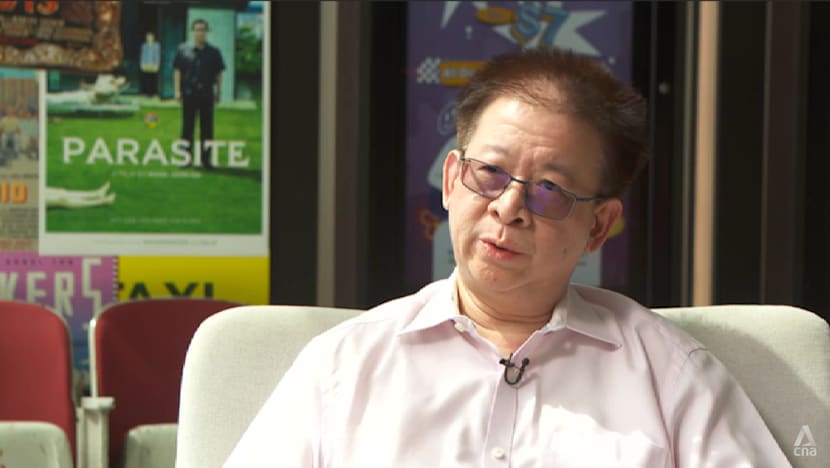 Singapore Film Society chairman Kenneth Tan speaking to CNA in an interview.
FILM FESTS PART OF “EXPERIENCE ECONOMY”
Meanwhile, the Singapore International Film Festival (SGIFF) has also seen renewed interest, with ticket sales jumping by about a third from 2024 to 2025.
A record 44 screenings were sold out last year, the highest number in the festival’s 36-year history.
SGIFF’s programme director Thong Kay Wee described 2025 as a “mourning period” for cinema lovers in the wake of the closures.
This galvanised filmgoers to show support through festival attendance, and SGIFF became “one big way that people can show support to films again”, he added.
Mr Thong said audiences are increasingly drawn to the wider experience around festivals.
“People are now seeking experiences. I think a film festival like ours operates very savvily within the experience economy, where people want to pay money and feel like they're going for not just a screening, but for everything that comes around it.”
That includes interactions beyond the screen, “the fervour, the Q&As, the meet-and-greets, and to be among fellow cinema lovers to experience the love of cinema together”, he added.
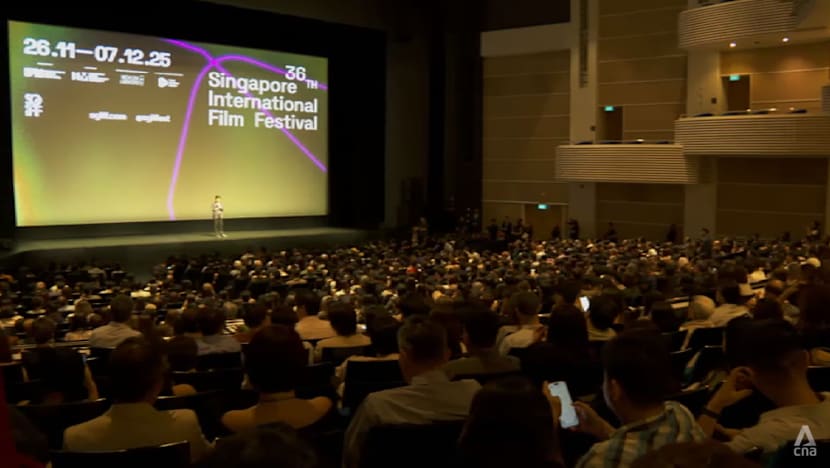 A record 44 screenings at the Singapore International Film Festival were sold out last year, the highest number in the festival’s 36-year history.
RETHINKING WHERE FILMS ARE SHOWN
Mr Tan said commercial cinemas remain the most practical venues for film screenings, even as operators rethink how they attract audiences.
“Everyone has been looking for new, out-of-the-box ways to do things,” he said, citing examples such as premium seating as well as child- and toddler-friendly cinema halls.
He also highlighted the importance of collaboration beyond traditional cinema spaces, even “between seemingly unrelated parts of the ecosystem”.
One example is how community centres work with film distributors, Mr Tan noted.
“What does a community centre or community club have to do with a movie distributor? You don't have a screen; you don't have projection equipment.
“But if I'm a community centre, and I write to (a) movie distribution company and say: ‘I'm interested in doing something to encourage families to bond across generations. Would you happen to have, even if it's not a new film, something in your library that speaks to this multi-generational theme?’”
Distributors are often receptive, Mr Tan said, because “they're looking for a second life for these films”.
“To the big international distributors, a movie that was in the cinema three years ago is old, and suddenly there's a chance to use it for a purpose that's meaningful.”
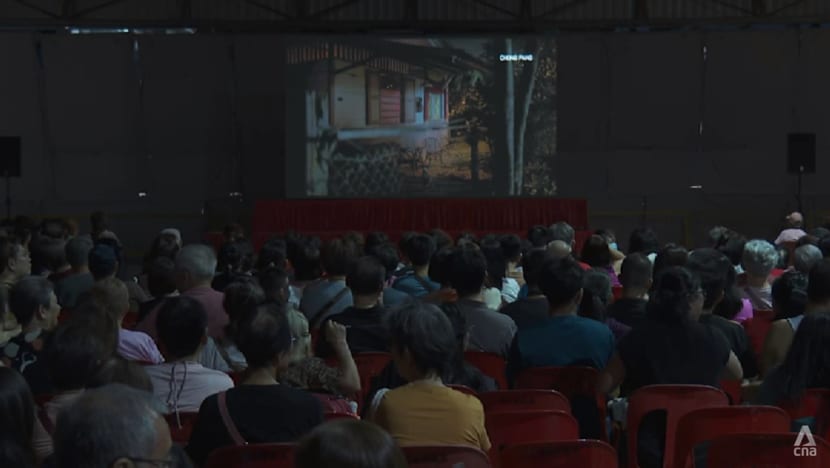 A community film screening.
WHY SOME OPERATORS STRUGGLED
Touching on the cinema closures, Mr Tan said rising rental and operating costs remain a major challenge for operators.
“If market rate rental costs and overhead were part of the equation that The Projector had to deal with, then in a territory like Singapore, it's very difficult for something like that to be financially sustainable,” he warned.
He added that large seating capacities can also make it harder to fill halls.
For example, some of the cinema halls at The Projector were quite large and could not always be filled even when mainstream blockbusters were screened, he noted.
Smaller, more intimate venues may offer one path forward, Mr Tan said, adding that SFS Somerset would not have gone ahead if it required a conventional rental arrangement.
“CINEMAS STILL PREVAIL”
Looking ahead, Mr Tan pushed back against claims that cinemas are in decline, pointing to expansion by Singapore’s remaining cinema chains, Golden Village and Shaw.
“Cinemas still prevail,” he said, noting that these operators are taking over locations vacated by former players.
He said this reflects continued demand for cinema-going in Singapore.
“Why would large profit-making conglomerates do that? In a country of going-out culture, where we all want air-conditioned places in shopping malls, people still want to watch, but there must be good content and enough variety.”
Watching films in a cinema, he added, offers a “communal experience” that cannot be replicated at home or on personal devices.
SGIFF’s Mr Thong agreed, adding that sustaining Singapore’s cinema culture requires a shift in how films are valued.
He cautioned against seeing cinema purely through the lens of commercial performance or as a “sunset industry”.
Instead, he said, cinema should be viewed as part of the arts – capable of nourishing and enlightening society.
Mr Tan added that government funding does play a role in supporting parts of the film ecosystem, but the industry’s sustainability ultimately depends on building cinema-going into everyday life.
“I think the crux of it is seeding a way of life, a habit, a norm in the community at large,” he said.
“We need more of a multicultural, multinational repertoire of movies available for people in Singapore to watch. Then government funding will be icing on the cake, not the basic batter with which to bake the cake.”