 3 months ago
120
3 months ago
120
The new ‘prototype city’ located within Siam Paragon sees environmental thinking weaved into its design, operations and customer experience.
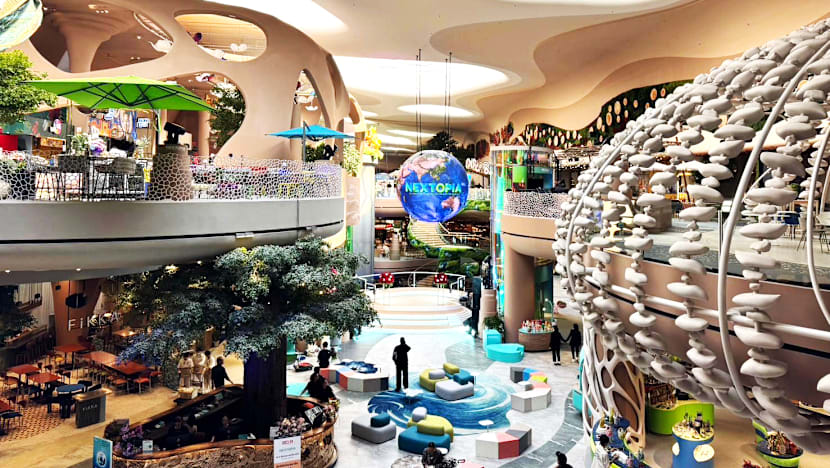
Nextopia sets a new benchmark in green retail, with sustainability built into its infrastructure and operations. Photos: Siam Piwat Group
New: You can now listen to articles.

This audio is generated by an AI tool.

Retail spaces aren’t typically designed to prompt reflection. But at Siam Paragon, a new retail experiment invites visitors to consider how consumption could be more intentional and collaborative.
Launched to mark the mall’s 20th anniversary, Nextopia introduces a model for retail that places sustainability at its core. Occupying the fifth floor of the Bangkok luxury retail destination, the 15,000 sq m space treats environmental thinking as a starting point – shaping its infrastructure, tenant mix and daily operations.
Billed as a “prototype city”, the zone extends this approach beyond physical design. In this inclusive space, shoppers are invited to experience sustainable supply chains firsthand and interact with design elements that make conscious consumption more accessible and engaging.
HARNESSING BIOPHILIC DESIGN TO SHAPE SUSTAINABLE SPACES
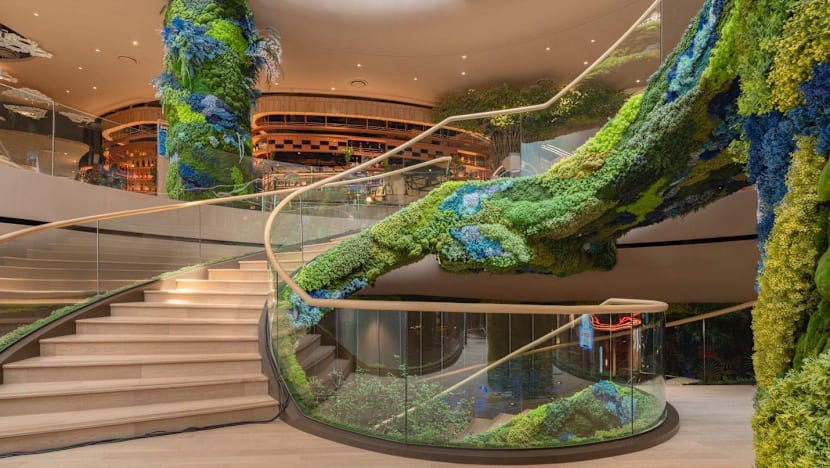 Nextopia brings biophilic design to life through nature-inspired installations made from upcycled materials and subtle sensory touches across the space.
Known for developing some of Thailand’s most iconic retail destinations, Siam Piwat Group positions Nextopia as a new benchmark in green design. By integrating environmental principles into the physical and operational systems that underpin everyday retail activity – from construction materials to renewable energy – it underscores the belief that sustainability is most effective when embedded from the outset.
Sustainable features take tangible form throughout the space. The kinetic floor, for example, converts foot traffic into clean electricity. Climate-responsive systems such as floor radiant cooling and a striking three-storey indoor waterfall help regulate temperature and air quality while reducing energy demand.
This systems-based approach is strengthened through partnerships with international organisations, local enterprises and industry leaders. These include the United Nations and its agencies – the United Nations Children’s Fund, World Food Programme and World Wide Fund for Nature – as well as Thai conglomerates such as B.Grimm, SCG Decor, Indorama Ventures, Kasikornbank and Siam Cement Group. In total, Nextopia brings together more than 50 innovation partners and 30 community groups, reflecting the project’s wide-reaching spirit of collaboration.
Through this coalition, Nextopia’s biophilic design extends beyond infrastructure into how the space is experienced. From nature-inspired installations made with upcycled materials to sensory cues embedded throughout, each element reflects input from specialists in sustainability and design.
A SENSORIAL BLUEPRINT FOR SUSTAINABLE RETAIL
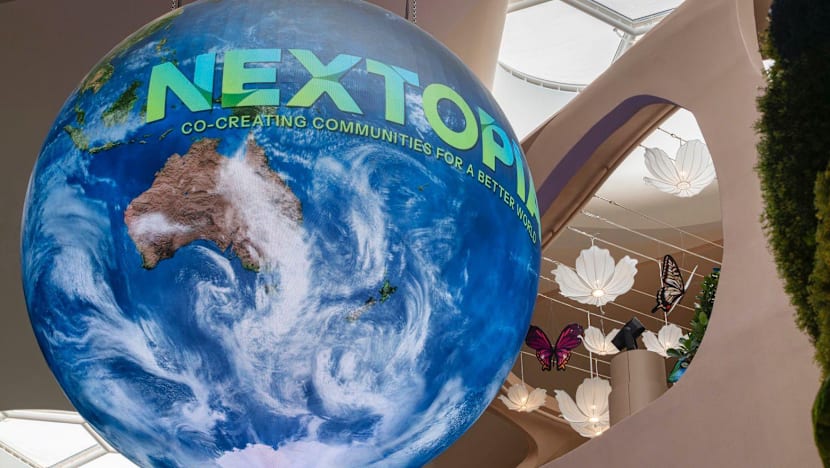 The Globe is a suspended installation that reflects real-time global climate conditions.
The centrepiece of the zone is The Globe, a suspended installation powered by live data from Thailand’s Geo-Informatics and Space Technology Development Agency and the United States’ National Aeronautics and Space Administration. It reflects real-time global climate conditions, offering visitors a direct connection to the planet’s environmental story. These insights are extended through regular workshops, exhibitions and talks focused on circular design, responsible sourcing and sustainable innovation.
Beyond its infrastructure, Nextopia’s artistic and sensory language is shaped by its creative partners. Visitors are greeted by the Tree of Life before encountering The Spiral – a moss-covered sculptural staircase that leads to Eatelier, a dining and entertainment zone on the fourth floor. Close by, the Community Room is a co-working hub designed to foster collaboration, dialogue and year-round exchange.
The Forest Canopy and Ocean Canopy installations flow through the space, their forms crafted from repurposed materials such as discarded ocean nets. Completing the immersive experience is a custom fragrance developed in collaboration with Thai perfume atelier Journal.
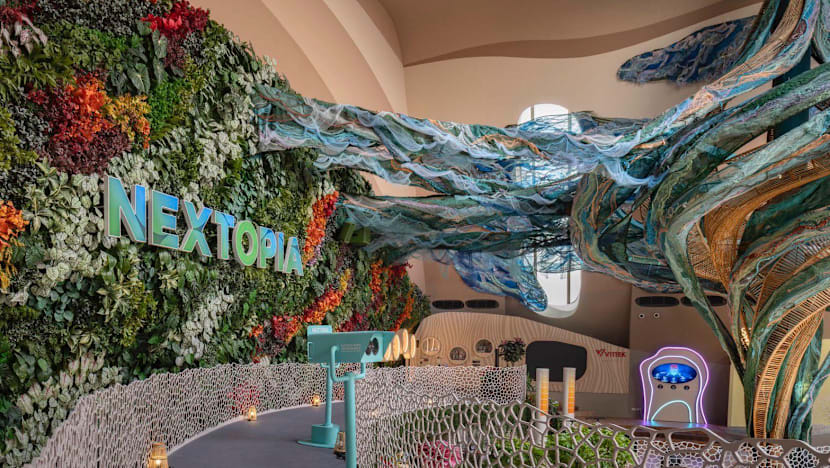 The Ocean Canopy installation is made from repurposed materials like discarded ocean nets.
Nextopia’s holistic approach has already delivered measurable results. It is the first multi-tenant retail project in Thailand to earn a Fitwel 2-Star certification, a US-based standard that measures how buildings support occupant well-being.
RETAIL AS A PLATFORM FOR COLLECTIVE ACTION
Bringing together more than 40 brands and 300 small- and medium-sized retailers and service providers, Nextopia gives local sustainable businesses a high-visibility platform to reach more shoppers. These include Pipatchara, which makes upcycled accessories; Brave Shoes, a maker of vegan leather footwear; and Grom Arttoy, which produces collectible figures using recycled plastics.
The experience goes beyond shopping. Within this carefully designed environment, visitors engage with sustainability in simple, everyday ways. From releasing virtual butterflies to planting vegetables at the vertical farm, hands-on activities help make the ideas behind sustainability more tangible and memorable.
Nextopia marks a shift in how retail spaces can nurture community. By connecting brands, partners and consumers around a shared cause, it reframes retail as a platform for collective action, showing how the future of shopping can centre on contribution, not just consumption.
Explore Siam Piwat Group’s vision for sustainable, design-led retail at Nextopia.