 3 months ago
161
3 months ago
161
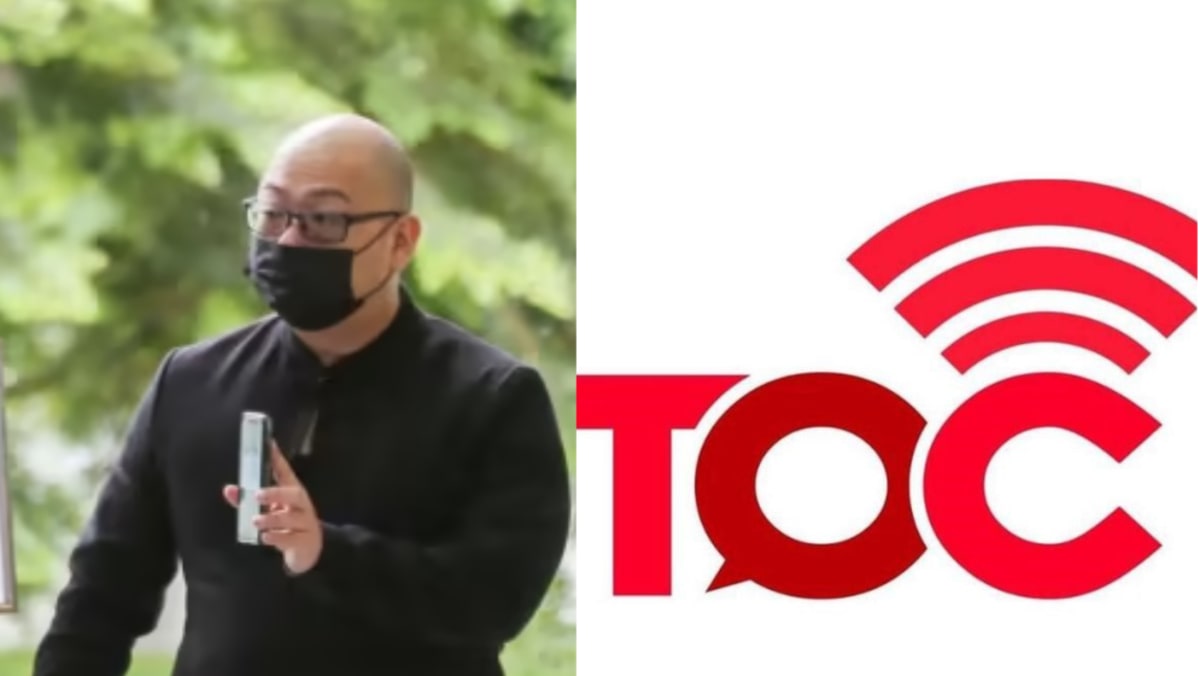
SINGAPORE: A recent correction direction issued to The Online Citizen’s (TOC) chief editor Terry Xu and its publisher had utilised a specific clause under the Protection from Online Falsehoods and Manipulation Act (POFMA) for the first time.
The provision, section 11(3)(b), allows the government to require a correction notice to be published in a specified newspaper.
It was used after what authorities described as TOC’s “persistent” publication of false and misleading content, despite multiple POFMA directions over the years.
"To mitigate against the impact and reach of their persistent falsehoods, we have considered it necessary to utilise the power under section 11(3)(b) of the POFMA to direct TOC to publish their correction notice in The Straits Times," the Ministry of Digital Development and Information (MDDI) and the Ministry of Law said in a joint response on Wednesday (Mar 25).
The correction direction in question was issued over TOC's Mar 9 article about the appointment of Mr Lucien Wong as attorney-general.
TOC and its publisher, Taiwan-based Miao Yi Infotech, were also required to publish correction notices on TOC’s websites, Heidoh’s website, TOC’s Facebook and Instagram pages.
In response to CNA's queries, the authorities said TOC has a history of publishing falsehoods, noting that its website, Facebook and X pages were designated as Declared Online Locations under POFMA twice - in July 2023 and July 2025.
These declarations require the display of warning notices to readers, as well as cut off sources of financial or other material benefits for the operator.
Despite these measures, TOC has continued to disseminate falsehoods, MDDI and MinLaw said. A total of 24 correction directions have been issued against TOC and its affiliated pages over the past six years, including the recent one on Mar 23.
Three of these directions were challenged in court, but none of the appeals succeeded, with the courts affirming the directions issued.
Noting that countries around the world continue to grapple with the persistent challenge of misinformation, MDDI and MinLaw said POFMA provides the Singapore government with targeted tools to tackle online falsehoods effectively.
"These tools address the distinctive challenges that online falsehoods present: their potential for rapid proliferation and viral transmission, permanence in digital environments, and tendency for false information to achieve broader circulation than facts," they said.
"Crucially, misinformation can go beyond digital boundaries and spread through offline discourse – influencing public understanding even among those who have not encountered the original false content online.
"POFMA therefore incorporates measures, including print corrections, to protect the broader population from the pervasive effects of falsehoods in public discourse."
TOC said in a Facebook post on Tuesday that it believes the latest correction direction was “the most escalated use of POFMA since it came into force”.
It added that it had complied with the order because “the law requires it” and not because it accepted the government's characterisation of its reporting.
The law ministry had taken issue with three points of falsehood in TOC's Mar 9 article on Mr Wong's appointment.
These included allegations that there was no information that Mr Wong had recused himself from acting on matters relating to the acquisition of 38 Oxley Road, the home of Singapore's first prime minister, Mr Lee Kuan Yew.
The attorney-general was the personal lawyer of the late Mr Lee's son, Senior Minister Lee Hsien Loong.
Both Mr Wong and Mr Lee had recused themselves from matters relating to 38 Oxley Road when it became an issue of public debate several years ago.
"This includes the compulsory acquisition of 38 Oxley Road," the government said on its Factually website on Monday.