 1 month ago
77
1 month ago
77
SINGAPORE: The Middle East crisis that has effectively blocked the Strait of Hormuz to shipping is an opportunity for the maritime industry to further explore cleaner fuel, said Maritime and Port Authority of Singapore (MPA) chief executive Ang Wee Keong.
Mr Ang was speaking on Wednesday (Mar 25) at the Asia Pacific Maritime exhibition and conference held at Marina Bay Sands.
“The challenges we face today are, in fact, an excellent opportunity for us to leverage to improve the sector’s resilience and help us to chart our next phase of growth,” he said, after referring to the ongoing crisis in the Middle East.
“In particular, I believe that digitalisation, automation and cleaner fuel energy solutions will help strengthen supply chain resilience, improve operational efficiency and safety, and support the transition towards a more sustainable maritime future.”
Mr Ang said that the maritime sector carries about 80 per cent of the world’s trade by volume, and has enabled small city states like Singapore to participate in global supply chains.
The maritime sector contributes about 7 per cent of Singapore's gross domestic product.
However, recent developments in the Middle East have almost completely disrupted vital shipping routes and global energy supplies, he added.
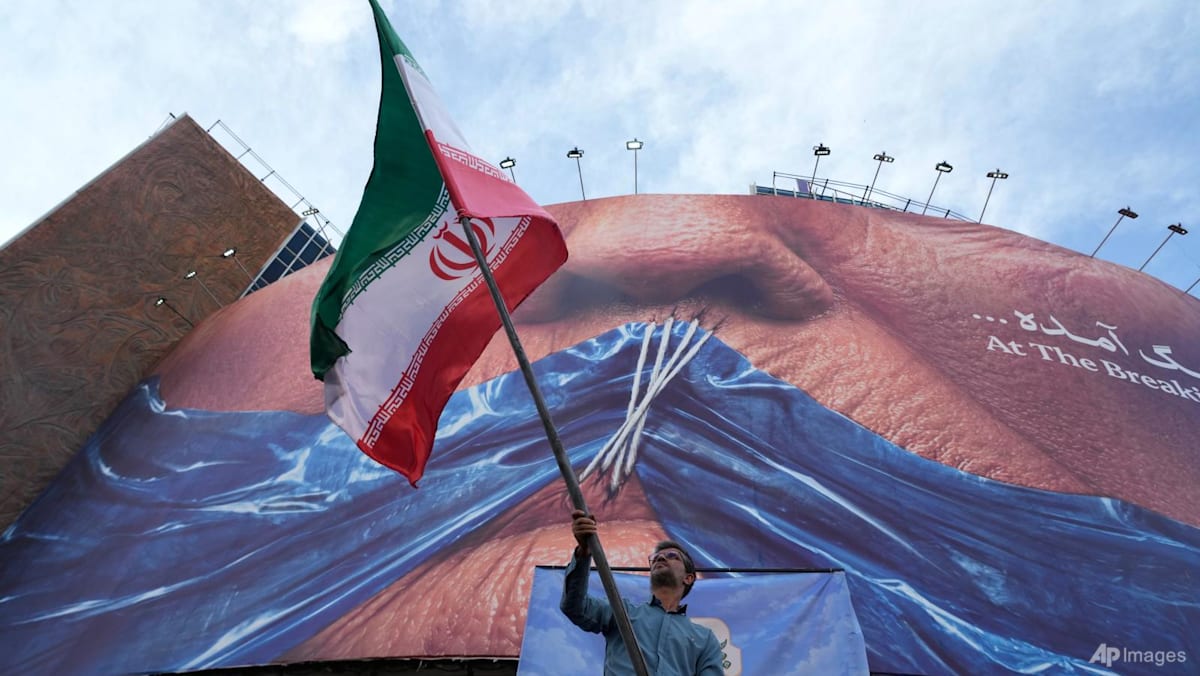
Maritime traffic through the Strait of Hormuz has almost completely stopped since the United States and Israel launched strikes against Iran.
Iran sits above this strategic waterway, a vital route for exports of oil, gas and other commodities from the Persian Gulf. Tehran has targeted tankers in the area.
“This has underscored the fragility of the system that we depend on,” said Mr Ang.
“As the current situation evolves, we are working closely with other governments, other agencies, as well as industry partners to ensure the resilience of maritime operations both in our ports as well as in other parts of Asia and our region.”
The flow of goods through Singapore has remained stable in recent weeks, with adequate bunker supply to meet the industry’s demand, said Mr Ang, adding that the situation will be monitored closely with MPA’s partners.
Bunker refers to the fuel oil stored in a ship's tanks used to power its engines.
WHAT HAS SINGAPORE DONE TO STAY RESILIENT?
On the digitalisation front, Mr Ang said that Singapore has been providing digital bunkering services as a default since April 2025.
Digital bunkering is the modernisation of the ship refuelling process, by replacing physical paperwork with digital documentation.
“This initiative helps improve efficiency, accuracy and transparency by replacing paper-based processes and documentation,” he said.
This in turn has led to savings of close to 40,000 man-days annually for the bunkering industry.
Automation is also something that MPA is embarking on, with plans to consolidate all port operations to Tuas Port in the west of Singapore.
When Tuas Port is completed in the 2040s, it will have the largest automated port in the world, Mr Ang said.
On the alternative fuels front, he said that Singapore will continue to strengthen its capabilities to support the evolving needs of the global shipping industry and the uptake of low-carbon fuels from Singapore.
For example, three methanol bunkering licences were awarded in 2025, and applications for liquefied natural gas (LNG) bunkering licences were opened this year.
Methanol and LNG bunkering are methods for refuelling ships with alternative fuels to reduce greenhouse gas emissions and meet environmental regulations.
“Together, all these mark important steps in building our capabilities and to strengthen supply chains and to prepare Singapore for a multi-fuel and a more sustainable future,” he said.