 1 month ago
77
1 month ago
77
In an interview with CNA, Javid Abdelmoneim warned that attacks targeting healthcare facilities and workers are worsening the crisis.
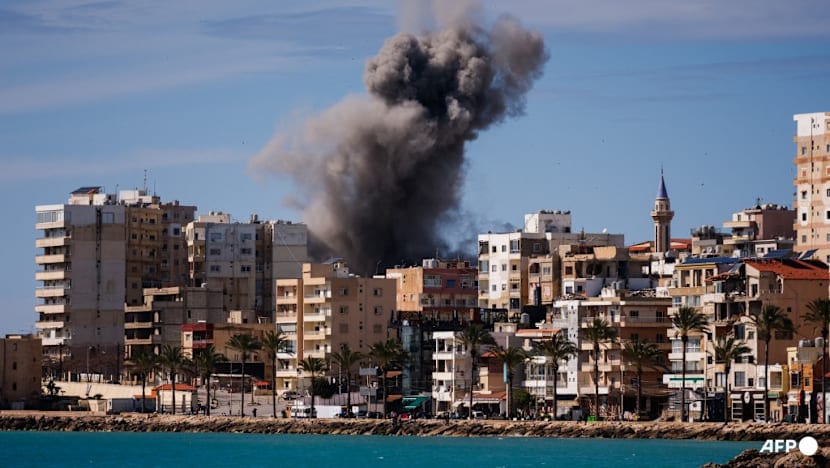
A plume of smoke rises from the site of an Israeli airstrike on the eastern outskirts of Tyre, in southern Lebanon, on March 24, 2026. (Photo: AFP/Dimitar Dilkoff)
New: You can now listen to articles.

This audio is generated by an AI tool.

Nearly a month into a widening Middle East conflict, the humanitarian toll is deepening, with healthcare systems facing growing strain and coming under attack.
The conflict, which began on Feb 28 with United States and Israeli strikes on Iran, has since spread across multiple countries. More than 1,400 people have reportedly been killed in Iran, and over a million have been displaced in Lebanon.
Speaking to CNA’s Asia Now in Singapore on Wednesday (Mar 25), Medecins Sans Frontieres (MSF) – or Doctors Without Borders – international president Javid Abdelmoneim warned that the rules of war are increasingly being ignored, particularly the protection of civilians and medical facilities.
“EVEN WAR HAS RULES”
Abdelmoneim said one of the most troubling aspects of the conflict was the erosion of international humanitarian law.
According to the World Health Organization, dozens of attacks on healthcare have been recorded since the start of the conflict, including incidents in both Iran and Lebanon that have killed health workers and damaged critical facilities.
In Lebanon, aid groups have reported strikes on ambulances and medical centres, with some incidents killing multiple health workers.
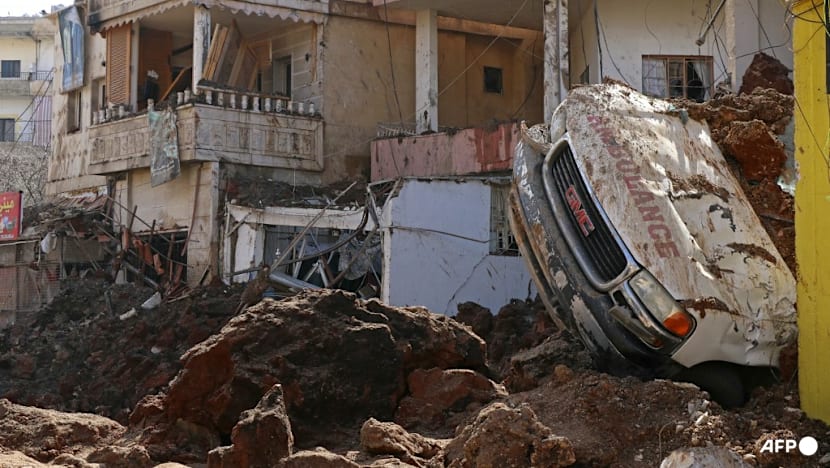 This photograph taken during a media tour organised by the Hezbollah shows a damaged and overturned ambulance at Nabi Sheet town after an Israeli military operation in the Bekaa Valley of Lebanon, on March 7, 2026. (Photo: AFP/Nidal Solh)
“We’re at a period of time now where it feels that the norms … which should protect civilians and civilian infrastructure – particularly healthcare – in times of conflict, are being increasingly ignored with no accountability for that,” Abdelmoneim told CNA.
“The right to healthcare, the access to healthcare, the safety of civilians in conflict is paramount,” he said.
“Even war has rules, and those rules seem to be increasingly abandoned.”
HEALTHCARE SYSTEMS UNDER STRAIN
The conflict has placed enormous pressure on already fragile healthcare systems, particularly in Lebanon, where Israeli strikes targeting the Iran-backed militant group Hezbollah have been accompanied by widespread evacuation orders.
“The sheer violence and the evacuation orders have meant a large swathe of the health system (in Lebanon) is inaccessible,” Abdelmoneim noted.
The country was already facing economic hardship, with many living below the poverty line. Repeated displacement has further cut people off from care.
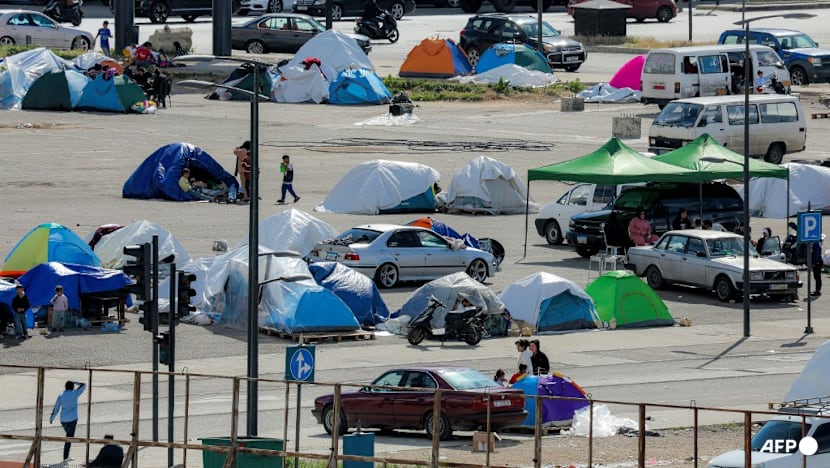 Makeshift tent encampments for people displaced from their homes by war are pictured at a parking area near Beirut's waterfront on March 25, 2026. (Photo: AFP/Joseph Eid)
At the same time, attacks on medical facilities are compounding the crisis.
Abdelmoneim said there has been an “alarming pattern” of strikes affecting hospitals and emergency response teams.
“Some 50, or just over 50, hospitals have been attacked now, and emergency medical response teams too, causing deaths,” he said.
Israel has said it is targeting Hezbollah infrastructure and has accused the group of using ambulances and medical facilities for military purposes, though it has not publicly provided evidence for the claims. Lebanese authorities and Hezbollah have denied this.
In response, MSF has scaled up its operations, deploying mobile medical teams across Lebanon to reach displaced populations.
It is also distributing essentials such as food, clean drinking water, blankets and bedding, particularly to those not in shelters.
CHILDREN FACE LASTING IMPACT
Abdelmoneim added that as health systems become overwhelmed, they are forced to prioritise trauma and surgical care, often at the expense of routine services.
“What can then happen, particularly with a displaced population, but also displaced health services, is that maternal care, child care, vaccinations, mental health care, and even chronic disease care stops or is very much reduced,” he said.
“You have all this other illness and what we call excess deaths – more deaths than would have happened had the health service not been disrupted.”
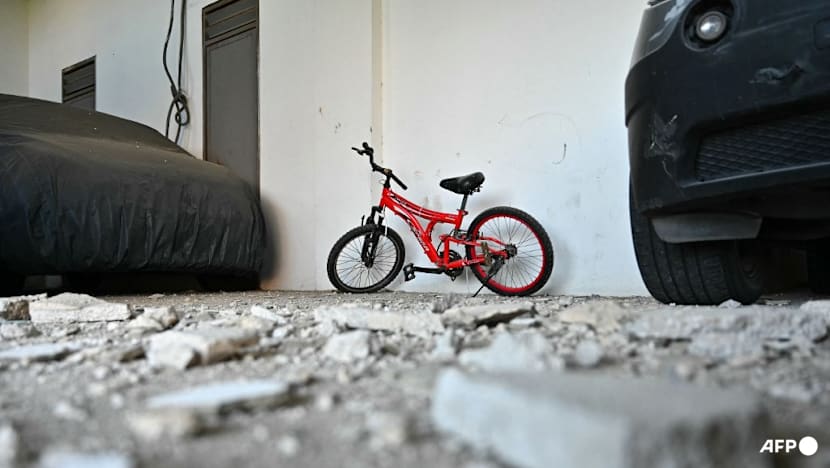 A child's bike is parked at the site of an overnight Israeli airstrike that targeted an apartment in Bshamoun, southeast of Beirut, on March 24, 2026. (Photo: AFP/Fadel Itani)
Children are among the most vulnerable in such crises, he noted, due to their susceptibility to disease and malnutrition.
“If you can’t give the full broad spectrum of vaccinations, then any small illness … can trigger acute malnutrition,” he said.
He also warned of the long-term psychological impact of conflict on children.
“A one-year war for a five-year-old is a long time. That is a life-changing experience from which it’s very hard to recover.”
EFFORTS CONTINUE IN FACE OF DANGER
Abdelmoneim, who took up his role at MSF last September, said the scale of the conflict is unlike anything he has seen in his career.
“I don’t think I’ve yet seen an instant overnight regional war,” he said, referring to how the conflict rapidly spread across multiple countries in the Middle East within days.
Despite the growing risks, he said humanitarian workers continue to step forward, even as conditions become more dangerous.
“I don’t think we have a recruitment problem at the moment, but of course, we have to put in more stringent measures to make sure that our staff are safe,” he said.
“That gets more difficult when the framework for that safety, the laws, are being abandoned.”