 4 months ago
124
4 months ago
124
SINGAPORE: Prices of mobility scooters in Singapore could increase by up to 15 per cent when new registration and ownership transfer regulations kick in from June, leading to higher operating costs, sellers told CNA.
These new regulations – aimed at curbing misuse by able-bodied individuals – were passed in parliament earlier this month.
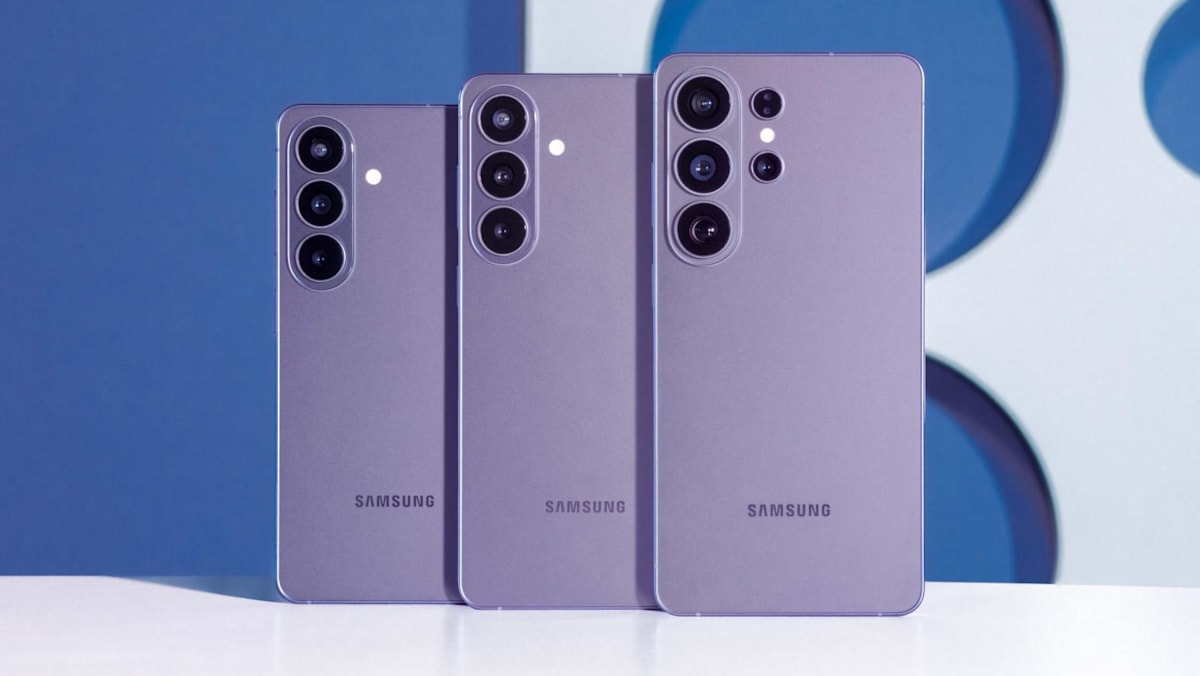
Mobility scooters are three- or four-wheeled motorised devices with a single seat and are steered using handlebars.
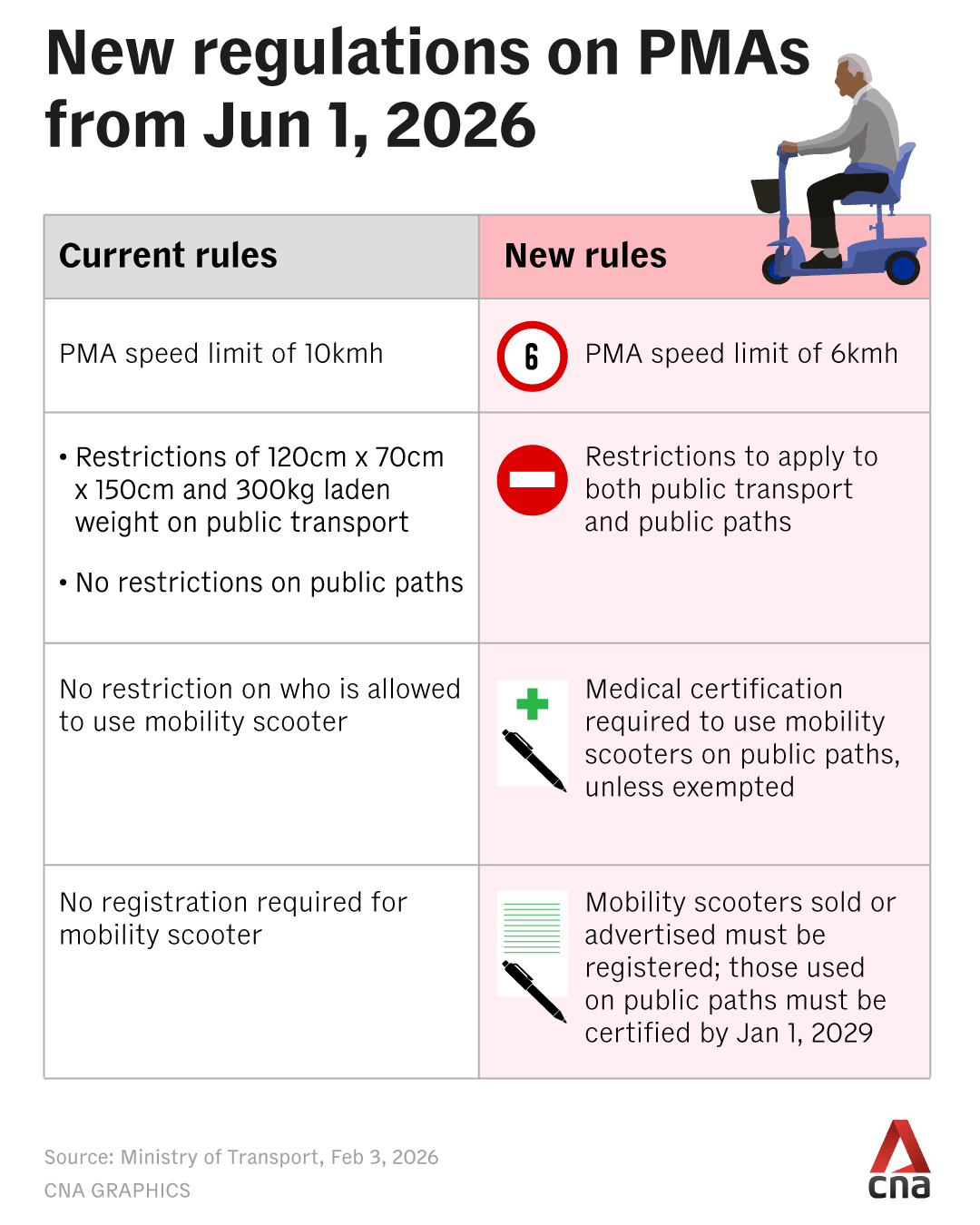
From Jun 1, all mobility scooters sold by authorised retailers must be registered and tagged before they can be handed over to buyers.
Retailers will also need to ensure that prospective owners have a valid certificate of medical need or are exempted from having one, as well as complete an ownership transfer process at the point of sale.
Mr Morgan Singh, managing director of DNR Wheels, said the requirement to send mobility scooters for inspection and registration could significantly add to logistics costs.
“Time will be one of the biggest things, because all these scooters come in carton boxes, and we only open them up accordingly for deliveries. If we were required to send every single one to an inspection centre, that would mean the transportation of it one by one or in bulk,” he noted.
“There's only so many scooters that can go into a lorry or van. They can't be stacked on top of each other. So maybe hiring extra manpower, extra vehicles - these are all the additional costs.”
Mr Singh’s firm imports up to 100 mobility scooters each month, with each costing around S$1,000 (US$788) to S$2,000 currently.
The Land Transport Authority (LTA) has said it is still determining the registration cost and will share more details when ready.
OWNERSHIP TRANSFER PROCESS
Under the new rules, approved retailers will be registered as the first owners of mobility scooters while the devices remain in stores.
This is after LTA’s appointed vendor ensures the mobility scooters meet device criteria, such as adhering to the reduced speed limit of 6kmh for personal mobility aids (PMAs).
Ownership must then be transferred to the buyer when a sale is made.
Retailers said the process may pose challenges for elderly customers who are not technologically savvy.
The process requires the existing owner to initiate the transfer on OneMotoring and the buyer to accept it, typically via Singpass. If Singpass is unavailable, the transfer can be made through a manual route.
Incomplete transfers could leave retailers exposed, said Elfigo Mobility founder Warren Chew.
“If the transfer ownership is not closed, what could happen is that you could have users - they let other people without a valid certificate use the device … (and the) distributor may get into trouble,” he pointed out.
Mr Chew gave an example of his company, as the importer, transferring ownership of a mobility scooter to a customer called Uncle Tan. If Uncle Tan does not acknowledge the transfer, the device will still be registered with Elfigo.
“If Uncle Tan does something illegal, for example, he resells the PMA to somebody doing food delivery, and then the food delivery rider gets caught, then Elfigo could possibly get in trouble for supplying a PMA to somebody that is not able-bodied,” Mr Chew said.
DNR Wheels’ Mr Singh also said the process could be cumbersome for elderly customers, many of whom may not have a Singpass account.
“I believe LTA is looking into it as we gave them the feedback, I think, two weeks ago. This could be one of the main issues I foresee,” he added.
BALANCING ENFORCEMENT AND ACCESSIBILITY
Experts said that while the new regulations are intended to address misuse of mobility scooters, care must be taken to ensure that those who genuinely need them are not priced out.
In response to CNA’s queries, LTA said most eligible seniors and persons with disabilities could qualify for subsidies of up to 90 per cent for compliant mobility scooters under government schemes such as the Seniors’ Mobility and Enabling Fund as well as the Assistive Technology Fund.
The qualifying per capita household income criteria for these schemes was raised from S$2,600 to S$4,800 from Jan 3.
Transport analyst Victor Kwan from the Singapore University of Social Sciences said manufacturers may also respond in ways that test the new rules.
“(There will) be new hybrid products that are being released by manufacturers overseas and then making them available online for purchase. The design may be changed; the size may be tweaked a little bit so that it can be forced into different kinds of categories,” Associate Professor Kwan noted.
“I think we will be able to see some of these hybrid devices that are designed to overcome some of the restrictions here locally.”
He added that strong enforcement in the initial months after the regulations take effect will be crucial in sending a clear signal to errant users.