 3 months ago
103
3 months ago
103
Australia is once again sweltering under an extreme heatwave, with temperatures climbing past 40°C in several states.
Millions of people across Australia's two most populous states - Victoria and New South Wales - have been warned to remain on high alert, including in major cities Sydney and Melbourne.
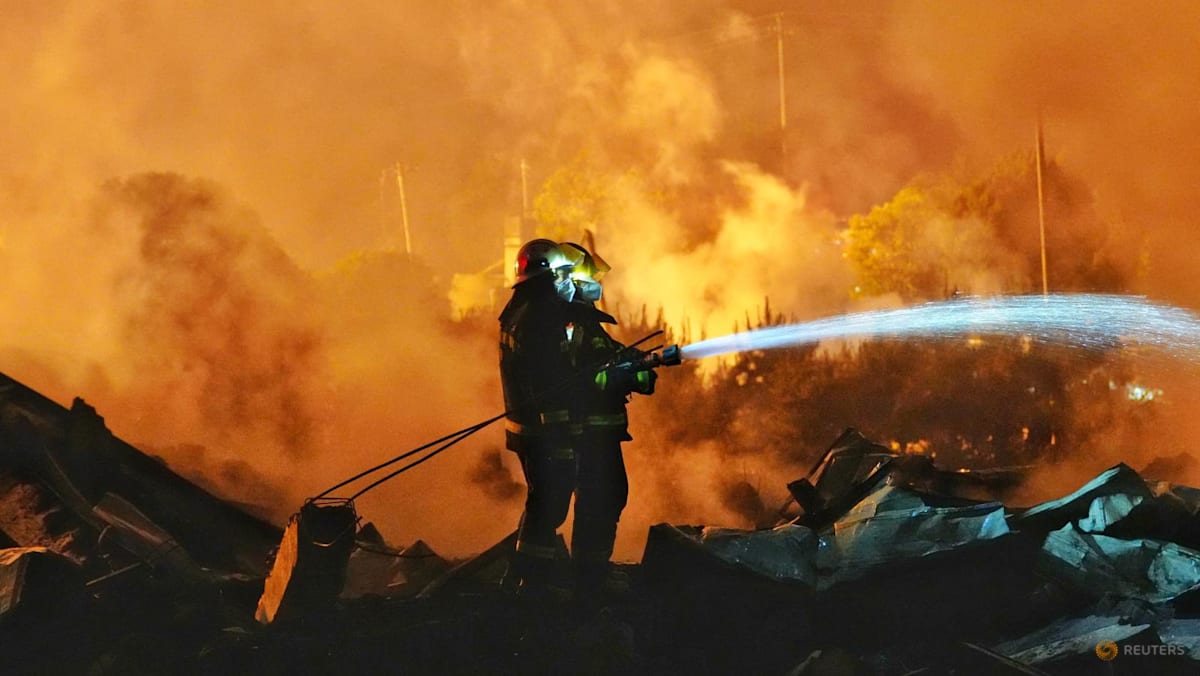
The current threat is expected to intensify, with strong winds and thunderstorms forecast to worsen the danger of fires. Three people, including a child, are unaccounted for as out-of-control bushfires rage in Victoria.
While such blazes are dominating public fear at the moment, climate experts told CNA the greater and more underestimated danger may be the heat itself.
HEAT TREATED AS SECONDARY RISK
Australians continue to overlook the danger of extreme heat - a hazard that kills more people than fires, floods or cyclones combined, said climate science professor Sarah Perkins-Kirkpatrick.
“This is a million-dollar question. I would even say it's a trillion-dollar question, and it's an issue not just in Australia, but globally,” noted the expert from the Fenner School of Environment and Society at the Australian National University (ANU).
Heat-related deaths are often misclassified, she explained, because they exacerbate existing conditions rather than presenting as a direct cause. Such deaths are also not instantaneous and usually happen up to two days after exposure.
“Generally, the deaths are put down to cardiac arrest and not necessarily heat stress … it kind of flies under the radar,” she added.
Mark Howden, director of ANU’s Institute for Climate, Energy and Disaster Solutions, echoed this sentiment, noting that climate change is pushing risks faster than systems can adapt.
“These heatwaves are highly unusual. They come on the back of significant increases in global temperature due to climate change,” he said.
Officials say current conditions are among the most dangerous since the devastating “Black Summer” bushfires of 2019 to 2020, which razed millions of hectares, destroyed thousands of homes and blanketed cities in noxious smoke.
While Australia has improved its emergency responses since the Black Summer blazes, with better warnings, evacuations and coordination across fire and health systems, Howden warned being prepared alone will not be enough.
“Even with all the preparedness in the world, we're still faced with things that we can't deal with,” he said, describing catastrophic fire conditions as “unmanageable bushfires”.
Climate change, he added, is driving increasingly severe conditions, meaning “there’s still surprises that will happen”.
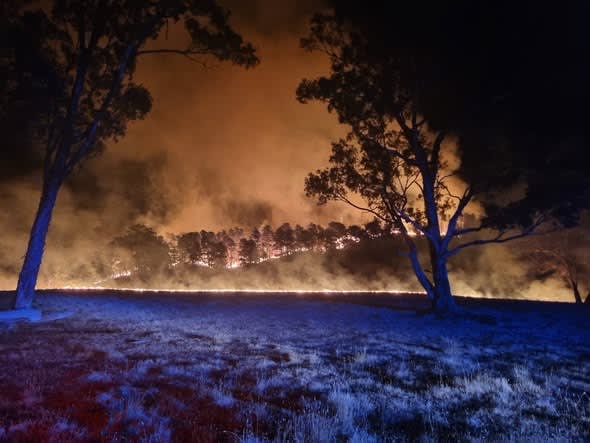 A photo of a bushfire near the town of Longwood, Australia, posted on Jan 8, 2026, by Victoria Premier Jacinta Allan. (Photo: Facebook/Jacinta Allan)
Perkins-Kirkpatrick said that while current conditions may not exactly mirror the Black Summer blazes, the similarities are close enough to be alarming.
“We aren't currently in a long-term drought, but we do have the same type of weather system that led up to the fires and also the heat that we saw in 2019, 2020,” she noted.
“I hope that the conditions and how the next two days play out will not be quite as extreme … but we just have to wait and see.”
NET ZERO NOT ENOUGH
While the experts stressed the urgency of cutting emissions to protect Australians from such extreme weather events, they warned that reaching net zero alone will not suffice.
This refers to when all emissions released by human activities are counterbalanced by removing carbon from the atmosphere. Australia aims to achieve net zero by 2050.
“We must reach net zero, not just here in Australia, but globally, if we have any hope of stabilising our global climate. But unfortunately, we've now reached a point where just reaching net zero is no longer enough,” said Perkins-Kirkpatrick.
Australia is already locked into worsening heat for at least the next millennium, she added.
Howden said emissions cuts are only the beginning.
“Greenhouse gas emissions are driving the temperature increases that we're seeing across the globe and the fire risk, so reducing those to net zero is a start,” he told CNA’s Asia Now.
“It's not the (end) of the job, because the temperature increases we've already experienced … mean that we're going to have increased heatwave and fire risks for centuries to come. So, we not only have to go to net zero - we actually have to go below zero if we're to wind back the climate change clock.”
POOR BUILDING DESIGN
Another of Australia’s biggest vulnerabilities is poor building design, said the experts.
“We do have a habit of building our houses like glorified tents … They're not well insulated. They're not really built for the climate,” said Perkins-Kirkpatrick.
During extreme heat events, heat gets trapped in buildings without the necessary infrastructure for people to stay cool, she noted. This increases health risks, especially for the elderly and vulnerable.
Howden said city design also plays a major role, with leafy suburbs significantly cooler than areas dominated by concrete and asphalt.
“They can have several degrees of temperature reduction if you have well-designed buildings, leafy green suburbs with lots of evaporation, lots of shade,” he added.
Hospitals and energy systems are already feeling the strain, said the experts.
“If people are able to stay cool inside their workplace or home, (they will be) so much less likely to be exposed to the extreme conditions and therefore less likely to present to emergency departments,” Perkins-Kirkpatrick added.
As Australia braces for more extreme summers, she cautioned that policymakers need to strengthen the country’s public health infrastructure.
However, this needs to come with greater public awareness and education, she said.
“There's still this sort of conversation in Australia: ‘So what it's summer? It's hot here. It’s always been hot here’. But our bodies don't differentiate between that – if it’s extreme and if it’s going to affect us physiologically,” she added.
“We need to change that public perception here in Australia that we're used to the extreme heat and it doesn't affect us, because fundamentally, it really does.”