 3 months ago
100
3 months ago
100
It wouldn’t be a stretch to say that the acclaimed American composer Alan Menken has raised a whole generation across the world.
In fact, it might even be an understatement, for his award-winning repertoire transcends arbitrary yardsticks like age and geography, as I realised while doing my research for our online chat on Wednesday (Dec 17).
The soundtrack to my childhood was entirely Menken-made – an enormous privilege, in hindsight, of having limited sources of entertainment pre-social media.
Before the turn of the millennium, he had already scored for the Disney Renaissance – the studio’s golden era from 1989 to 1999 that produced commercially and/or critically successful films – including The Little Mermaid (1989), Beauty And The Beast (1991), Aladdin (1992), Pocahontas (1995), The Hunchback Of Notre Dame (1996) and Hercules (1997).
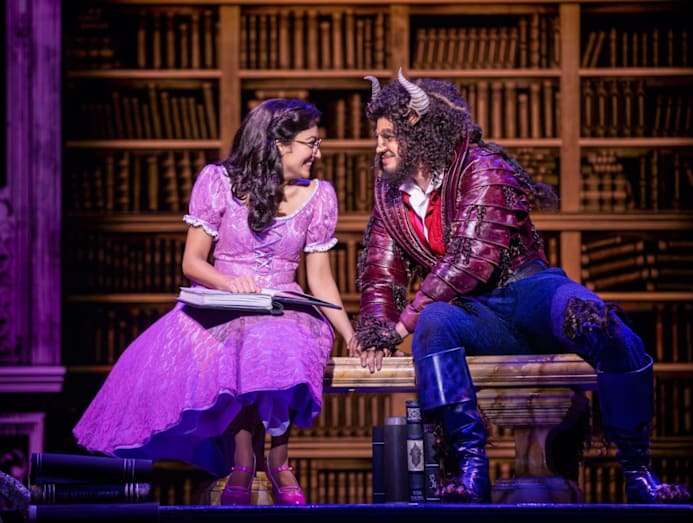 The library scene of Disney's Beauty And The Beast musical. (Photo: Disney's Beauty and the Beast/Daniel Boud)
While I first experienced his work as family-friendly films, they tend to reveal a deeper, different resonance when revisited as an adult.
When the familiar emotional pull of a Disney animated classic meets the life you’ve since lived, you begin to truly understand the meaning of timelessness.
ON NOT "WRITING DOWN" FOR CHILDREN
All this to say, there is nothing childish about children’s movies – a philosophy that Menken embodies too, having said in past interviews that he doesn’t write specifically for children.
Even though he may remove references that aren't quite child-appropriate, “there is a tendency to think that when one writes for children that you’re writing down to their understanding”, the 76-year-old explained over Zoom from the United States.
“But it’s really a matter of getting to the emotional truth in the story; getting to the stylistic way of telling the story that brings in from our musical culture (and which) it just enriches (as a result).”
Take Beauty And The Beast, whose musical production is currently showing at the Sands Theatre of Marina Bay Sands – its only stop in Asia – until Jan 25, 2026.
This reimagined staging of the beloved 1991 animation and its subsequent Broadway debut in 1994 is the first Disney-produced Beauty And The Beast in over 25 years. It includes new sets, costume designs and state-of-the-art technology, while retaining its nostalgic and spellbinding tunes, such as Be Our Guest and the title song Beauty And The Beast.
Importantly, children love the story – even though, as Menken put it, they have “no idea who Maurice Chevalier is” or know about "the stylistic precedence to Gaston (the film’s chauvinistic main antagonist) and how we presented him in almost like a Sigmund Romberg kind of opera".
The late Chevalier was, in fact, an iconic French entertainer who directly inspired the suave candelabra Lumiere. Voice actor Jerry Orbach mimicked Chevalier's style to capture the quintessential French flair.
Romberg, on the other hand, was a Hungarian-born American composer best known for his musicals and operettas in the 1920s.
But such context is unnecessary for children to appreciate the film. They “pick up on the nuances”, Menken said. “They’re smart. They’re sophisticated. They are the future.”
To illustrate his point, he recalled how his niece would tell him about a young boy in her school who’d gush about The Little Mermaid, which Menken had scored to lyrics by his much-loved collaborator, the late Howard Ashman.
This young boy was named Lin-Manuel Miranda, and he grew up to create, among others, the award-winning Broadway musical and pop culture phenomenon Hamilton.
“But that passion in what we created was essential to the wonderful artist that (Miranda) has become. And that is universal in the work, whether it’s written for children or adults,” Menken believes.
“Just write for the characters, write for the story and write for the medium.”
A FORMULA TO HIS HALLMARK HEARTFELT SCORES?
No doubt, it is sound advice, coming from a “Disney Legend” himself. The official title is given to individuals who’ve made a significant impact on the Disney legacy.
He is also, unsurprisingly, a member of the small group of EGOT winners. These are Hollywood’s creme de la creme who have bagged Emmy, Grammy, Oscar and Tony awards.
His talent has been recognised time and again, with eight Academy Awards, seven Golden Globe Awards, 11 Grammy Awards, a Daytime Emmy Award and a Tony Award, among numerous other accolades, to his name.
Yet, even the most coveted trophies can't fully represent Menken’s eminence, as anyone who’s been swept up by his emotionally resonant scores can attest.
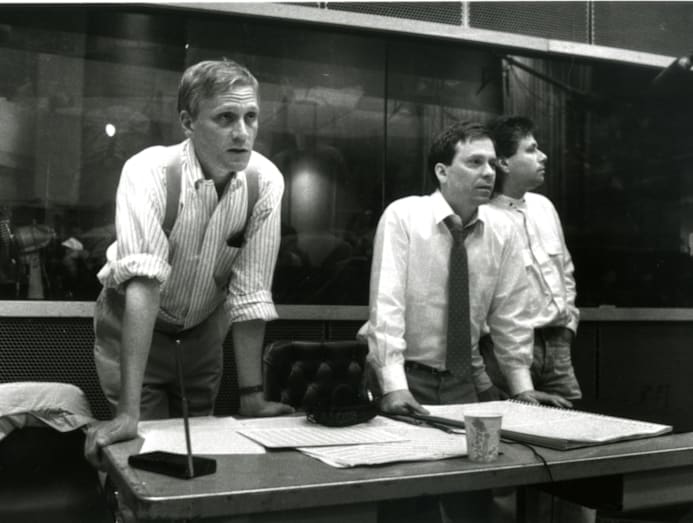 From left: Lyricist Howard Ashman, orchestrator Danny Troob and Alan Menken during the Beauty and the Beast vocal and orchestra pre-recording. (Photo: Disney Theatrical Group)
Both he and Ashman are often credited for creating the “I Want” or “I Wish” song genre. The term describes a series of songs from Disney Renaissance films in which the main character expresses a yearning for something greater than their current situation.
One such song is the opening number in Beauty And The Beast. The song Belle, named after the headstrong heroine, introduces her non-conformist desire to escape the provincial village life she’s being forced to live.
What’s key to the perfect “I Want” or “I Wish” song, at least as a listener, is an unmistakable, authentic sincerity that’s both universal and timeless.
Ironically, “you don’t want to be led by the emotion, in terms of setting the structure”, said Menken. Doing so would almost pigeonhole the song into achieving a fixed outcome.
Instead, he starts by asking himself: How are we going to tell the story? What world is this story in? What is our attitude about the characters? What is the audience we want to reach?
“Then when you reach a moment that is emotional, you open up that portal and go: What is the emotion that the character feels and what is the emotion you want to convey to an audience?”
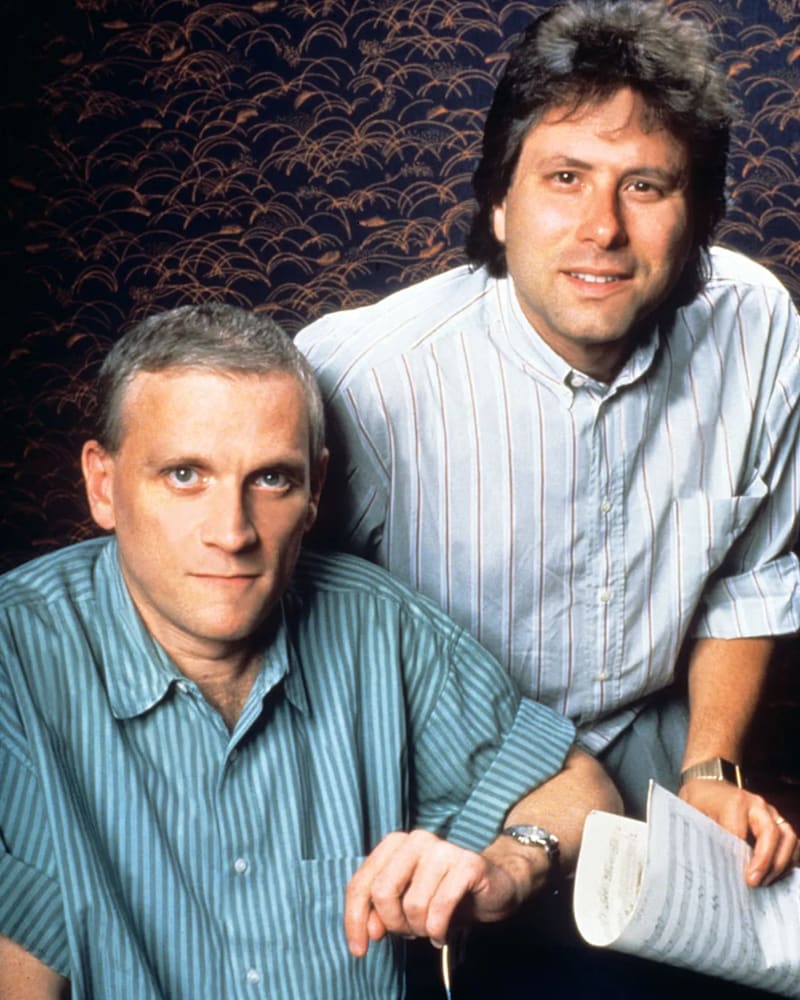 Collaborators Howard Ashman (left) and Alan Menken during the production of Disney's original The Little Mermaid from 1989. (Photo: Disney Theatrical Group)
But if there were a formula to consistently drawing out such heartfelt sentiment, it might just be inborn to an extent.
Menken pointed to his attention deficit hyperactivity disorder (ADHD) tendencies since he was young.
“It’s just that (those with ADHD) are not (usually) run by narrative details and remembering facts. We want to see the greater arc, the bigger emotional landscape, the larger themes, and then the narrative comes in and serves that, as opposed to the other way around,” he said.
“For me, one of the things that obviously draws me to music is the emotional gestalt of music, whether it’s in love, regret, tension, anger, (or) something spiritual. Whatever it is, music is the perfect medium for reaching those places.”
And musicals, which Disney classics essentially are, ultimately centre on love, he added. “Even when it’s dark music, it could be about the lack of love or the wounding of somebody who wanted love. You can’t escape it. It’s there.”
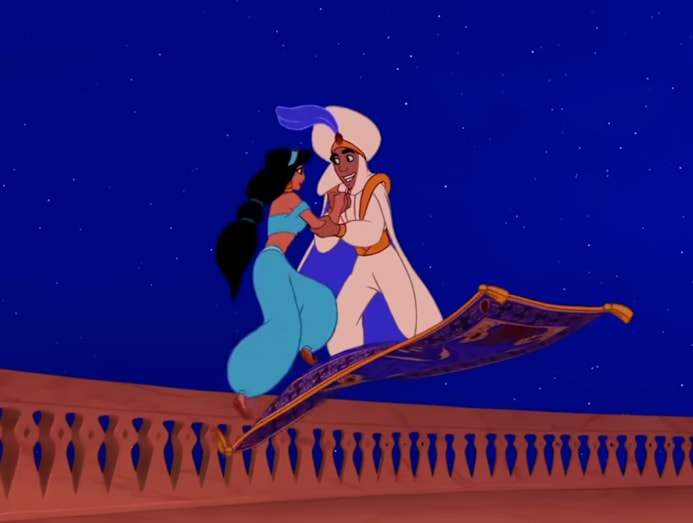 Alan Menken and lyricist Tim Rice wrote A Whole New World for Disney's Aladdin released in 1992. (Screengrab: YouTube)
STICKING WITH HIS HEART
Perhaps it’s easier for Menken to find the same core in every song when he’s anchored by a straightforward commitment to doing right by himself, beyond the technicalities of music.
It’s a lesson best illustrated by the reception to his work on Disney’s 1992 American historical musical drama film Newsies, which was initially a box office flop yet eventually found unexpected success as a Broadway hit.
The film won him a Razzie Award for Worst Original Song that year for the song High Times, Hard Times – one of his favourite achievements, he said in complete earnestness. The parody award show honours the worst of cinematic failures.
Then in 2012, the film won him a Tony Award for Best Original Score, which he said taught him an important life lesson.
“There is always a (bigger) evolution and shifting of thoughts and values, but you just (have to) stay in it. Don’t let anything ever just defeat you. Just stick with what’s in your heart," he said.
"Remaining true to your core, knowing that is what you feel deeply, is a measure of the journey you’re meant to be on. And you have to treat that with respect and treasure it."
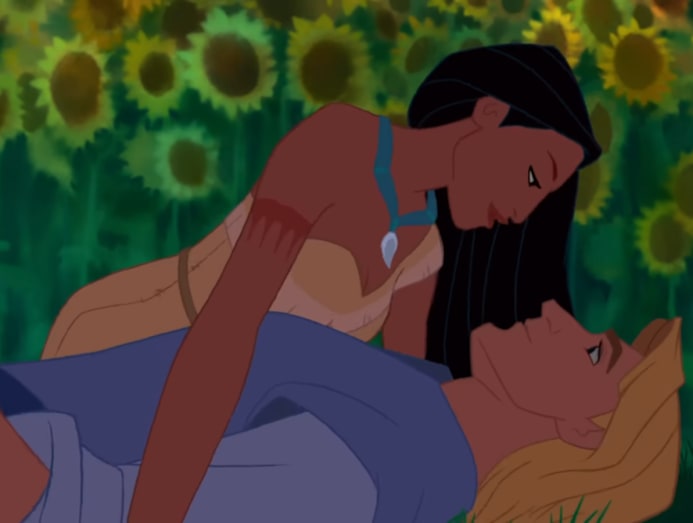 Alan Menken and lyricist Stephen Schwartz wrote Colors Of The Wind for Disney's Pocahontas released in 1995. (Screengrab: YouTube)
At Menken’s own core is an indefatigable curiosity and sense of wonder about his work, that much is clear.
His ability to retain a childlike passion for what he loves doing may be especially crucial when he has to revisit older Disney films for a stage or new on-screen adaptation, since he admits it’s always a “challenge” to enter a project knowing he needs to add something new even when the original work already feels “complete”.
Getting involved with new collaborators, from directors to actors, is what keeps each process feeling fresh for him.
“I love writing new musicals, and finding the discovery of the musical DNA, of how I want to tell this story. But coming back to (something), you know that you’re returning to the organic DNA (and) a new being will be born in this new adaptation,” he added.
“I’m juggling being the keeper of the flame, where this is what we originally intended, and being an active and enthusiastic part of a new exploration of those characters in that story.”
Even after five decades, he appears to still be astonished by his illustrious career. Which is perhaps why, given the chance to meet his younger self on the cusp of life-changing fame, he would offer just one piece of advice.
“Don’t ever fall in love with your own work,” he quipped.
“The saddest thing I’ve seen is people who are hanging on to something they wrote. Just write another one and another one and another one. Let other people fall in love with what you do. It’s not your job to fall in love with your own work.”
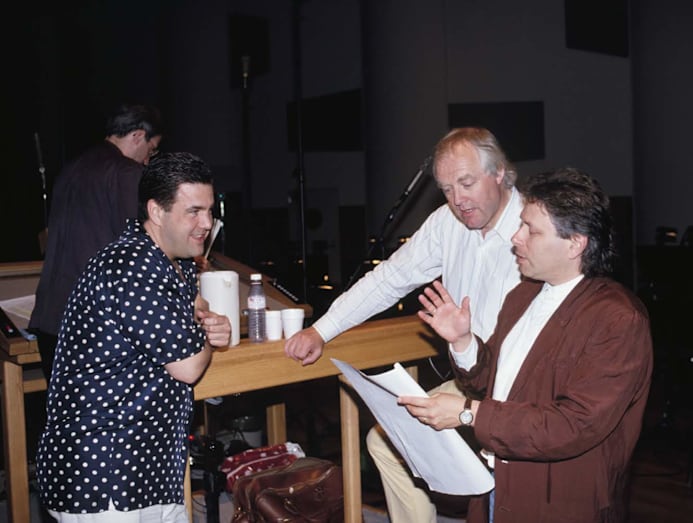 From left: Jonathan Freeman, who voiced Jafar in Disney's Aladdin (1992), songwriter Tim Rice and Alan Menken during the vocal and orchestra pre-recording for the film. (Photo: Disney Theatrical Group)
Those of us who grew up with Menken’s songs might not have known how to name the feeling they gave us, though we recognised it all the same. And figuring out how he gets it right every time can feel equally hard to pin down.
But after just 30 minutes of speaking with the man whose simple demeanour belies his staggering legacy, it starts to make sense where that deeply human touch comes from.
Like many successes, it’s a mix of luck, skill and talent. But maybe most importantly, it comes from a quality that fame usually erodes with time.
He is, at heart, still the person he’s always been: “This guy who likes to write songs and make music.”
Disney’s Beauty And The Beast musical is now showing at the Sands Theatre in Marina Bay Sands until Jan 25, 2026. Tickets can be purchased here.