 1 month ago
62
1 month ago
62
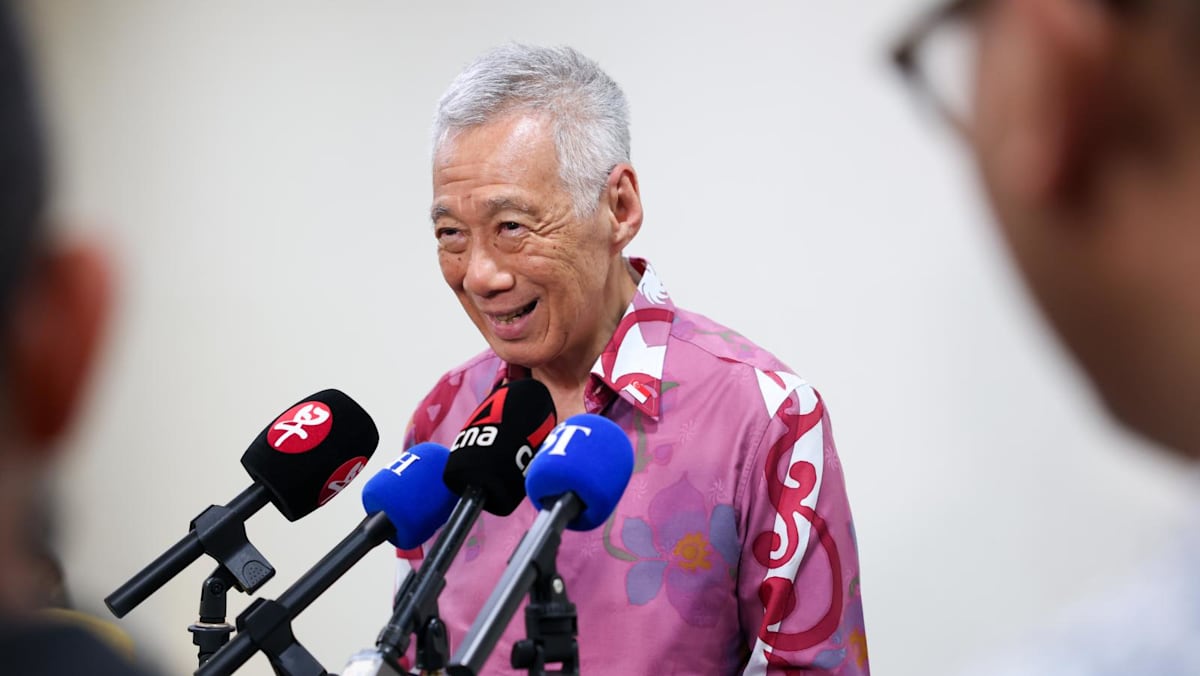
Speaking to CNA, the chairman of Indian conglomerate Piramal Group says artificial intelligence is opening access to credit and public services in underserved areas, but warns it could widen the gap between skilled and unskilled workers.
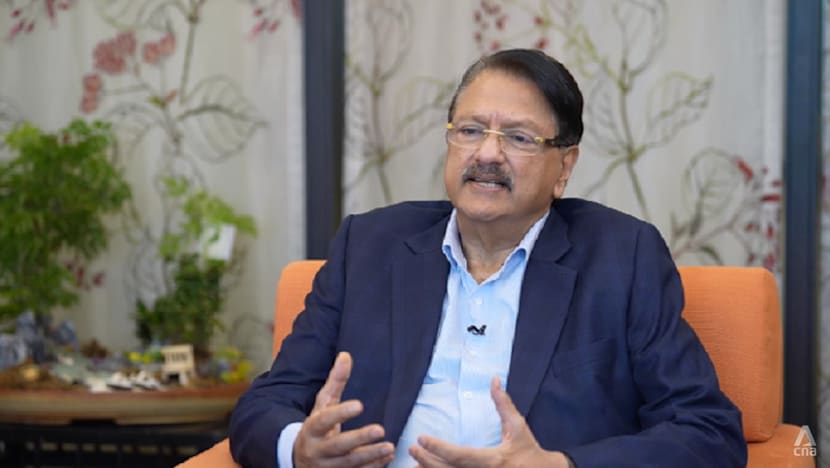
Ajay Piramal, chairman of the Piramal Group, speaking to CNA in an interview.
New: You can now listen to articles.

This audio is generated by an AI tool.

MUMBAI: Artificial intelligence is spreading beyond India’s cities and boardrooms, expanding access to finance and public services in rural and underserved communities.
For Indian industrialist Ajay Piramal, chairman of the Piramal Group, the technology has already become central to business operations.
“We are in the lending business and AI is no longer a periphery to our business. It is actually the core of our business,” he told CNA.
Across the conglomerate’s financial services arm, AI is used from underwriting loans to collecting payments, improving efficiency while expanding access to more borrowers.
EXPANDING ACCESS TO CREDIT
Piramal said one of the biggest shifts he sees with AI is in lending to micro, small, and medium-sized enterprises (MSMEs) and low-income borrowers – segments traditionally underserved by banks.
AI-driven risk assessment allows lenders to evaluate borrowers without formal credit histories by using alternative data such as digital payments or utility bill records. This is expanding access to credit in semi-urban and rural areas.
He noted that AI has improved underwriting while automating routine processes, making operations faster and more efficient.
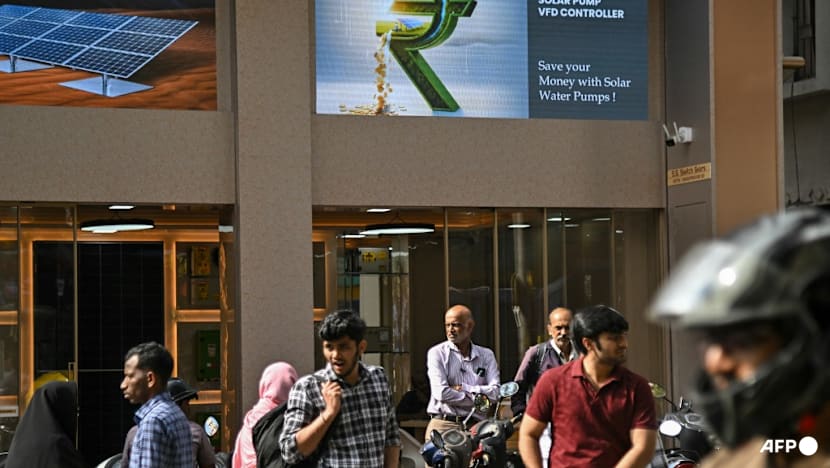 Pedestrians wait below a digital advertisement featuring the Indian rupee symbol at Chickpet market in Bengaluru on Dec 26, 2025. (Photo: AFP/Idrees Mohammed)
“Thanks to all the data which is available … we are able to underwrite much better quality of loans because of AI. That relieves a lot of time for our people,” he said, allowing them to focus on more complex tasks.
“In terms of collections as well, we're finding that with AI, almost 15 per cent of our collections are totally hands-free,” he said, adding that systems can now predict which borrowers are likely to repay on time.
“I look at it as an advantage for a country like India, where even now a large proportion of the people do not have access to formal loans,” he said, noting that AI will “open up the market more” and drive growth.
A TOOL TO TACKLE INEQUALITY, BUT WITH RISKS
Despite these gains, Piramal warned that AI could also widen existing inequalities.
He noted a widening gap between eastern India and the rest of the country, where per capita incomes are significantly higher.
While AI can improve access to finance – a key driver of growth – it could also deepen inequality if not managed carefully.
“With AI, people who have skills, people who have more education will get higher jobs, better paying jobs. But these people could be left behind,” he cautioned.
To address this, the Piramal Foundation – the group’s philanthropic arm – is using AI to improve the adoption of public services in rural areas.
One initiative is an AI-powered chatbot called Sachiv-G, designed for village leaders.
“In any village … there are more than one hundred odd schemes which are available from the government, but it is very difficult for either the sarpanch (village leader) to know it, or the (government) official supervising them, to know it,” Piramal said.
“If a sarpanch has a question, he can just ask this AI bot and he will get an answer.”
 Girls run outside a makeshift school, built for sanitation workers' children, ahead of the Maha Kumbh Mela festival in Prayagraj on Jan 11, 2025. (Photo: AFP/Niharika Kulkarni)
The foundation is also using AI to simplify access to government scholarships for girls, significantly reducing processing times, Piramal said.
A process that previously took up to 44 weeks can now be completed within a week, helping more female students stay in school longer. This is a key factor in delaying early marriage and improving long-term economic prospects for women, he noted.
Piramal acknowledged that while AI can be misused and may automate some roles, its overall impact is likely to boost productivity.
STRONG OUTLOOK FOR INDIA
Beyond AI, Piramal expressed confidence in India’s economic resilience, even amid global uncertainties, including the ongoing conflict in the Middle East.
He said the impact on India would depend on how long the conflict lasts, warning that higher oil prices could widen the country’s current account deficit and slightly dampen growth if the situation drags on.
But with strong foreign exchange reserves, controlled inflation and a more stable banking system, he said India is better positioned to weather shocks than in the past.