
 3 months ago
137
3 months ago
137
You’ll understand what luxury really means when you discover headphones priced in the thousands. Before Audio Technica Singapore invited me to the launch of its flagship ATH-ADX7000 open-air (or “open-back”) dynamic headphones, I had no idea such expensive models existed. There’s even a five-figure model I was lucky enough to try out – more on that later.
For those unfamiliar with the difference, open-back headphones are designed to let air move freely through the ear cups. This means sound travels both in and out through the back of the speakers, allowing you to hear your surroundings and vice versa – for example, you might catch snippets of nearby conversations. Many premium headphones use open-back designs because they deliver a more natural, clearer sound, making music seem more lifelike. However, some users may find the bass less pronounced than with other types. Because these headphones are more exposed, they can be more fragile and need careful handling to avoid damage from moisture or dust. As a result, most are used for home listening.
Closed-back headphones, by contrast, have sealed ear cups that trap sound inside and block more external noise. This makes them ideal for listening in public or on the go. While they may not sound as spacious or natural as open-backs, they provide better isolation from outside noise.
THE AURAL SET-UP
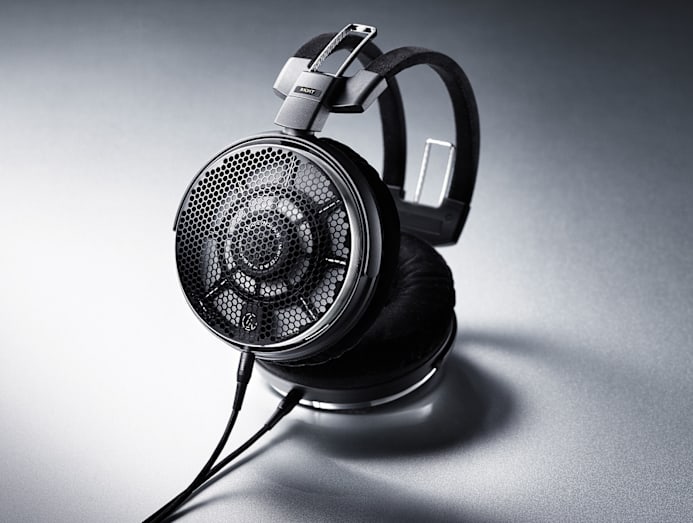 The Audio Technica ATH-ADX7000. (Photo: Audio Technica Singapore)
Returning to Audio Technica, the brand’s flagship model is priced at S$4,799 (US$3,769). To keep the comparison fair, I looked at open-back headphones in a similar price range. Zeppelin & Co, a reputable local head-fi retailer in Sim Lim Square, helped with the selection. The specialty store has a cafe and designated listening areas for customers of all ages. “Head-fi” denotes high-performance, audiophile-grade headphones paired with dedicated amplifiers. Such setups typically include a streamer, a digital-to-analogue converter (DAC), and an external power supply.
Kristy Song, founder of Zeppelin & Co, gave me the chance to test two other premium open-back headphones – the Focal Utopia (S$5,999) and the ZMF Caldera (from S$4,899). In the private listening bar, separate from the shop’s main area, I listened using lossless audio files. Lossless audio compresses music without discarding original sound details, unlike lossy formats that sacrifice data to shrink file size. Services such as Tidal and Apple Music’s lossless option offer this kind of high-quality audio, so you can hear details closer to how they were recorded.
The setup was simple: I used a Sony Walkman as the source, connected it to a Violectric HPA V550 headphone amplifier, and then powered the headphones from there. Open-back headphones often need an amplifier to deliver enough power for the best sound quality, especially if they have high impedance or lower sensitivity. Without one, you might find the volume isn’t loud enough and the audio lacks detail.
I listened to each pair using the same songs: November Rain by Guns N’ Roses, Under Pressure by Queen and David Bowie, She’s Out of My Life by Michael Jackson, Somebody to Love by Queen, and Dreams by Fleetwood Mac.
AUDIO TECHNICA ATH-ADX7000
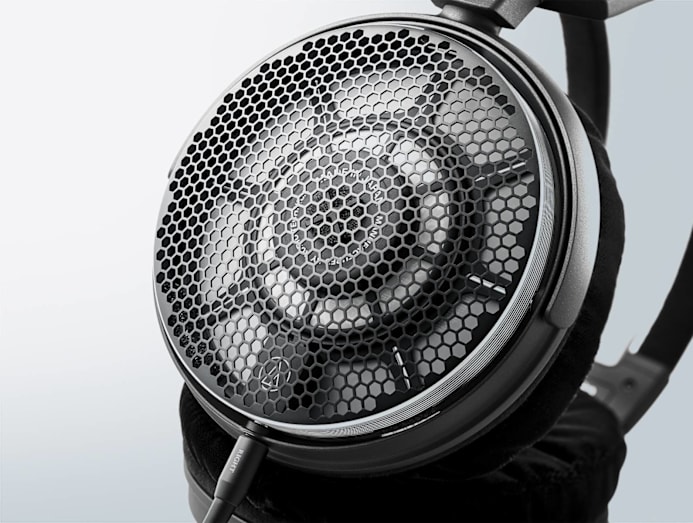 The ATH-ADX7000 is Audio Technica’s flagship open-back dynamic headphone, built for an airy, spacious presentation. (Photo: Audio Technica Singapore)
Using this pair as my reference point, I tried on the Japanese-made headphones without expecting much. They were the lightest of the three options, weighing 275g with velvet pads or 265g with Alcantara pads. The lightweight yet durable design not only makes them comfortable for long listening sessions, but also helps reduce unwanted vibrations, maintain clarity, and minimise coloration – qualities that make listening feel like an art form.
The headphones use aluminium housings with a honeycomb-punched pattern to maximise ventilation. Audio Technica’s proprietary Core Mount Technology positions the driver unit to boost airflow to the diaphragm. Its High-Concentricity X Transfer Dynamic (HXDT) technology is designed to improve driver alignment, which the company says enhances spaciousness, bass response, and mid and high-frequency clarity. Audio Technica also claims the combination of HXDT and the open-air design allows sound to be produced directly from the diaphragm, resulting in more accurate, dynamic, and detailed performance.
The first thing I noticed with the ADX7000 was its impressively wide soundstage. Picture yourself seated in the middle rows at the Esplanade Concert Hall, centred and facing the stage. The headphones offer excellent horizontal separation between instruments, allowing each element to stand out clearly. While the vertical soundstage isn’t especially tall, there’s realistic depth that draws you in. The presentation stays natural and true to life, living up to Audio Technica’s “reference headphone” positioning. Sharp, detailed dynamics keep clarity intact across the sound profile.
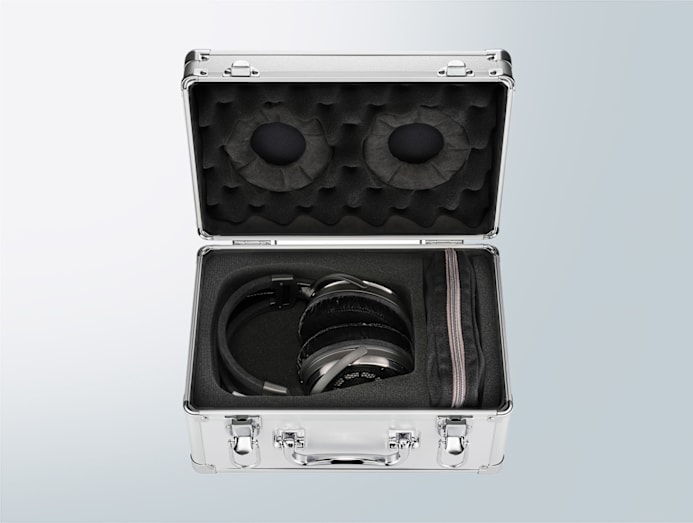 Audio Technica’s ATH-ADX7000 – the brand’s flagship open-back dynamic headphones – pictured in a protective carrying case. (Photo: Audio Technica Singapore)
In November Rain, the opening piano notes sounded incredibly lifelike, and the thunder effect that rolls in before the strings felt natural without ever becoming overwhelming. Axl Rose’s vocals revealed plenty of subtle detail. I liked how clearly each instrument stood out within the stereo field; the greater sense of depth and height made it easy to pick out individual parts. This was especially noticeable when Slash’s fiery lead guitar soared above the steady rhythm section, punctuated by sharp snare hits and a lively honky-tonk piano–guitar duel. Even the soft rain at the song’s conclusion felt impressively real.
Under Pressure delivered a uniquely intense experience, driven by the interplay between Freddie Mercury and David Bowie’s vocals. Their almost frenzied energy buildt toward the song’s climax, with the bass motif resonating throughout.
The Audio Technica’s overall sound profile was well-balanced and neutral, allowing instruments to sound natural and true to life – and making it excellent for reference listening. At times, specific frequencies stood out, but they never overpowered the rest of the mix. Unlocking the ADX7000’s full capabilities required a well-matched headphone amplifier.
FOCAL UTOPIA
 The Focal Utopia, an open-back model, delivered a vivid sense of detail and intimacy across rock and vocal-led tracks. (Photo: Focal Utopia)
Made in France, the Focal Utopia headphones are the product of more than 40 years of acoustic innovation. As open-backs, their beryllium “M”-dome drivers aim to deliver the realistic listening experience associated with Focal’s best loudspeakers. The headphones combine advanced engineering with a sleek, luxurious look. Each element reflects careful craftsmanship, with premium materials and elegant finishes.
 The Focal Utopia – a premium open-back headphone made in France – offered exceptional clarity and a sense of immediacy during the listening session. (Photo: Focal Utopia)
If listening with the Audio Technica is like sitting in the middle section of the Esplanade Concert Hall, the Focal Utopia feels closer to being positioned right in front of the stage. It offers exceptional clarity, transparency, and intimacy, delivering a front-row perspective on the performance.
Like any true reference-grade transducer, the Utopia lets its drivers flex with bass-rich music, unlocking more expressive potential. Michael Jackson’s voice sounded almost holographic on She’s Out of My Life, supported by sparse keyboards and bass guitar. The Utopia also separated the bass from the other instruments with ease, lending warmth that the Audio Technica struggled to match.
On Queen’s Somebody to Love, I could hear the air vibrate as Roger Taylor hit his tom-toms, and I could almost picture John Deacon’s fingers gliding up and down the bass strings in the buildup to the guitar solo. It felt as if the band was in the room when I closed my eyes.
The Focal Utopia delivered dynamic, impactful sound characterised by clarity and nuance, striking an effective balance between power and refinement. Musical elements came through with impressive cohesion and transparency, creating a highly immersive listening experience. One drawback is the weight: at 490g (excluding cables), the Utopia can feel heavy on the head. For comfort, use it while seated in a supportive, high-backed chair.
ZMF CALDERA
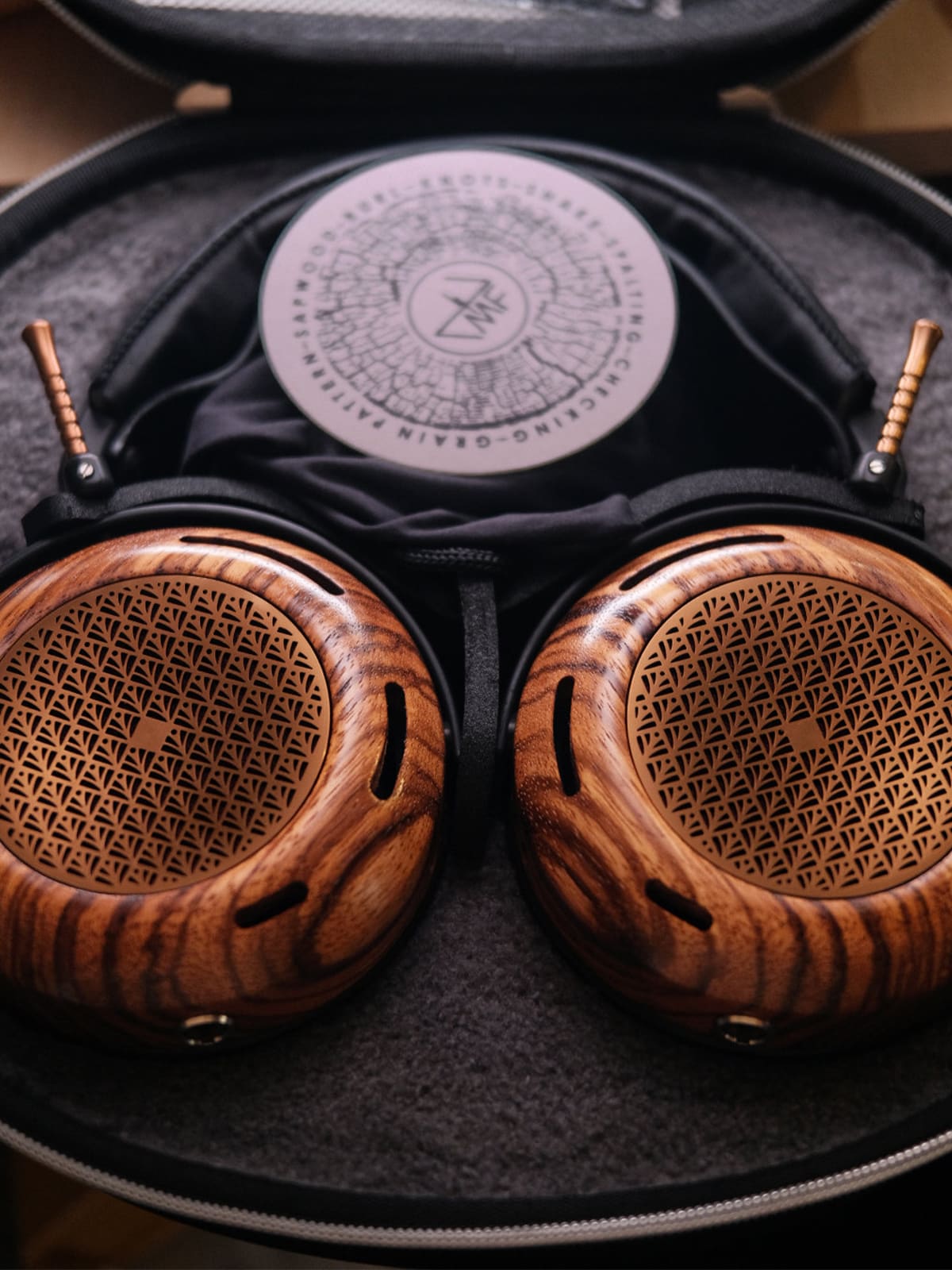 The ZMF Caldera. (Photo: ZMF)
After multiple unsuccessful attempts, Zach Mehrbach Films (ZMF) finally developed its own planar magnetic drivers. Central to the Caldera’s design are the Caldera driver, CAMS (Caldera Asymmetrical Magnet Structure), and the Atrium Damping System (ADS). Together, these technologies aim to blend ZMF’s distinctive sonic signature with the punch of dynamic drivers and the detail associated with planar headphones. All ZMF products are hand-assembled in small batches in the United States.
Listening to the Caldera for the first time can be revelatory, with an immediacy and subtlety that translate into exceptional bass response and clarity across the frequency spectrum. In theory, a planar driver can outperform many dynamic-driver counterparts in both depth and fidelity.
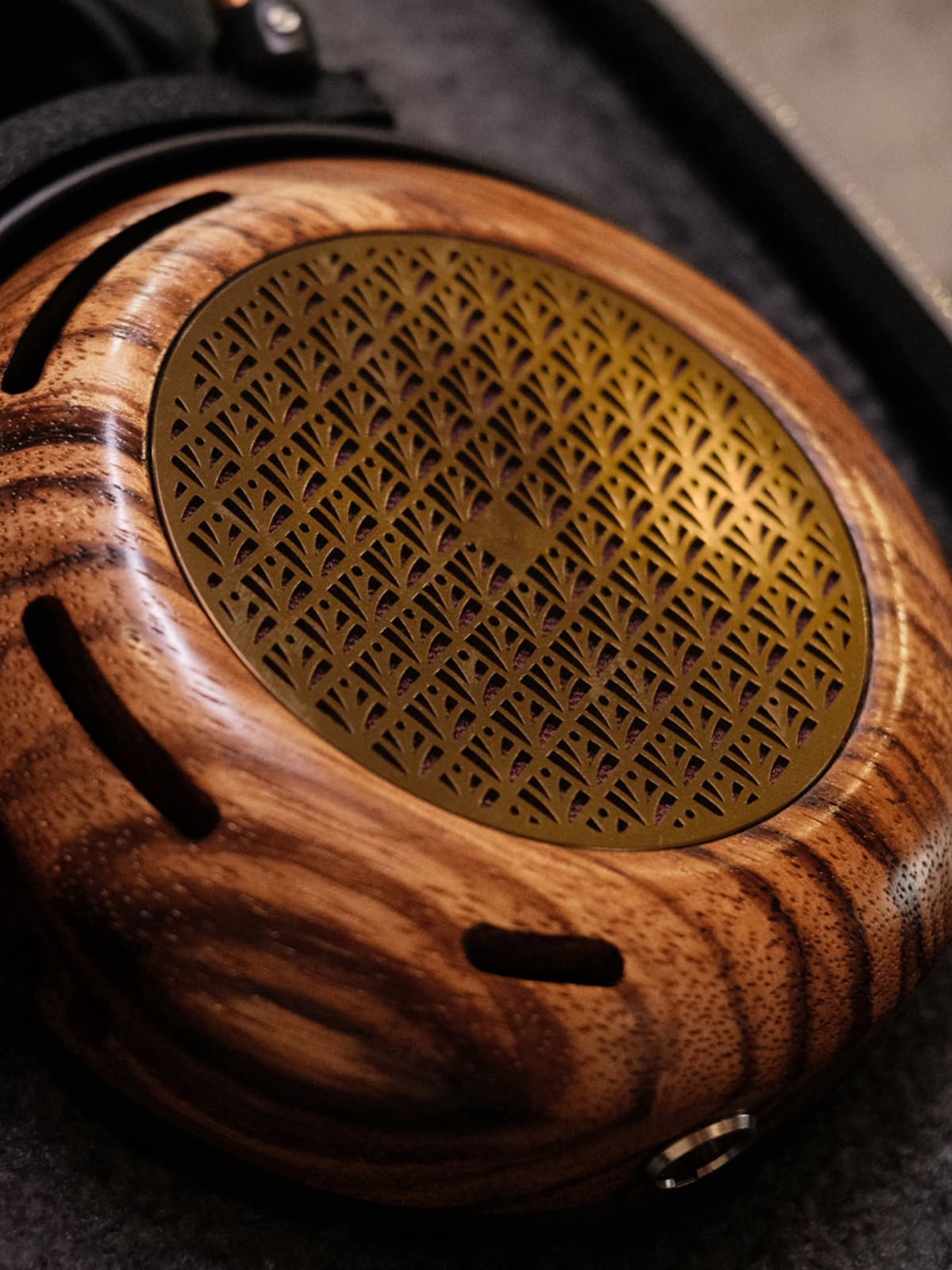 Premium wood ear cups are a defining feature of the ZMF Caldera, a flagship open-back model built for careful home listening. (Photo: ZMF)
The ZMF Caldera is notably heavy, thanks to its premium exotic-wood ear cups. Depending on the wood selected, it weighs between 490g and 550g. According to Song, each unit has unique grain patterns intrinsic to natural wood, resulting in distinct appearances. ZMF also uses a variety of exotic woods, making each release a limited edition. She added that a local collector has been meticulously acquiring every new exotic-wood release.
How did they sound? That depended on the type of wood used. The pair I tried featured oak, with aged copper grilles and leather ear cups. On Fleetwood Mac’s Dreams, the bass guitar and kick drum sounded richer, Stevie Nicks’ vocals were airier, and Lindsey Buckingham’s acoustic strumming felt more prominent than on the Focal Utopia. Overall, the Caldera highlighted instruments and voices, bringing them to the foreground.
Compared with the Utopia, which places the listener at the front of the stage in the Esplanade Concert Hall, the Caldera felt like sitting several rows back, though not quite in the middle of the hall. On Queen’s Somebody to Love, the articulation of the bass strings was less pronounced than on the Focal, and it tended to blend into the ensemble. However, the Caldera excelled at rendering individual instruments distinctly: Freddie Mercury’s piano at the end of the track was reproduced with remarkable realism, and the decay of each note mirrored that of a live instrument. I noticed a similar effect with Michael Jackson’s vocals on She’s Out of My Life, capturing the emotional nuance in his performance.
Although planar drivers are often praised for bass, the Caldera didn’t deliver as much impact as the Focal or the Audio Technica. During the climax of November Rain, for instance, the blend of guitars, drums, piano, and vocals felt less powerful than it did on the other two headphones. Overall, the ZMF came across as more restrained.
THE FIVE-FIGURE SENNHEISER HE1
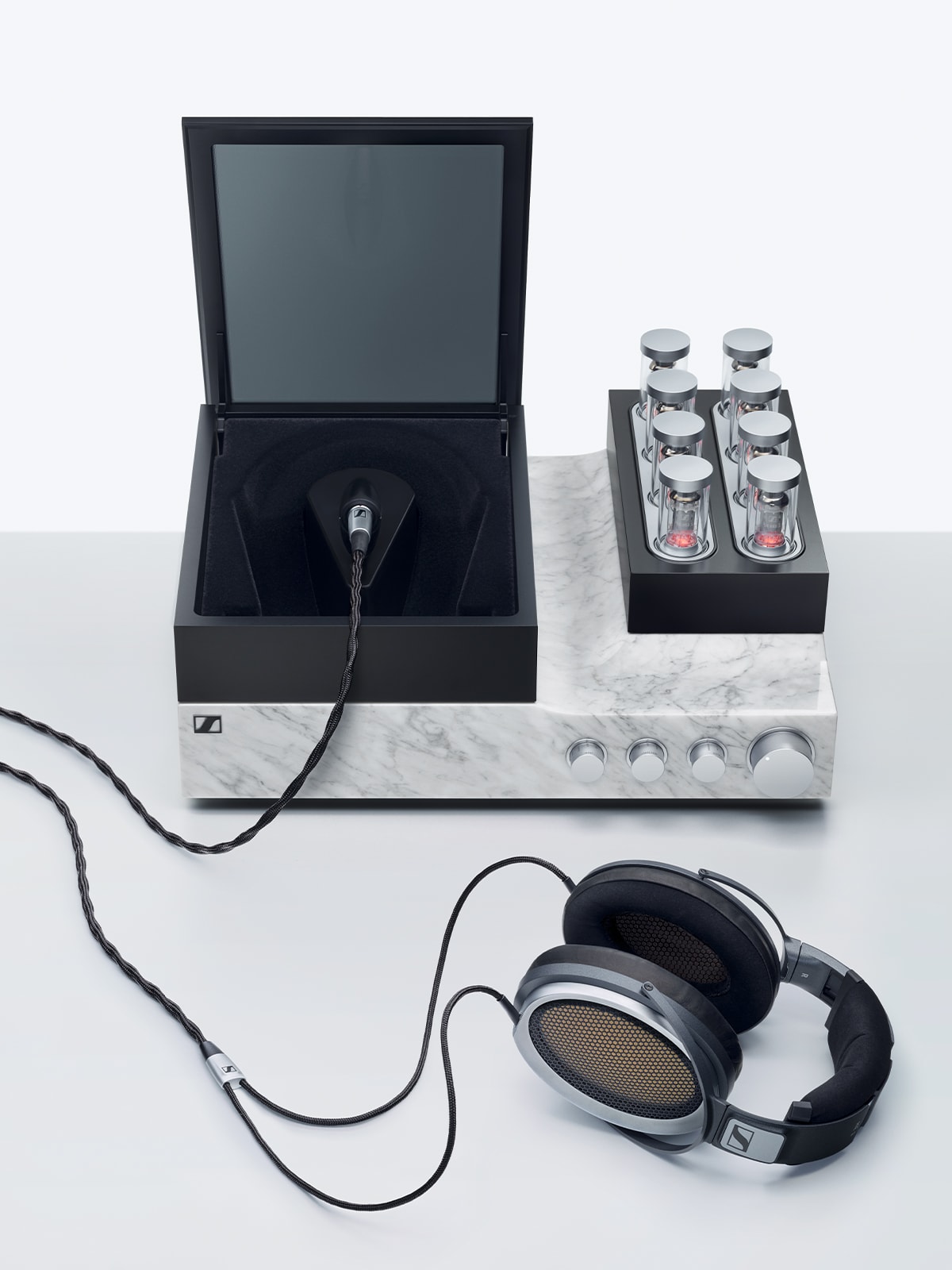 The Sennheiser HE1 is an electrostatic headphone paired with a matching vacuum-tube amplifier with an internal DAC, designed as a single system. (Photo: Sennheiser)
Before I share my thoughts on the three pairs of headphones, I wanted to experience what only a handful of people worldwide have: the £74,990 (US$100,366; S$127,790) Sennheiser HE1. The HE1 is an electrostatic headphone paired with a vacuum-tube headphone amplifier and an internal DAC. Both components are designed to work as a cohesive system.
In this context, I met Crinacle (or Crin), proprietor of earphone store The Hangout by Crinacle. He also owns an HE1.
The HE1 stands apart from any discussion of cost-to-performance value – it simply represents the zenith of headphone engineering. Before I even touched the device, my eyes were drawn to the generous expanse of marble that forms most of its chassis. It’s Carrara marble – the kind once favoured by Michelangelo for his masterpieces.
Powering on the HE1 was an experience in itself: as the vacuum tubes and control dial emerged and illuminated, the anticipation built. Only after opening the compartment lid on the left headphone case could I fully immerse myself in what the HE1 had to offer.
Before I even noticed the headphones themselves, the carefully crafted aluminium frame caught my eye, offset by soft leather and high-quality microfibre. The ear cups were remarkably roomy, easily accommodating larger ears and sitting gently against my head for a comfortable, secure fit without pressure. The design made extended listening sessions easy – perhaps while relaxing in an Eames armchair.
At the listening session, Crin connected the HE1 to his mobile phone via Spotify. Although it might seem unbelievable, I was immediately amazed – the sound quality was stunning.
It wasn’t only textures that felt enhanced – the overall presentation benefited as well. Instrument separation was handled with remarkable finesse. Playing any of the songs I mentioned made it clear how the HE1 capitalised on the space between musicians, making each performer distinctly audible within the soundstage.
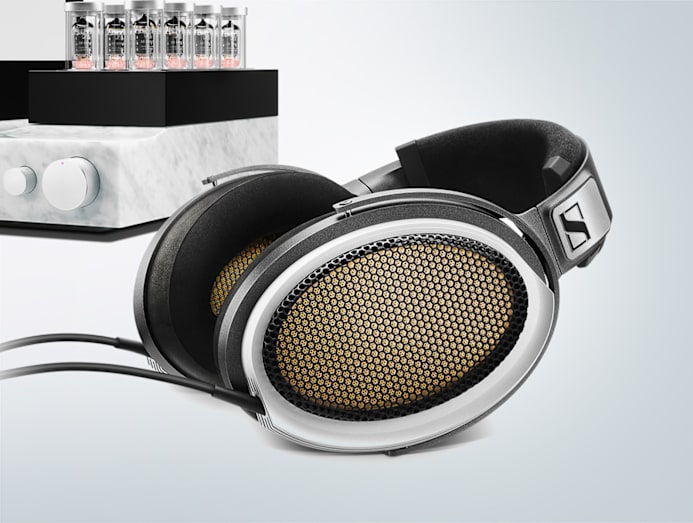 The Sennheiser HE1. (Photo: Sennheiser)
It felt as though the soundscape shifted with each genre: She’s Out of My Life placed me alongside the musicians in the studio, while Under Pressure had the intimate vibe of watching a favourite band perform at a cosy pub. When Michael Jackson’s Billie Jean came on, it felt like I was right on the dancefloor with him singing live.
Of course, clarity alone wasn’t enough – the HE1 also excelled in control. Timing felt impeccably precise; each note’s beginning and end landed exactly as intended. Attack and decay were rendered with such finesse that every musical gesture felt intentional and deeply expressive, forging a genuinely moving connection between performer and listener.
Is the £74,990 price tag justified? For Crin, there was no hesitation. Like performance supercars such as Ferrari and Lamborghini, the HE1 earned its premium through engineering and artistry. Its value lay in the extraordinary experience and craftsmanship it delivered, making the cost a reflection of its place at the pinnacle of audio excellence.
FINAL THOUGHTS
The headphones I’d recommend depended on your preferred genre. The Focal Utopia was particularly well-suited to fast-paced, dynamic music, offering an energetic and unreserved listening experience. For slower-paced tracks where vocals are prominent – jazz, ballads, and classical pieces, for instance – the ZMF Caldera delivered exceptional results. In contrast, the Audio Technica offered the most versatility across genres: while it wasn’t as forward as the Utopia or as emotionally resonant as the Caldera, it delivered a balanced signature with minimal colouration.
Given the premium nature of these models, I’d recommend visiting a specialist store such as Zeppelin & Co to audition them in person. The staff are highly knowledgeable and can offer useful recommendations. If you’re interested in purchasing the Sennheiser HE1, be aware there’s a waiting list – and you’ll need to make an initial down payment of US$10,000 just to be considered.