 3 months ago
118
3 months ago
118
The new Apple MacBook Neo is already shaking up the PC industry with its affordable price. Not only is it Apple's cheapest laptop yet – it starts at S$849 – it's also competing in the low-cost laptops Windows segment, but offering performance that punches way above its price point.
If you're wondering if you should get the MacBook Neo, read on. But if you're thinking whether you should buy one of Apple's other MacBooks instead, don't worry, we’ve got you covered as well. After all, the MacBook range stretches from the new Neo, to the thin and light Air, to the powerful Pros, so here's what each offers.
THE ALL NEW MACBOOK NEO
 The MacBook Neo. (Photo: Aloysius Low)
Designed for everyday use, students, or someone looking to jump into the Mac ecosystem without breaking the bank, the MacBook Neo doesn't use the same processors as the other MacBooks in the lineup. Instead, it's the same chip found on the Apple iPhone 16 Pro and Pro Max.
If the question is whether a phone processor can run a computer, the answer is yes. The Neo is more than capable of editing 4K videos, playing games such as Hades II, and offers better value compared to, say, Windows laptops of the same price range which may struggle.
The Neo features a 13-inch display, with storage starting from 256GB (S$849) and going up to 512GB, 16 hours of battery life, dual speakers, and weighs just 1.23kg. But it's not perfect, as the laptop doesn't come with a backlit keyboard, two USB-C ports, only supports one external monitor, and you only get Apple's fingerprint login, Touch ID, if you purchase the 512GB model.
 The MacBook Neo. (Photo: Apple)
The best thing about the MacBook Neo though, isn't just the price and value. It comes in four gorgeous hues: Silver, Indigo, Blush, and Citrus. The latter is particularly striking, and these bold colours really make this laptop stand out – even compared with the other MacBooks.
So should you get this? Well, if you're looking for a perfect budget laptop, it offers value that's seriously unbeatable right now, unless Windows laptop makers can figure out how to compete in this segment that Apple looks to have upended.
We recommend going for the 512GB version with Touch ID, priced at S$999. You'll appreciate the convenience of Touch ID and the extra storage. If you're a student, the Neo comes with a S$120 discount, so the laptop costs S$729 (256GB) and S$879 (512GB) respectively.
THE SUPER THIN MACBOOK AIR WITH M5
 MacBook Air. (Photo: Apple)
Ever since making its debut in 2008 by getting pulled out of a brown manila envelope, the Air has always impressed with its thinness. It's still the slimmest MacBook at around 1.13cm thick, but no longer the lightest as it now shares that honour with the Neo.
But while they may weigh the same, the S$1,599 MacBook Air with M5 comes with much better specs. It sports the base M5 processor, which is Apple's latest chip for its mainline MacBook range. It comes with 16GB of unified memory, double that of the Neo, and storage space of up to 4TB. The Air with M5 also features a 13.6-inch or 15.3-inch display, 18 hours of battery life, four-speaker system, a backlit keyboard, two USB-C Thunderbolt 4 ports, and Touch ID.
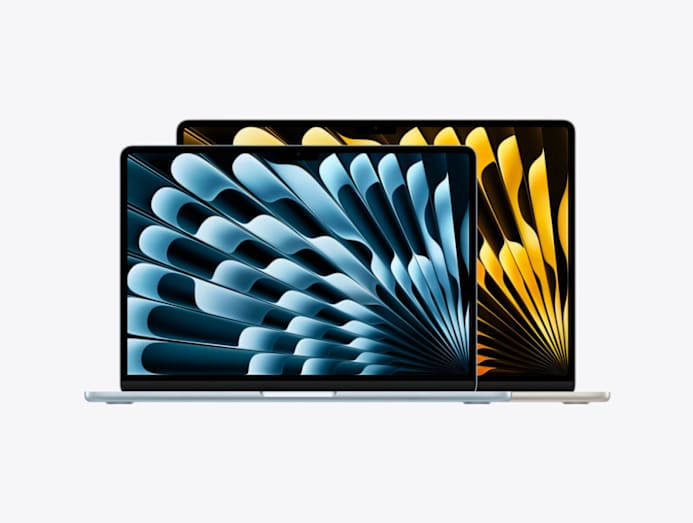 MacBook Air. (Photo: Apple)
This enables it to handle heavier workloads compared to the Neo, perfect for creatives and executives who want something beefier for travel. The slightly larger display (13.6-inch), longer battery life, more storage space, and a more colour accurate display will make this enticing for users who want a portable and powerful laptop.
And unlike the Neo, it supports two external monitors, perfect for productivity. The only downside? The Air doesn't come with built-in fans, so when it's firing on all cylinders, say, gaming, or video encoding, the laptop may slow down slightly to keep things cool. Like the Neo, you get a pick of four colours (though not as bright): Sky Blue, Silver, Starlight, and Midnight.
So who is the MacBook Air for? The answer is simple. If you want more power compared to the Neo, and prefer its sleek form factor, the 13-inch Air will definitely be the one to get. If you need a bigger screen, go for the 15-inch one instead. But with everything Apple, the Air is designed to offer performance of about 90 per cent of what you'll get if you get the next step up in line: The base MacBook Pro with M5.
THE BASE MACBOOK PRO WITH M5
 MacBook Pro. (Photo: Aloysius Low)
Sitting right in the middle of the pack and sporting a 14.2-inch 120Hz display, the Pro with M5 offers up to 24 hours of battery life, and a starting 1TB of storage. This is the right balance for those who want a powerful laptop that can handle anything you can throw at it. And if you want to relax and unwind with some games, it is more than capable of running games at 30fps or more.
But what is it that makes the base Pro with M5 something to consider over the Neo or Air? Well, a few things. The 120Hz display gives you buttery smooth scrolling while reading, improved responsiveness, and reduced motion blur. It's also much brighter, and supports HDR content, so movies on Netflix will look amazing. Then there's the six-speaker system, which delivers impressive sound that will give movies an immersive feel.
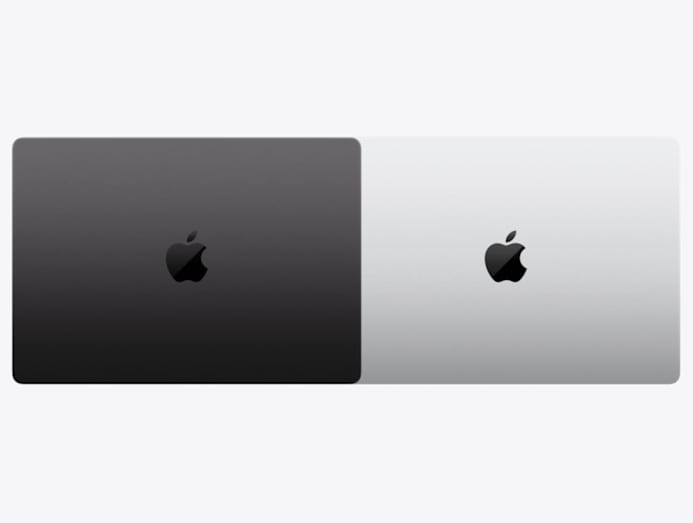 MacBook Pro. (Photo: Apple)
And unlike the prior two MacBooks, the base MacBook Pro (and onwards) has built-in fans, which keeps the laptop's M5 processor running cooler and letting it run at full power much longer. That means it works great for all sorts of heavy duty tasks, such as 3D modelling, video editing, AI image generation, editing photos, and more.
To be clear, it's not like the Neo and Air aren't capable of doing all these things, but the base Pro with M5 will handle this much better, and run longer as well, with its 24 hours of battery life versus the Air's 18 hours. It also has better connectivity, with three USB-C Thunderbolt 4 ports, a HDMI port, and a SD card reader. Unlike the more colourful MacBooks, the MacBook Pro only comes in Space Black or Silver.
Now, is the Pro the best fit for you? If you want a great laptop that can do it all, you can't go wrong with this MacBook. It has performance for anything you can throw at it, great battery life, and a brilliant display. Creatives will love that it comes with a built-in card reader as well, so you can easily edit photos without needing to bring an extra card reader dongle along.
THE MOST POWERFUL MACBOOK PRO WITH M5 PRO AND M5 MAX
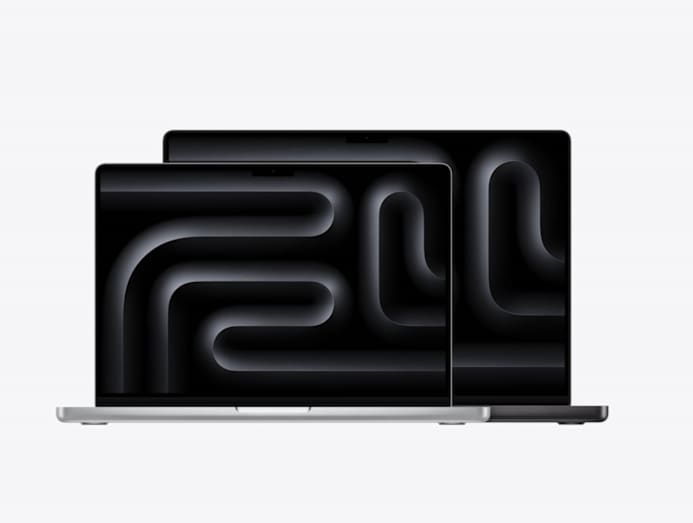 MacBook Pro. (Photo: Apple)
If performance is what you crave and are willing to pay for, then the MacBook Pro with M5 Pro and M5 Max will be your laptop of choice. Don't expect these to come cheap, though, the M5 Pro-powered 14-inch laptop starts at S$2,999, while the M5 Max starts at S$5,099.
The M5 Pro and M5 Max are currently the fastest processors in Apple's laptop lineup, delivering incredible power that lets them do whatever the previous laptops can do without breaking a sweat. And if you're so inclined, these are also incredibly powerful gaming machines, letting you play most games with ease.
Available in two sizes, 14-inch and 16-inch, the MacBook Pro with M5 Pro and M5 Max are also available with an optional matte display. It's a great option to have, and costs just a bit more. They also come with everything the base Pro has, but with more power and speed.
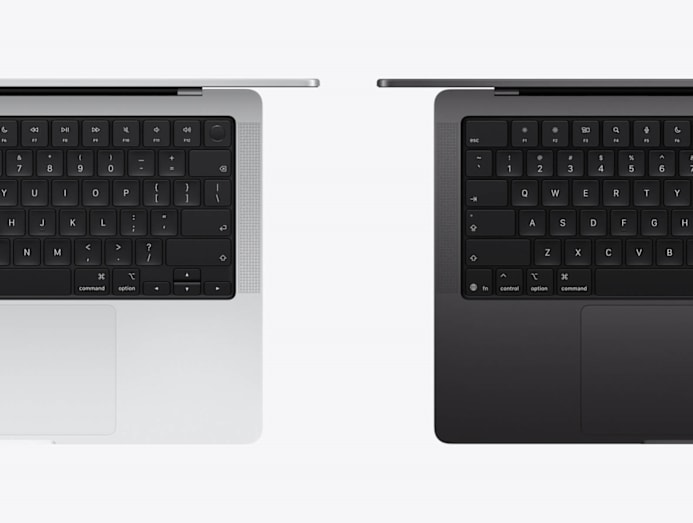 MacBook Pro. (Photo: Apple)
These highest-end models come with three USB-C ports, but with the faster Thunderbolt 5 connectivity standard, which is twice the speed of Thunderbolt 4. You also get the same HDMI port and SD card reader.
The MacBook Pro with M5 Pro and M5 Max are perfect for the current AI boom, with the performance and capabilities to run your own AI chat bots on the machine itself without needing to go online. It will also be able to generate images from text descriptions the fastest of all the MacBooks.
Other uses include data modelling, post-production work, and anyone doing complex computation and simulations. So get this if you're planning to do all that, or if money is no issue and you just want the very best.